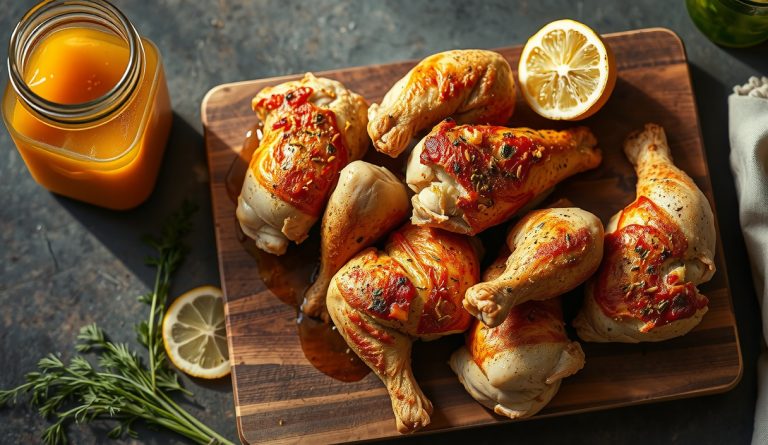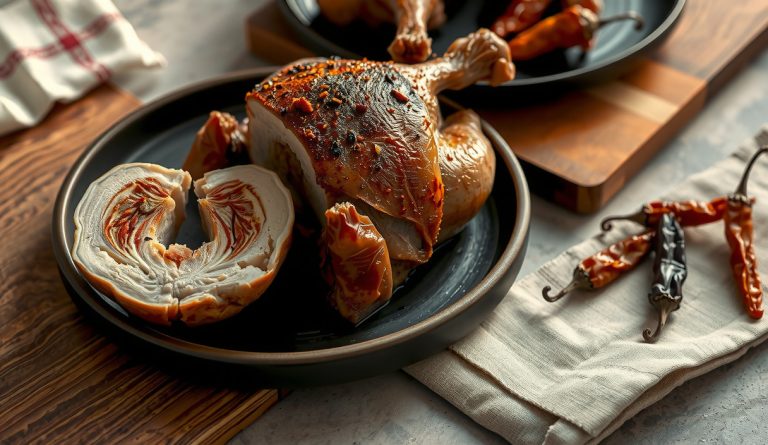
Of the four major dietary adaptations, keto requires the least surgery on this recipe. Lacto-fermented brine contains zero sugar — all fermentable sugars were consumed by Lactobacillus during the six-week ferment, leaving only lactic acid, salt, and aromatics. The chicken itself is a zero-carb protein. The only genuine carbohydrate load in the canonical recipe comes from brown sugar in the dry rub and any sweet table sauce applied at the finish. Both are easy, technically precise swaps.
What changes when you make this recipe keto?
Rub sugar replacement. Brown sugar in the canonical rub serves two functions: it contributes to early Maillard browning and it provides a hygroscopic surface that holds smoke phenolics. The best keto replacement is allulose — a rare sugar that is not metabolized, delivering 0g net carbs — used at a 1:1 ratio by weight. Allulose browns and caramelizes at temperatures very close to sucrose, so bark color and crust texture will be nearly indistinguishable from the original.
Erythritol is an acceptable second choice but carries two liabilities: it recrystallizes as the surface cools, leaving a gritty, pale sheen rather than a lacquered crust, and it produces a noticeable cooling sensation on the palate from its high negative enthalpy of dissolution. If you use an erythritol/monk-fruit blend, apply the rub closer to cook time and do not let the finished bird rest uncovered for more than 10 minutes before serving.
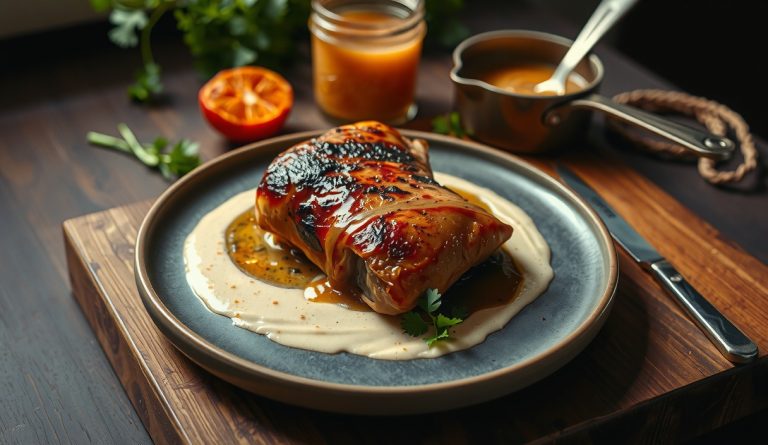
Finishing sauce. Ketchup-based or honey-touched barbecue sauces commonly served alongside smoked chicken clock in at 8–15g of sugar per two-tablespoon serving. Replace with a keto-friendly vinegar sauce built from apple cider vinegar, one tablespoon of allulose, one teaspoon of smoked paprika, cayenne, and black pepper. The acid complements the residual lactic tang from the brine without adding sugar load. Alternatively, a compound butter — soft butter, minced garlic, dill, and lemon zest — served tableside adds fat and mirrors the brine’s aromatic profile at near-zero carbs.
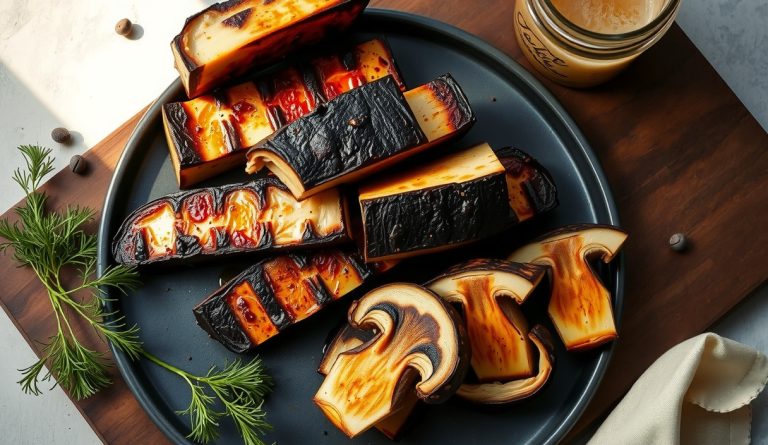
Sides and serving vehicle. Skip the bun or sandwich format. The natural keto companions to heavily seasoned, lactic-acid-brined chicken are smoked halved heads of cauliflower (which benefit from the same cherry wood and absorb smoke phenolics effectively due to their porous surface), a shaved cabbage slaw dressed with cider vinegar and olive oil, or pork rind crumbles when crunch texture is desired. The net carb delta versus a standard roll-and-slaw presentation is approximately −28g per plate.
What stays exactly the same in the keto version?
The entire brine chemistry, spatchcock preparation, pellicle formation, cherry-wood smoke schedule, and internal temperature targets are identical in the keto adaptation. The collagen-softening and myosin-solubilization mechanisms that make smoked chicken tender operate independently of sugar. Protein and fat — the dominant macronutrients in fermented-brine smoked chicken — are the keto-friendliest components of the canonical recipe and require no modification whatsoever.
When is the keto version actually the better choice?
This adaptation suits strict keto practitioners and anyone managing blood glucose, but it also happens to produce a cleaner-tasting bark. The allulose swap removes the residual molasses undertone of brown sugar, letting the lactic acid, dill terpenes, and smoke phenolics read with greater aromatic clarity. If you have never tasted the fermented brine character without brown sugar competition, the keto version may become your preferred default regardless of dietary goals.
Complete fermentation and smoking instructions are at the original recipe — apply these keto modifications on top of that method.