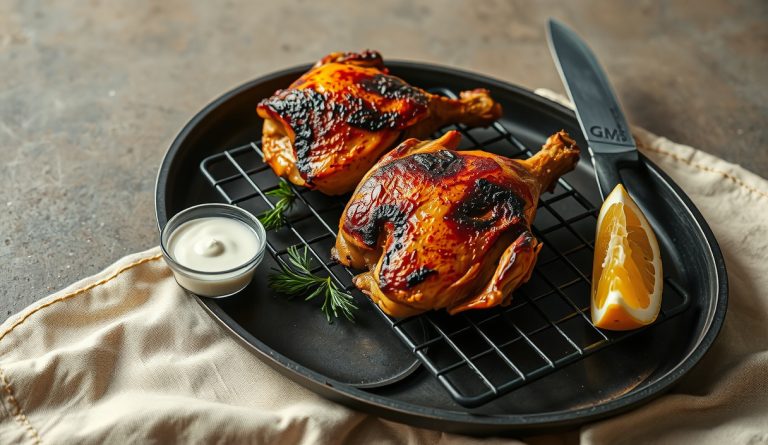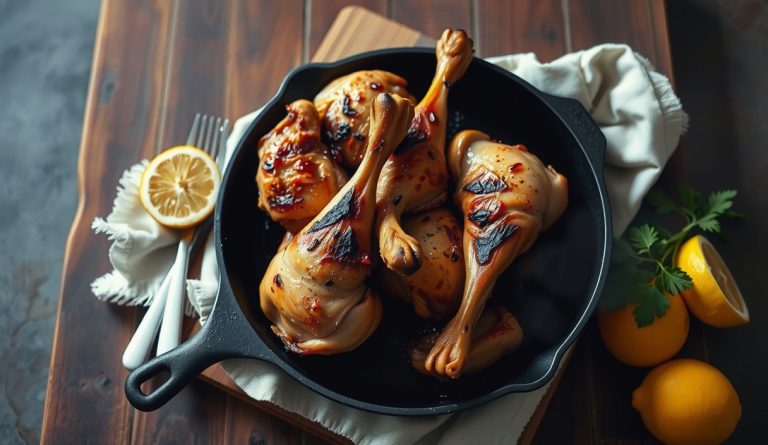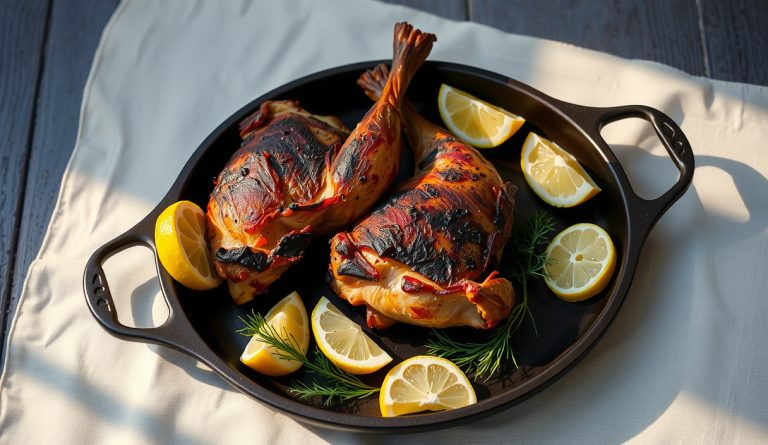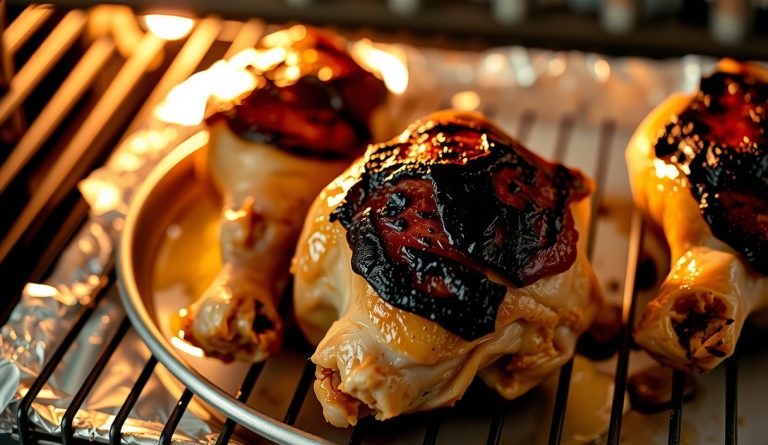
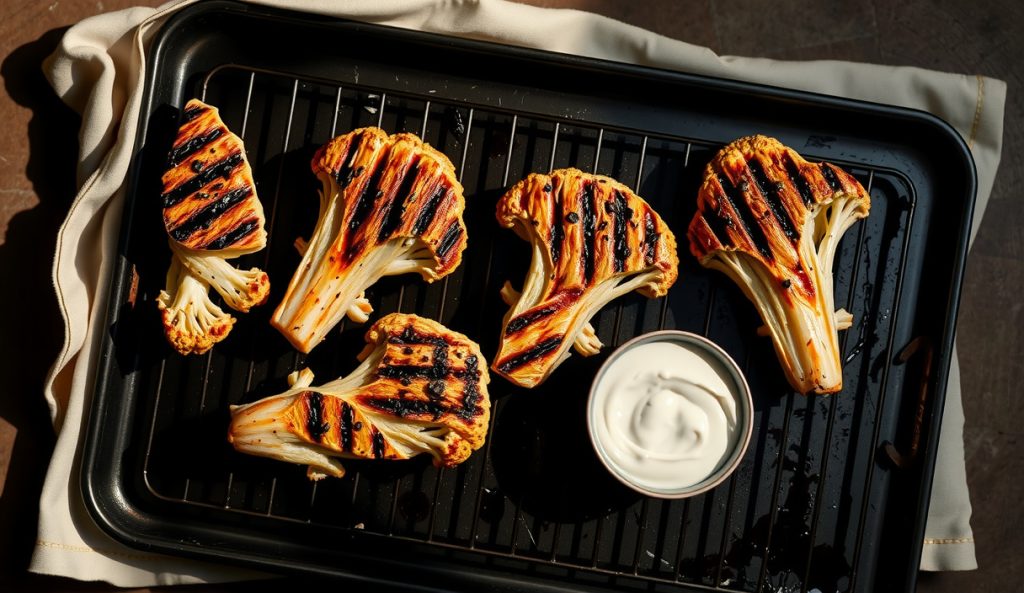
This is not a replacement for smoked chicken thighs. It is a companion dish engineered to sit at the same table, use the same marinade science, and come off the same smoker at roughly the same time — so that vegetarian guests and meat-eating guests share an experience rather than eat parallel, disconnected meals. The analog is thick-cut cauliflower steaks (1.5 to 2 inches, cut through the crown to preserve the floret architecture), marinated in the same full-fat Greek yogurt base, smoked at 275°F over cherry wood, and finished with a direct-heat sear. The choice of cauliflower over jackfruit or mushroom is mechanistic: cauliflower’s dense, low-moisture cell structure and high surface-area-to-volume ratio in steak form create the closest analog to the chicken thigh’s behavior in the yogurt crust context.
What changes between chicken and cauliflower — and why it matters
The substrate and its Maillard mechanics. Cauliflower contains glucosinolates and free amino acids — predominantly glutamine and asparagine — that participate in Maillard browning alongside the yogurt’s lactose and casein lysine residues. This is the same dual-substrate Maillard reaction that makes the chicken crust complex. Asparagine-sugar Maillard pathways generate slightly different pyrazine species than meat amino acids do, producing nuttier, more roasted aromatic notes that complement rather than mimic the chicken’s caramel-roast profile. The cauliflower crust is genuinely interesting, not a simulation of poultry.
Marinade adhesion and contact time. Use the same yogurt marinade at full concentration — identical smoked paprika, cumin, garlic, lemon, and salt ratios. Cauliflower’s surface porosity is significantly higher than chicken skin, so the casein-spice VOC delivery mechanism works faster: 3 to 4 hours of marinade contact is sufficient, though overnight (up to 8 hours) causes no harm and deepens color. Pat the cauliflower steaks gently before placing on the grate — excess pooled yogurt on a vegetable substrate scorches faster than on protein-rich meat, because cauliflower’s surface lacks the myofibrillar protein matrix that moderates heat transfer on chicken.
Smoke uptake mechanics. Cauliflower absorbs phenolic smoke compounds more aggressively than chicken because its cell walls are hydrophilic and lack the lipid barrier of subcutaneous fat. Two ounces of cherry wood is sufficient for the cauliflower steaks — do not scale the wood quantity up to match the chicken or the cauliflower will read as over-smoked against the dairy marinade. Place cauliflower steaks on the upper rack (cooler zone) when cooking alongside chicken, allowing the chicken’s fat drip to contribute aromatic smoke from the drip zone below.
Cook time and finish. At 275°F indirect heat, cauliflower steaks reach fork-tender through the core in 55 to 70 minutes. There is no internal temperature pull point as with meat; probe the thickest part of the stem — the cauliflower should yield with light pressure but not collapse. Finish with 90 seconds per side over direct high heat to set the Maillard crust properly. The yogurt crust on cauliflower benefits from this direct-heat step more than chicken does because the vegetable surface dries more slowly under indirect smoke alone.
What stays exactly the same between the two dishes
The marinade formula, the wood species, the smoker temperature, and the underlying acid-protein-casein science are identical across both dishes. Cherry wood’s mild phenolic profile and the yogurt’s pH 4.2 surface priming work on cauliflower amino acids by the same mechanism they work on myosin — electrostatic and hydrophobic interactions that bind spice VOCs to the surface and create a cohesive crust under heat. The flavor language of the table is coherent because the marinade is identical.
When is the cauliflower companion the better choice?
Cook both simultaneously — chicken on the lower grate, cauliflower steaks on the upper rack — and serve as a shared table spread. This is the longer-table model: vegetarian guests receive a dish built with the same craft and the same scientific rigor, not an afterthought side salad. Because the marinade is identical, every guest at the table is eating within the same flavor language regardless of what is on their plate.
The full chicken method, smoker setup, and science rationale are at the original recipe — run both simultaneously and serve them as one spread.