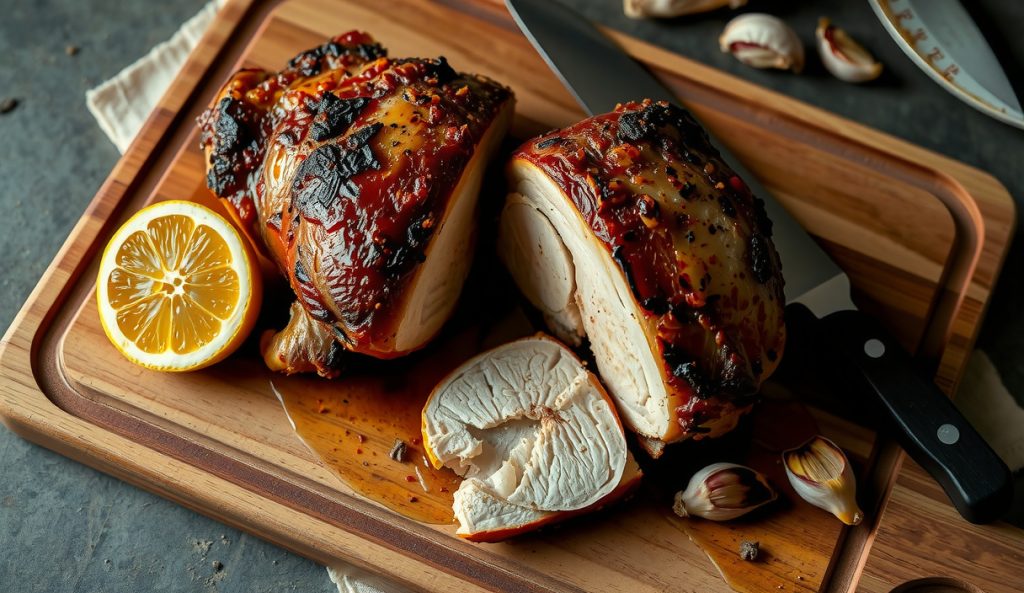
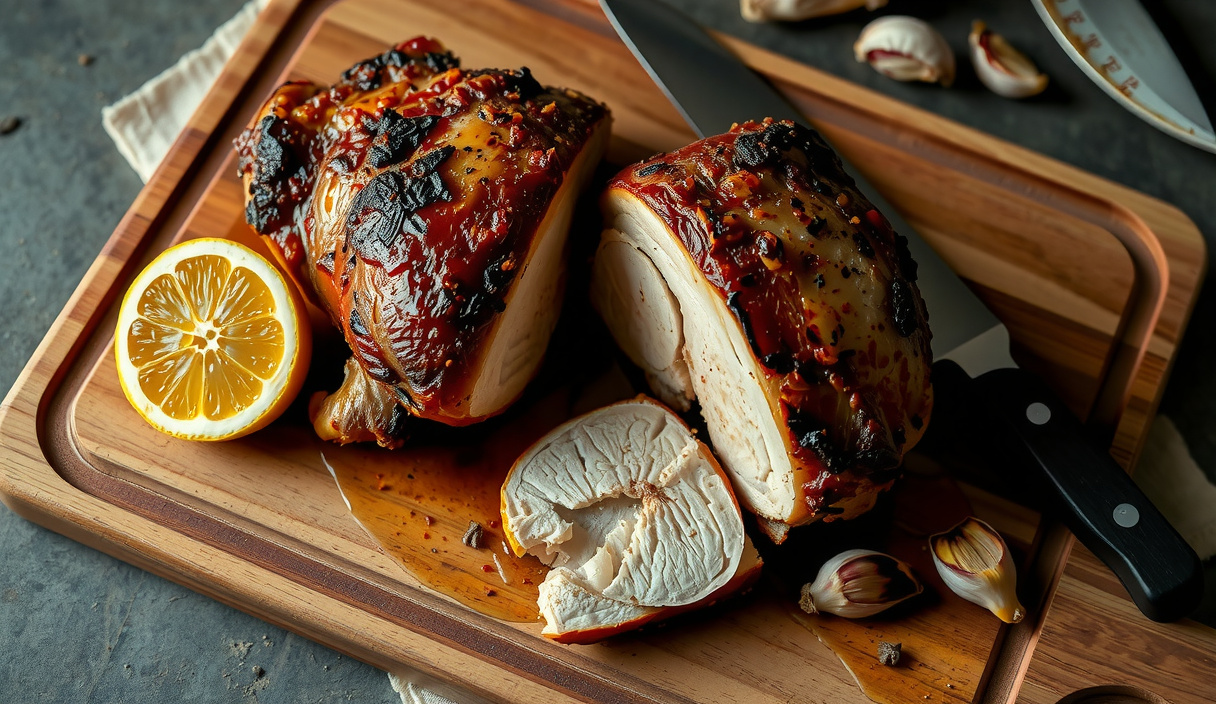
High-Protein Smoked Greek Yogurt Marinade Chicken

Equipment
- 1 Smoker or kettle grill Offset, kamado, or pellet grill capable of holding 275°F indirect heat
- 2 to 3 oz Cherry or apple wood chunks Mild fruitwood only — do not substitute hickory or mesquite
- 1 Digital instant-read thermometer Pull at 168°F internal in the thickest part of the thigh, away from bone
- 1 Wire rack over sheet pan For resting — prevents steam from softening the bark
- 1 Large zip-lock bags or baking dish For marinating — zip-lock bags with air pressed out accelerate acid contact
Ingredients
Chicken
- 4 lbs bone-in, skin-on chicken thighs About 6 to 8 thighs; skin-on is strongly preferred for crust integrity
Yogurt Marinade
- 1.5 cups full-fat Greek yogurt Fage Total 5% or Stonyfield Whole Milk — 10% milkfat minimum
- 3 tablespoons fresh lemon juice About 1.5 lemons; adds citric acid, reinforcing the pH drop alongside the yogurt’s lactic acid
- 1 teaspoon lemon zest Optional but adds aromatic limonene to the VOC matrix
- 4 cloves garlic Minced or pressed — allicin compounds partition into the fat phase of the yogurt
- 2 tablespoons smoked paprika Smoked, not sweet — opened within the last 6 months for live guaiacol content
- 1.5 teaspoons ground cumin Freshly ground preferred; pre-ground works but check for staleness
- 1 teaspoon ground coriander
- 0.5 teaspoon ground cayenne pepper Adjust to heat tolerance; capsaicin reinforces the surface TRPV1 warmth perception
- 1.5 teaspoons kosher salt Diamond Crystal; if using Morton, reduce to 1 teaspoon
- 0.5 teaspoon black pepper Freshly cracked
- 1 tablespoon extra-virgin olive oil Helps the marinade adhere and expands the lipid phase for VOC delivery
Finishing
- 1 lemon Cut into wedges for serving
- 2 tablespoons fresh flat-leaf parsley or cilantro Roughly chopped; adds brightness and green chlorophyll contrast to the bark

Instructions
Build the Marinade
- In a large bowl, combine the Greek yogurt, lemon juice, lemon zest, minced garlic, smoked paprika, cumin, coriander, cayenne, kosher salt, black pepper, and olive oil. Whisk until fully homogeneous — the olive oil will emulsify into the yogurt’s aqueous phase on contact. Taste: it should be aggressively seasoned, tangy, and aromatic. This is your only seasoning window.3 tablespoons fresh lemon juice, 1 teaspoon lemon zest, 4 cloves garlic, 2 tablespoons smoked paprika, 1.5 teaspoons ground cumin, 1 teaspoon ground coriander, 0.5 teaspoon ground cayenne pepper, 1.5 teaspoons kosher salt, 0.5 teaspoon black pepper, 1 tablespoon extra-virgin olive oil
Marinate
- Score the chicken thighs two or three times through the skin down to the bone using a sharp knife. This is not decorative — the score channels allow marinade acids to penetrate the subcutaneous fat layer and reach the lean meat beneath. Add the thighs to the marinade bowl and turn to coat every surface. Transfer to zip-lock bags with all air pressed out, or cover the bowl tightly with plastic wrap. Refrigerate for 8 to 24 hours. Do not marinate at room temperature.
Set Up the Smoker
- One hour before cooking, remove the chicken from the refrigerator and let it begin to temper on the counter — this narrows the thermal gradient between the surface and the core, reducing cook time by 10 to 15 minutes. Prepare your smoker for indirect heat at 275°F. Add 2 to 3 ounces of cherry or apple wood chunks directly to the coals or the wood box. Place a water pan under the grate if your setup allows — the added humidity slows surface desiccation and extends the Maillard window.
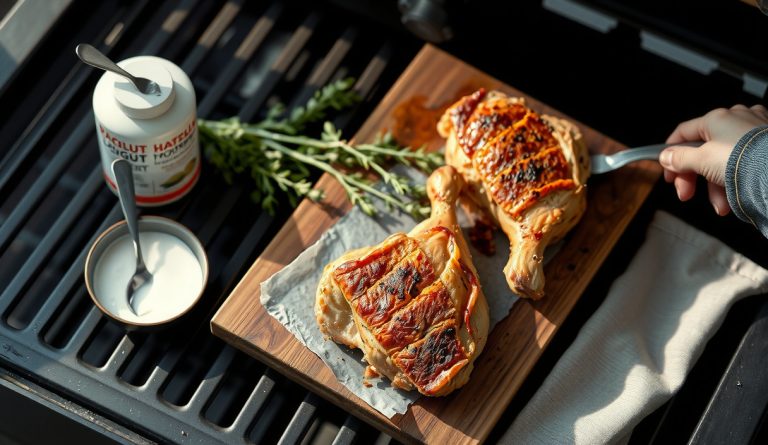
- Remove the chicken thighs from the marinade. Using a paper towel, make one light pass over each side to remove any pooling yogurt — you want a thin, adherent layer remaining, not a thick wet coating that will steam rather than sear. Arrange the thighs skin-side up on the grate with at least 1 inch of clearance between pieces.
Smoke
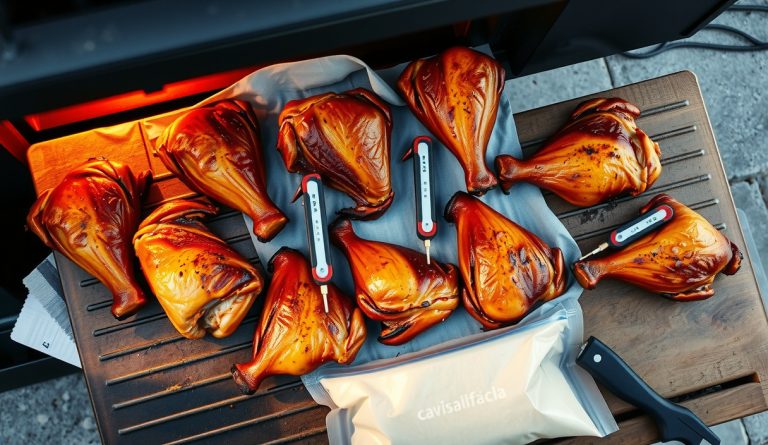
- Close the lid and smoke at 275°F for approximately 90 to 120 minutes. Do not open the lid during the first 60 minutes. The yogurt crust will set and bronze between 60 and 90 minutes. Around 150°F to 160°F internal, you will hit the evaporative stall — the surface temperature plateaus as moisture carries heat away. Let it stall. This is where the crust deepens. Monitor with an instant-read thermometer. Pull the chicken at 168°F internal, measured in the thickest part of the thigh away from bone. Carry-over heat will bring it to 172°F during the rest.
Rest and Serve
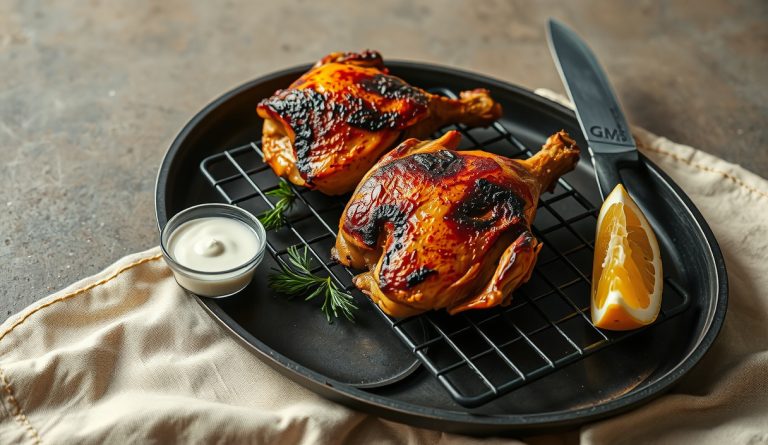
- Transfer the thighs to a wire rack over a sheet pan. Rest for 5 minutes — do not tent with foil, which traps steam and softens the bark. Squeeze fresh lemon wedges over the surface and scatter chopped parsley or cilantro. Serve immediately.1 lemon, 2 tablespoons fresh flat-leaf parsley or cilantro
Notes
Nutrition
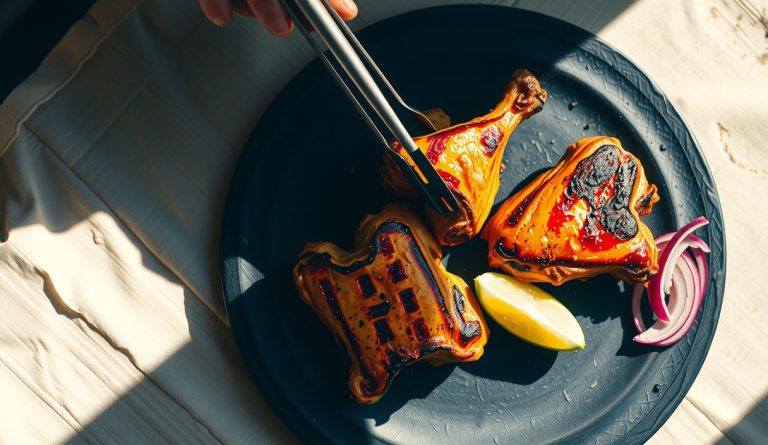
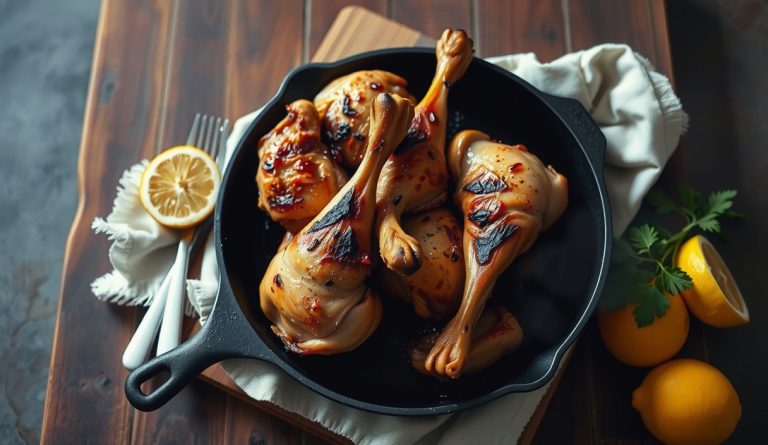
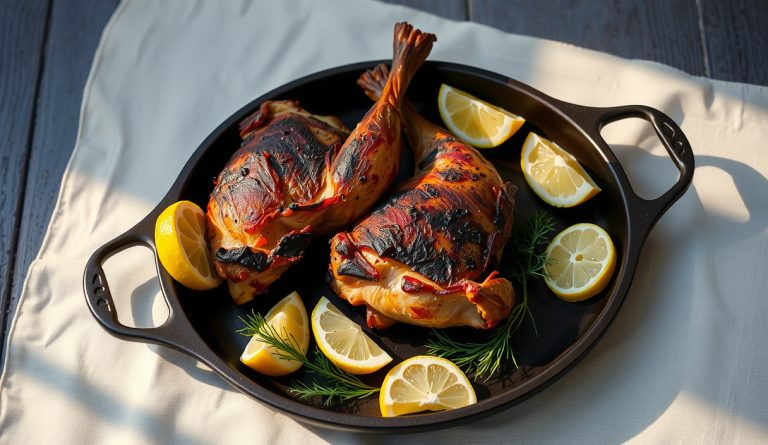
There is a moment at the smoker — around the 90-minute mark, internal temp hovering at 155°F — when the yogurt crust caramelizes into something between a tandoor char and a Memphis bark. It is not a coincidence. It is acid-driven protein chemistry meeting controlled wood smoke, and once you understand why it works, you will never marinate chicken any other way.
Full-fat Greek yogurt clocks in at a pH of roughly 4.0 to 4.4. That acidity is doing something specific: it shifts the isoelectric point equilibrium of the outermost muscle proteins, partially unfolding myosin strands at the surface without the thermal violence of high heat. The result is a pre-denatured boundary layer that bonds tightly to the spice matrix during smoking, producing a crust with genuine texture depth rather than a spice coating that slides off the moment a fork touches it. Eight hours of contact time is not a suggestion — it is the kinetic minimum for meaningful penetration of those organic acids into the first 3 to 4 millimeters of meat.
Why does smoked Greek yogurt marinade chicken work? The science
Smoked Greek yogurt marinade chicken works because lactic and citric acids drop the meat’s surface pH to approximately 4.2 — below the isoelectric point of myosin at roughly pH 5.4 — triggering controlled partial unfolding of surface proteins before any heat is applied. At this pH, myosin carries a net positive charge, and electrostatic repulsion between adjacent protein strands causes partial unfolding of the tail domains — specifically the myosin rod — without triggering the catastrophic aggregation and water-expulsion event that begins in earnest above 58°F internal. This is a controlled structural priming, not a cook. Moisture-holding capacity actually increases slightly in the surface zone during this phase because the loosened polymer network can bind more free water, which translates directly to a juicier finished product compared to an unacidified brine.
The yogurt’s protein matrix — predominantly casein micelles and whey globulins — acts as a physical delivery vehicle for the spice VOCs (volatile organic compounds). Because casein micelles are hydrophobic in their core, lipophilic compounds from smoked paprika and cumin partition into these micelles during the 8-hour rest, raising their effective concentration at the meat surface. When the marinade hits smoker heat, water activity at the surface drops rapidly as free moisture evaporates, and the Maillard reaction ignites between yogurt lactose and lysine residues in both the casein and the chicken’s myofibrillar proteins. This dual Maillard substrate — dairy sugar plus meat amino acid — generates a broader, more complex VOC profile than a spice-and-oil rub alone, producing deep caramel-roast notes alongside the paprika’s characteristic pyrazine aromatics.
On the smoker, fire serves as a tunable radiant and convective heat source. Running at 275°F with indirect heat and a small chunk of cherry or apple wood keeps the radiant component low enough that the yogurt crust does not scorch before the interior reaches the collagen-softening window of 165°F to 175°F in the thigh. The stall — that 150°F to 160°F plateau where surface evaporation absorbs energy as fast as the cooker delivers it — is your friend here. It extends the time the crust spends at the Maillard activation threshold (roughly 140°F surface) without overshooting the actin denaturation danger zone above 165°F internal, where water-holding capacity collapses and the meat dries irreversibly. Pull at 168°F internal; carry-over will land the thigh at 172°F, which is the precise sweet spot for thigh collagen conversion without water-holding capacity loss.
What equipment and ingredients do I need?
Greek yogurt, full-fat only. Low-fat yogurt drops the casein-to-whey ratio and reduces the micelle concentration available to carry spice VOCs. Low-fat yogurt also has less structural body, meaning the marinade runs off the meat surface rather than adhering. Full-fat (10% milkfat or higher) is not negotiable here. Siggi’s, Fage Total 5%, or Stonyfield Whole Milk are reliable picks.
Smoked paprika, not sweet. The distinction matters because smoked paprika’s pyrazine and guaiacol content — generated during the drying-over-oak process — mirrors and amplifies the phenolic compounds arriving from the wood smoke. Sweet paprika is primarily carotenoid color with little aromatic contribution. Buy a tin opened within the last 6 months; stale paprika has lost its guaiacols to oxidation and contributes nothing but red color.
Bone-in, skin-on chicken thighs. The subcutaneous fat layer is not decoration. It insulates the lean meat from radiant heat while simultaneously rendering and basting the surface during the smoke. Skinless thighs will work but require a slightly shorter cook and lose the architectural protection the skin provides against over-drying.
The smoker setup. Any offset, kettle, kamado, or pellet grill running at 275°F with indirect heat works. A water pan under the grate adds humidity that slows surface desiccation, extending the Maillard window. Use 2 to 3 ounces of cherry or apple wood — mild, fruity smoke complements the dairy without bulldozing it. Skip mesquite or hickory; their phenol intensity overwhelms the yogurt’s subtle contribution.
Digital instant-read thermometer. Non-negotiable. Pull the thighs at 168°F in the deepest part of the thigh, away from bone. Bone conducts heat aggressively and will read 10 to 15°F higher than the surrounding meat.
High-Protein Smoked Greek Yogurt Marinade Chicken
Equipment
- 1 Smoker or kettle grill Offset, kamado, or pellet grill capable of holding 275°F indirect heat
- 2 to 3 oz Cherry or apple wood chunks Mild fruitwood only — do not substitute hickory or mesquite
- 1 Digital instant-read thermometer Pull at 168°F internal in the thickest part of the thigh, away from bone
- 1 Wire rack over sheet pan For resting — prevents steam from softening the bark
- 1 Large zip-lock bags or baking dish For marinating — zip-lock bags with air pressed out accelerate acid contact
Ingredients
Chicken
- 4 lbs bone-in, skin-on chicken thighs About 6 to 8 thighs; skin-on is strongly preferred for crust integrity
Yogurt Marinade
- 1.5 cups full-fat Greek yogurt Fage Total 5% or Stonyfield Whole Milk — 10% milkfat minimum
- 3 tablespoons fresh lemon juice About 1.5 lemons; adds citric acid, reinforcing the pH drop alongside the yogurt’s lactic acid
- 1 teaspoon lemon zest Optional but adds aromatic limonene to the VOC matrix
- 4 cloves garlic Minced or pressed — allicin compounds partition into the fat phase of the yogurt
- 2 tablespoons smoked paprika Smoked, not sweet — opened within the last 6 months for live guaiacol content
- 1.5 teaspoons ground cumin Freshly ground preferred; pre-ground works but check for staleness
- 1 teaspoon ground coriander
- 0.5 teaspoon ground cayenne pepper Adjust to heat tolerance; capsaicin reinforces the surface TRPV1 warmth perception
- 1.5 teaspoons kosher salt Diamond Crystal; if using Morton, reduce to 1 teaspoon
- 0.5 teaspoon black pepper Freshly cracked
- 1 tablespoon extra-virgin olive oil Helps the marinade adhere and expands the lipid phase for VOC delivery
Finishing
- 1 lemon Cut into wedges for serving
- 2 tablespoons fresh flat-leaf parsley or cilantro Roughly chopped; adds brightness and green chlorophyll contrast to the bark
Instructions
Build the Marinade
- In a large bowl, combine the Greek yogurt, lemon juice, lemon zest, minced garlic, smoked paprika, cumin, coriander, cayenne, kosher salt, black pepper, and olive oil. Whisk until fully homogeneous — the olive oil will emulsify into the yogurt’s aqueous phase on contact. Taste: it should be aggressively seasoned, tangy, and aromatic. This is your only seasoning window.3 tablespoons fresh lemon juice, 1 teaspoon lemon zest, 4 cloves garlic, 2 tablespoons smoked paprika, 1.5 teaspoons ground cumin, 1 teaspoon ground coriander, 0.5 teaspoon ground cayenne pepper, 1.5 teaspoons kosher salt, 0.5 teaspoon black pepper, 1 tablespoon extra-virgin olive oil
Marinate
- Score the chicken thighs two or three times through the skin down to the bone using a sharp knife. This is not decorative — the score channels allow marinade acids to penetrate the subcutaneous fat layer and reach the lean meat beneath. Add the thighs to the marinade bowl and turn to coat every surface. Transfer to zip-lock bags with all air pressed out, or cover the bowl tightly with plastic wrap. Refrigerate for 8 to 24 hours. Do not marinate at room temperature.
Set Up the Smoker
- One hour before cooking, remove the chicken from the refrigerator and let it begin to temper on the counter — this narrows the thermal gradient between the surface and the core, reducing cook time by 10 to 15 minutes. Prepare your smoker for indirect heat at 275°F. Add 2 to 3 ounces of cherry or apple wood chunks directly to the coals or the wood box. Place a water pan under the grate if your setup allows — the added humidity slows surface desiccation and extends the Maillard window.
- Remove the chicken thighs from the marinade. Using a paper towel, make one light pass over each side to remove any pooling yogurt — you want a thin, adherent layer remaining, not a thick wet coating that will steam rather than sear. Arrange the thighs skin-side up on the grate with at least 1 inch of clearance between pieces.
Smoke
- Close the lid and smoke at 275°F for approximately 90 to 120 minutes. Do not open the lid during the first 60 minutes. The yogurt crust will set and bronze between 60 and 90 minutes. Around 150°F to 160°F internal, you will hit the evaporative stall — the surface temperature plateaus as moisture carries heat away. Let it stall. This is where the crust deepens. Monitor with an instant-read thermometer. Pull the chicken at 168°F internal, measured in the thickest part of the thigh away from bone. Carry-over heat will bring it to 172°F during the rest.
Rest and Serve
- Transfer the thighs to a wire rack over a sheet pan. Rest for 5 minutes — do not tent with foil, which traps steam and softens the bark. Squeeze fresh lemon wedges over the surface and scatter chopped parsley or cilantro. Serve immediately.1 lemon, 2 tablespoons fresh flat-leaf parsley or cilantro
Notes
Nutrition
How do I nail the smoked yogurt chicken every time?
- Do not skip the 8-hour minimum. At 4 hours, only the outermost millimeter has acidified. The functional surface denaturation that creates the adherent crust requires 8 to 12 hours. If you are short on time, use 24 hours in the refrigerator — the extended low-temperature kinetics actually improve the result.
- Pat the chicken partially dry before it goes on the grate — not bone dry. Remove excess pooling yogurt that would steam rather than sear, but leave a thin adherent layer. Use a paper towel with one light pass per side. Wiping aggressively strips the marinade and wastes 8 hours of work.
- Resist opening the smoker lid during the first 60 minutes. Every lid-open event dumps accumulated smoke and drops the chamber temperature 30 to 50°F, resetting the Maillard surface chemistry and adding 10 to 15 minutes to total cook time. Commit to the process.
- Watch for yogurt crust burning, not coloring. The dairy sugars brown faster than you expect. If the crust is going dark before the internal temp reaches 155°F, introduce a water pan or drop the cooker to 250°F. The goal is deep amber, not black.
- Rest on a rack, not a flat surface. Resting on a flat plate traps steam under the crust, softening the bark built over 2 hours of smoking. A wire rack over a sheet pan lets moisture escape from all sides, maintaining crust integrity through the 5-minute rest.
- Do not sauce. This recipe does not need it. A finishing squeeze of lemon and fresh herbs is the correct move. A BBQ sauce would cancel the yogurt’s subtle tang architecture with competing acid and sugar signals.
What variations can I make on this recipe?
Tandoori-style on the grill. Replace the smoked paprika with equal parts Kashmiri chili powder and add 1 teaspoon of garam masala and a pinch of turmeric to the marinade. Cook over high direct heat at 450°F on a charcoal grill, 6 to 7 minutes per side, targeting char marks and an internal temperature of 168°F. The same acid-denaturation mechanism applies; the high direct heat compresses the Maillard window into a more intense, faster event.
Dairy-free adaptation. Substitute full-fat coconut yogurt (Coyo or Culina brands) for the Greek yogurt. The pH is similar (roughly 4.1 to 4.5), so the acid-denaturation mechanism is preserved. The casein-based VOC delivery vehicle is lost, so compensate by blooming your spices in 1 tablespoon of neutral oil before adding them to the coconut yogurt — this pre-dissolves the lipophilic aromatics into the fat phase directly.
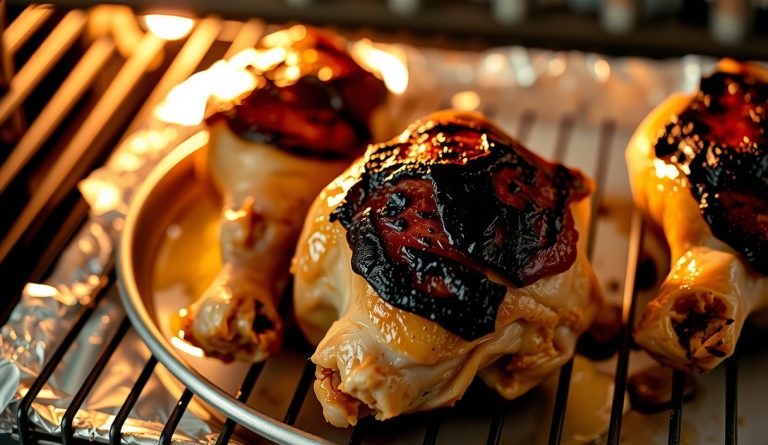
High-protein sheet-pan version. If a smoker is not available, arrange the marinated thighs on a wire rack over a foil-lined sheet pan. Roast at 425°F convection for 35 to 40 minutes until the internal temperature reaches 168°F. Finish with 2 minutes under the broiler to create the bark. The yogurt-Maillard crust is fully reproducible in a home oven with no additional equipment, though the phenolic complexity from wood smoke will be absent.
Scaling for a crowd. This recipe doubles and triples linearly — the marinade ratios hold at any volume. For large batches, marinate in zip-lock bags with all air pressed out rather than in a bowl; the vacuum contact accelerates acid penetration slightly. On the smoker, maintain at least 1 inch of clearance between thighs to allow smoke circulation and prevent steam pocketing between pieces.
Frequently asked questions
Can I marinate longer than 12 hours? Yes, up to 24 hours without structural damage. Beyond 24 hours, the lactic and citric acids begin to over-denature the surface proteins past the useful phase — the result is a mushy, pale surface layer that does not brown effectively. If marinating longer than 24 hours is necessary, reduce the lemon juice by half.
Why do I need full-fat yogurt specifically? The fat phase in full-fat Greek yogurt serves two functions: it carries lipophilic spice aromatics to the meat surface (fat is a solvent for VOCs), and it physically lubricates the crust during the early smoke phase, preventing the protein coating from contracting and cracking before it sets. Low-fat yogurt lacks this lipid buffer, producing a crust that fractures and peels rather than adhering as a unified bark.
What wood should I use? Cherry and apple are the correct choices for this recipe — their phenol-to-guaiacol ratio produces mild, fruity smoke that complements the dairy’s lactic tang without overpowering it. Hickory and mesquite introduce aggressive creosol and syringol compounds that compete with and mask the yogurt marinade’s contribution. If only hickory is available, use half the amount and mix with fruitwood if possible.