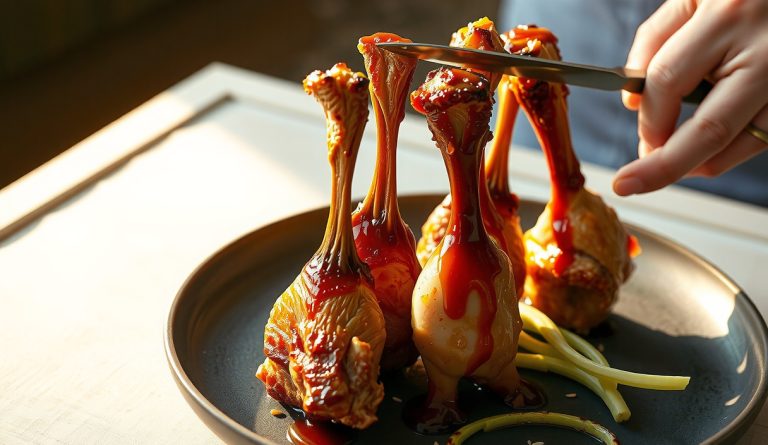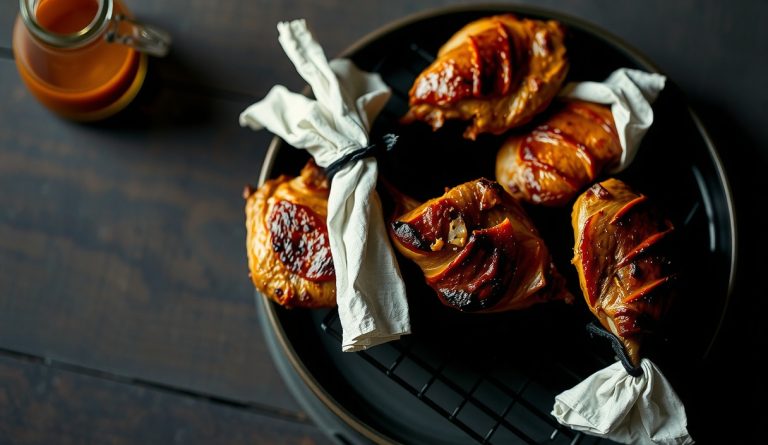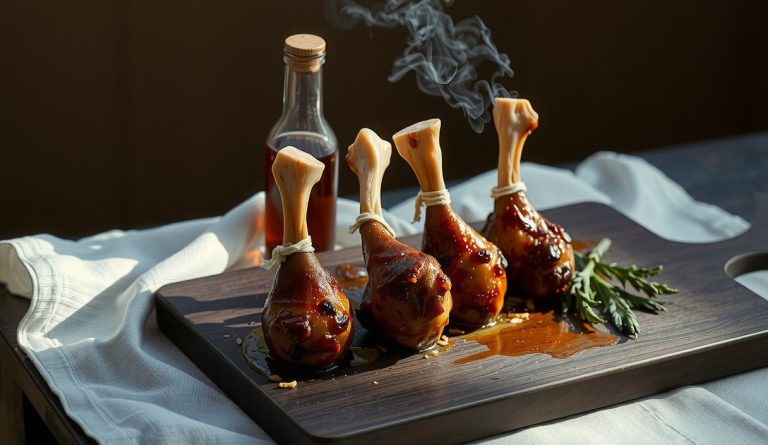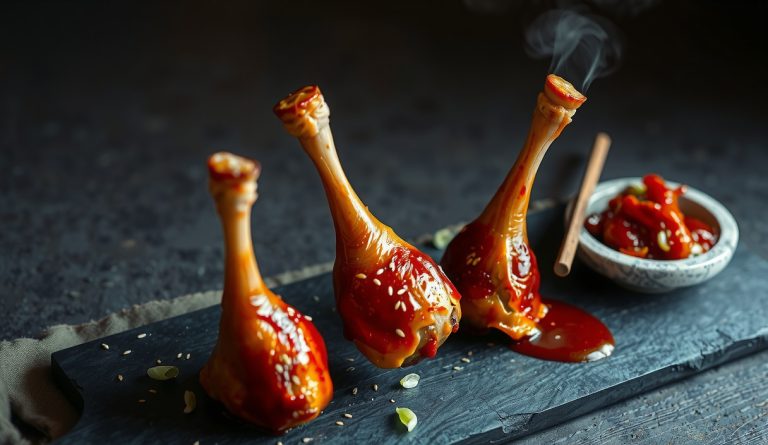
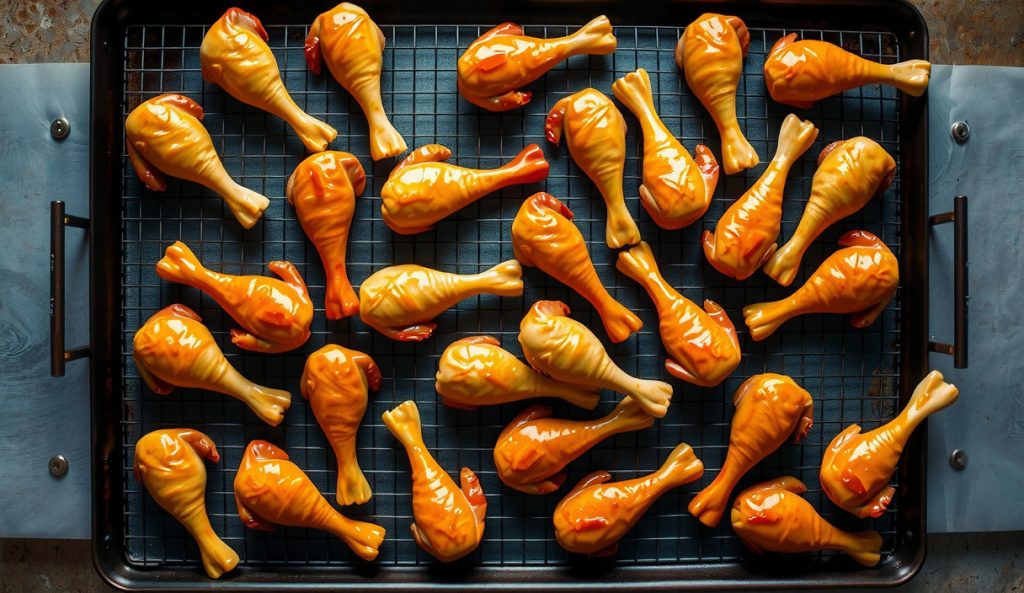
The canonical smoked chicken lollipops recipe is calibrated for a single grate level of up to 12 pieces — a manageable load for most kettle and offset setups. When a party demands 18 to 24 lollipops, the constraints shift from recipe technique to pit physics. Airflow, radiant heat distribution, and probe discipline become the variables that determine whether every lollipop finishes evenly or whether some pieces come off the grate undercooked while others are past their mark.
This variation does not change a single ingredient or flavor parameter. It is a pit management protocol for high-volume cooks.
What changes when you scale past 12 lollipops?
Beyond 12 pieces on a single grate level, airflow is meaningfully compromised. Smoke and heat travel through the path of least resistance — open gaps between pieces — while the center of a densely loaded grate receives reduced convective airflow and can run 15 to 20°F cooler than the edges. This cold-zone effect is cumulative: pieces in the center stall longer and can finish 10 to 15 minutes behind perimeter pieces even when surface appearance looks uniform.
The solution is two-grate staging. Place a second rack above the first with at least 4 inches of clearance. Load the upper rack with the smaller pieces and those that can afford slightly faster cooking from the rising heat; place the largest drumsticks at the perimeter of the lower rack where airflow is strongest. Add 10 to 15 minutes to the total expected cook time to account for reduced convective efficiency across both levels.
Thermometer discipline is the operational core of a large cook. Probe at least 30% of the lollipops before pulling any of them, prioritizing the largest drumsticks and any piece sitting in the center of either grate level where airflow restriction is greatest. A single-point instant-read check on one piece is not sufficient evidence that the batch is done.
What stays the same when scaling up?
The pit temperature target of 250°F, the internal doneness target of 165°F, rub ratios, glaze application timing, and lollipop prep are all unchanged when scaling to 18 to 24 pieces. Scaling is linear on ingredients — multiply rub and glaze quantities directly by the number of pieces relative to the canonical batch size.
When is the crowd-scaling approach the better choice?
Use this two-grate protocol any time you are cooking for more than 12 guests and want to serve the canonical recipe at full quality rather than downgrading to a simpler format. It is especially valuable for tailgate setups, backyard parties, or competition warm-up cooks where throughput matters and uneven doneness is not acceptable.
Use the full method, equipment, and rub measurements from the original Smoked Chicken Lollipops.