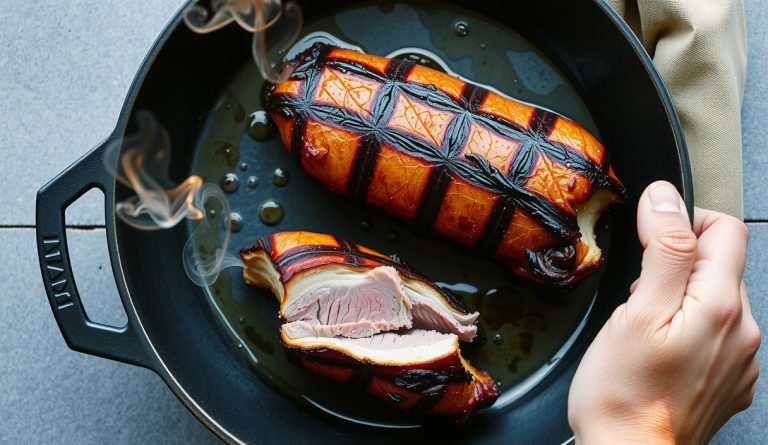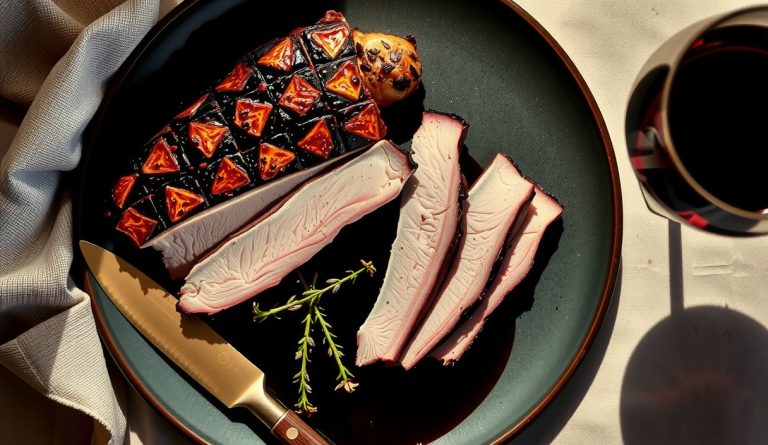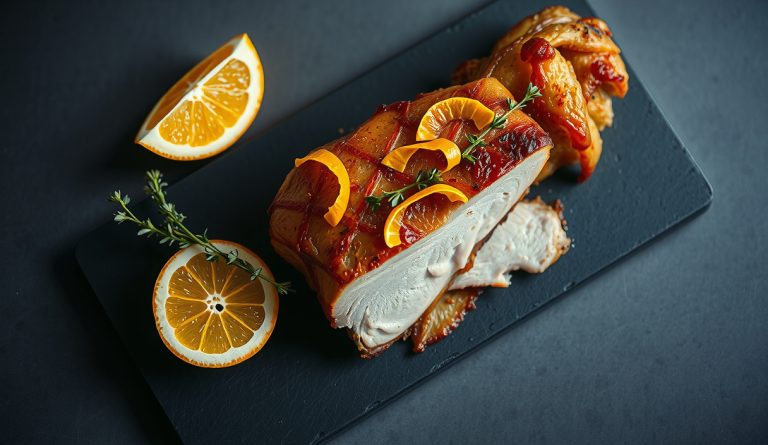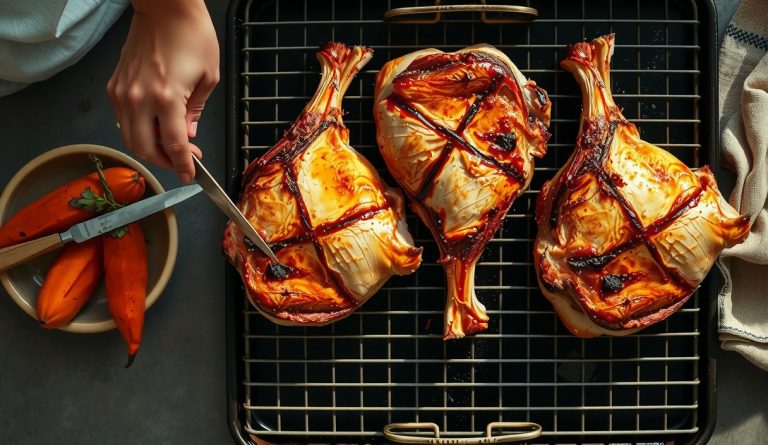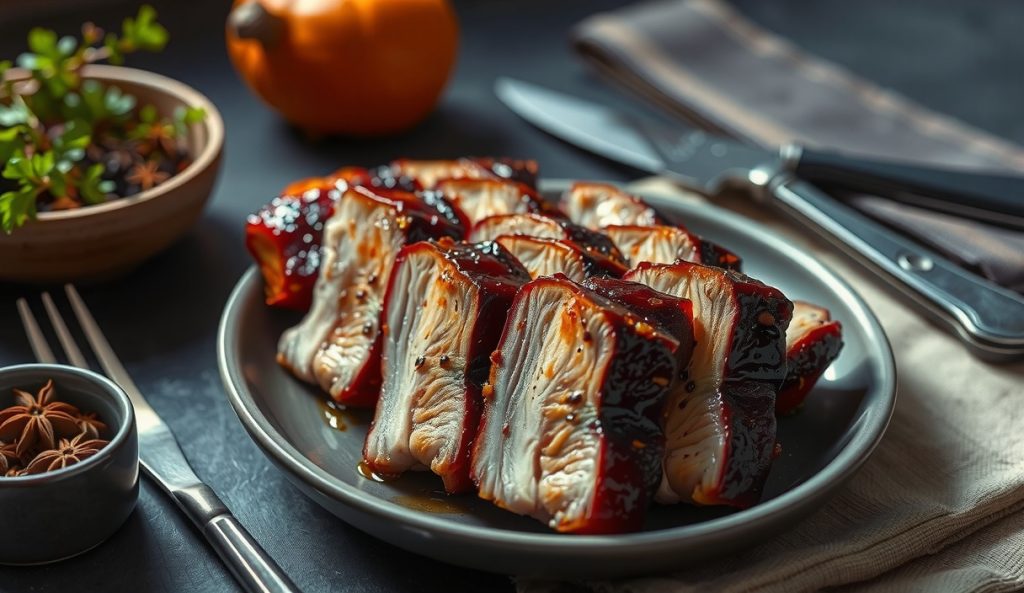
The five-spice lacquer finish transforms the final 10 minutes of the smoke into a distinct second act. Where the canonical smoked duck breast method delivers clean, rendered skin with pure duck flavor, this variation layers a glossy, aromatic crust that reads as simultaneously sweet, savory, and deeply spiced. The lacquer finish suits dinner-party presentations or any occasion where visual drama and complex fragrance matter as much as texture.
What changes with the five-spice lacquer variation?
Whisk together 2 tablespoons of honey, 1 tablespoon of soy sauce, and 1 teaspoon of five-spice powder into a smooth glaze. Once the duck breast reaches 120°F internal temperature — roughly 10 minutes before pulling — brush a single, even coat over the skin side and allow the glaze to set in the live smoke. Do not flip the breast or disturb the glaze during this window. A second coat can be applied if the first absorbs completely and the surface looks matte, but one coat is usually sufficient.
Why does the five-spice lacquer work? The science
The lacquer sets through accelerated Maillard chemistry driven by honey’s free reducing sugars. Honey’s primary reducing sugars — fructose and glucose — lower the activation threshold for the Maillard reaction compared to sucrose, meaning they react more aggressively with amino acids at the elevated surface temperature of fully rendered duck skin. This reaction produces a dense matrix of melanoidins, the compounds responsible for both the lacquer’s dark mahogany color and its roasted, nutty aroma.
The five-spice aromatics — star anise, clove, cassia, Sichuan pepper, and fennel — volatilize into this melanoidin matrix as it sets, locking fragrance into the crust rather than letting it dissipate into the surrounding smoke. The result is a crust that carries its spice from the inside out rather than sitting on the surface. Watch the glaze closely in this final window: it can cross from lacquered to scorched in under two minutes if the smoker runs hot.
What stays the same from the base recipe?
The dry-brine protocol, the skin-scoring depth, the cold-start render, and the smoke temperature and wood selection all remain unchanged from the base method. The glaze is an additive finish applied exclusively in the final phase of cooking — the five-spice lacquer does not alter the foundational technique that builds crispy, fully rendered duck skin.
When is the five-spice lacquer variation the better choice?
Choose this variation when serving duck breast as a plated centerpiece rather than a carved component. The lacquer finish produces a visually distinct, restaurant-style surface that communicates craft on the plate. The five-spice note also bridges well alongside Asian-inflected sides — bok choy, jasmine rice, pickled cucumber — where the spiced crust ties the protein to its accompaniments.
Avoid the five-spice lacquer variation if the goal is pure, unadulterated smoke flavor, or if the duck breast anchors a composed plate with already sweet or highly spiced elements where adding another layer of sweetness and spice would create competition rather than harmony.
Use the full method, equipment, and rub measurements from the original Smoked Duck Breast with Crispy Skin.