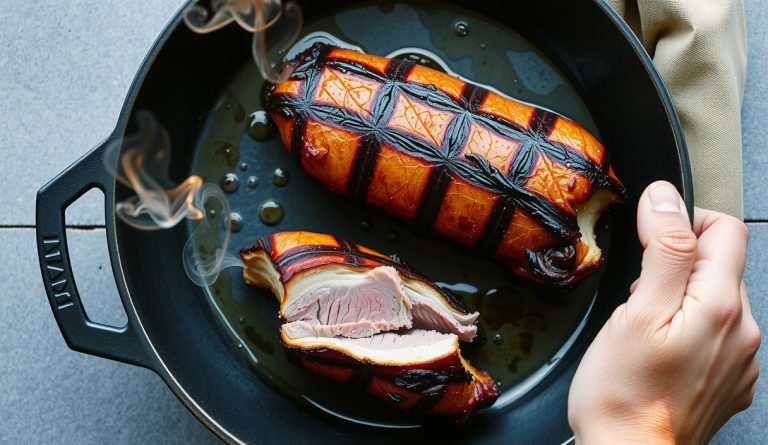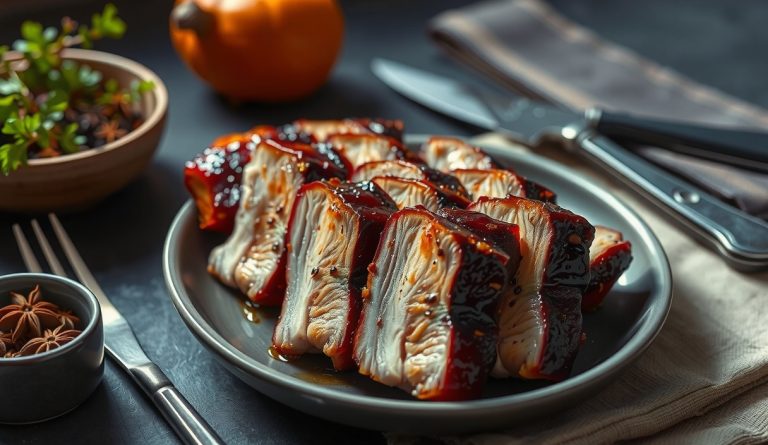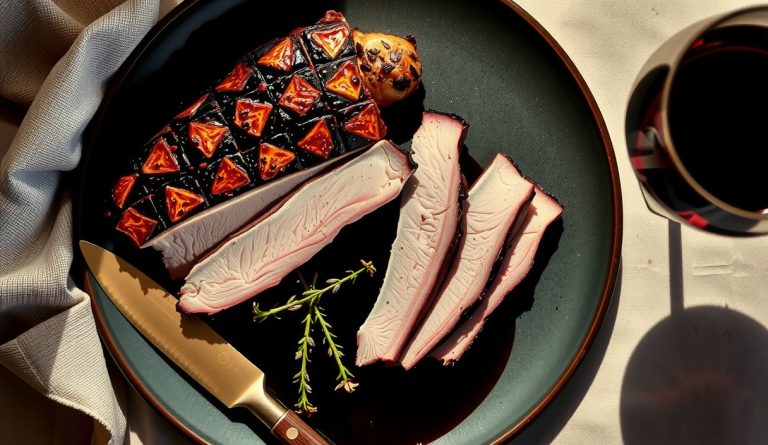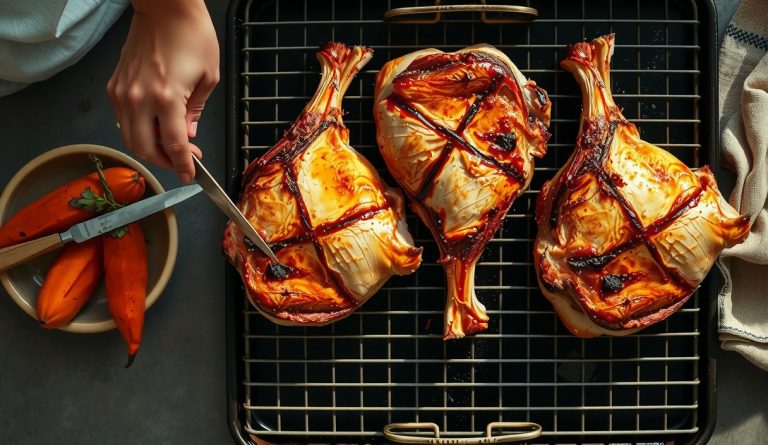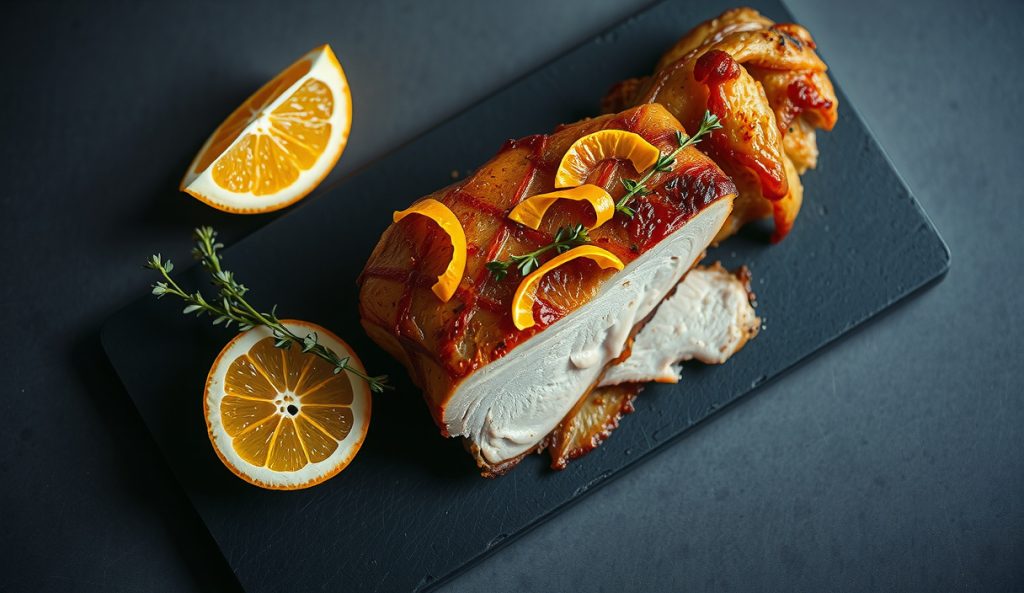
Duck fat is not a neutral medium. During a 24-hour dry-brine rest, fat-soluble aromatic compounds migrate from the skin’s surface into the subcutaneous fat layer, altering the flavor of every bite. The orange and thyme dry brine variation leverages this chemistry deliberately, introducing two complementary aromatic systems — citrus and herb — that soften duck’s characteristic gamey iron note without masking it. The result is a breast that still tastes unmistakably like duck, but with a lifted, aromatic finish that reads as refined rather than rustic.
What changes in the orange and thyme variation?
To the canonical dry brine salt mixture, add 1 teaspoon of finely grated fresh orange zest and 1 teaspoon of dried thyme. Grate the zest immediately before mixing — pre-grated zest loses volatile aromatics rapidly as limonene off-gases into the air. Apply the augmented brine to the scored skin and flesh sides as directed in the base recipe, then refrigerate uncovered for the full 24-hour period.
The mechanism is lipid partitioning. Limonene, the dominant terpene in orange zest, is highly lipophilic — it preferentially dissolves into fat rather than water. Over 24 hours, limonene migrates from the surface application into the subcutaneous fat layer, perfuming the fat itself rather than merely coating the exterior. Thymol, the primary monoterpenoid phenol in thyme, operates through a parallel pathway and contributes an earthy, slightly medicinal warmth that counterbalances duck’s high-iron gaminess at a sensory level. Neither limonene nor thymol survives high heat intact, so their primary expression is in the rendered fat on the palate, not in the smoke aromatics.
What stays the same as the base recipe?
The salt quantity, brine duration, scoring technique, cold-start render, and smoke protocol are all identical to the canonical smoked duck breast method. This variation modifies only the dry brine composition — it is the lowest-intervention path to a meaningfully different flavor profile, requiring no changes to equipment, timing, or cook temperature.
When is the orange and thyme variation the better choice?
This variation is the right call when serving guests who find duck’s gamey character challenging, or when pairing with Mediterranean-leaning sides such as roasted root vegetables, lentil salads, or braised greens with garlic. The citrus-thyme profile also pairs well with Pinot Noir and Burgundy-style wines, making it a strong choice for wine-forward dinners. The variation adds negligible prep time and zero additional technique, so it works equally well for weeknight cooking and formal service.
Use the full method, equipment, and base salt measurements from the original Smoked Duck Breast with Crispy Skin.