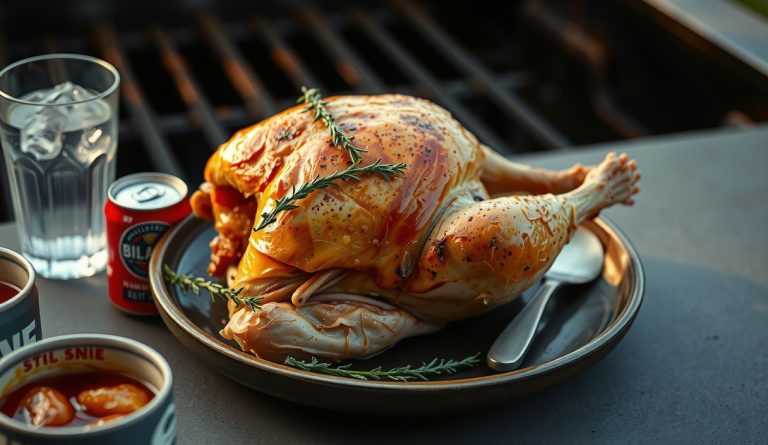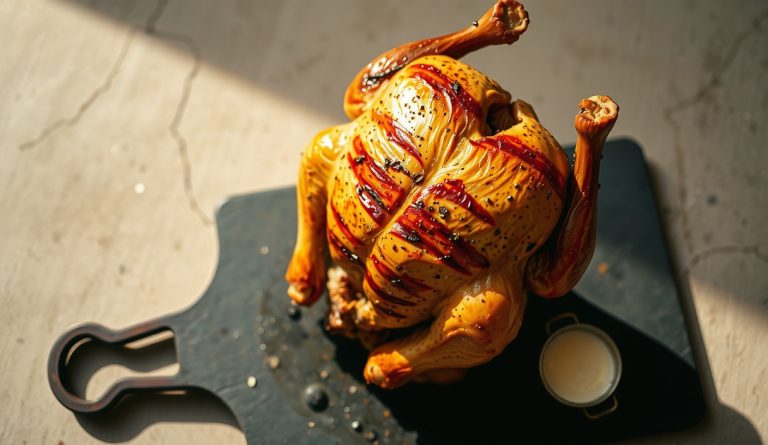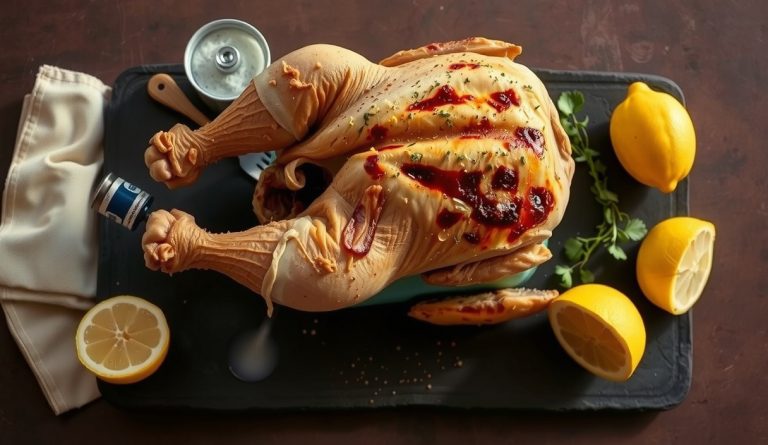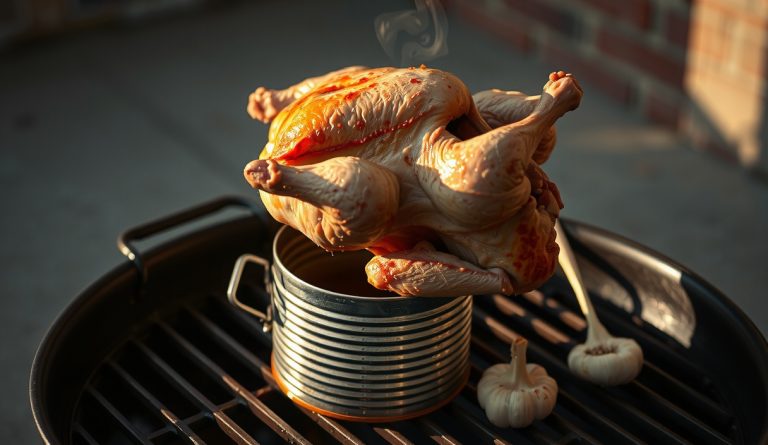
Beer-can chicken is one of the most naturally gluten-friendly cooks in the BBQ canon. The chicken, the smoke, the dry brine, the indirect heat method — none of it involves wheat. The single gluten vector hiding in plain sight is the beer itself, and swapping it out requires understanding why the liquid is in the can before you choose a replacement.
What needs to change for a gluten-free beer-can chicken?
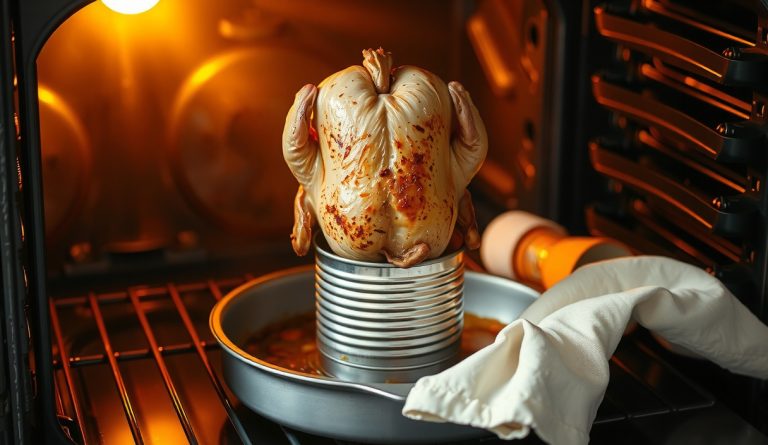
The beer: Standard lagers and ales are brewed from barley malt, which contains gluten. Even low-gluten beers processed with Clarex enzyme are not certified below 20 ppm in all brands. The three safest paths are: (1) a certified gluten-free beer brewed from sorghum, millet, or rice — these perform identically in the can because the vapor function is pure humidity, not flavor; (2) a half-filled can of low-sodium chicken stock, which the canonical recipe itself endorses and which actually delivers more savory cavity vapor; or (3) apple cider vinegar diluted 1:4 with water for a mild aromatic steam. Whichever you choose, fill to the 50% mark — the same calibration that sustains vapor across the full 75–90-minute cook without boiling over.
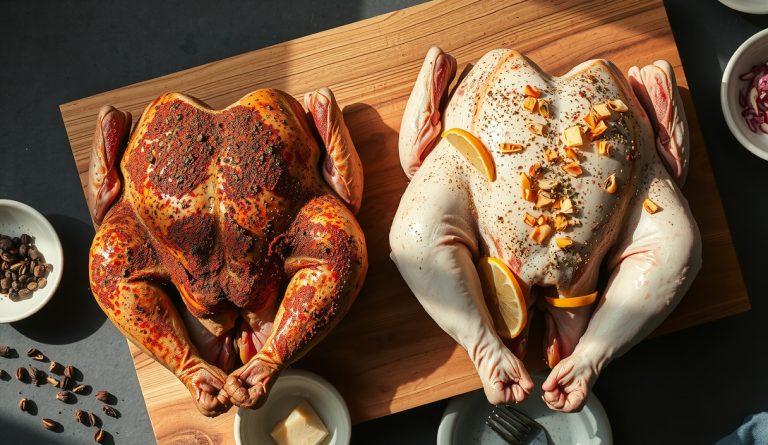
The spice rub: Home-blended rubs made from whole spices are inherently gluten-free. If you use any commercial rub, read the label carefully — some manufacturers use wheat flour or wheat-derived maltodextrin as an anti-caking agent. A rub built from paprika, garlic powder, onion powder, black pepper, mustard powder, and cayenne carries zero gluten risk when sourced from a dedicated facility or a verified GF-certified brand.
Worcestershire sauce: If your canonical rub paste or any finishing sauce calls for Worcestershire, the standard Lea & Perrins formula contains barley malt vinegar. Swap it for a certified GF Worcestershire — several major brands now offer one — or use coconut aminos, which bring comparable umami depth with zero gluten and a slightly sweeter profile. Coconut aminos also reduce sodium, so adjust the rub’s salt measurement upward by a pinch if you make this switch.
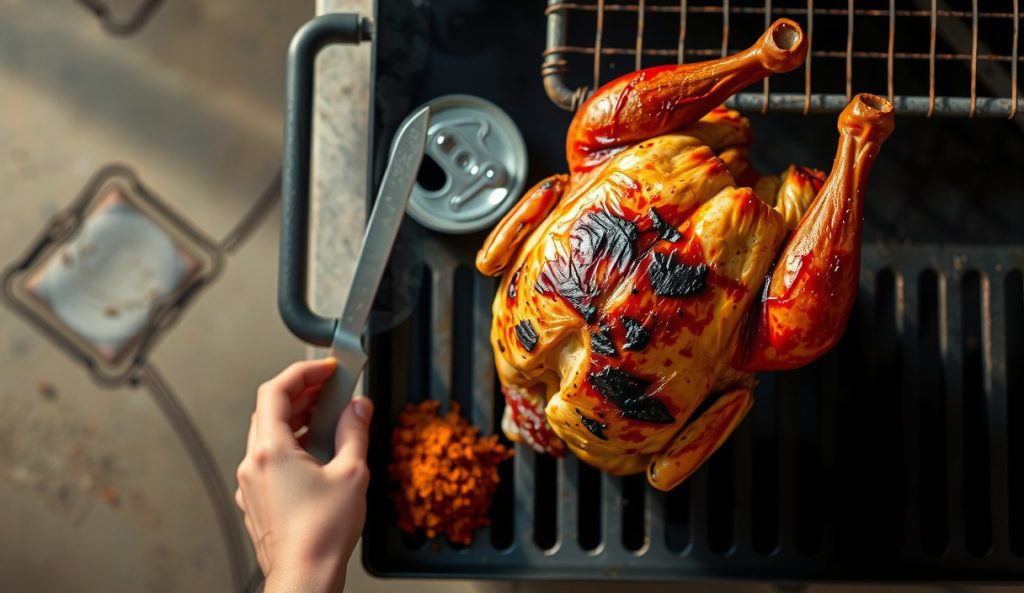
Cross-contamination: If your spice grinder has been used on wheat-containing blends, run a clean-grind of raw rice through it before grinding your rub ingredients. Use a dedicated basting brush or one that has been through the dishwasher — not a brush that touched a flour-dusted surface earlier in the day. The grill grates themselves are not a gluten risk once brought to cooking temperature.
What stays exactly the same in this gluten-free adaptation?
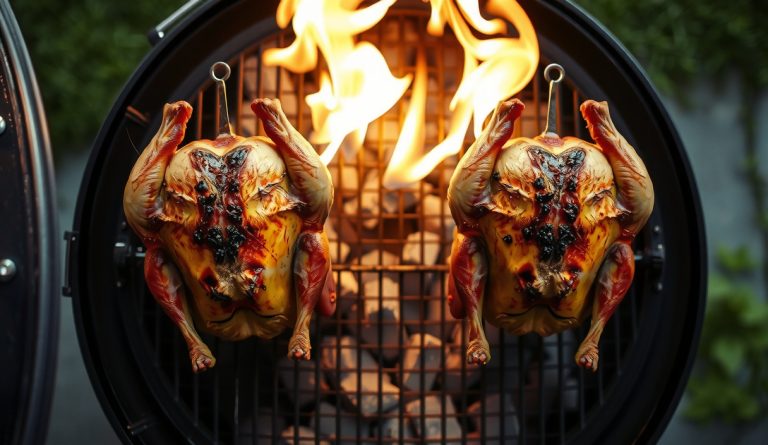
The entire architecture of this cook is unchanged: the 24-hour dry brine at 0.5 teaspoon kosher salt per pound, the vertical orientation on the can, the indirect 350°F two-zone setup, the pull temperature of 160°F at the breast with carryover to 165°F, and the rest period all remain identical. Gluten has no role in Maillard browning, bark formation, collagen hydrolysis, or any thermal event on the grill. The science that makes this bird great is fully intact regardless of what liquid goes in the can.
Who should cook this gluten-free version — and is it actually better?
This adaptation is essential for anyone with celiac disease or non-celiac gluten sensitivity, and it is equally practical for households that simply don’t keep beer on hand. Using low-sodium chicken stock in the can is arguably the superior choice regardless of dietary need — the savory vapor is more complementary to poultry flavor than hop-forward beer steam, and the canonical recipe says as much.
Follow the full timing, temperature, and technique at the original Beer-Can Chicken recipe — just make the liquid swap and audit your rub labels before you fire the grill.