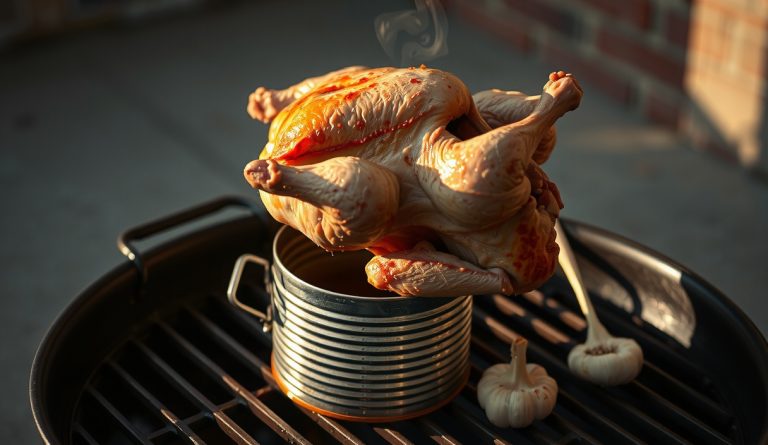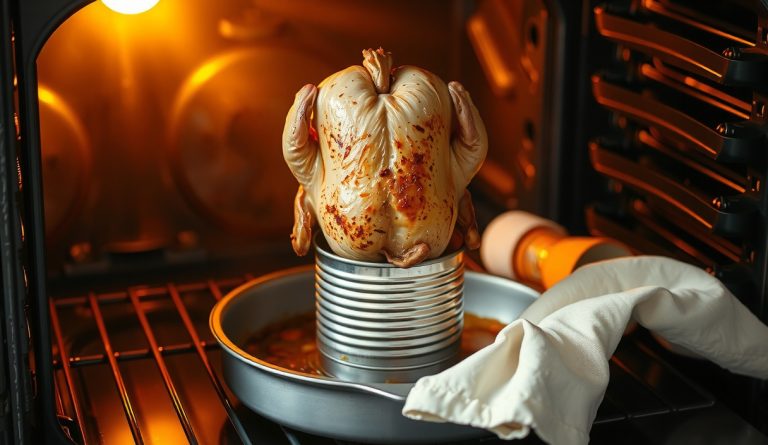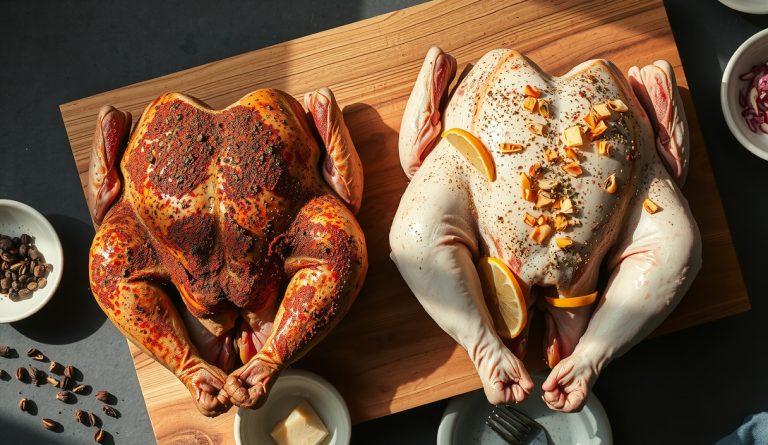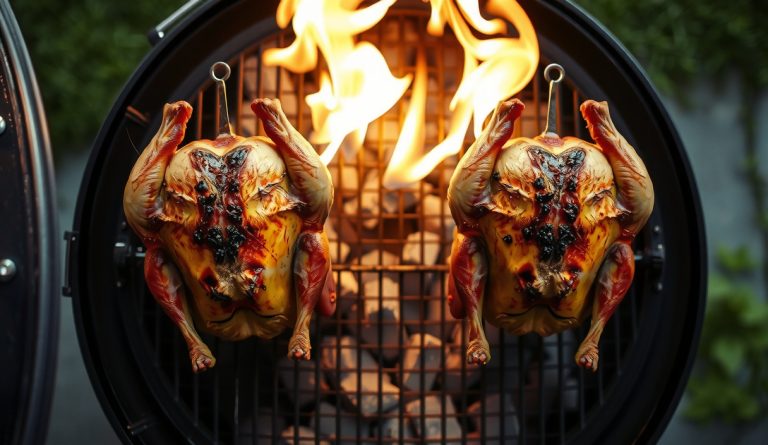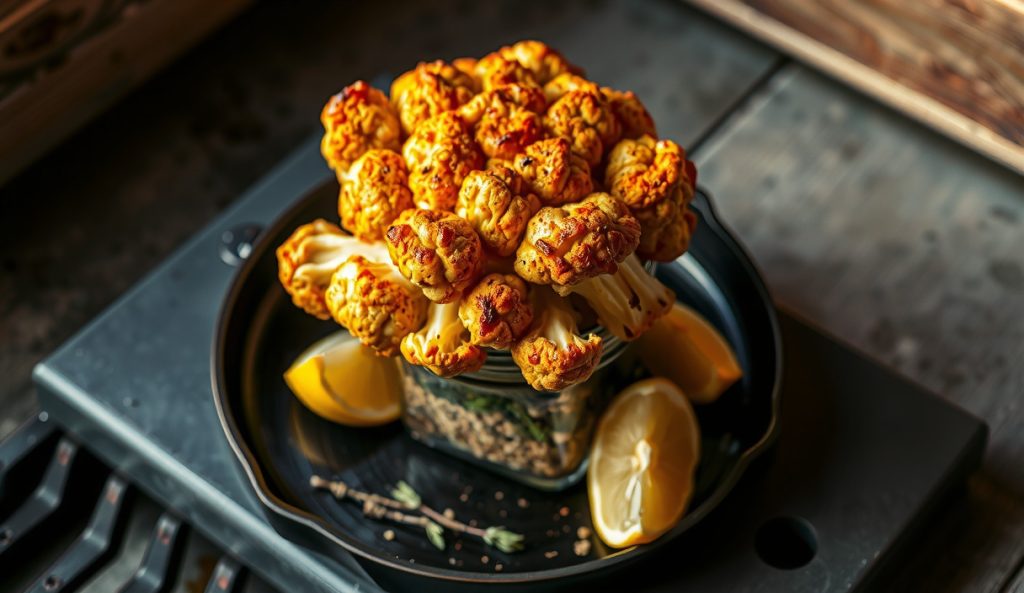
This is not a replacement for beer-can chicken. It is a companion dish that sits alongside it at the same table, sharing the same fire, the same rub, and the same vertical-on-a-can geometry. The goal is a vegetable centerpiece that gets genuinely interesting things done to it by smoke and heat — not a pale imitation, but something worth making in its own right. A whole head of cauliflower is the best analog this cook has to offer.
What changes when you swap chicken for cauliflower?
The vessel: A medium head of cauliflower — approximately 2 pounds, leaves trimmed, stem flattened slightly so it sits stable — mounts directly on a standard 12-ounce can filled halfway with apple cider, beer, or vegetable stock. The can positions the cauliflower’s dense core above the vapor source, and the florets fan outward into the convective heat exactly as a chicken’s thighs angle toward the lower heat zone. Brush the entire head generously with olive oil or clarified butter. Cauliflower has virtually no surface fat of its own, and Maillard browning on vegetable tissue requires a lipid medium to reach the 280°F+ surface temperatures where the amino-carbonyl cascade fires. Without fat, the cauliflower steams; with fat, it develops a genuine crust.
The rub: Apply the canonical rub — paprika, garlic powder, onion powder, black pepper, salt, brown sugar, cayenne — at the same ratios used on the chicken. Cauliflower’s porous floret surface holds dry rub exceptionally well once coated in oil. The glucosinolates in cauliflower — specifically sinigrin and glucoraphanin — break down under heat into sulfur-containing volatiles that interact with the Maillard products from the rub, producing a roasted, savory complexity that stands on its own terms. The result is not chicken-flavored, but it is deeply savory.
Smoke uptake: Cauliflower absorbs smoke more aggressively than chicken because its porous cellular structure and high surface-area-to-mass ratio give smoke compounds — primarily guaiacol and syringol — more condensation sites. Use the same wood the canonical Beer-Can Chicken recipe specifies, but start with a lighter hand: one chunk rather than two, then adjust after your first cook. The smoke volume that registers as moderate on a whole bird can read as heavy on a vegetable with no fat cap to buffer it.
Temperature and timing: Cook the cauliflower at the same 350°F indirect setup used for the chicken. A 2-pound head needs 60–75 minutes total, compared to 75–90 minutes for a whole bird. Begin checking at 55 minutes: the outer florets should be deeply browned and slightly crisp, and a skewer should pass through the core with light resistance — tender but not collapsed. An internal core temperature of 185–195°F produces the best texture. At that range, the outer layer has crisped via Maillard browning, the inner florets have softened through cell-wall pectin breakdown, and the core retains slight firmness. Pull the cauliflower when a skewer meets the resistance of a firm-cooked potato.
What stays exactly the same as the chicken setup?
The two-zone indirect fire, the vertical-on-a-can orientation, the vapor-generating half-full can, and the wood smoke all carry over from the chicken recipe without modification. The grill configuration built for the chicken accommodates the cauliflower simultaneously — run both at once and the result is a complete table served from one fire.
When is the cauliflower companion the better call?
The beer-can cauliflower is the right dish when the table includes vegetarians who deserve a genuine centerpiece — something cooked with intention on the same grill, not a grocery-store side heated as an afterthought. It is also the right call for any cook who wants a vegetable preparation that tastes built for the fire rather than merely surviving it.
The fire management, can setup, and rub ratios are all drawn from the original Beer-Can Chicken recipe — run both on the same grill at the same time.