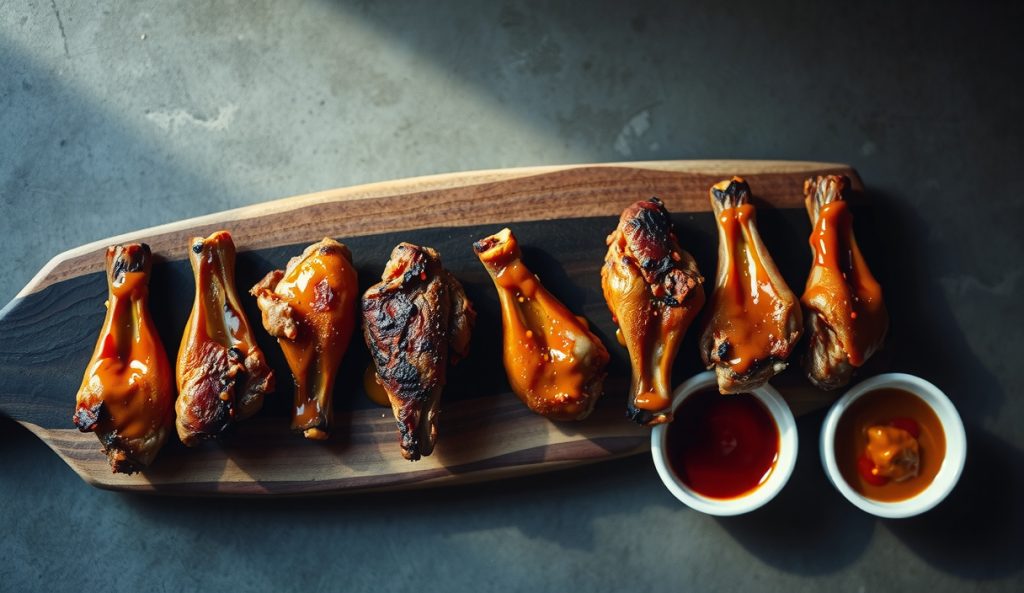
The tapioca-cornstarch crust on these gluten-free smoked wings is engineered for structural integrity, but that integrity is conditional. The chemistry of whatever sauce you pour on top determines whether the crust survives contact or collapses within two minutes. Understanding the fat-phase versus aqueous-phase distinction is the difference between a wing that stays shatter-crisp at the table and one that turns soggy before it leaves the kitchen.
What changes when you add sauce?
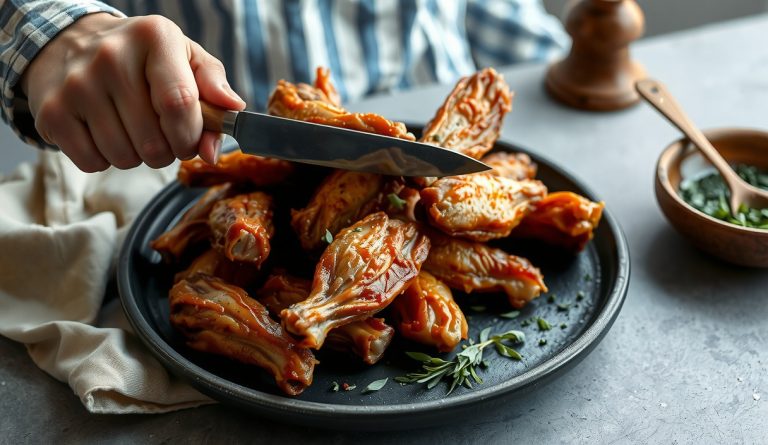
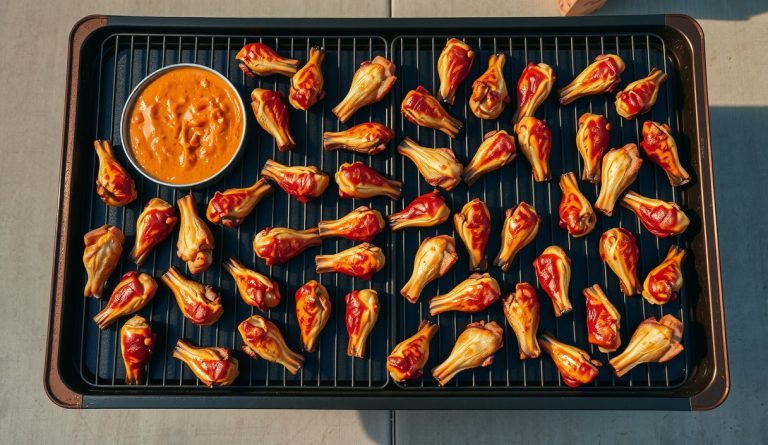
Buffalo sauce — the classic butter-emulsified hot sauce — is uniquely compatible with this crust. The continuous fat phase of an emulsified sauce coats the exterior starch lattice rather than penetrating it. Fat molecules are too large and hydrophobic to displace the moisture that has already been driven out of the amylopectin network during the high-heat finish, so tossing immediately after the finish stage is safe and will not meaningfully compromise crispness. Toss in a bowl, plate quickly, and serve within 8–10 minutes for best results.
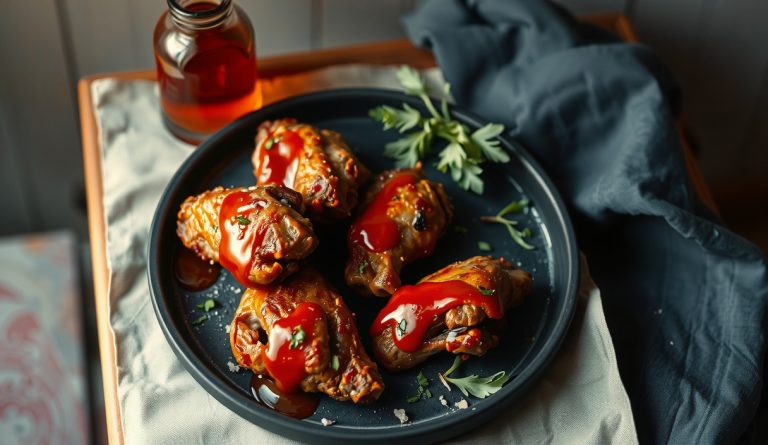
Water-based sauces — teriyaki, honey-soy, most fruit-glazed BBQ sauces — follow a different rule. Their aqueous phase rehydrates the amylopectin layer directly on contact. Amylopectin, the branched starch component responsible for the crust’s elastic snap, absorbs free water rapidly and swells, collapsing the starch lattice within 2–3 minutes of coating. For these sauces, apply after plating rather than tossing: spoon or brush onto individual wings at the moment of service, or serve the sauce as a side dip so guests control their own timing.
What stays the same no matter which sauce you choose?
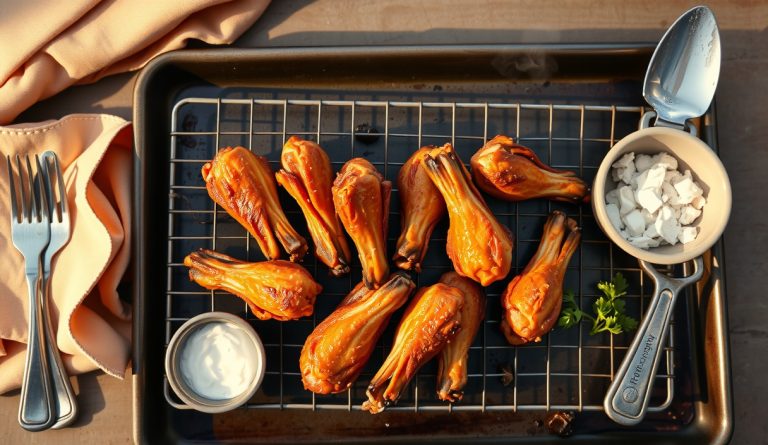
The two-stage cook — low smoke followed by a high-heat finish — is unchanged by sauce selection. The dredge ratio, the overnight dry-brine protocol, and the finish temperature target of 200–205°F internal all remain exactly as written in the canonical recipe. Sauce selection is purely a post-cook decision; nothing in the cook itself needs to be adjusted.
When is this sauce compatibility guide the right tool to reach for?
Use this guidance any time you are serving wings buffet-style, at a party where sauce choices vary, or when you want to offer both a sauced and an unsauced option from the same batch. Knowing the fat-phase rule also helps when improvising with an unfamiliar sauce — read the ingredient list and identify whether the first liquid component is oil or water to predict how the gluten-free crust will respond before you commit to a toss.
Use the full cook method, dredge measurements, and timing from the original Gluten-Free Smoked Wings — Shatter-Crisp Coating.