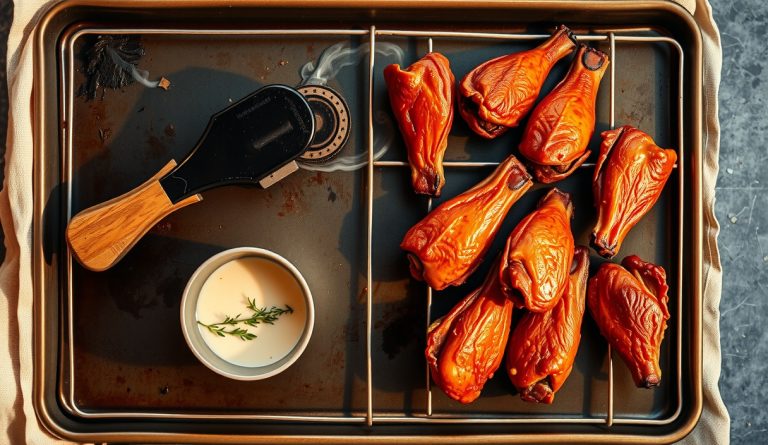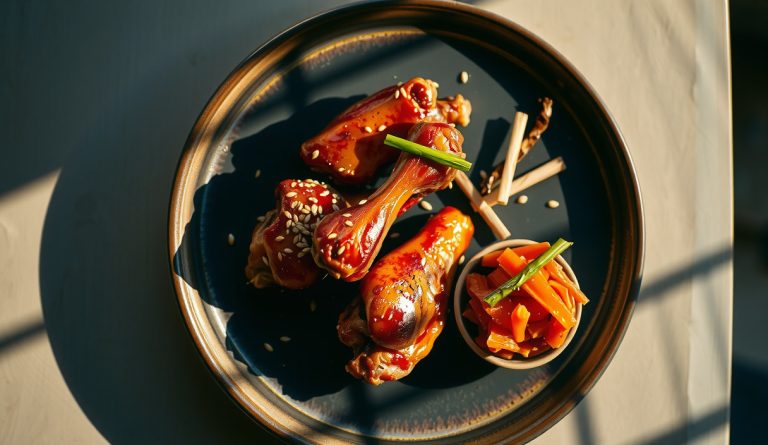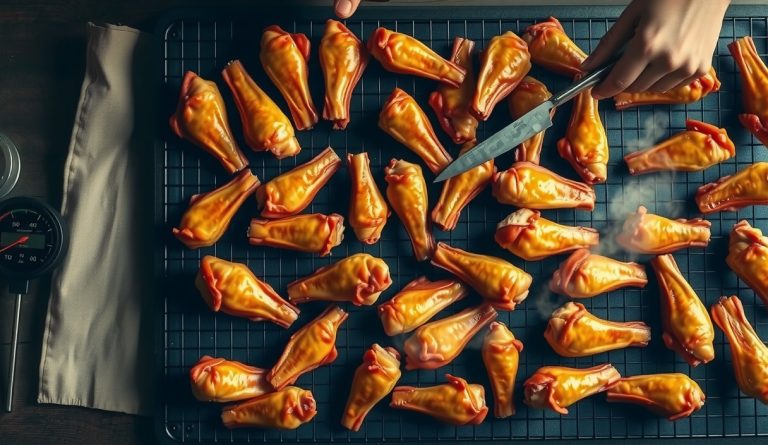
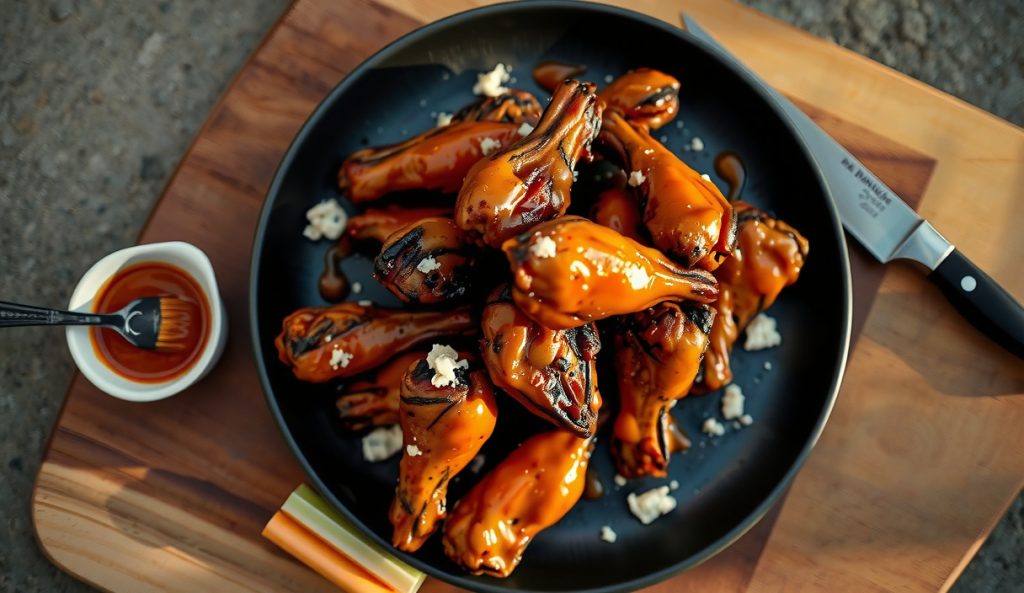
Buffalo sauce is one of the few classic preparations where simplicity is the entire point. Two ingredients — butter and cayenne-based Louisiana hot sauce — emulsified together off heat produce a coating that is simultaneously rich, sharp, and glossy. Applied to a wing with genuinely crispy skin, the result is the version every sports-bar iteration is attempting and rarely achieving. The smoke phase adds a low, background complexity that the original Anchor Bar version never had.
What changes with the Buffalo variation?
Melt 4 tablespoons of unsalted butter over low heat, then pull the pan off the burner entirely before whisking in 1/3 cup of Frank’s RedHot or any cayenne-forward Louisiana-style hot sauce. The critical step is whisking off heat: when the sauce is combined at temperatures above approximately 160°F, the butter fat fraction begins to break and pool rather than forming a stable emulsion.
Off heat, the fat droplets remain suspended in the acetic acid and water matrix of the hot sauce, producing a cohesive, clingy coating. That emulsified fat layer also buffers the acetic acid — the primary volatile compound in vinegar-based hot sauce — softening its sharpness on the palate while helping the sauce adhere to the skin rather than running off.
Toss the wings directly off the grate, while the skin is at peak temperature and rigidity. Do not substitute margarine or any spread with elevated water content — margarine’s water fraction converts to steam on contact with the hot wing surface and softens the skin almost immediately, undoing the dry-brine and sear work. Eat within five minutes of tossing.
What stays the same as the base recipe?
Every element of the canonical method — the overnight baking-powder brine, the 250°F smoke phase, and the finishing sear over direct heat above 425°F — is unchanged. The crispy skin is not incidental to Buffalo wings; it is the entire structural rationale for building the canonical recipe first and adding sauce second.
When is the Buffalo variation the better choice?
This is the correct variation for any occasion where Buffalo wings are the stated expectation — game-day gatherings, bar-food-style spreads, or any table that includes blue cheese dressing and celery. The Buffalo variation is also the lowest-effort option: no additional prep, no specialty ingredients, and a sauce that can be made in under two minutes.
The smoke layer beneath the Buffalo coating distinguishes these smoked chicken wings from anything fried or oven-baked without requiring any explanation to the people eating them.
Use the full brine, smoke, and sear method from the original Smoked Chicken Wings With Crackling-Crisp Skin.