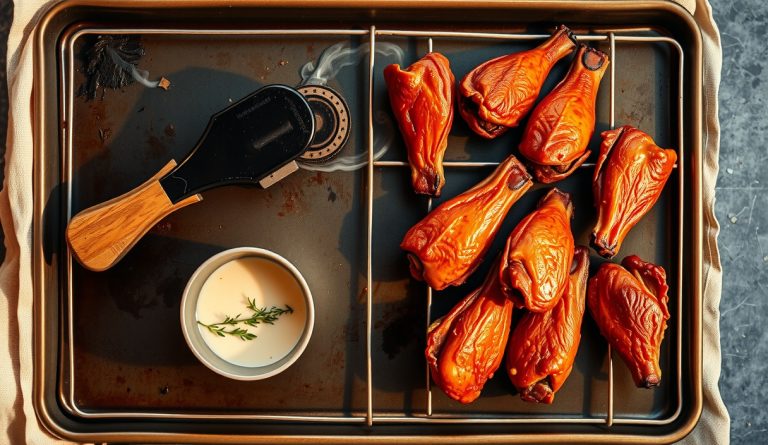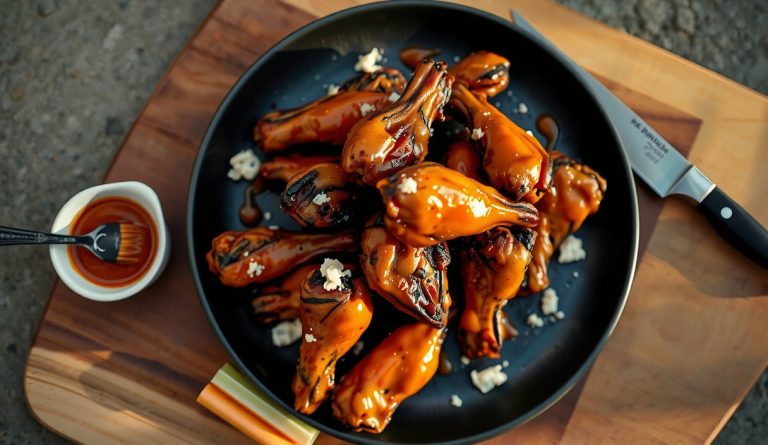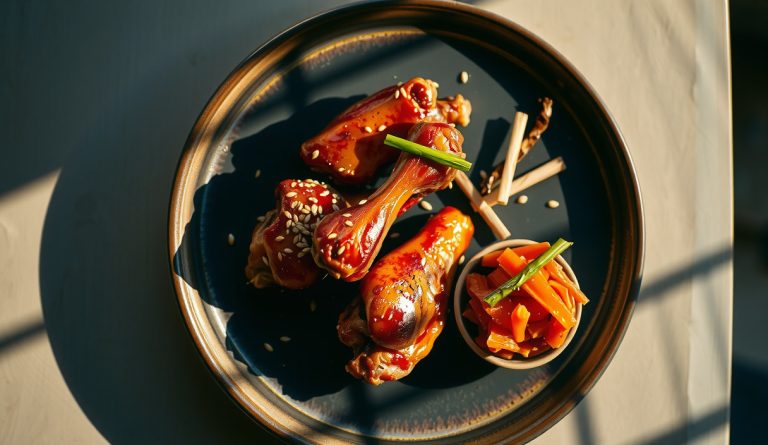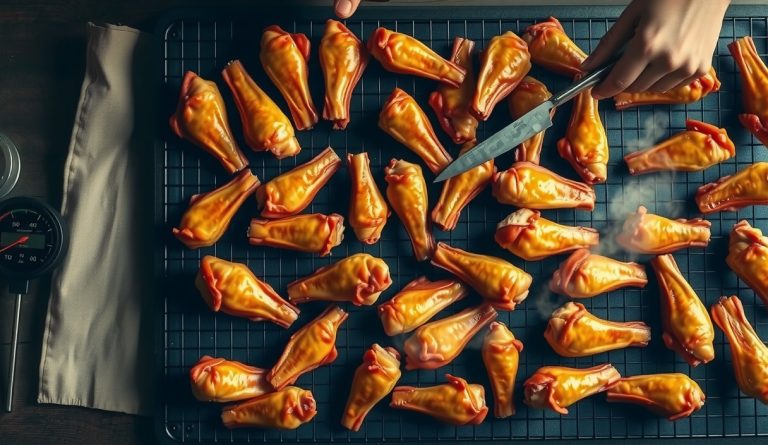
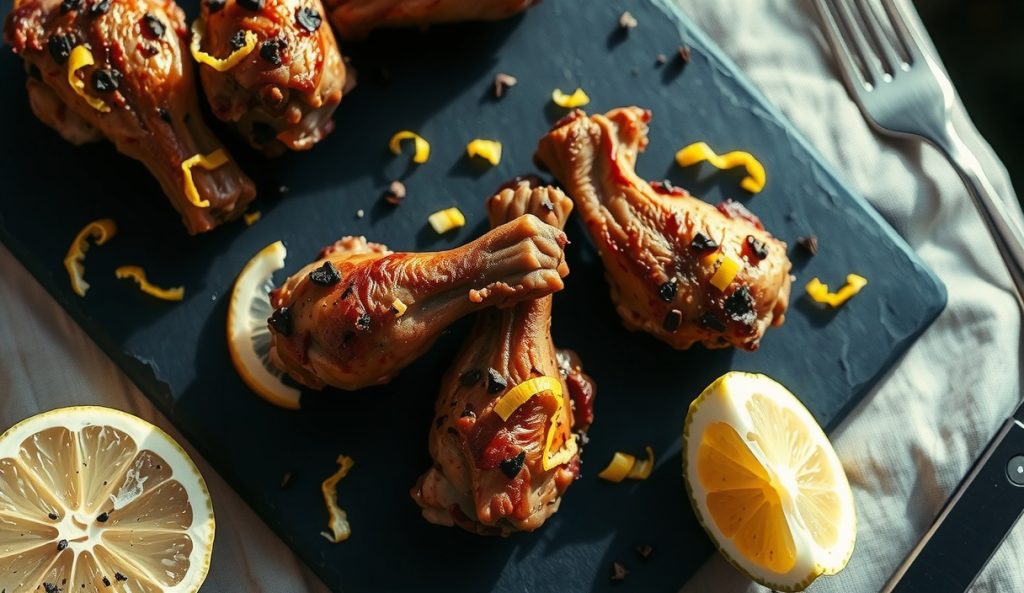
The lemon-pepper dry toss is the variation that removes every variable except the wing itself. There is no sauce to mask the skin texture, no glaze to add color, and no fat to buffer the palate. What you get is the direct expression of a properly dry-brined, smoked, and seared wing — and the wing holds up. This is the variation to cook when you want to understand what the canonical method actually produces, or when you are serving guests who want flavor clarity over complexity.
What changes with the lemon-pepper dry toss?
There is no sauce preparation in the lemon-pepper dry toss. The only finishing step is a dry toss: pull the wings off the sear and immediately transfer to a mixing bowl. Add 2 teaspoons of freshly cracked black pepper and zest both lemons directly over the bowl using a Microplane.
The directional zesting — into the bowl rather than onto a prep board in advance — is mechanically important. Lemon zest contains high concentrations of limonene and linalool in its volatile oil fraction. Both terpenes are low-boiling-point compounds that begin to off-gas at ambient temperature; pre-zesting onto a board loses a measurable portion of that aromatic load before the wings ever receive it. Zesting directly over a bowl of hot wings releases those terpenes into a hot, humid microenvironment immediately above the meat surface, which drives rapid olfactory perception before the aromatics disperse.
The aromatic bloom from fresh lemon zest is present at full intensity for roughly 60 seconds, then drops off sharply. The lemon-pepper dry toss is a dish to eat as it is tossed, not to hold on a platter.
Use only freshly cracked black pepper, not pre-ground. Pre-ground pepper has already lost the majority of its volatile piperine aromatics to oxidation. Freshly cracked pepper releases those compounds on contact with the warm surface of the wing, delivering a sharper, more complete aromatic hit.
What stays the same — and why it matters more here?
The overnight dry brine, the smoke phase, and the high-heat sear are all unchanged from the canonical method, and those steps matter more in the lemon-pepper dry toss than in any other variation. Because there is no sauce, fat, or glaze to carry flavor, the skin itself — its texture, seasoning depth, and rendered fat content — is the entire eating experience. Skipping or shortening any stage of the canonical method will be more apparent in this variation than in any of the sauced ones.
When is the lemon-pepper dry toss the better choice?
Choose the lemon-pepper dry toss when your audience includes people who are skeptical of heavy sauces, when you are pairing wings with a wine or sake that would be overwhelmed by Buffalo or gochujang, or when you simply want to demonstrate what the dry-brine-and-sear method actually achieves. It is also the fastest variation to execute — the finishing step takes under 30 seconds.
Use the full brine, smoke, and sear method from the original Smoked Chicken Wings With Crackling-Crisp Skin.