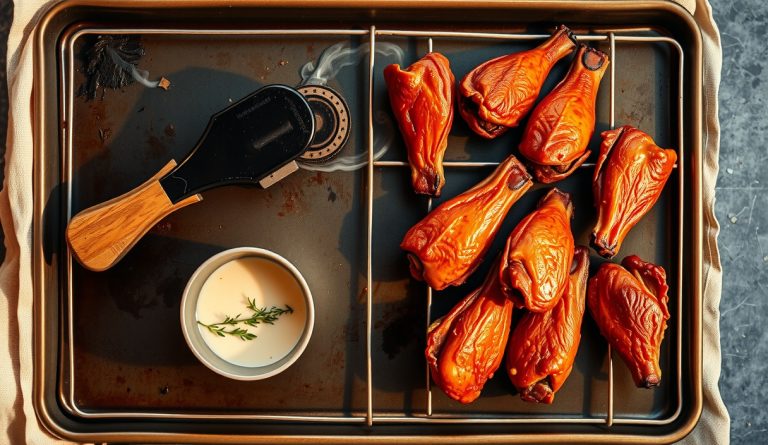
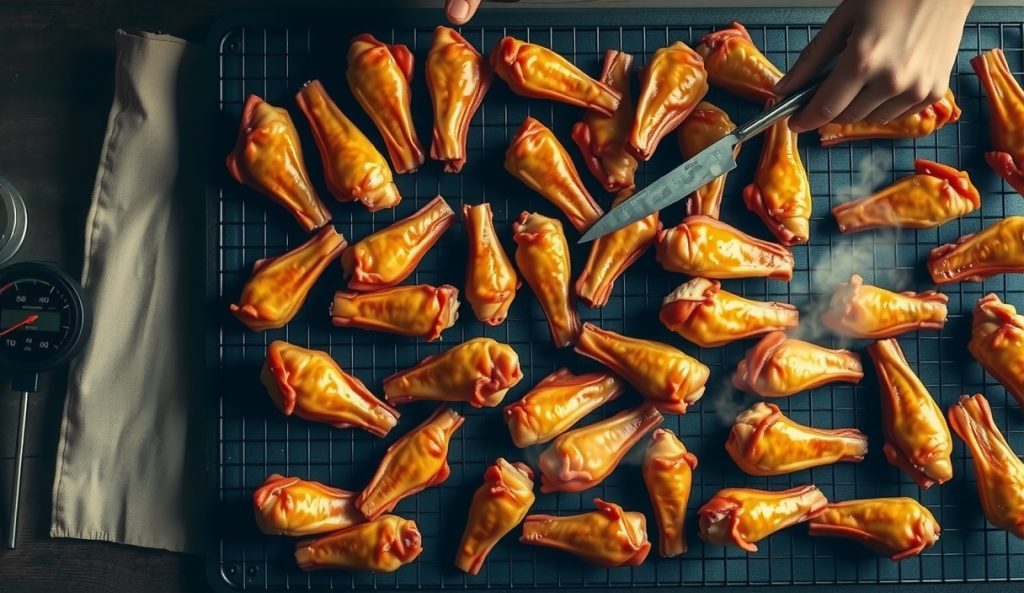
The canonical smoked chicken wings recipe is engineered around a single grate layer with adequate spacing — and that spacing is functional, not aesthetic. Skin drying during the smoke phase depends on continuous convective airflow moving across each wing surface. When wings are crowded, convective drying stalls, moisture accumulates at the skin boundary, and the fat rendering that drives crispness slows. Scaling this recipe correctly means scaling the physical setup, not just the ingredient quantities.
What changes when you scale up smoked chicken wings?
The baking-powder-to-salt ratio scales linearly by wing weight and requires no adjustment for batch size. For every additional pound of wings beyond the base recipe, add 1 teaspoon of kosher salt and 1/4 teaspoon of baking powder to the dry brine. This linear relationship holds because baking powder functions by surface coverage: the alkaline sodium bicarbonate and acid salt components react with skin moisture to raise surface pH, and that reaction is a function of surface area rather than total mass. The same concentration applied uniformly produces identical skin chemistry regardless of total batch weight.
For batches above 4 pounds, introduce a second grate level in the smoker and rotate the top and bottom levels at the 30-minute mark of the smoke phase. Wings on the upper grate receive different smoke density and radiant heat distribution than those on the lower grate; rotating at the midpoint equalizes cumulative smoke exposure and surface color across the entire batch. Do not stack wings or overlap them on any grate — a single uncrowded layer per rack is the minimum viable spacing.
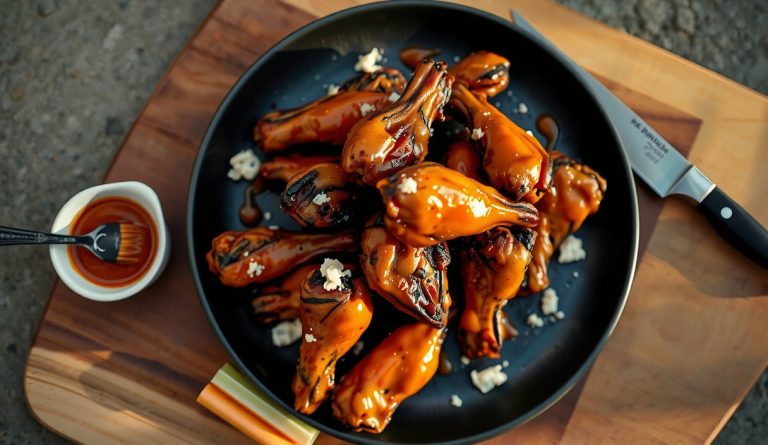
The sear phase requires more active management at scale. Work the wings in groups small enough that the grill surface temperature does not drop below 425°F. Adding too many cold wings at once drops grate temperature significantly, extending the time needed to achieve skin crispness and increasing the risk of sticking. Rest the grill surface for 90 seconds between groups if needed to allow full temperature recovery before the next batch contacts the grate.
What stays the same no matter how many wings you cook?
The smoke phase temperature of 250°F, the total smoke time, and the sear temperature target above 425°F are all unchanged regardless of batch size. The per-wing process is identical — only the logistics of grate management and sear sequencing expand with volume. Every wing still goes through the same full brine, smoke, and sear sequence that produces crackling-crisp skin.
When is the scaled-up approach the right choice?
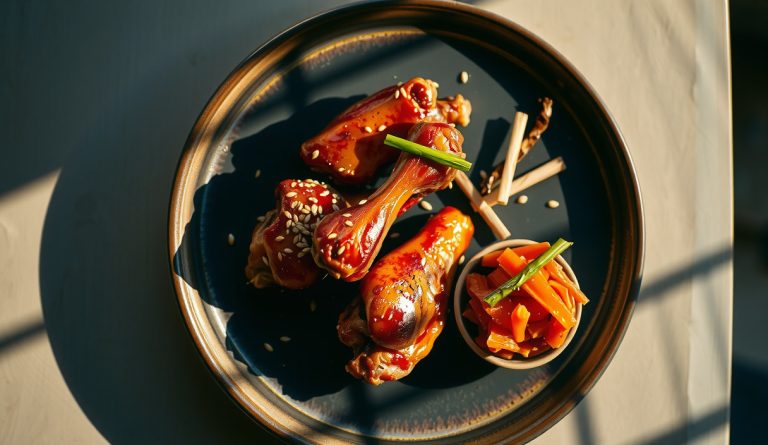
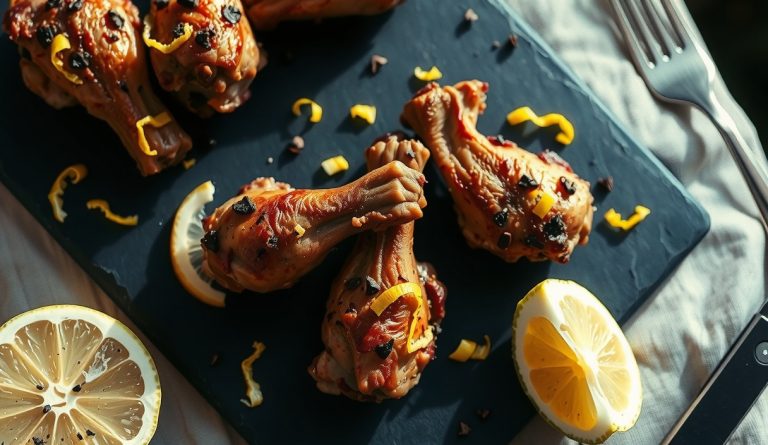
This variation is the right approach for gatherings of more than six people, tailgate setups, or any event where smoked chicken wings are the primary protein rather than a side offering. It is also the practical choice when you want to prepare multiple sauce variations simultaneously — a scaled batch allows you to split the finished wings across Buffalo, gochujang, and lemon-pepper finishes from a single cook, delivering a spread with variety without running separate sessions.
Use the full brine, smoke, and sear method from the original Smoked Chicken Wings With Crackling-Crisp Skin.