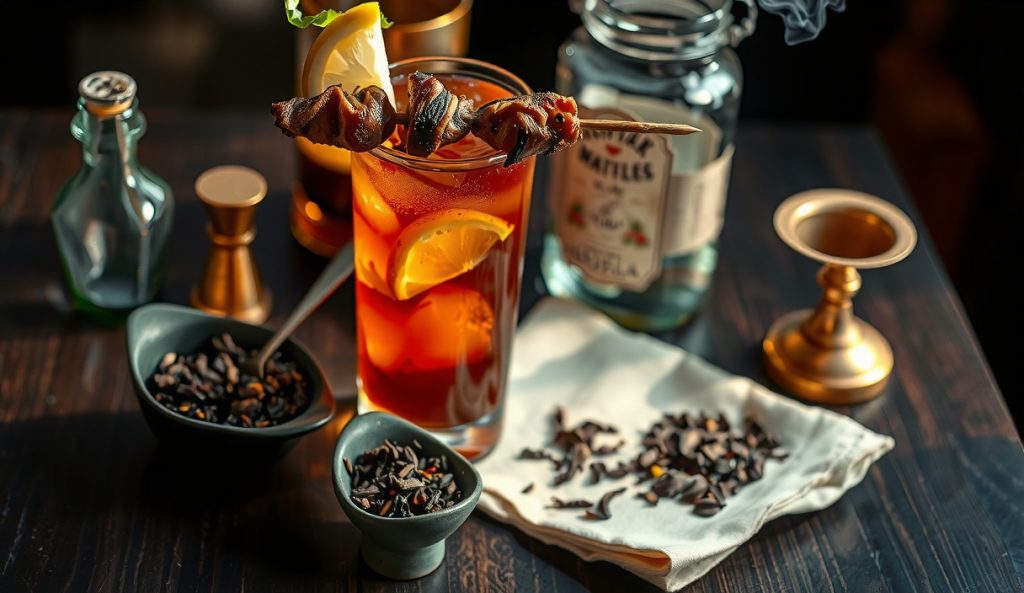
Vodka’s role in a Bloody Mary is primarily structural: ethanol raises perceived viscosity, carries fat-soluble aroma compounds, and bridges the tomato’s water phase with the oil-soluble spice components. Removing vodka without a functional replacement produces a flat, thin drink that lacks both body and aromatic complexity. This non-alcoholic build substitutes cold-brewed lapsang souchong — a tea smoke-dried over pine wood during processing — which addresses mouthfeel and the smoke register simultaneously. The result is a complete, composed drink built on the same structural logic as the canonical alcoholic version, not a stripped-down alternative.
What changes in the non-alcoholic build?
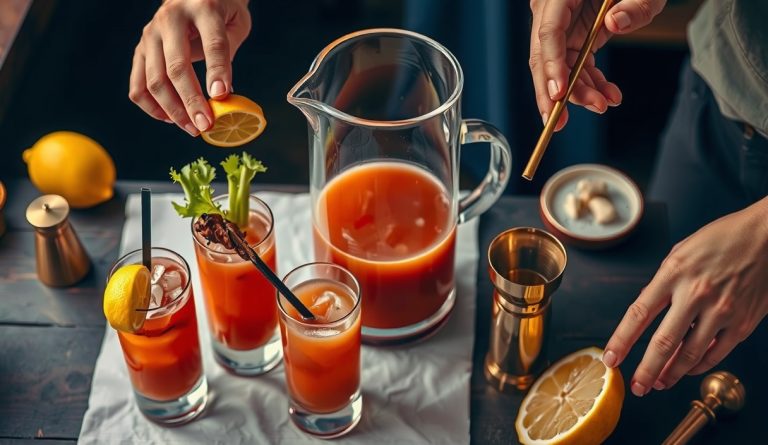
Replace the 1.5 ounces of vodka with an equal volume of cold-brewed, filtered lapsang souchong or a comparable smoked tea. To cold-brew, steep 10 grams of loose-leaf lapsang souchong in 300 milliliters of cold filtered water for 10 to 12 hours in the refrigerator, then strain through a fine-mesh filter. The extended cold extraction draws polyphenols and tannins without the astringent bitterness that hot extraction introduces, yielding a clean, moderately tannic liquid that provides the mouthfeel structure vodka would otherwise supply.
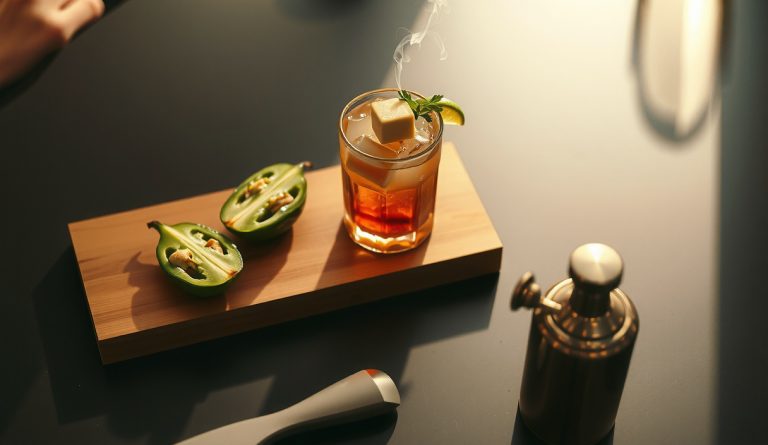
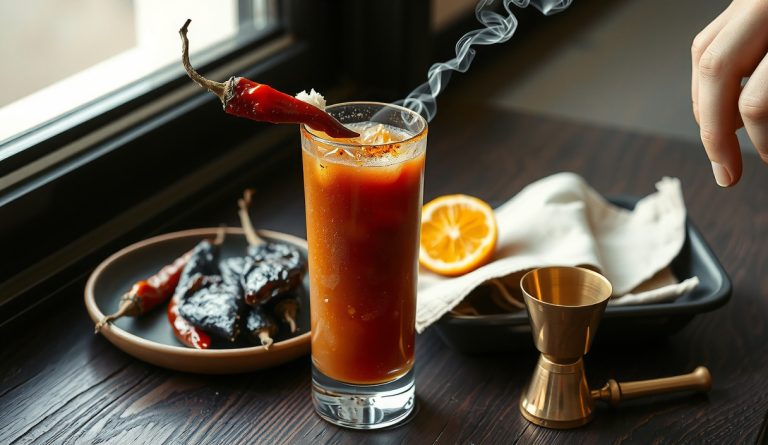
Lapsang souchong carries guaiacol and related smoke phenolics absorbed during the pine-smoke drying process — the same compound class produced during wood combustion and already present in the cold-smoked tomato juice base. Rather than introducing a foreign flavor, the tea deepens and mirrors the smoke layer already built into the drink, reinforcing a single coherent aromatic register rather than adding a competing one.
If lapsang souchong is unavailable, a Gunpowder green tea cold-brew delivers tannin structure without smoke — a functional but less complete substitution. Avoid black teas processed without smoke; they contribute tannin but shift the drink’s nose toward a conventional iced tea register, which undermines the smoked-tomato foundation.
What stays the same in this build?
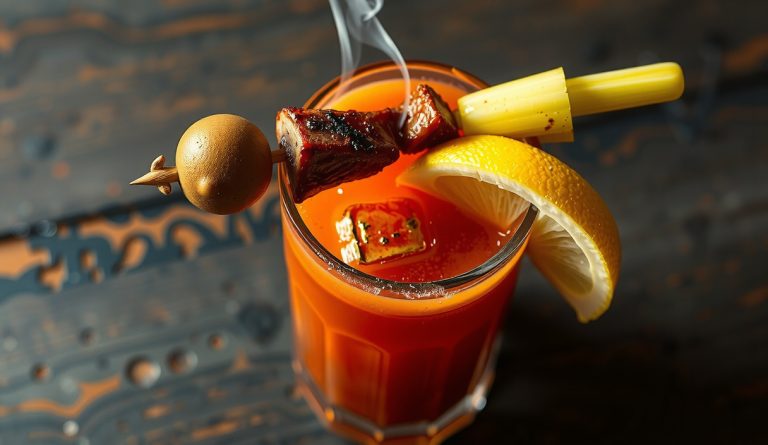
Every other component of the Smoked Bloody Mary with Brisket Burnt-End Skewer remains identical to the canonical alcoholic recipe. Cold-smoked tomato juice, horseradish, Worcestershire, celery salt, black pepper, lemon juice, Tabasco, the build method over ice, the rimming salt, and the brisket burnt-end skewer are all unchanged. Glass choice and serving temperature are also unchanged, so the non-alcoholic and alcoholic versions are visually indistinguishable at the garnish station.
When is the non-alcoholic build the better choice?
Use this build for brunch service where guests include non-drinkers, designated drivers, or those avoiding alcohol for health or personal reasons, and where serving a noticeably inferior non-alcoholic option would read as an afterthought. The lapsang souchong build holds up on its own terms alongside the alcoholic canonical version — both can be served from the same garnish station without distinction in presentation or perceived effort.
Use the full method, smoking technique, and garnish instructions from the original Smoked Bloody Mary with Brisket Burnt-End Skewer.