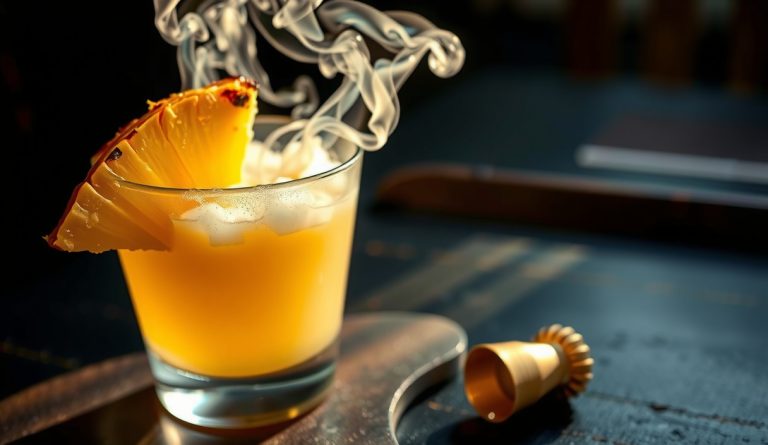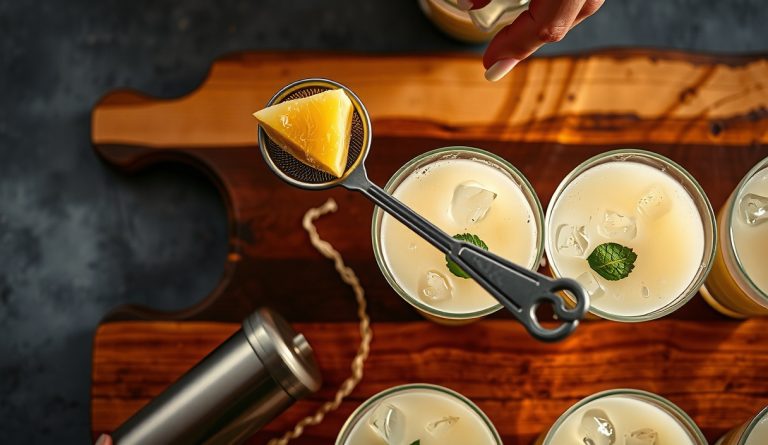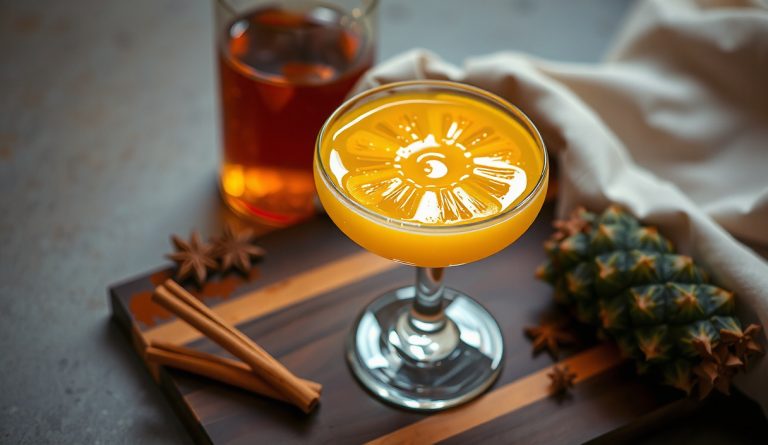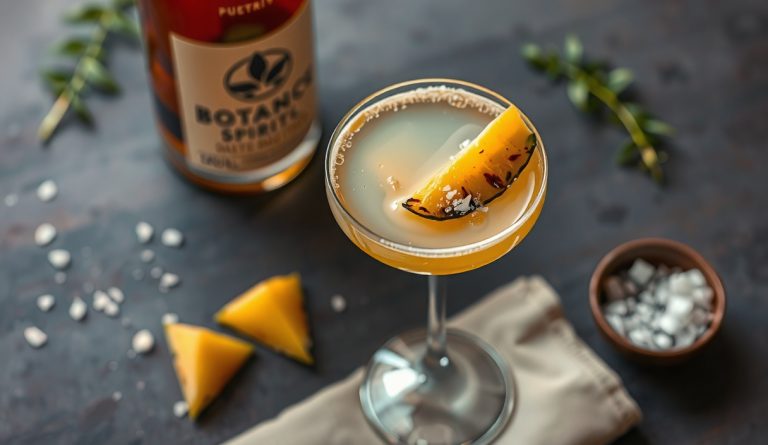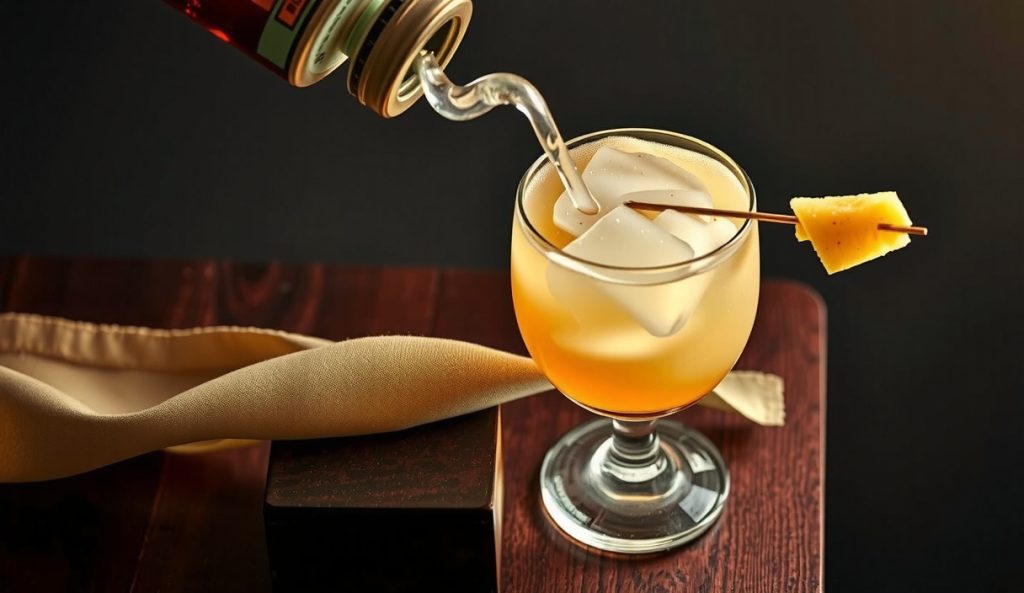
The canonical Smoked Pineapple Daiquiri produces smoke from one source: cold-smoked pineapple juice. This mezcal blend variant introduces a second, structurally distinct smoke origin by replacing 0.5 oz of white rum with 0.5 oz of highland Oaxacan mezcal — espadin or tobala. The result is a layered smoke profile where agave roast phenols and wood-derived guaiacol occupy different aromatic registers in the same glass, creating depth that reads as complexity rather than intensity.
What changes in the mezcal blend variant?
Remove 0.5 oz of white rum from the canonical build and replace it with 0.5 oz of a highland Oaxacan mezcal. Espadin provides a clean, approachable agave smoke; tobala adds a wilder, more mineral character — choose based on how prominent you want the mezcal thread to read in the finished drink.
Replace the simple syrup entirely with 2 dashes of orange bitters. This substitution manages residual sweetness while introducing oxidized orange terpenes — specifically limonene and linalool — that chemically bridge the agave aromatic family and the tropical pineapple esters. The bitters function as a linking agent rather than a flavoring accent, and the swap produces a noticeably drier finish than the canonical build.
Agave-derived smoke phenols — primarily syringol and cresol compounds produced during the underground pit-roasting of agave piñas — differ meaningfully from the guaiacol-dominant smoke present in wood-smoked pineapple juice. Together, the two smoke sources produce a broader smoke phenol spectrum than either origin alone could deliver. The pineapple’s natural acidity keeps the finish clean, and the lime sharpens the aromatic boundary between the two smoke layers.
What stays the same from the canonical recipe?
The total spirit volume, shaking method, lime quantity, and smoked pineapple juice preparation all remain unchanged from the canonical Smoked Pineapple Daiquiri. The mezcal blend variant is still a daiquiri at its structural core — sour, spirit, sweet — and the coupe or rocks presentation is unaltered. Only the sweetener format and the rum split change.
When is the mezcal blend the better choice?
This variant is the right call when serving mezcal drinkers who might otherwise find a straight daiquiri format too simple, or when the occasion calls for a cocktail that bridges a BBQ menu and a craft cocktail program. The agave-tropical aromatic axis is distinctive enough to anchor a menu position, and the drier finish from the bitters-for-syrup swap makes the mezcal blend more food-pairing friendly than the canonical build.
Use the full method, equipment, and juice preparation from the original Smoked Pineapple Daiquiri.