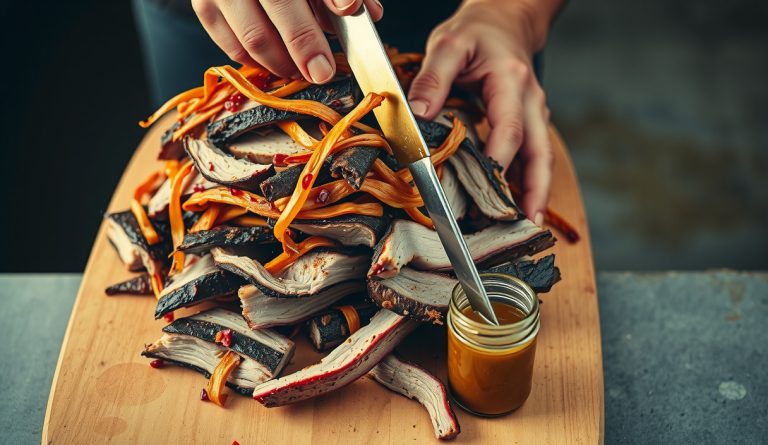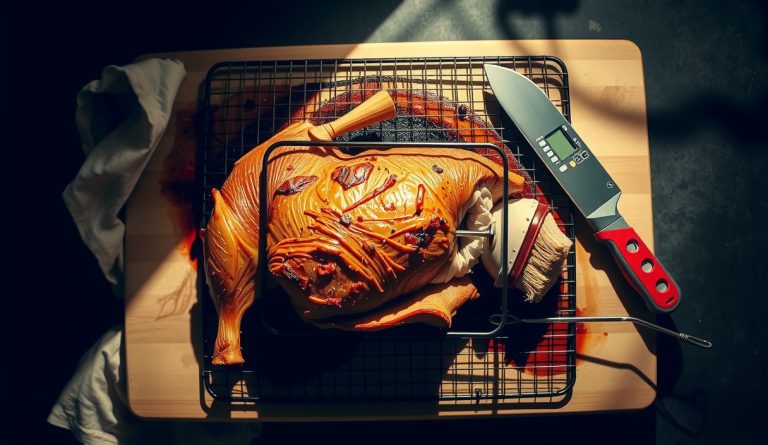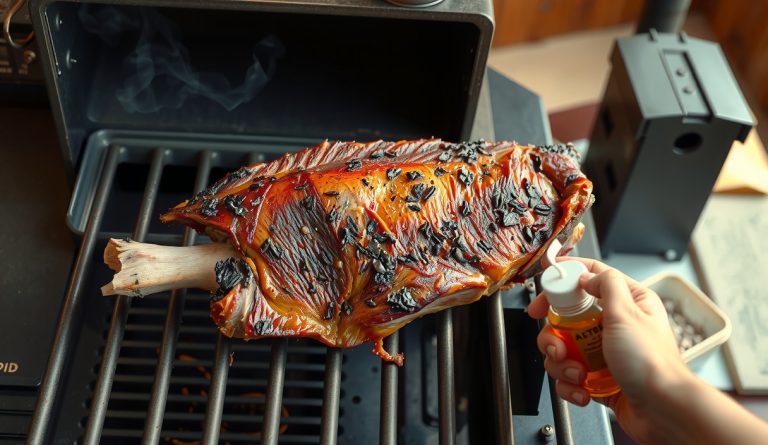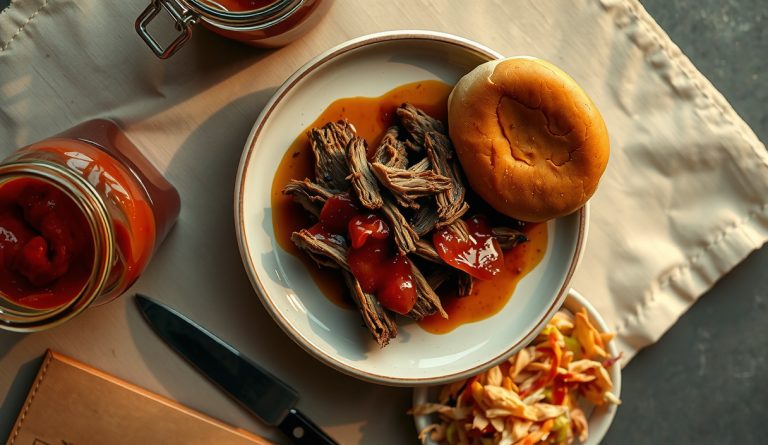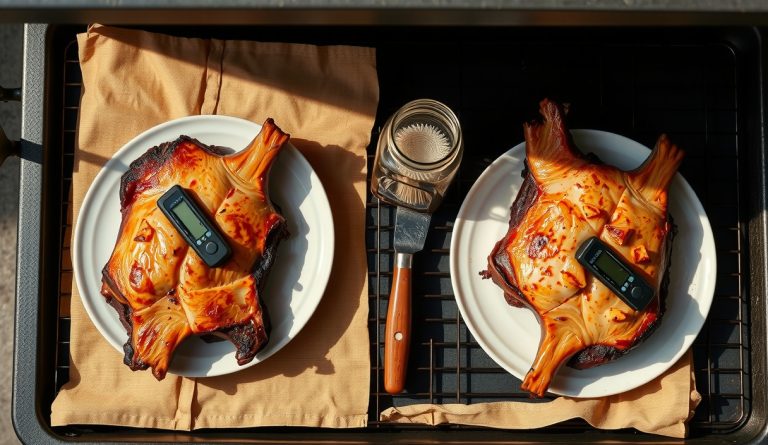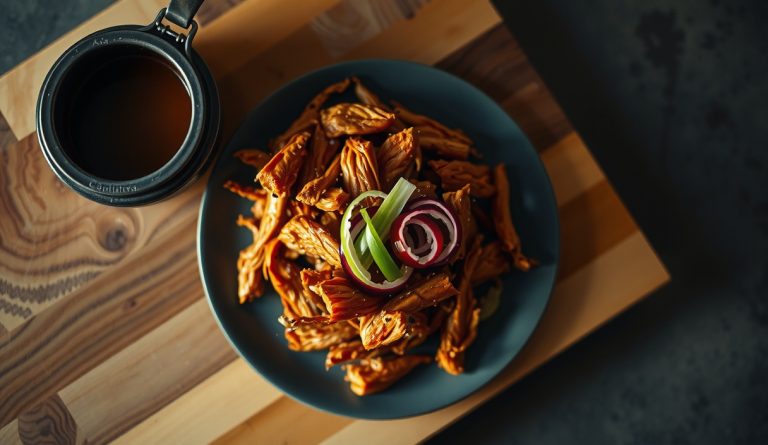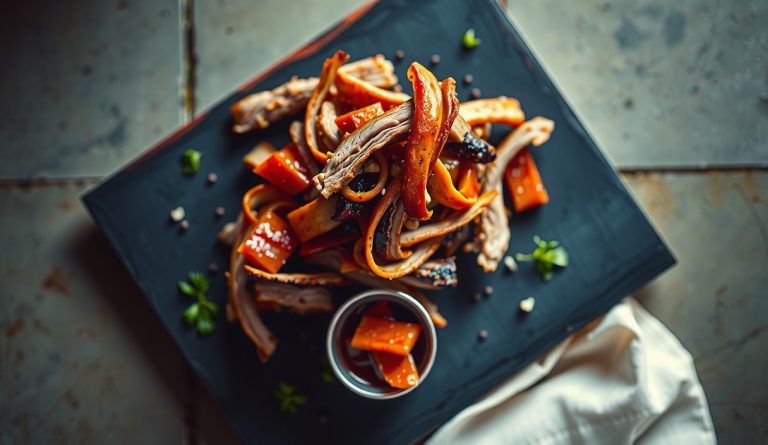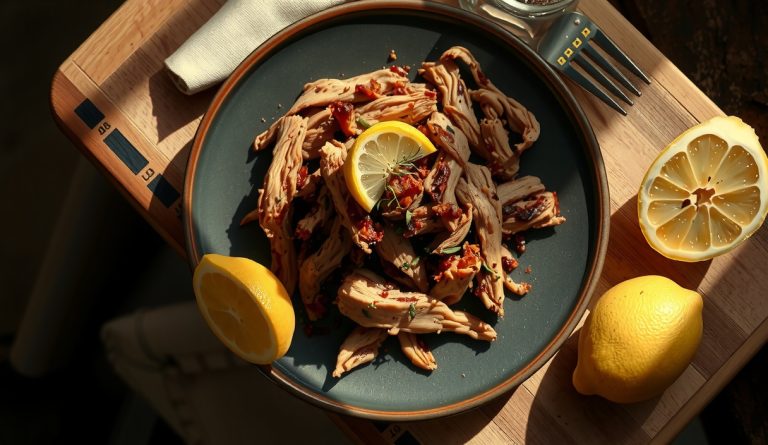
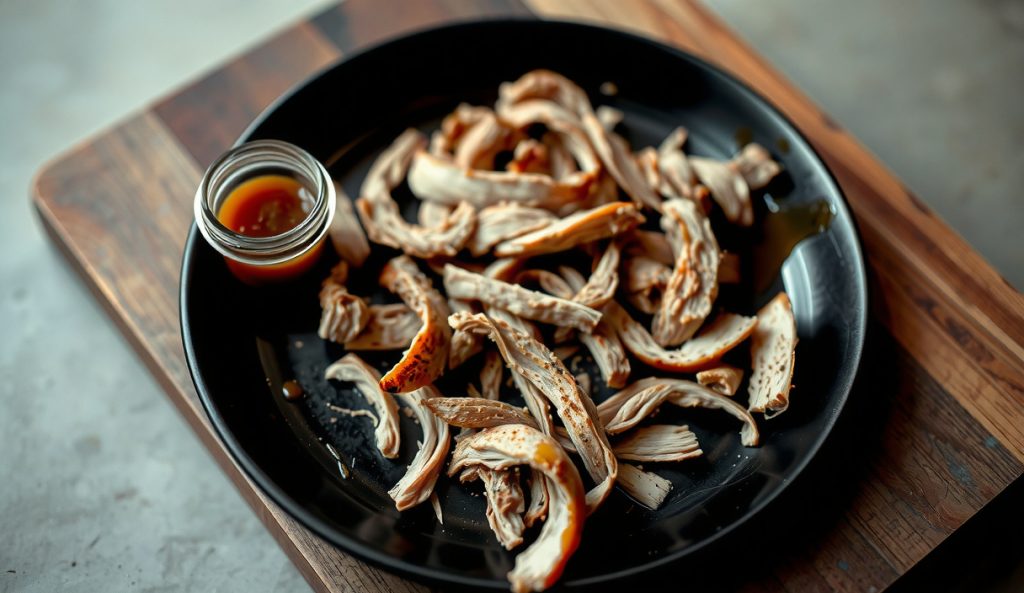
Eastern NC pulled pork is built on four ingredients — pork, vinegar, smoke, and heat — and none of those four contain gluten. That structural simplicity makes this one of the safest canonical BBQ cooks for anyone managing celiac disease or non-celiac gluten sensitivity. “Nearly gluten-free” is not “certified gluten-free,” however, and one overlooked ingredient or shared tool can undo the entire effort. This guide closes those gaps without changing a single thing that matters to the outcome.
What needs to change to make this recipe fully gluten-free?
Worcestershire sauce in the rub or mop: Some pitmaster interpretations of this recipe — and many commercial Eastern NC mop sauces — include a splash of Worcestershire for depth. Standard Worcestershire (Lea & Perrins in the US) is gluten-free, but many store-brand and UK-formulated versions use barley malt vinegar as their acidulant. Read the label every time, or substitute an equal volume of coconut aminos, which delivers the same umami-soy-molasses register with zero gluten and a nearly identical pH profile at the concentrations used in a vinegar mop.
Dry rub anti-caking agents: If you are using a pre-blended commercial rub rather than building the simple salt-and-red-pepper base from scratch, check for wheat starch or wheat flour listed as an anti-caking agent — this is a real and common practice in economy spice blends. Building your own rub from kosher salt, crushed red pepper, optional black pepper, and a pinch of smoked paprika eliminates this vector entirely and costs less than the commercial alternative. Dedicated gluten-free spice brands like Penzeys or Spiceology are also reliable options.
Apple cider vinegar: Distilled grain vinegars can retain trace peptide fragments from fermentation, though the scientific consensus places those fragments below the 20 ppm Codex threshold. Apple cider vinegar — the canonical mop base in this recipe — is fermented from apple sugars and carries no grain origin whatsoever, making apple cider vinegar inherently gluten-free. Sticking with apple cider vinegar eliminates even that theoretical grain-derived exposure.
Cross-contamination at the grill: A wire brush used on a shared grate can deposit gluten-containing residue from a prior cook. Burn the grate clean at high heat for 15 minutes, then wipe with a folded paper towel held in tongs before placing the shoulder. Use a dedicated mop brush or silicone basting brush that has not touched marinades containing soy sauce or beer. A fresh sheet of butcher paper for wrapping — if you choose the Texas crutch — is already single-use and poses no cross-contamination risk.
What stays exactly the same in the gluten-free version?
The bone-in pork butt, the 225°F chamber temperature, the 203°F internal target, the 12-to-14-hour cook commitment, the oak-hickory wood split, and every step of the mop protocol are completely unaltered in the gluten-free version. Smoke penetration, collagen hydrolysis, the evaporative stall, and Maillard bark formation all proceed identically regardless of the ingredient audit. In every sensory and scientific dimension, the gluten-free version of this cook is the same cook.
When is the gluten-free version the better default choice?
Any time you are feeding a mixed table that includes guests with celiac disease or gluten sensitivity, make these audit swaps the default rather than a special accommodation. The ingredient cost difference is negligible, the flavor profile is indistinguishable from the standard version, and you never need to manage two parallel cooks or label individual plates.
Follow the full timing, temperature, and mop technique at the original recipe — every step applies directly once your ingredient audit is complete.