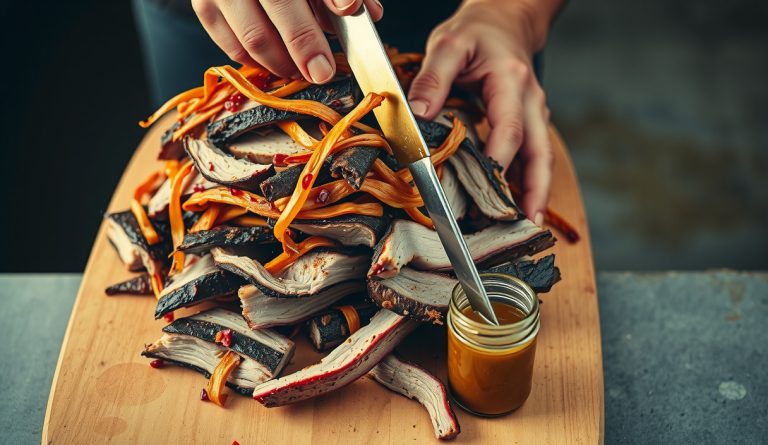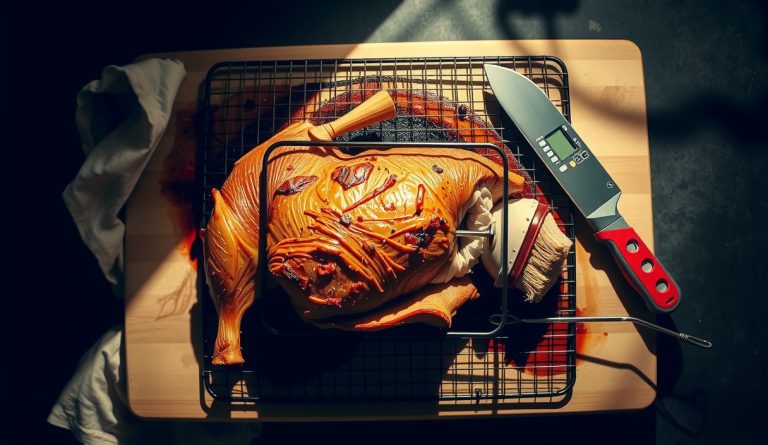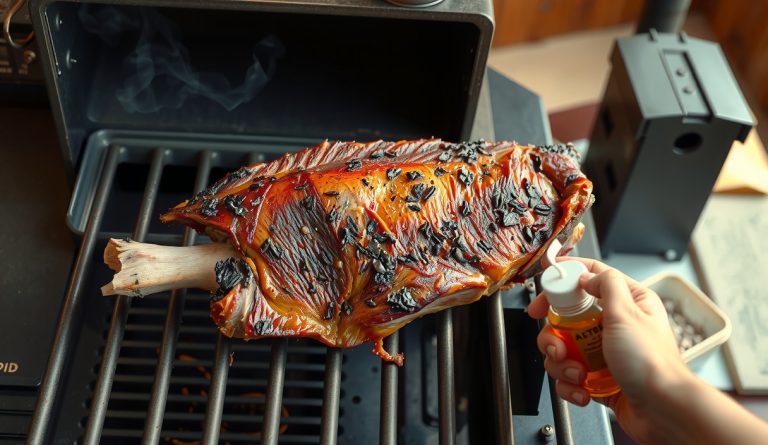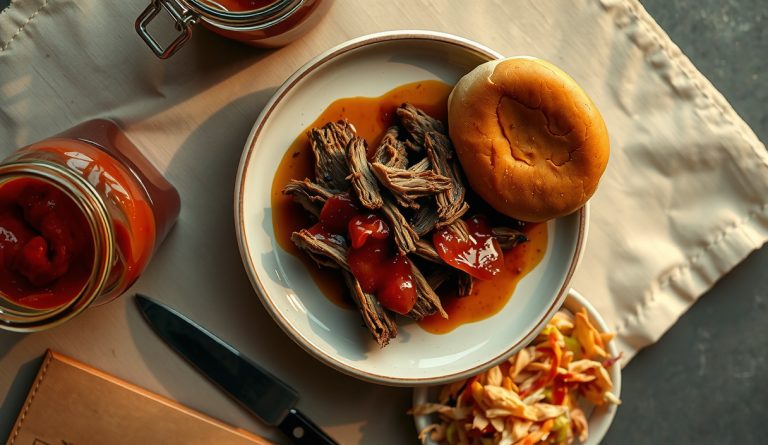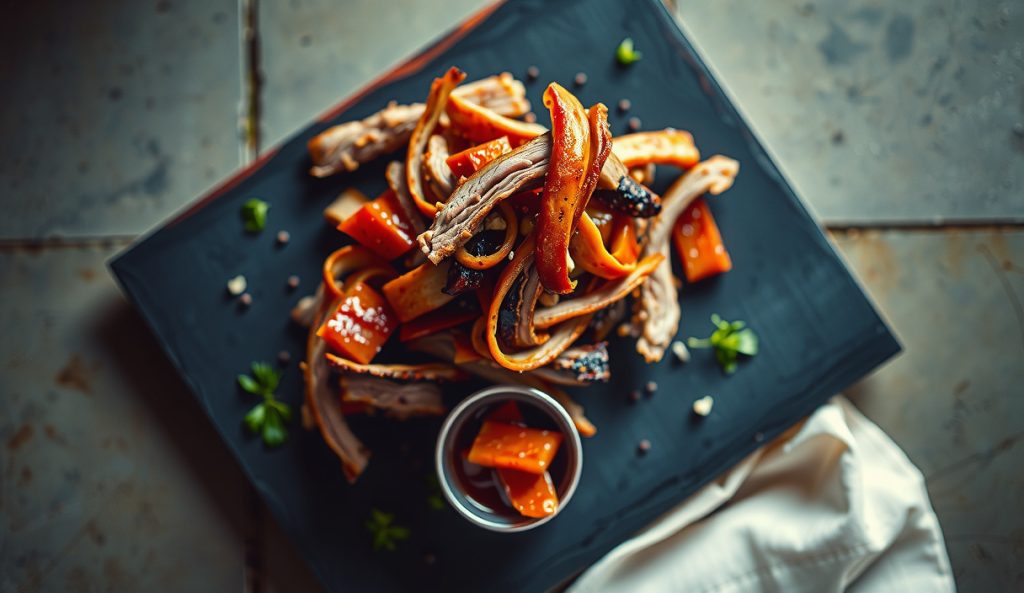
Of all the canonical American BBQ styles, Eastern North Carolina pulled pork is the one that requires the fewest concessions for a ketogenic table. No tomato, no molasses, no brown sugar glaze — the entire flavor architecture is acid, smoke, fat, and capsaicin. The canonical recipe as written is already very low in sugar; the modifications below address the one place where carbohydrates can quietly enter, and then reframe the plate to maximize fat-to-protein ratio for strict keto adherents.
What changes
The dry rub’s sugar baseline: The canonical rub contains no brown sugar — a deliberate choice that distinguishes Eastern NC from virtually every other regional style. If your personal rub iteration has drifted toward a Memphis or Kansas City profile with even a tablespoon of brown sugar per pound, remove it entirely. Smoke, salt, and red pepper generate a bark through the Maillard reaction between amino acids and naturally occurring trace reducing sugars in the meat’s surface moisture; added sugar is not required for crust formation here and contributes approximately 3-5g net carbs per serving at typical rub application rates.
The vinegar mop: Raw apple cider vinegar contains roughly 1g net carbohydrate per tablespoon — negligible at mop quantities, and no adjustment is needed. Confirm your ACV brand carries no added honey or apple juice concentrate, which some “raw” brands include; plain 5% acidity ACV has a clean keto-compatible carb profile.
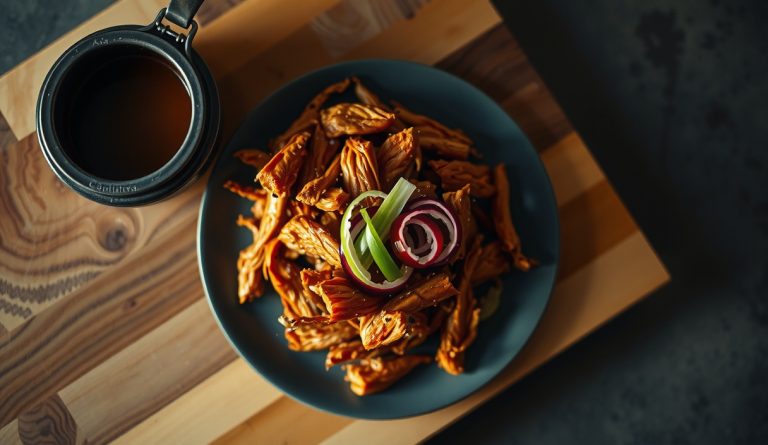
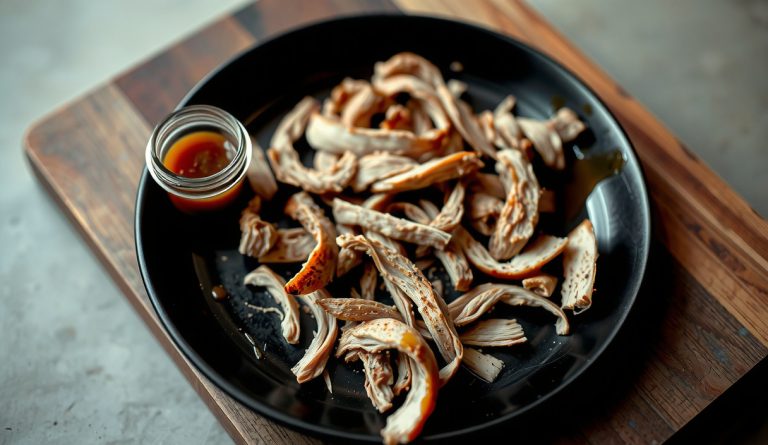
The finishing sauce (if using): Many tables serve pulled pork with a secondary sauce at plating. Commercial Eastern NC bottled sauces occasionally include corn syrup or sugar. Make your own with ACV, water, red pepper flakes, black pepper, and a touch of salt — zero net carbs, and it out-performs the bottled version. If you want a hint of sweetness to round the acid edge, allulose is the best keto sweetener for this application: it dissolves cleanly in cold vinegar, browns and caramelizes similarly to sucrose at higher temperatures, and does not crystallize or impart the cooling sensation that erythritol-based blends introduce in cold acidic liquids.
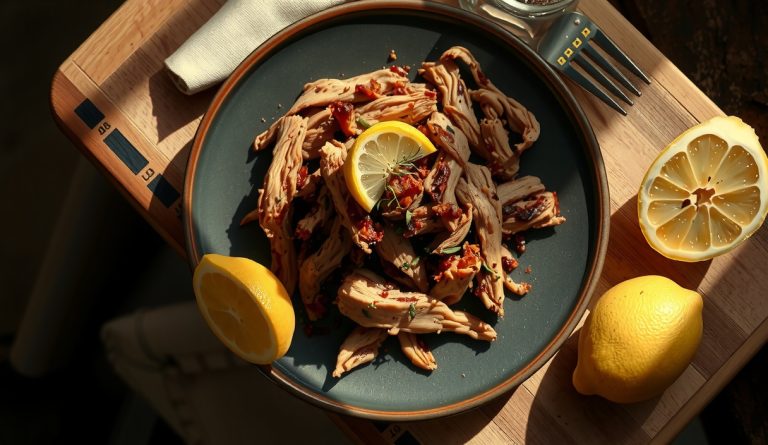
Serving vessel and sides: Buns are the primary carb delivery mechanism at a pulled pork table. Butter lettuce cups preserve the wrapping mechanic with near-zero net carbs and add a fresh water content that contrasts rendered pork fat pleasantly. Pork rinds crushed tableside as a textural garnish replace the bread-crumb or toast role. A vinegar-dressed shredded cabbage slaw (no added sugar, mayo or sour cream base) contributes roughly 2-3g net carbs per half-cup serving and provides the crunchy counterpoint that hush puppies and cornbread would otherwise fill.
What stays the same
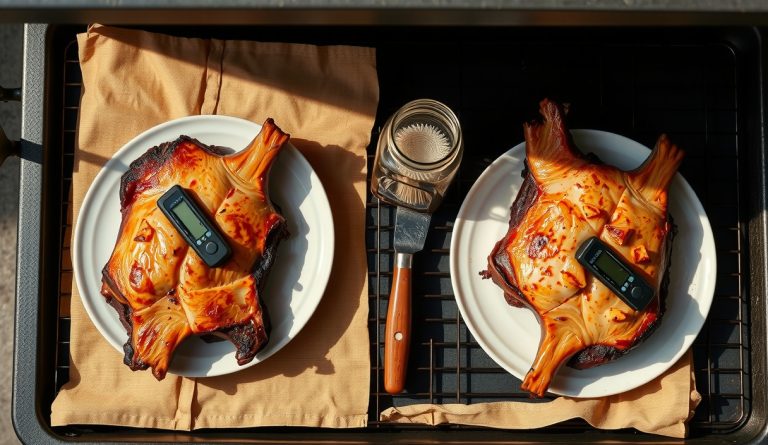
The entire cook protocol — bone-in butt, 225°F chamber, 203°F probe target, the 12-to-14-hour window, the oak-hickory fire, and the mop cadence — is unchanged. Pork shoulder’s macronutrient profile (roughly 22g protein, 18g fat per 3oz cooked serving) is naturally compatible with ketogenic macros without any modification to the meat itself.
When this is the better choice
Ideal for keto athletes doing a long weekend cook, or any host who wants a single large-format centerpiece that serves both carb-cycling and strict ketogenic guests from the same pot — the pork itself requires no segregation, only the sides and sauces need two versions.
The full temperature protocol and mop technique live at the original recipe — follow them exactly; nothing about the keto adaptation changes timing or fire management.