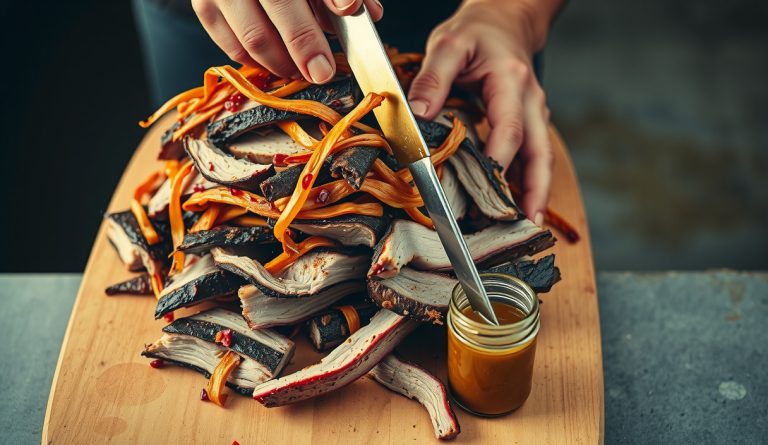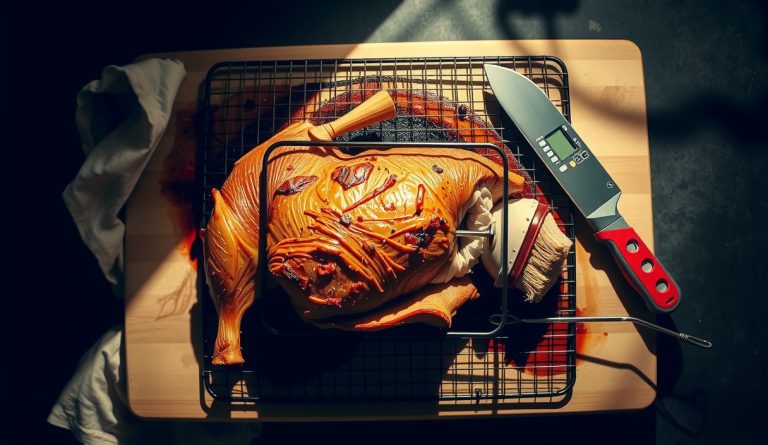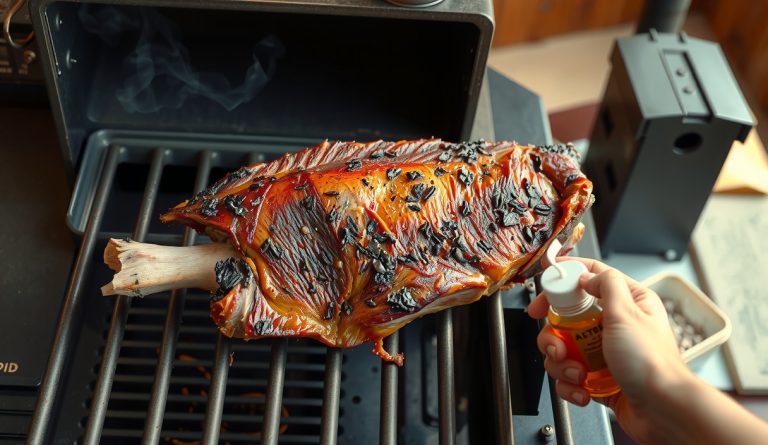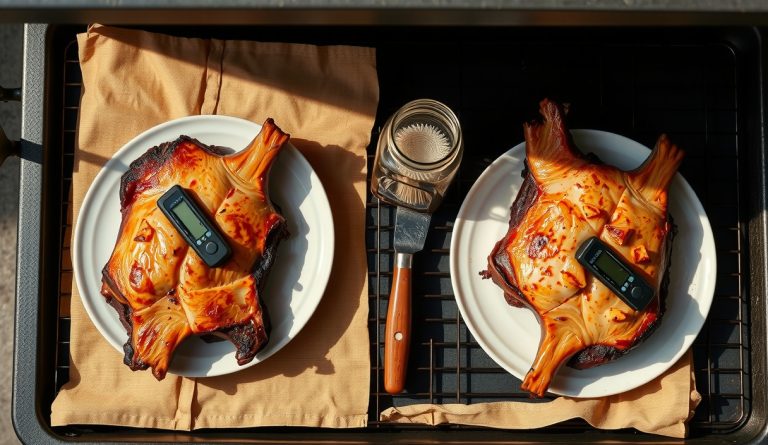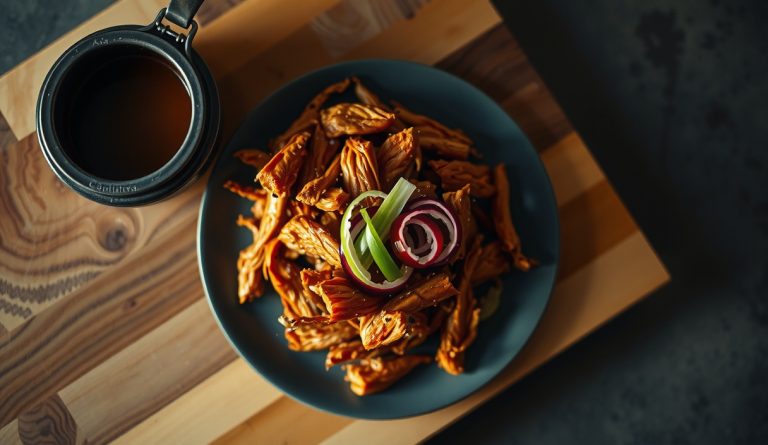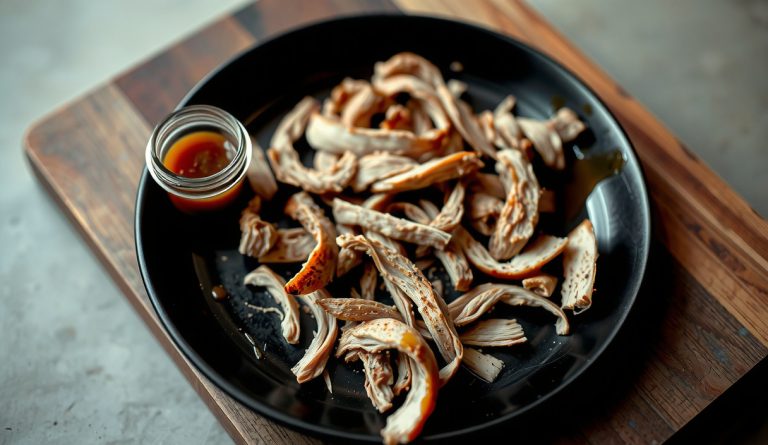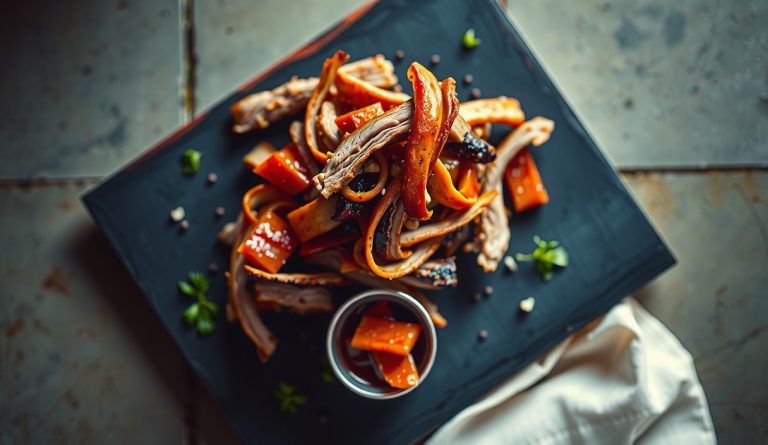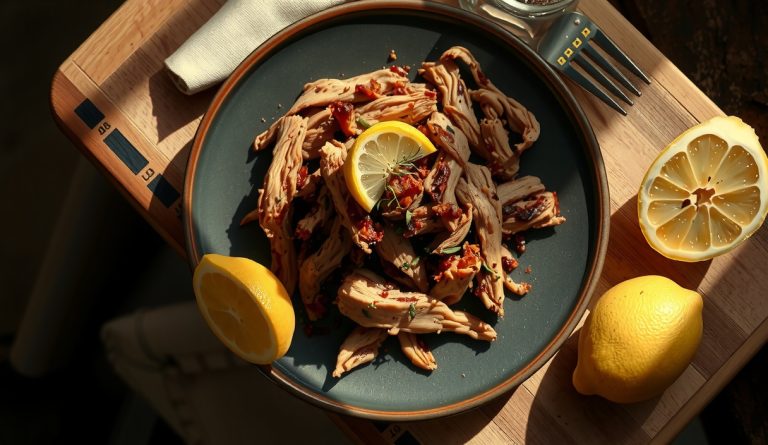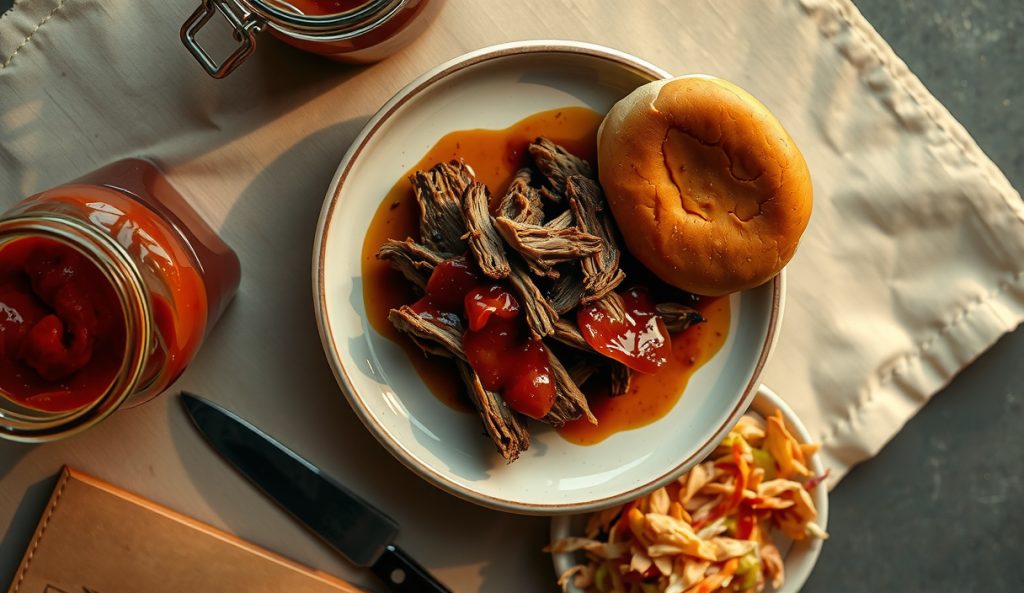
Eastern North Carolina and Piedmont North Carolina share the same smoke-and-pork philosophy but part ways at the sauce pot. Where the Eastern tradition holds to nothing but vinegar, pepper, and salt, the Lexington dip introduces tomato and sugar — a shift that reflects the German and Scotch-Irish settlement patterns of the Piedmont foothills and their preference for a rounder, less astringent finish. Neither style is a corruption of the other; they are parallel evolutions of the same hog-cooking culture, separated by roughly one hundred miles of geography.
What changes in the Piedmont / Lexington style?
The Lexington variation modifies only one element of the canonical recipe: the mop composition. To the base mop, add 2 tablespoons of ketchup and 1 tablespoon of brown sugar per batch, whisking them in while the mop is still warm so the tomato solids disperse evenly throughout the liquid.
The sucrose in the brown sugar begins caramelizing at approximately 160°F surface temperature — well within range during the final two hours of the cook when the bark is actively setting. Expect visible and aromatic darkening to occur faster than it would with a pure vinegar mop. Once the stall clears, probe the bark firmness with a gloved finger and reduce mop frequency to once per hour if the exterior is approaching your target color.
The tomato-derived acids — citric and malic — add a secondary acid note that rounds the sharp acetic hit of the cider vinegar without neutralizing it. This produces the sweet-sour-heat balance that defines authentic Lexington dip. At serving, this same ratio, scaled to taste, can be spooned directly over pulled pork as a finishing sauce. Lexington-style barbecue joints typically present the dip on the side rather than mixing it into the pull, allowing each plate to be adjusted at the table.
What stays the same as the Eastern NC method?
Every structural element of the cook remains identical to the canonical recipe: the smoke wood, the pit temperature target of 225°F, the bone-in shoulder, the low-and-slow timeline, the stall management strategy, the pull temperature of 203°F, and the resting protocol. The only modification to the Piedmont / Lexington style is the mop composition — 2 tablespoons of ketchup and 1 tablespoon of brown sugar added per batch.
When is the Lexington style the better choice?
Choose the Piedmont / Lexington variation when your audience includes guests who find a straight vinegar sauce too aggressive. The rounded sweet-sour profile also pairs more naturally alongside sides that carry sweetness of their own — coleslaw with a creamy dressing, or cornbread with honey butter — without competing on the plate.
The Lexington style is also a reliable bridge for crowds unfamiliar with vinegar-forward barbecue, and it allows a larger spread to represent both major North Carolina traditions simultaneously: one shoulder mopped Eastern-style, one mopped Lexington-style, two sauces on the side.
Use the full method, equipment, and rub measurements from the original Carolina Pulled Pork with Eastern NC Vinegar Mop.