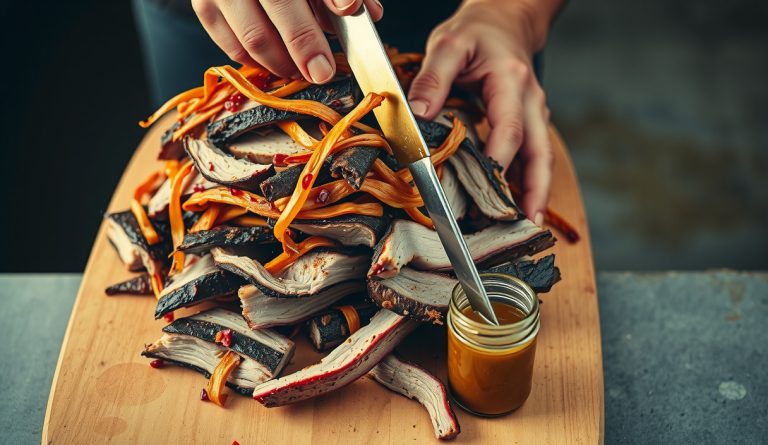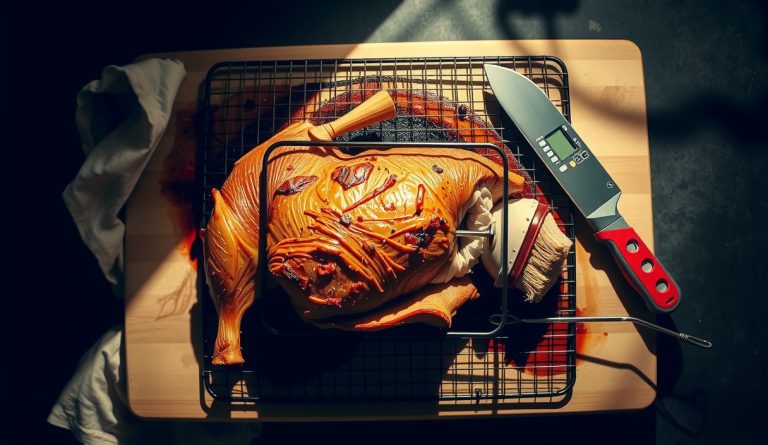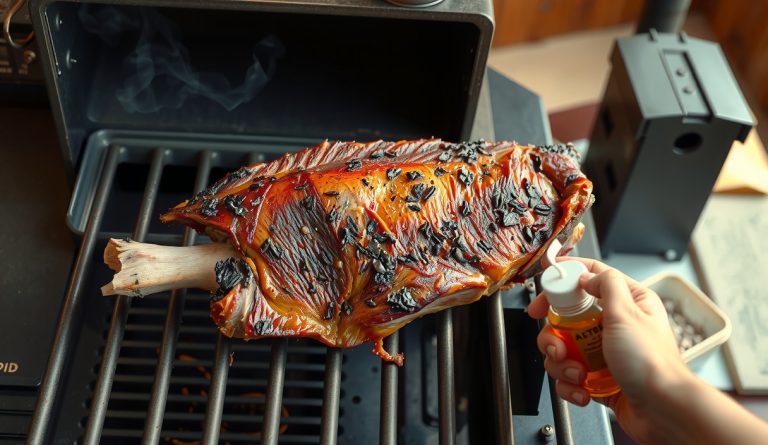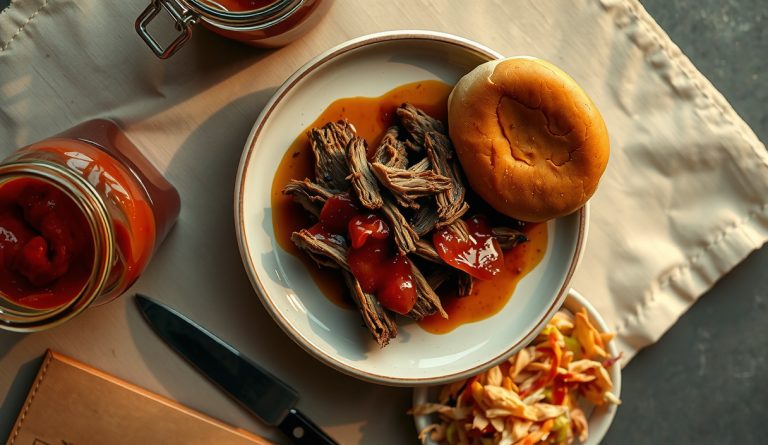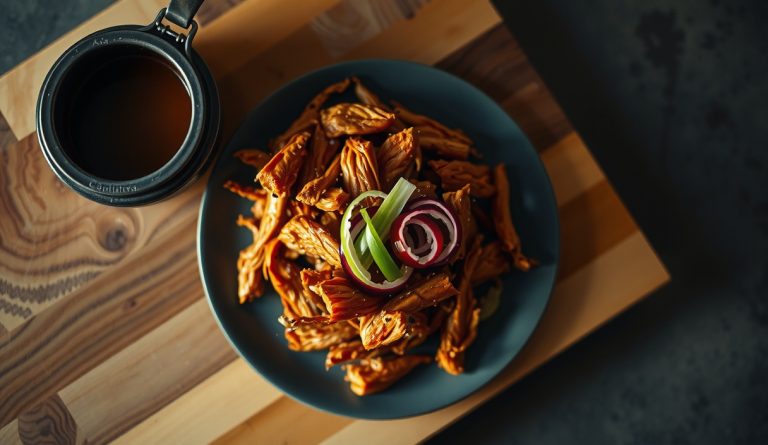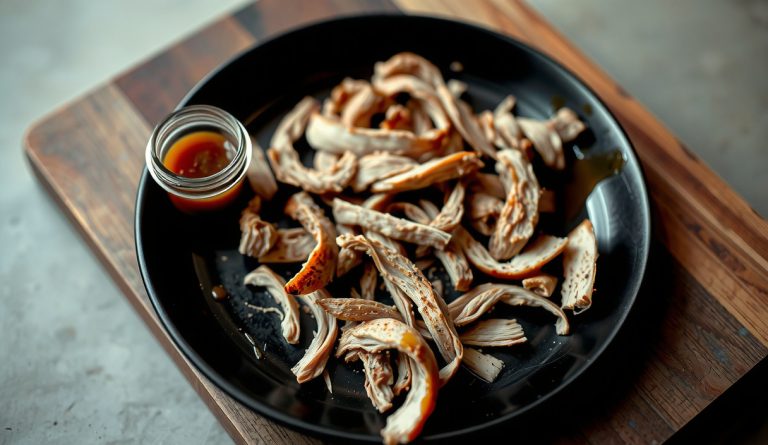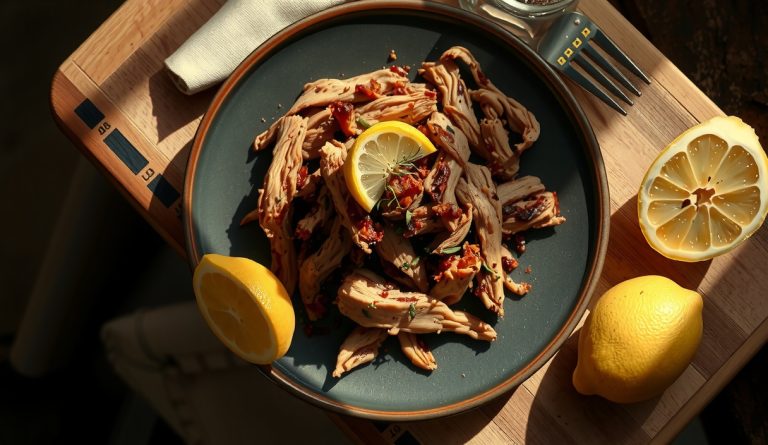
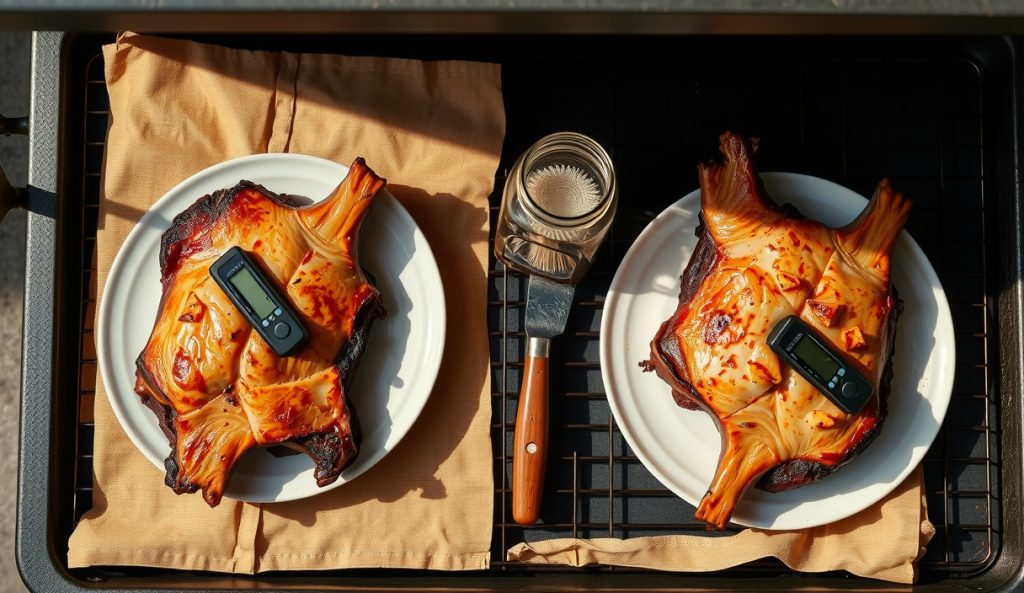
Cooking two bone-in pork shoulders simultaneously is the most practical way to serve a larger group without introducing a second smoker or a second cook session. The logic is straightforward: two shoulders in the same chamber do not require double the fuel, double the wood, or double the attention — but they do change the thermal dynamics inside the cooker in ways that require a deliberate adjustment to your timeline and your staging.
What changes when you cook two pork shoulders at once?
The combined thermal mass of two cold shoulders — typically 16 to 20 pounds of dense muscle and bone — absorbs a significantly greater amount of heat energy when the shoulders first enter the chamber. Your smoker will recover to target temperature more slowly after loading, and the evaporative stall, which occurs as internal moisture migrates to the surface and cools the meat, will extend by 30 to 60 minutes compared to a single-shoulder cook. Plan your start time accordingly and resist the urge to increase the pit temperature to compensate; pushing past 250°F to recover lost time will dry the exterior before the interior collagen has finished converting to gelatin.
Collagen-to-gelatin hydrolysis is a time-and-temperature-dependent reaction: adequate time at 160–180°F internal is non-negotiable regardless of how urgently the clock presses. There is no shortcut through this window — only patience and a properly maintained 225°F pit.
Do not stack the shoulders or place them directly side by side with no clearance. Each shoulder needs even airflow on all exposed surfaces for consistent bark development — a minimum of two inches of clearance between them and between each piece and the chamber walls. If your grate only accommodates a single layer, that spacing requirement is your binding constraint. The mop recipe from the canonical post scales linearly: use 1 cup of apple cider vinegar as your base unit per shoulder, so two shoulders means a double batch.
What stays the same when scaling to two shoulders?
The pit temperature target of 225°F, the mop schedule, the rub ratios, the pull temperature of 203°F, the probe-feel test, and the minimum one-hour rest wrapped in butcher paper all remain unchanged when scaling to two shoulders. You are cooking the same recipe twice in the same space — the only variable is thermal load and the timeline buffer that accounts for it.
When is cooking two shoulders the better choice?
Two bone-in pork shoulders is the right approach for cookouts of 20 or more, for competition practice runs where you need to evaluate consistency across multiple pieces, or any time you want leftover pulled pork for the following day without running the smoker twice. Two shoulders also give you a natural opportunity to test a small mop variation — such as the Piedmont-style dip — on one shoulder while keeping the other Eastern NC traditional.
Use the full method, equipment, and rub measurements from the original Carolina Pulled Pork with Eastern NC Vinegar Mop.