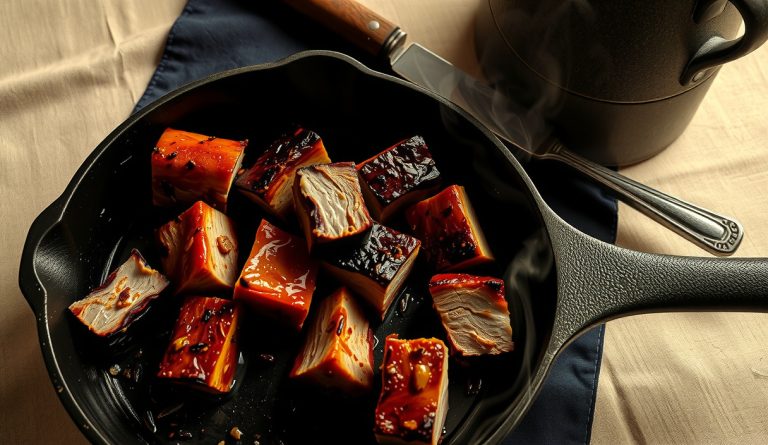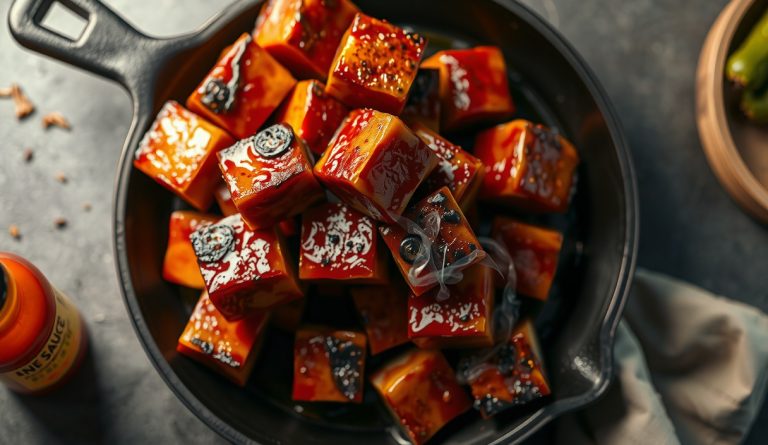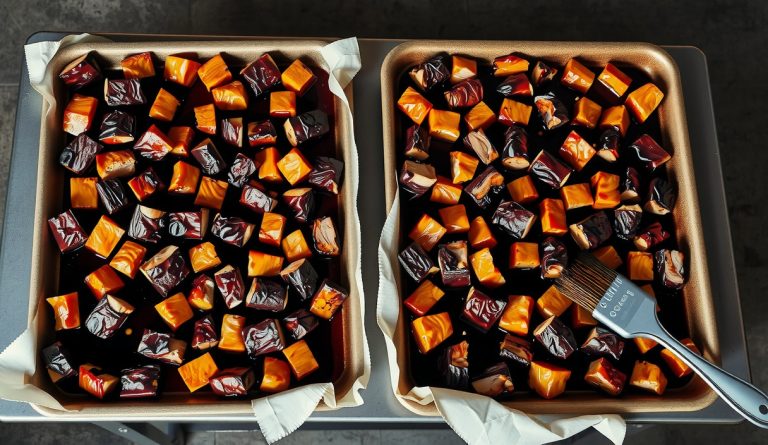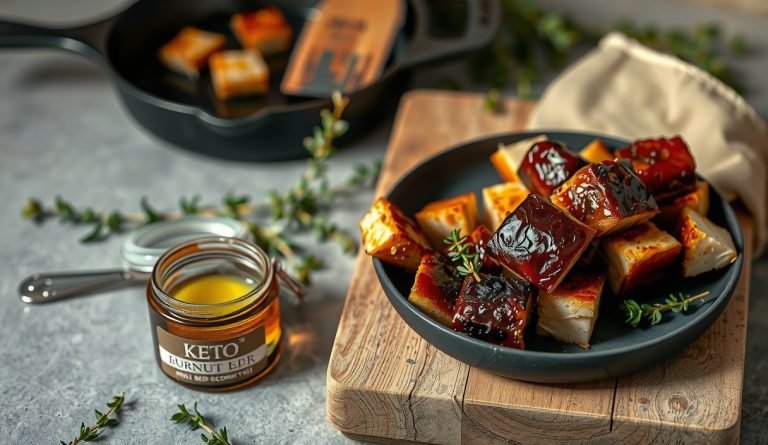
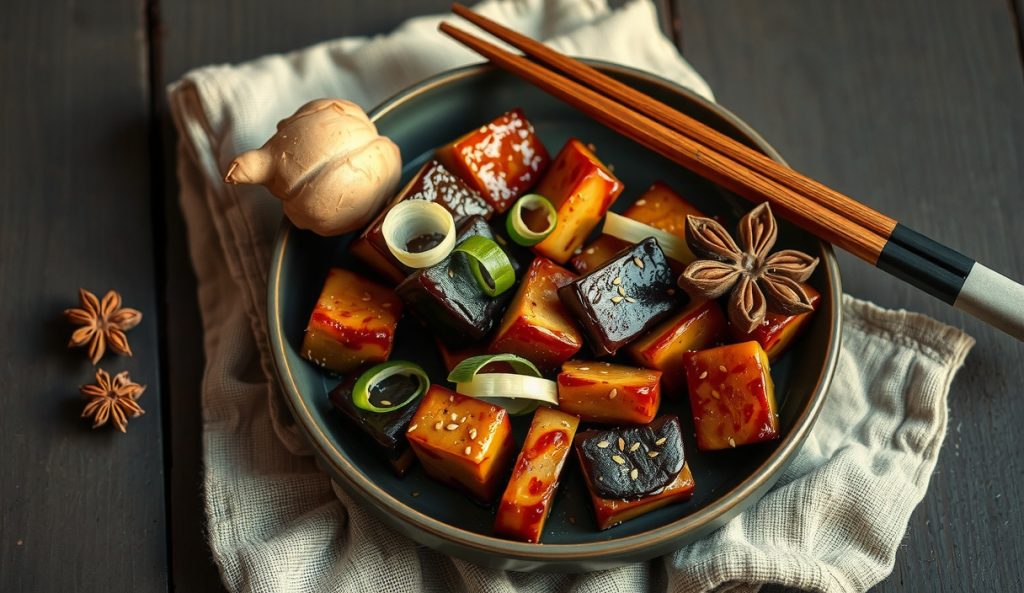
Pork belly has a long culinary history across East Asian traditions — char siu, kakuni, and samgyeopsal all share the same cut. This Asian-inspired variant nudges the American smoked burnt-end format in that direction by replacing smoked paprika in the rub with five-spice powder and rebuilding the glaze around coconut aminos and fresh ginger. The result stays fully keto while producing a glaze that reads as distinctly savory-sweet rather than purely sweet-smoke.
What changes in the Asian-inspired version?
In the dry rub, replace the smoked paprika with 1 teaspoon of five-spice powder. Five-spice introduces star anise, cloves, and Sichuan pepper aromatics that complement rendered pork fat without contributing any net carbohydrates to the rub.
For the glaze, substitute 2 tablespoons of coconut aminos for the apple cider vinegar, and add 1 teaspoon of freshly grated ginger. Coconut aminos are naturally low-carb — typically under 1 gram of net carbs per tablespoon — and carry a meaningful Maillard advantage: they contain both free amino acids and small-chain reducing sugars that act as additional browning precursors alongside the allulose. The result is a deeper, more complex glaze color than the canonical version achieves at the same temperature and time.
Ginger contributes gingerol and shogaol volatiles, which sharpen the aromatic finish of the finished pork belly cubes. In the final two minutes of the glaze phase, scatter sesame seeds over the cubes and leave the smoker lid open slightly — the sesame seeds will toast lightly from residual heat without burning. Do not add the sesame seeds earlier or they will over-darken before the glaze sets.
What stays the same as the canonical recipe?
The pork belly cube dimensions, initial smoke time and temperature, foil-braise procedure with butter and allulose, xanthan gum concentration, and total glaze-phase duration all remain exactly as written in the canonical recipe. The structural intent — full fat render, lacquered exterior, tender pull — is unchanged. Only the aromatic profile of the rub and the acid component of the glaze are swapped.
When is this Asian-inspired version the better choice?
This variant is the right call when you want a conversation piece at a mixed barbecue spread, when pairing with keto-friendly Asian sides such as shirataki noodle salad or bok choy stir-fry, or when your crowd is accustomed to savory-sweet glazes and may find the canonical version too one-dimensionally sweet. The substitutions require no additional prep time, making this variant equally suited to weeknight cooking.
Use the full method, equipment list, and base quantities from the original Keto Pork Belly Burnt Ends with Allulose Glaze, applying only the rub and glaze substitutions described above.