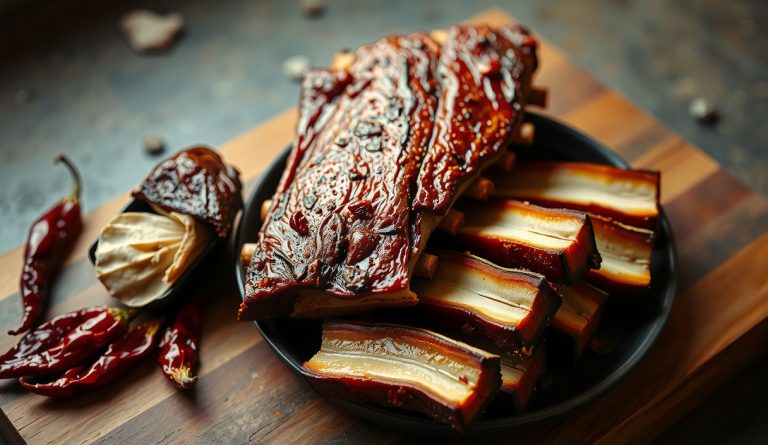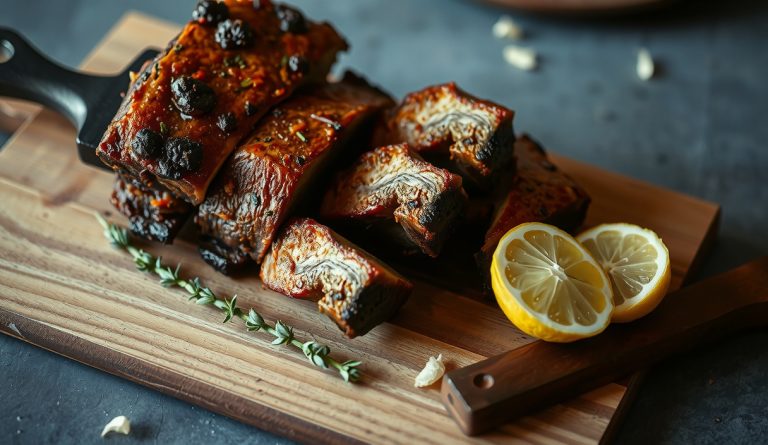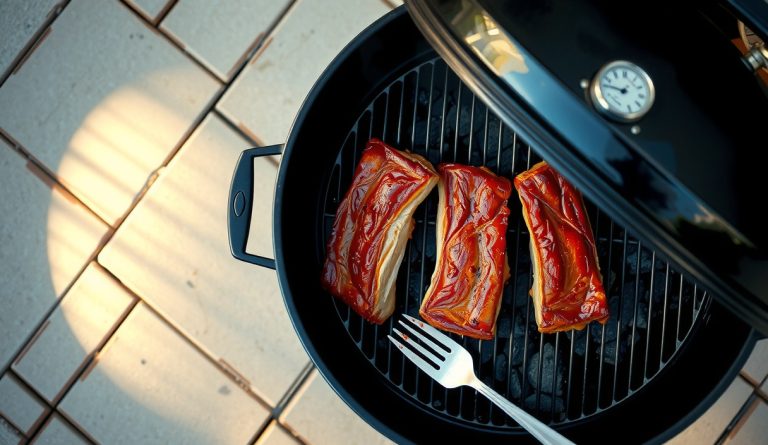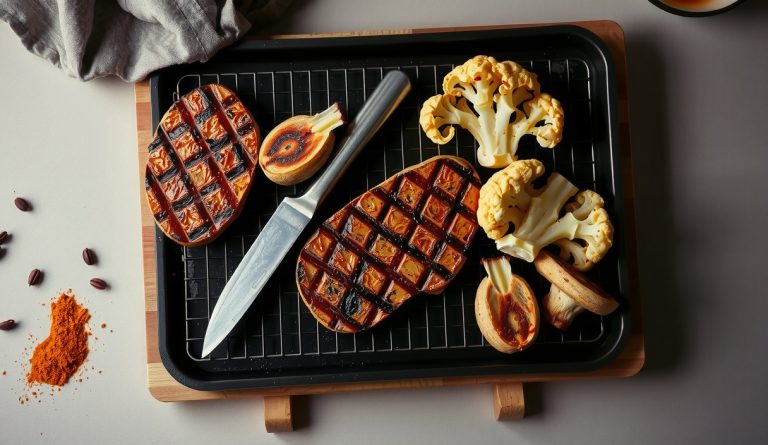
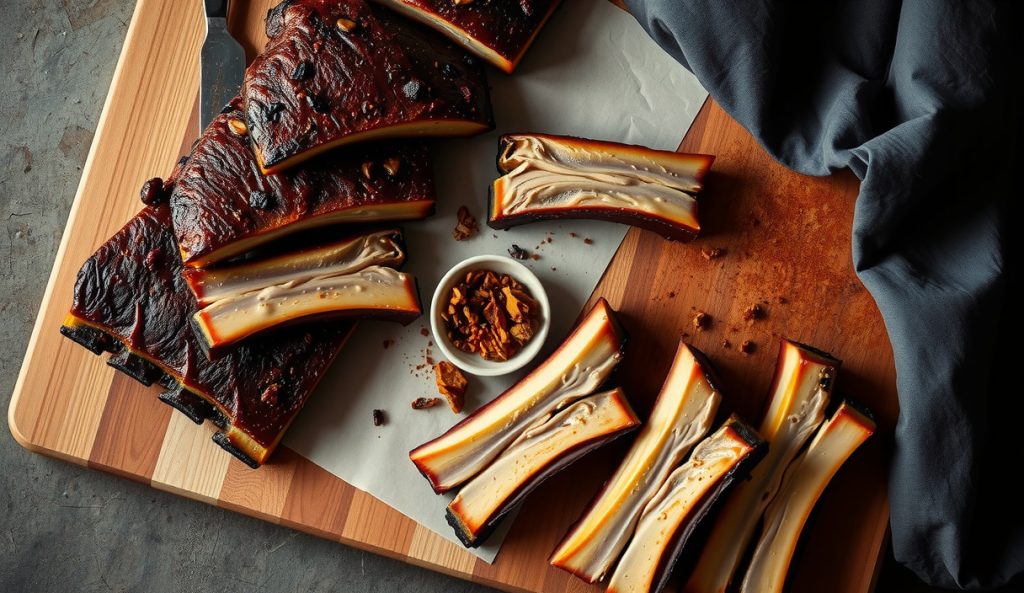
St. Louis spare ribs cooked in pure dry-rub Memphis style are among the most naturally keto-compatible large-format BBQ cooks that exist. Pork spare ribs contribute zero net carbohydrates, carry a generous fat-to-protein ratio, and require only one ingredient swap to achieve full keto compliance: replacing the brown sugar in the rub with allulose. That single change drops the per-serving carbohydrate contribution from the rub to effectively zero while preserving the dark, lacquered bark that defines the Memphis dry-rub tradition.
What changes for the keto version?
Brown sugar → allulose: The canonical rub uses brown sugar both for flavor and as a Maillard accelerant — its reducing monosaccharides (fructose and glucose) donate freely to amino-carbonyl condensation, seeding the dark bark. Allulose is the correct substitute here, not erythritol. Allulose is a rare sugar that browns and caramelizes at temperatures closely approximating sucrose; it participates in Maillard reactions because it retains a free carbonyl group, unlike erythritol, which does not brown well and can produce a distracting cooling sensation on the finish. Use allulose at a 1:1 ratio by weight. Bark color, tack, and gloss — the products of the three-hour Phase 1 desiccation and Maillard cascade — will be essentially indistinguishable from the sugar-sweetened original. A monk-fruit/erythritol blend is a workable fallback, but expect marginally less bark depth and watch for surface crystallization during the final unwrapped hour as erythritol re-precipitates.
Spritz sugar load: If the canonical spritz includes apple juice or any sweetened liquid for its surface-moisture and smoke-ring function, replace it with plain apple cider vinegar diluted 1:3 with water. The acidity and moisture still promote NO₂ absorption for smoke-ring development; the apple-ester character still harmonizes with the wood blend. Net carbohydrate contribution from the spritz drops to near zero.
Sides and serving format: The canonical Memphis context implies a plate with white bread or crackers as a grease vehicle. Substitute thick-sliced dill pickles, pork-rind cracklins for crunch, or simply serve the rack unaccompanied — the rendered intramuscular fat is self-sufficient. Cauliflower gratin with smoked paprika echoes the rub’s flavor profile and keeps the table thematic without a carbohydrate spike.
Net-carb delta: A standard spare-rib rub batch for one rack uses roughly 3–4 tablespoons of brown sugar, delivering approximately 9–12 g of carbohydrates per rack before any rub is lost to drip. Divided across four to six servings, that is 1.5–3 g net carbs per serving from the rub alone — modest but meaningful on a strict keto protocol. The allulose swap drops that contribution to effectively zero, because allulose is not metabolized to glucose and is excluded from net-carb calculations in most tracking frameworks.
What stays exactly the same?
The complete 3-2-1 cook structure, the smoked paprika and cumin rub backbone, the hickory-apple wood blend, the foil-wrap collagen hydrolysis phase, and the bend-test standard are all unchanged. Pork spare ribs are naturally high in fat and protein with zero carbohydrate content — the keto adaptation is purely a rub-level edit, not a method change.
When is this version the better choice?
This version suits any strict ketogenic or low-carb table, but it is also the right call whenever a drier, less sweet bark is the goal. The allulose rub produces a slightly more savory-forward crust that many competition pitmasters prefer over the conventional sugar finish, regardless of dietary goals. The adaptation costs nothing in technique and nothing in flavor complexity.
All temperature targets, timing, and fire-management details live at the original Memphis Dry-Rub Spare Ribs recipe.