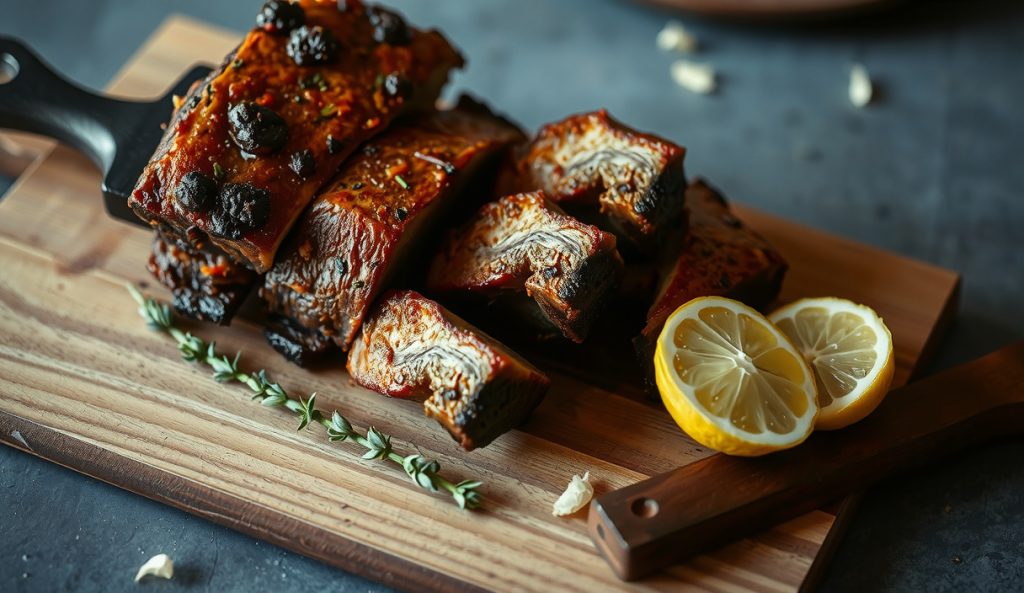
Reducing sodium in a dry-rub spare rib recipe is not as simple as dialing down the salt and calling it done. Salt performs three distinct functions in this cook: it draws surface moisture via osmosis during the pre-cook resting period (aiding bark adhesion), it denatures surface proteins slightly to improve rub bonding and Maillard substrate availability, and it is the primary seasoning amplifier that makes the smoke, paprika, and cumin taste like themselves rather than like cardboard. A thoughtful low-sodium adaptation preserves all three functions through substitution and compensation — it does not pretend those functions disappear when you remove the salt.
What changes when you cut the sodium?
Rub salt reduction — 50–60%: Cut the salt in the canonical rub by half to two-thirds. Do not go further. Below that threshold, the Maillard reaction at the surface becomes noticeably less vigorous because the protein-denaturing priming effect is lost, and the other spices taste muted rather than amplified. A full rack at the canonical salt level runs roughly 1,400–1,800 mg sodium per serving; a 55% reduction brings that to approximately 630–810 mg before any other adjustments — still meaningful for most low-sodium protocols.
Potassium chloride partial replacement: Replace up to one-third of the removed salt with a food-grade potassium chloride salt substitute (Nu-Salt, NoSalt). Potassium chloride activates the same salty taste receptors as sodium chloride, partially restoring seasoning punch. The important caveat: above roughly 30% KCl of total salt-equivalent, a metallic bitterness emerges, particularly detectable against the rub’s spice-forward notes. Stay at or below that threshold. Individuals on potassium-restricted diets — certain kidney conditions, specific diuretics — should consult their physician before using KCl substitutes.
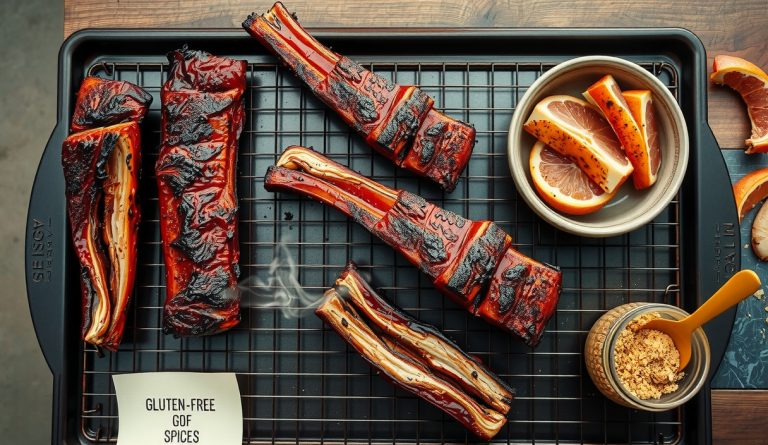
Flavor compensation — lean harder on everything else: Add one teaspoon of finely grated lemon or orange zest to the rub. The citrus oils contribute limonene and citral, which trick the palate into perceiving brightness and seasoning depth in the absence of full sodium. Increase dried herbs — thyme or oregano — by half a teaspoon to add aromatic complexity. A small addition of mushroom powder (dried porcini, finely ground) contributes free glutamates that amplify perceived savory intensity without any sodium contribution. Lean harder on the smoke: hickory’s guaiacol and syringol phenolics register as seasoning in the brain’s flavor-integration architecture, partially substituting for sodium’s flavor-enhancement role.
Bark honesty: With reduced salt, the bark on the low-sodium spare ribs will be slightly less aggressively crusty — surface protein denaturation and moisture-draw are both attenuated. To partially compensate, extend Phase 1 unwrapped time by 15–20 minutes (to 3 hours 15 minutes total) to deepen surface desiccation before the foil wrap. The final Phase 3 bark-set hour can also extend by 10–15 minutes if color and crust development lag. Check the bend test on schedule regardless.
What stays the same on the low-sodium version?
The 3-2-1 temperature and timing framework, the foil-wrap collagen hydrolysis mechanics, the hickory-apple wood combination, the membrane removal and prep protocol, and the bend-test standard are entirely unchanged on the low-sodium spare ribs. The structural tenderness of the rib is driven by time and heat, not by sodium content.
Who is this low-sodium version the right call for?
This version is the right call for guests managing hypertension, heart failure, or physician-directed sodium restriction — and also for anyone cooking for a mixed table who wants a single rack that works for everyone without a separate preparation.
Full method, temperatures, and the science behind the stall are at the original Memphis Dry-Rub Spare Ribs recipe.