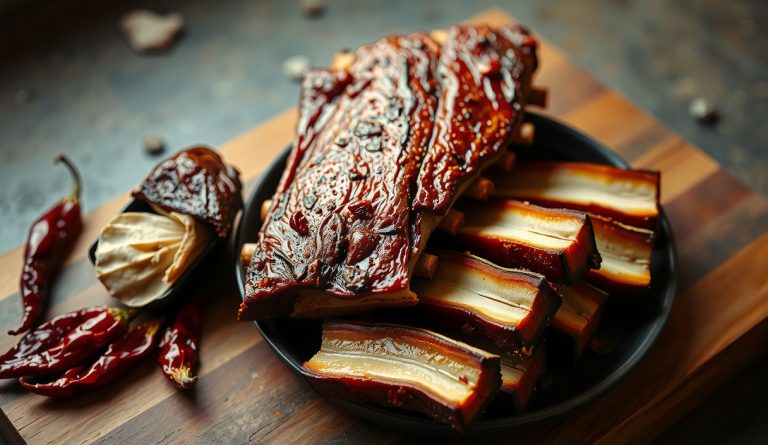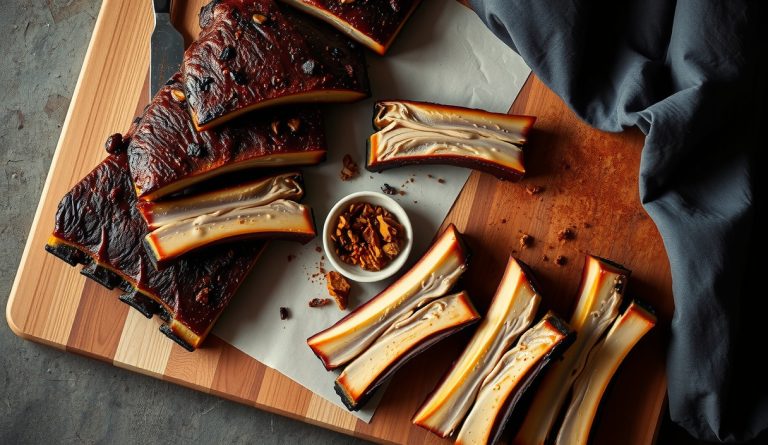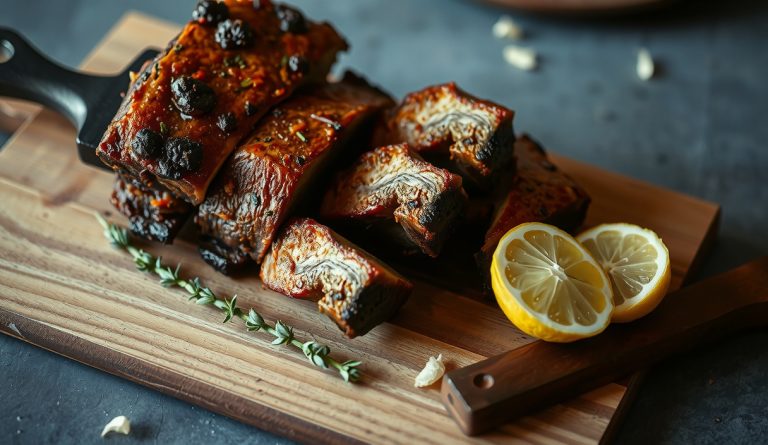
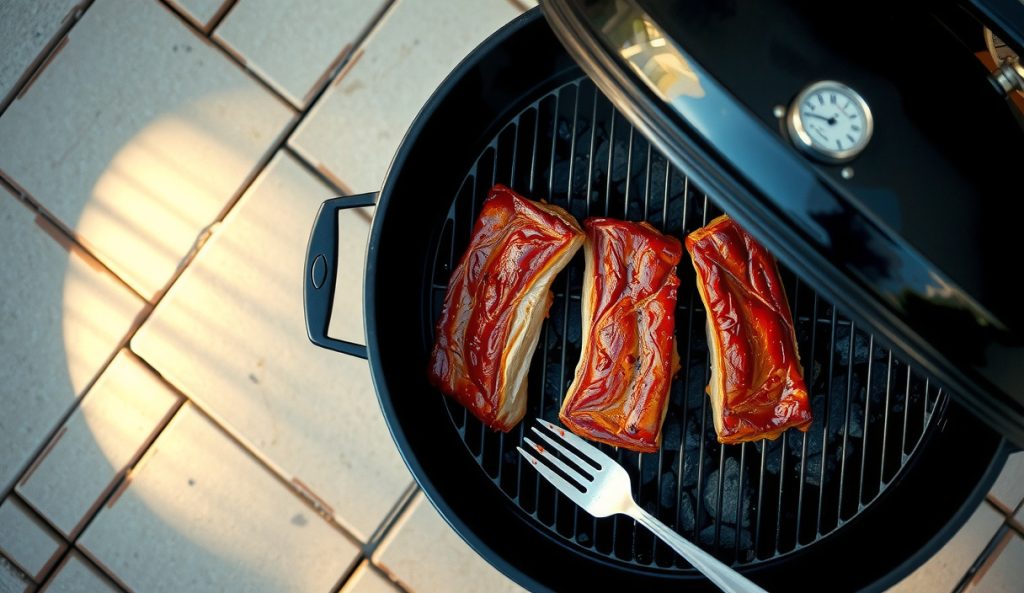
An offset smoker with a dedicated firebox is the traditional vessel for Memphis dry-rub spare ribs, but it is not the only one that works. A 22-inch kettle grill configured with a slow-n-sear insert or a snake-method charcoal arrangement can hold the 225–250°F grate temperature band this cook requires for the full 3-2-1 duration. The underlying thermodynamics are identical between both setups; what changes is how you regulate airflow rather than how you manage a separate firebox.
What changes between an offset and a kettle smoker?
On an offset smoker, temperature is controlled primarily by managing the fuel load in the firebox and partially by the exhaust damper. On a kettle, both intake and exhaust vents do the work once a stable thermal mass is established. The target starting configuration once the grate stabilizes at 225–250°F: bottom vent at roughly one-quarter open, top vent at three-quarters open. The bottom vent is the primary throttle — it governs oxygen supply to the fuel bed. The top vent controls exhaust draw; closing it too far traps combustion gases, produces acrid smoke, and introduces off-flavors into the bark. Keep the top vent at least half open throughout the entire cook.
For the snake method, arrange briquettes in a two-brick-wide, two-brick-tall arc around half the kettle’s perimeter. Place three or four wood chunks at intervals along the first two-thirds of the snake — this staggers smoke delivery across the cook rather than front-loading it. The slow-n-sear insert simplifies this process by creating a defined fuel zone and a water reservoir that moderates temperature swings; fill the reservoir at the start of each phase. In either configuration, avoid opening the lid more than necessary — each lid lift drops grate temperature by 20–30°F and requires 10–15 minutes to restabilize, compressing the effective cook time.
What stays the same regardless of which smoker you use?
Every element of the cook — the 3-2-1 phase structure, the rub formula, the wood species (apple or cherry), the wrap contents, and the bend-test doneness standard — is identical regardless of whether you are running an offset or a kettle. Equipment is the delivery mechanism; the Memphis dry-rub spare ribs recipe does not change based on the vessel used to produce it.
When is the kettle setup the better choice?
The kettle setup is the better choice when storage space, budget, or portability is a constraint. The kettle is also well-suited to cooks who smoke infrequently and do not want to maintain a firebox-fed offset. For high-volume or back-to-back competition cooks, the offset’s larger cook surface and continuous fuel access make it the more practical tool — but for one or two racks on a weekend, a well-configured kettle produces results that are indistinguishable to the palate.
Use the full method, rub formula, and phase timing from the original Memphis Dry-Rub Spare Ribs.