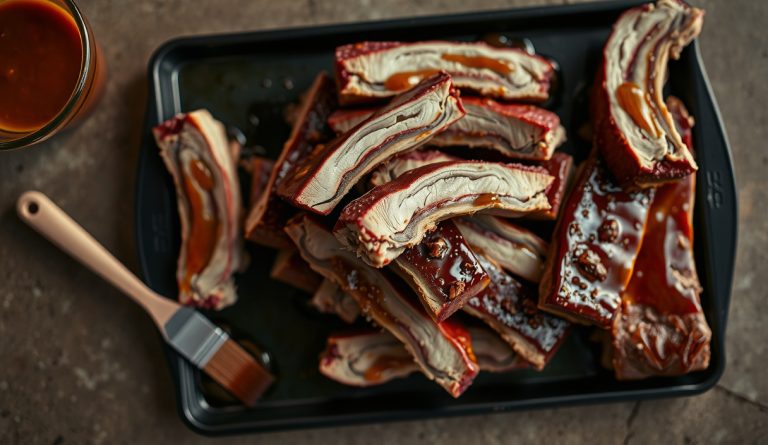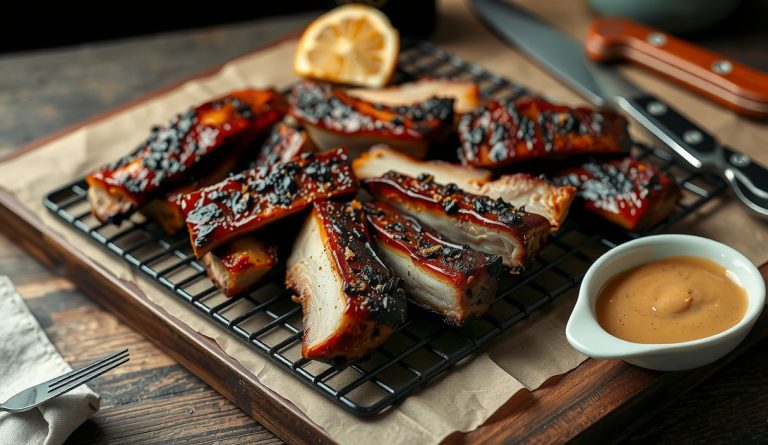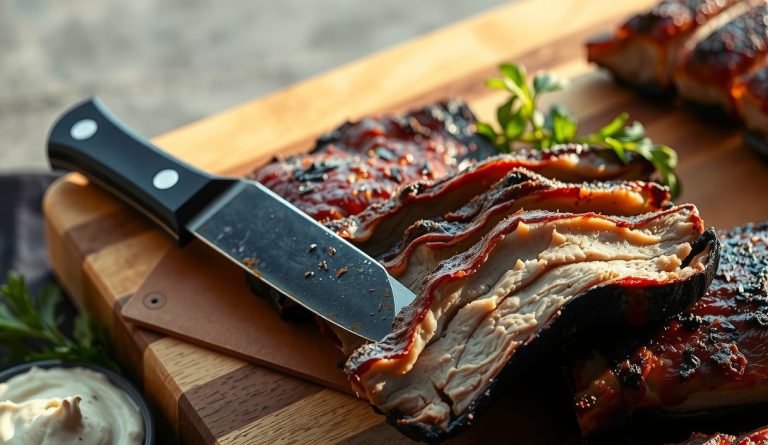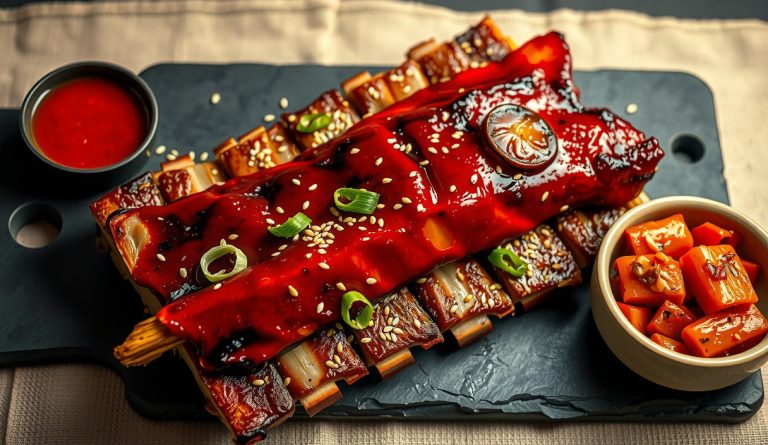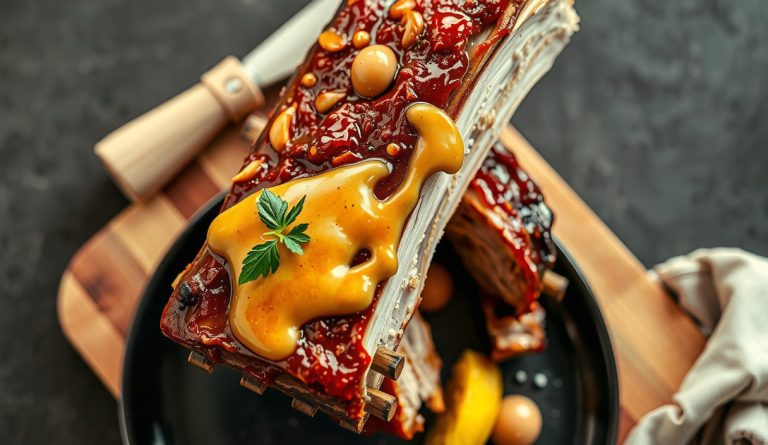
Oven-only country-style pork ribs are a legitimate alternative to the smoked version, with one clearly defined trade-off: no smoke flavor and no smoke ring. The three-stage structure of the canonical recipe — an uncovered dry-heat phase to build surface crust, a foil-sealed braise to drive collagen hydrolysis, and a high-heat broiler finish to set the glaze — translates directly to a conventional oven. The result is a legitimately crusted, braise-tender rib executable in a standard apartment kitchen with no special equipment beyond a wire rack and a foil pan.
What changes when you move the country-style ribs to the oven?
Set the oven to 275°F — use convection if available, because convection maintains a lower-humidity environment around the meat, accelerating surface drying and improving Maillard browning on spice proteins and meat sugars. Arrange the dry-brined, rub-coated ribs on a wire rack set over a foil-lined sheet pan and roast uncovered for 90 minutes. This phase replicates the initial smoke-stage function: the surface dries, the rub sets, and early crust formation begins. No searing step is needed — sustained convective dry heat handles crust development over time.
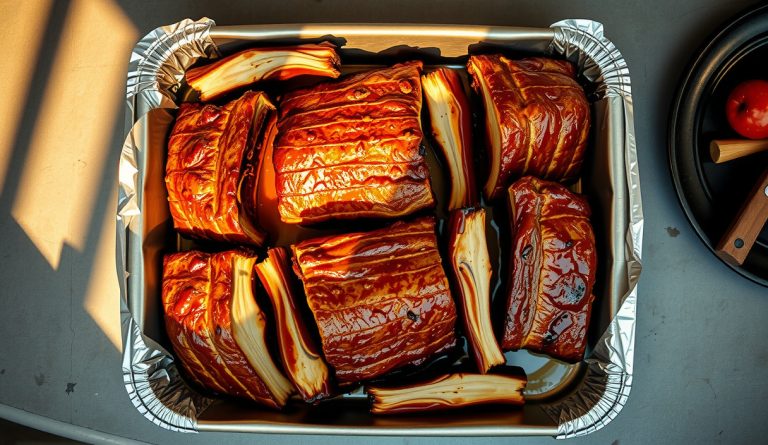
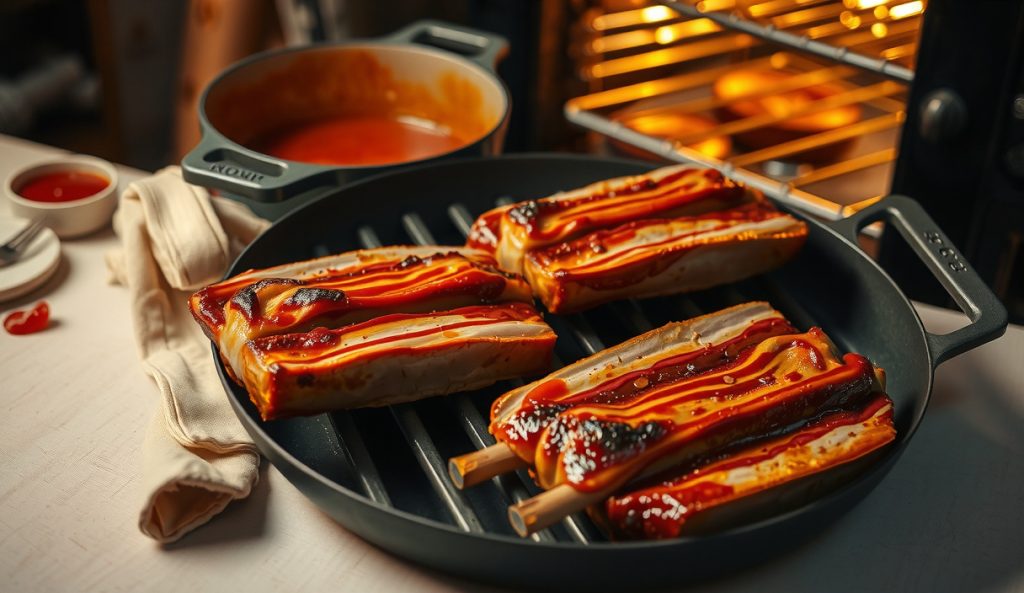
After 90 minutes, transfer the ribs to the foil pan, add the braise liquid, seal tightly with foil, and raise the oven temperature to 300°F. Continue braising until the internal temperature reaches 195°F, approximately 60 to 75 minutes — this is the temperature at which collagen hydrolysis to gelatin completes, producing the pull-apart texture the canonical recipe is built around. To finish, apply sauce and run the ribs under the broiler at 450°F for 2 to 3 minutes per side, watching closely. Broiler output varies significantly between ovens; check at the 2-minute mark.
What stays exactly the same as the smoked version?
The dry brine timing, the spice rub, the braise liquid composition, the 195°F internal temperature target, and the sauce application logic are all unchanged from the canonical recipe. The oven substitutes for the smoker’s thermal environment at each stage, but the underlying chemistry — surface dehydration, Maillard browning, collagen-to-gelatin conversion, and glaze caramelization — is identical. The foil-sealed braise step in particular is structurally the same in both methods.
When is the oven method the better choice?
The oven method is the correct variation for apartment dwellers without access to outdoor cooking equipment, for winter months when running a smoker is impractical, or for any situation where eliminating fuel management and setup time matters. The oven method is also the recommended path for a first test batch: the oven environment is more controllable and more forgiving than an unfamiliar smoker setup, making it easier to understand how the recipe behaves before introducing smoke as a variable.
Use the full method, rub measurements, and braise liquid proportions from the original Smoked Country-Style Pork Ribs.