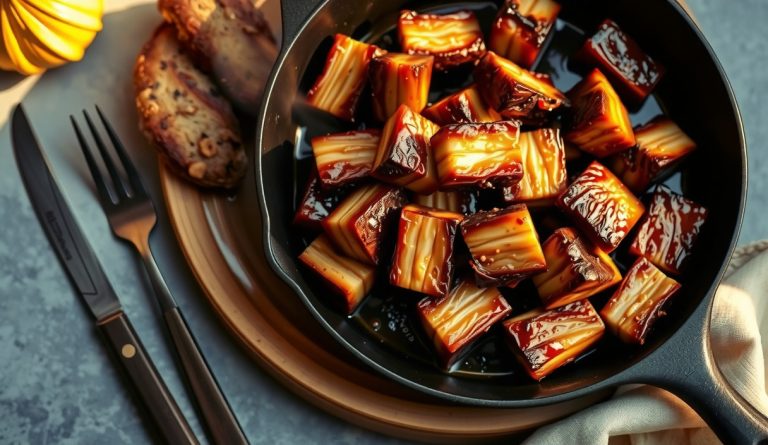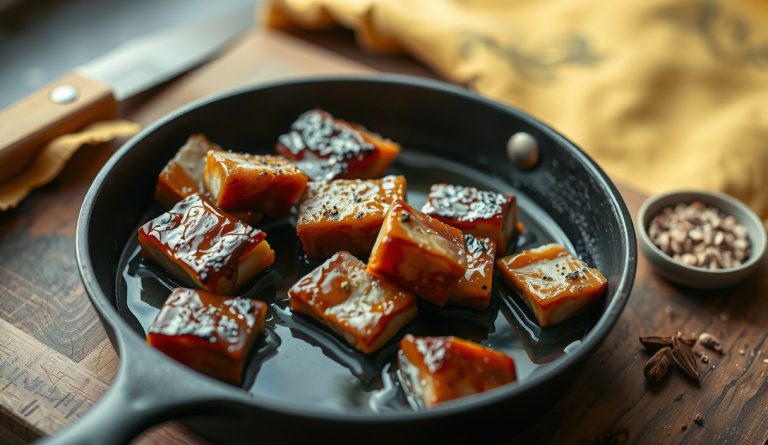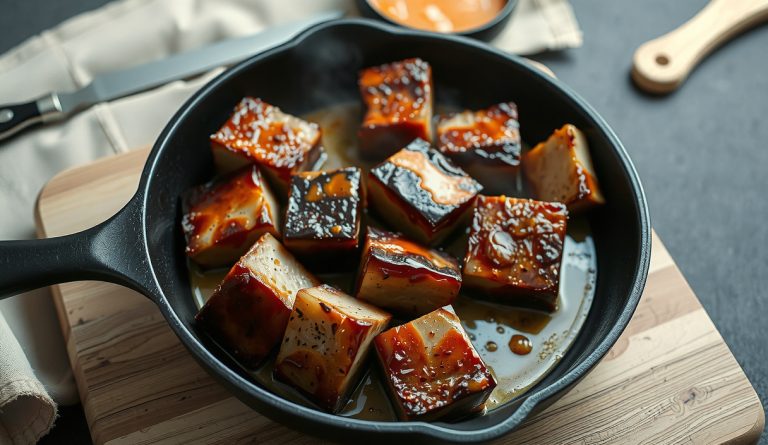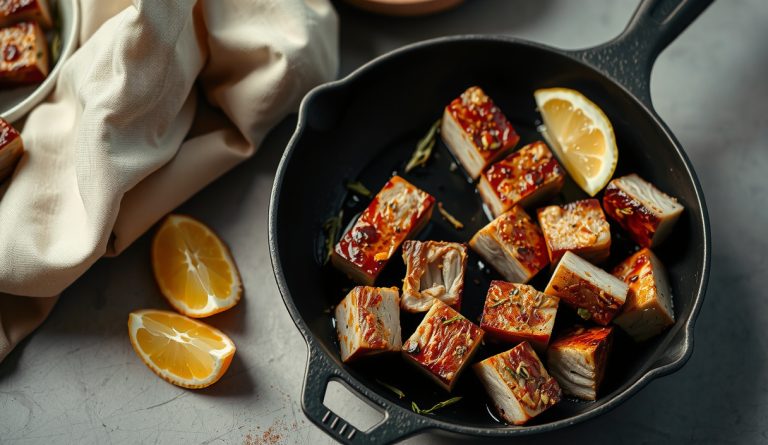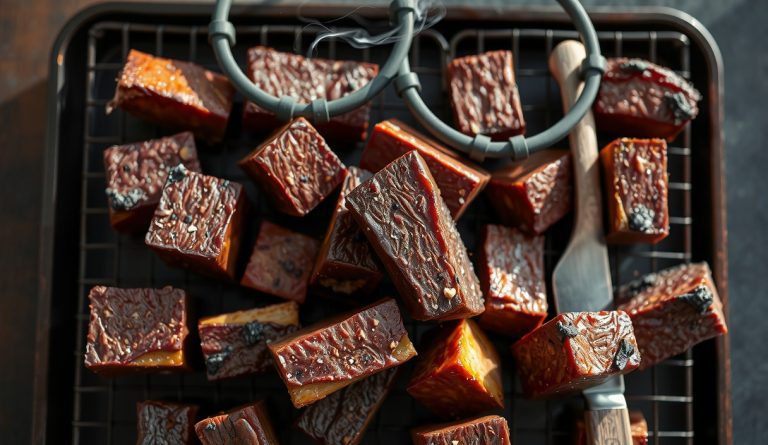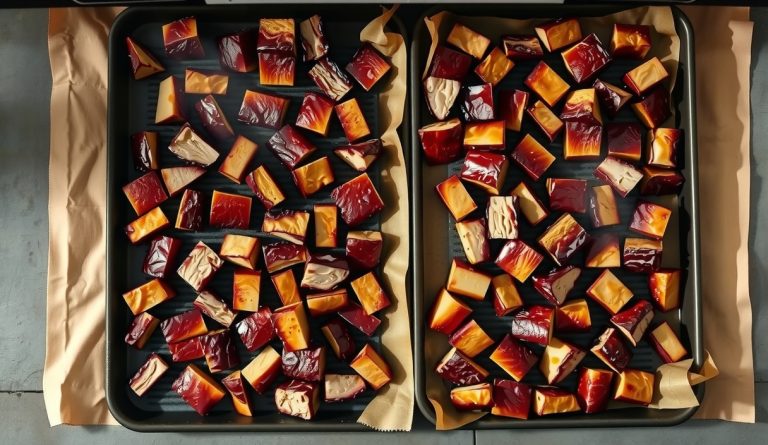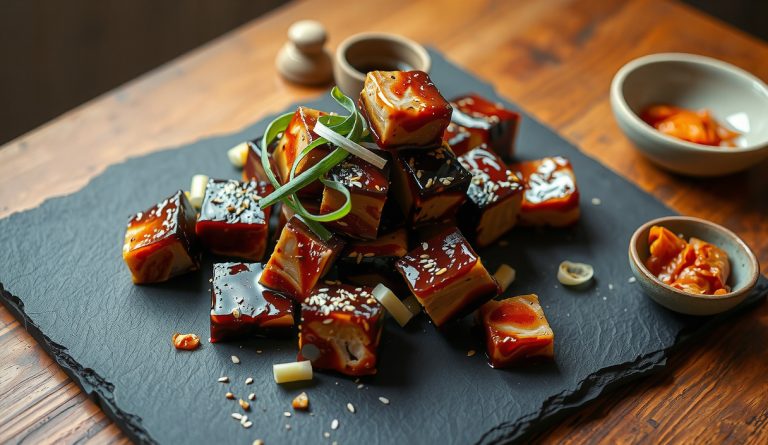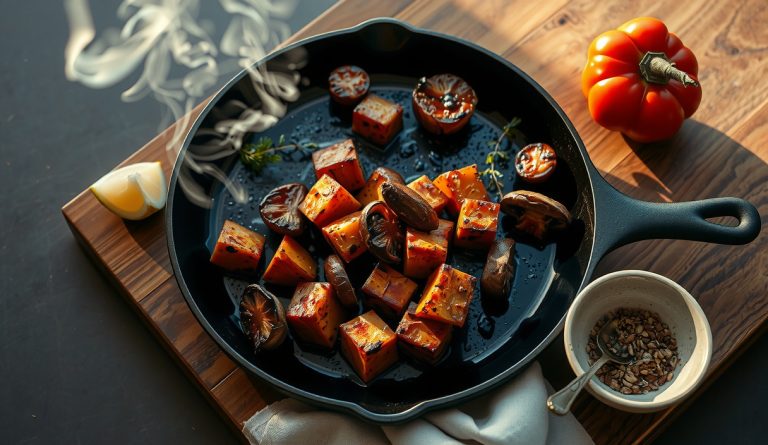
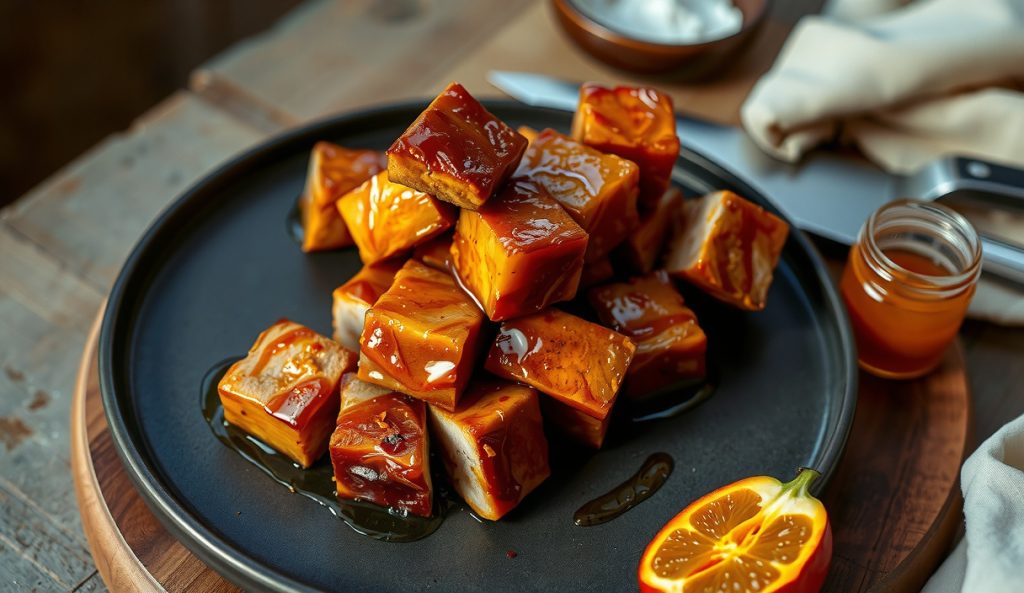
This honey-habanero variation preserves the sweet-lacquered architecture of the canonical smoked pork belly burnt ends recipe while sharpening both sweetness and heat through two targeted ingredient swaps: raw honey replaces brown sugar in equal volume, and one to two minced habanero peppers enter the glaze. The result is a burnt end that reads as familiar — sticky, caramelized, lacquered — but carries a slow, building heat through the back half of each bite. This version suits cooks who want genuine fire without abandoning the classic meat candy format.
What changes in the honey-habanero version?
Swap brown sugar for an equal volume of raw honey and add 1–2 minced habanero peppers to the glaze. Technique is critical: add the minced habanero directly to the melted butter first and cook for 60–90 seconds before adding the honey. This step blooms the capsaicinoids — lipophilic compounds — into the fat, distributing them evenly through the glaze rather than leaving them concentrated in isolated pepper fragments. Wear gloves when handling habaneros; capsaicin binds to skin and mucous membranes regardless of washing.
Raw honey’s native invertase enzyme hydrolyzes sucrose into free glucose and fructose before cooking even begins, yielding a higher proportion of reducing sugars than brown sugar provides. Reducing sugars are the primary Maillard reactants alongside amino acids — more free glucose and fructose means faster browning onset at a given temperature, producing a deeper, more complex bark during the final 20–30 minutes on the grate. Because the capsaicinoids are lipophilic, they partition heavily into the abundant rendered pork belly fat, delivering a sustained heat release rather than a sharp capsaicin spike.
What stays exactly the same as the original recipe?
The three-phase cook structure is identical to the canonical recipe: open smoke to build bark, a wrapped braise to 190°F internal temperature, then an uncovered glaze phase. The dry rub, smoker temperature (250°F), and all target internal temperatures remain unchanged. Only the glaze composition changes — everything else the cook has already mastered transfers directly.
When is this honey-habanero version the better choice?
Choose the honey-habanero version when your crowd explicitly wants heat, when you are pairing the burnt ends with cooling sides like creamy coleslaw or pickled cucumber, or when you want Maillard color development to push darker and faster than the standard brown sugar glaze achieves. One habanero delivers noticeable heat; two is aggressive — calibrate to your audience and their capsaicin tolerance before committing.
Use the full method, equipment, and rub measurements from the original Smoked Pork Belly Burnt Ends.