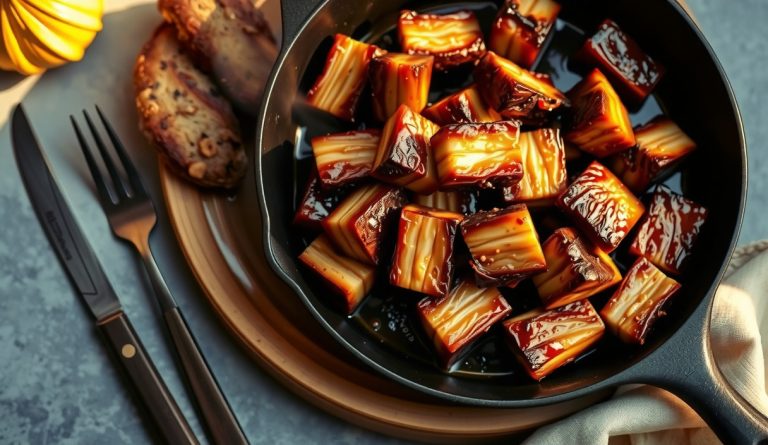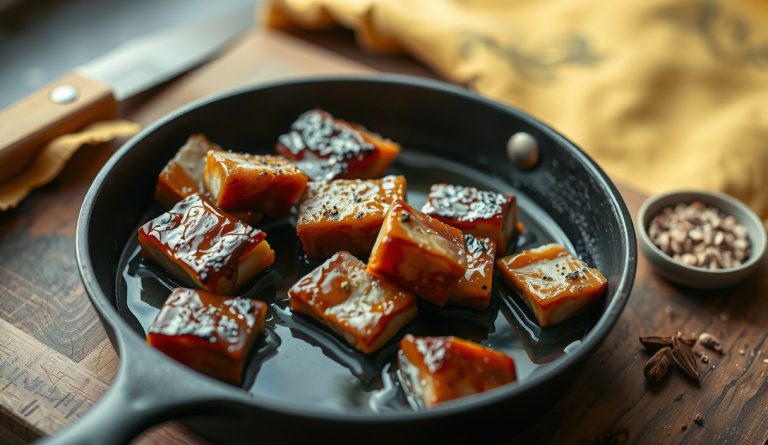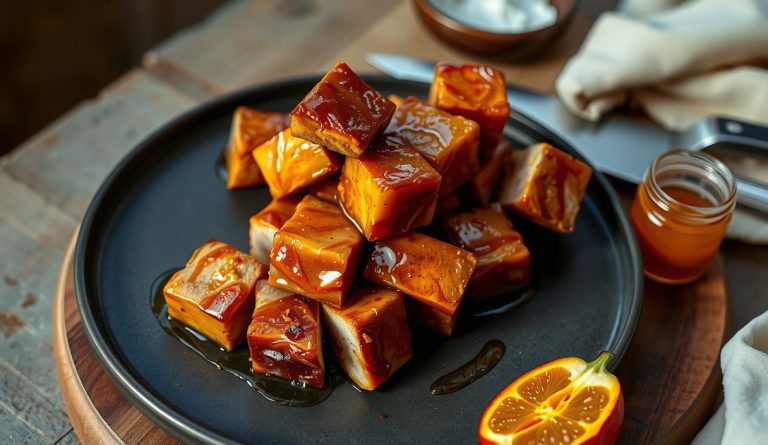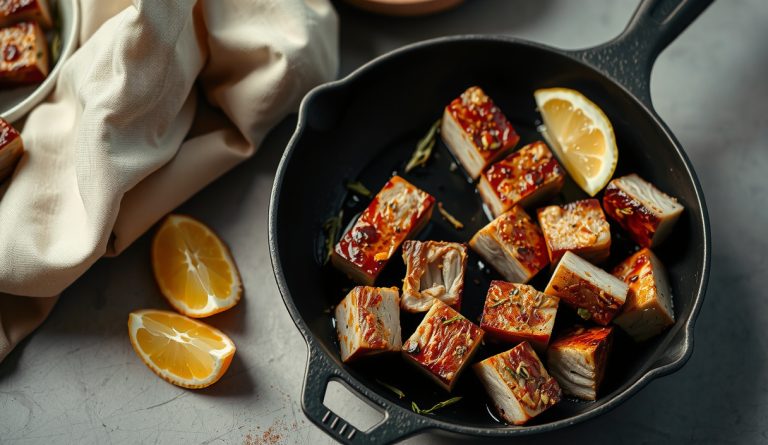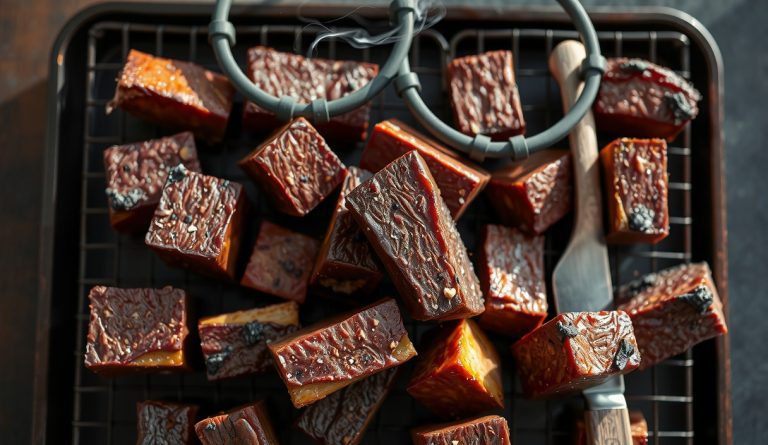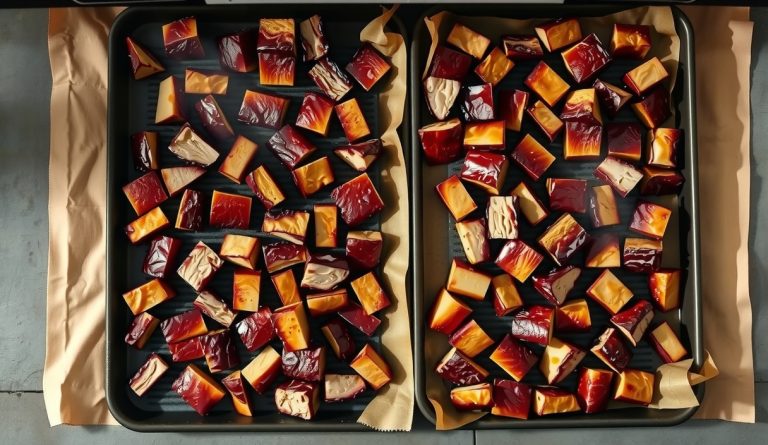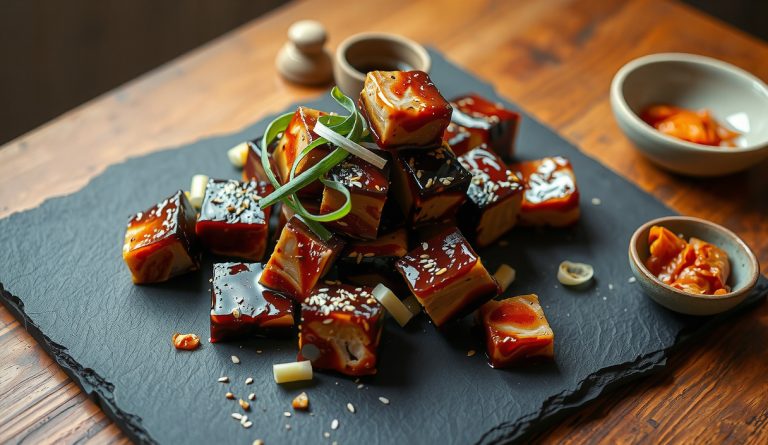
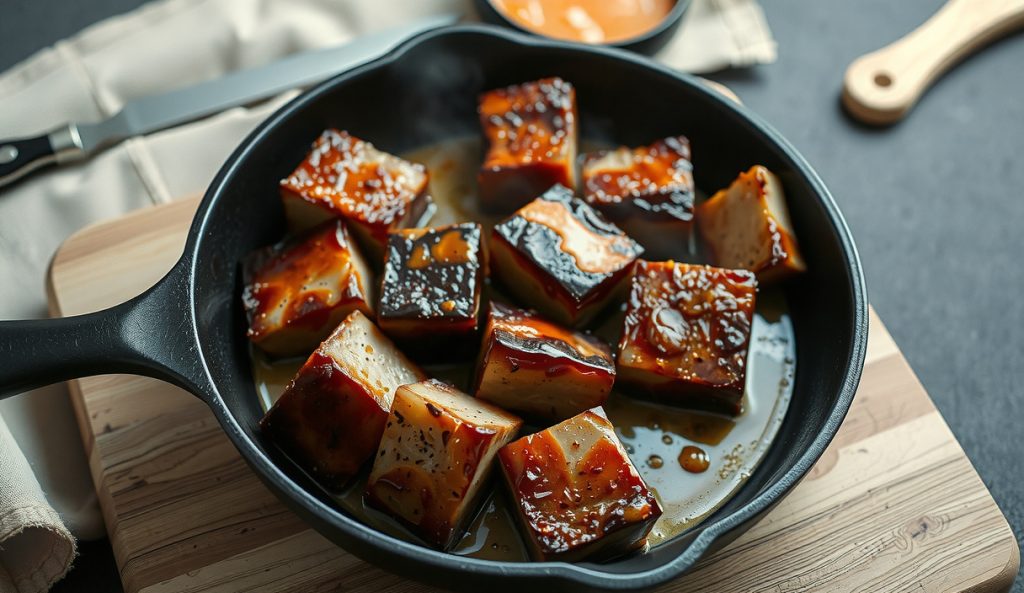
Pork belly is one of the most keto-compatible proteins you can smoke: an extraordinary fat-to-protein ratio, near-zero intrinsic carbohydrates, and a collagen network that converts to gelatin independent of any added sugar. In the canonical recipe, the entire carb load lives in the rub and the glaze — brown sugar, ketchup, and molasses in the sauce. Eliminate those precisely, and you preserve everything that makes smoked pork belly burnt ends transcendent while cutting net carbs from roughly 18–22g per serving to under 3g.
What changes to make smoked pork belly burnt ends keto?
Brown sugar in the rub. Replace brown sugar with an equal weight of a granulated allulose–monk-fruit blend. Allulose is the critical choice here — not pure erythritol. Allulose participates in the Maillard cascade and caramelizes at temperatures close to those of sucrose, producing the same deep mahogany bark at a 250°F pit temperature. Erythritol-only blends do not brown the same way; they also recrystallize as the surface cools, leaving a gritty, cooling sensation on the palate. A 50/50 allulose–monk-fruit blend delivers sweetness calibration plus real browning chemistry.
BBQ sauce in the glaze. Standard Kansas City-style sauce contributes the majority of the serving carbs — ketchup alone delivers roughly 4g net carbs per tablespoon, and molasses adds another dense hit. Use a dedicated keto BBQ sauce (widely available, sweetened with allulose or monk-fruit) or build a rapid version: tomato paste thinned with beef stock and apple cider vinegar, one tablespoon of allulose, smoked paprika, garlic, and a dash of gluten-free Worcestershire. Tomato paste carries a lower sugar-per-tablespoon load than ketchup and provides the same glutamate-driven umami depth the glaze requires.
Butter in the glaze. Butter stays. Butter is essentially carb-free, and its saturated milkfat — palmitic and stearic glycerides — does exactly the same work: coating the bark in a thin continuous lipid film that carries the glaze and drives the second Maillard layer during re-smoking.
Net-carb delta. The canonical pork belly burnt ends recipe runs approximately 18–22g net carbs per serving, almost entirely from brown sugar rub and ketchup-molasses sauce. Substituting an allulose–monk-fruit rub and a keto BBQ sauce brings that figure to roughly 2–3g net carbs per serving. Allulose is not metabolized and is excluded from net-carb calculations in most frameworks, so the rub contributes effectively zero net carbs.
Serving. Skip any bread or starchy side. Smoked pork belly burnt ends served over a simple dressed cabbage slaw — acid, salt, no added sugar — or alongside smoked cauliflower florets keeps the entire plate within keto macros.
What stays the same in the keto version?
Every structural element of the cook is unchanged: cube geometry, 250°F pit temperature, the unwrapped smoke phase run to 190°F internal, the aluminum-pan glaze braise, and wood selection. Collagen hydrolysis is a temperature-and-time reaction with no carbohydrate dependency — the trembling, self-saucing gelatin texture of the finished burnt ends is fully preserved by the keto substitutions.
When is the keto version the better choice?
This is the version to bring to any low-carb or ketogenic table. Because pork belly’s fat content is so high, smoked pork belly burnt ends also serve people pursuing a therapeutic ketogenic diet who need a high fat-to-protein ratio in every component of the meal — the fat-to-protein balance of pork belly requires no adjustment whatsoever.
Full method, timing, and temperature science live at the original Smoked Pork Belly Burnt Ends recipe.