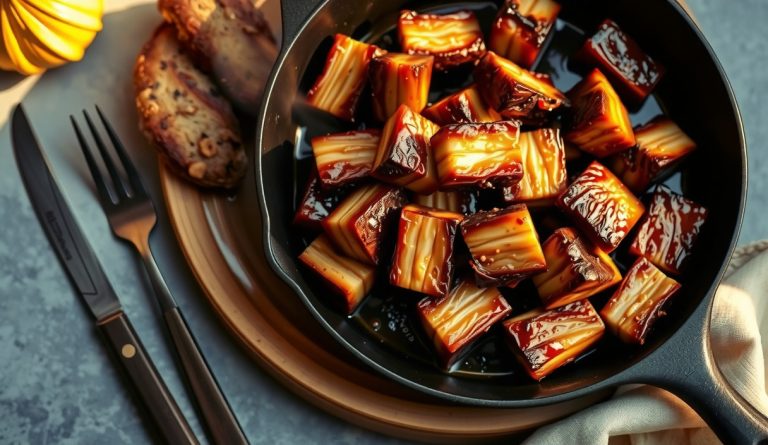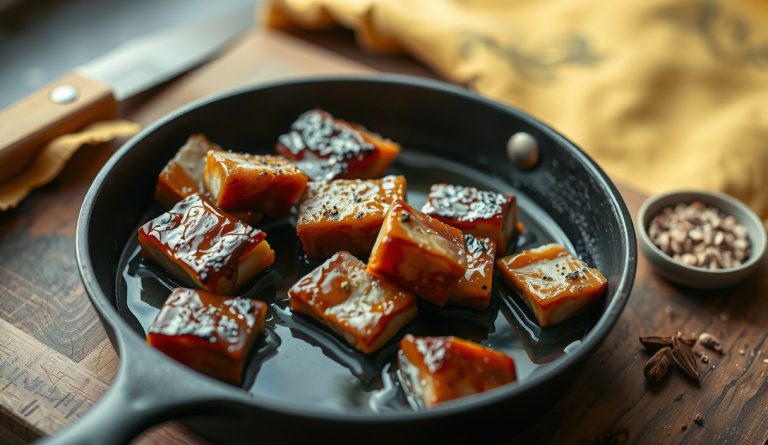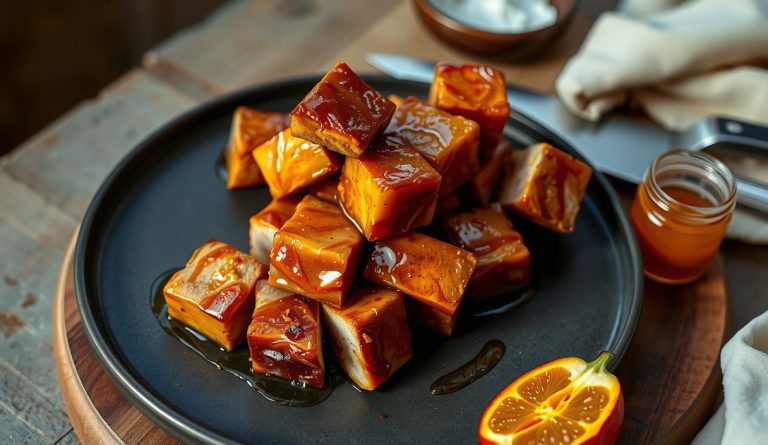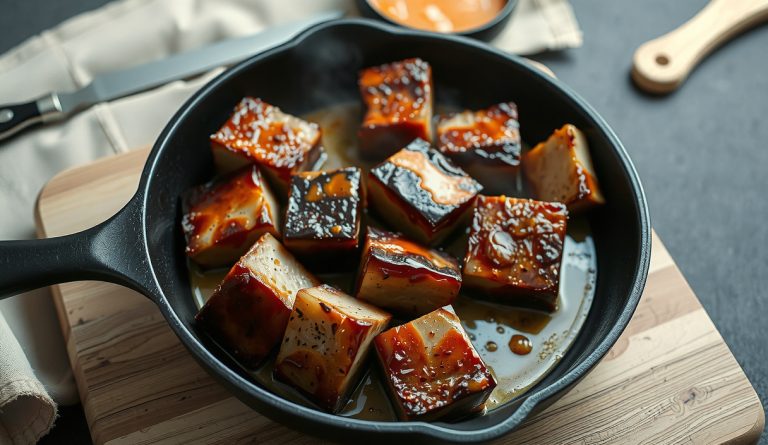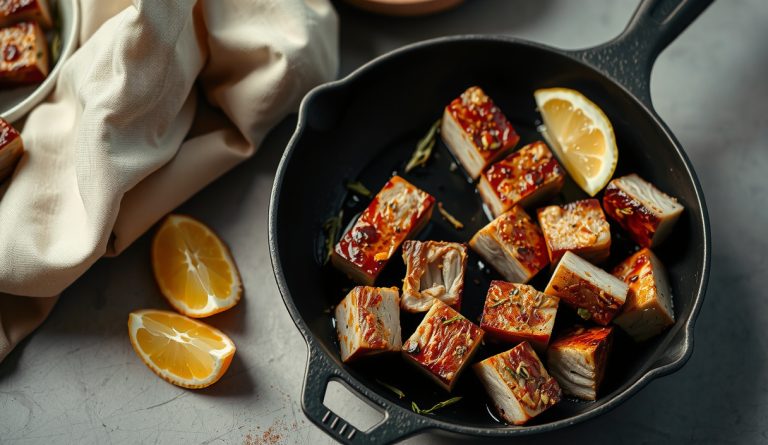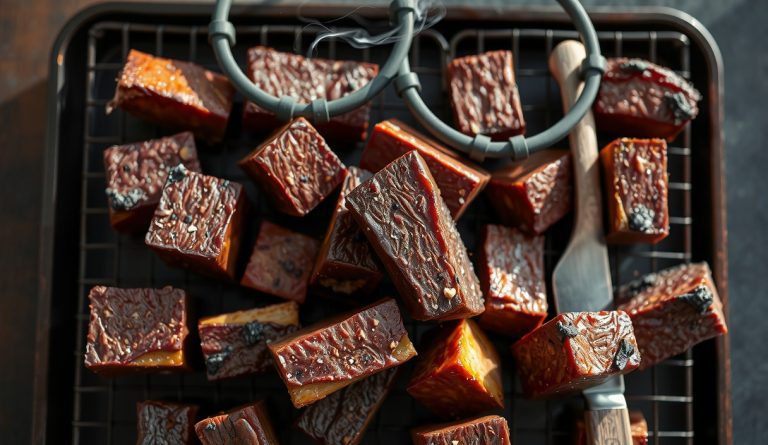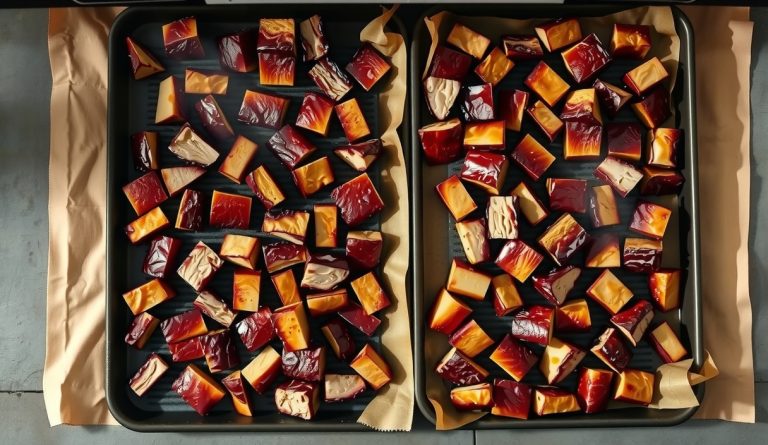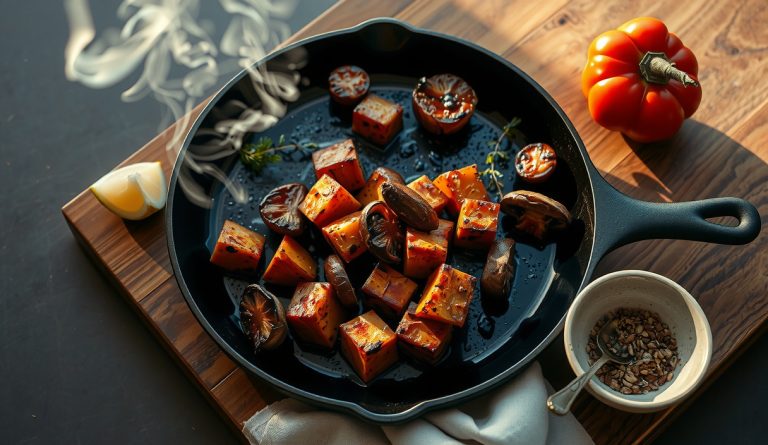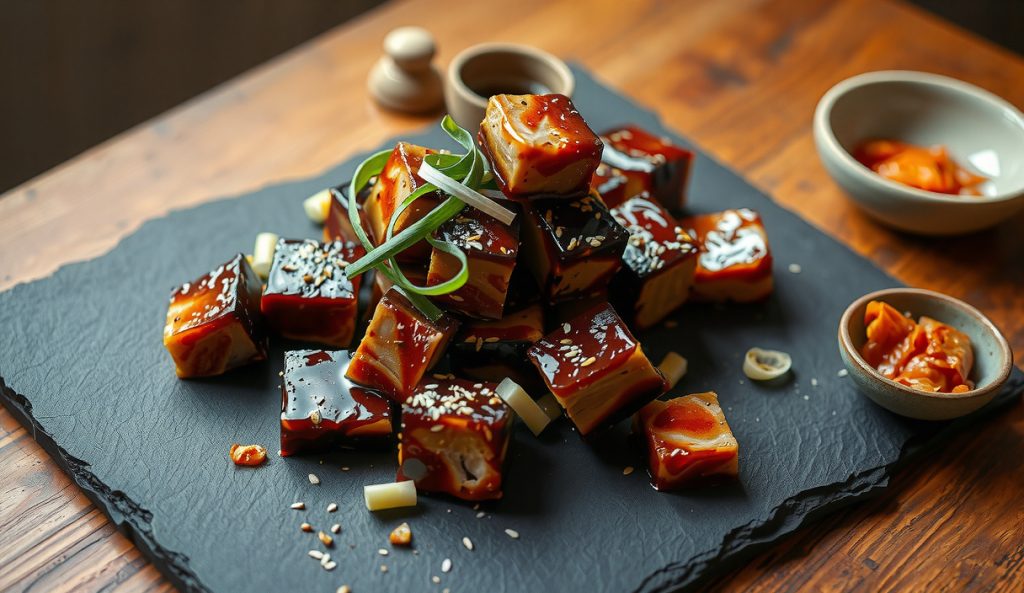
The canonical pork belly burnt ends glaze leans on brown sugar and BBQ sauce for its sweet-sticky finish. This Korean-inspired version replaces that glaze entirely with gochujang, honey, toasted sesame oil, and soy sauce — a combination that delivers fermented complexity, chemesthetic heat, and a lacquer that clings aggressively to the rendered fat exterior. The textural payoff remains identical — that glossy, cubed bite — but the flavor profile moves decisively away from American BBQ sweetness toward something more layered and savory.
What changes in this Korean-inspired version?
Replace the brown sugar and BBQ sauce glaze with the following: 2 tablespoons gochujang, 2 tablespoons honey, 1 tablespoon toasted sesame oil, 1 tablespoon soy sauce, and 2 tablespoons unsalted butter. Combine these ingredients in the aluminum pan once the pork belly cubes are pulled off the smoker at 190°F internal temperature, toss the cubes to coat evenly, and return the pan to the smoker uncovered for the final 20–30 minutes. Finish with toasted sesame seeds and sliced scallion greens immediately before serving.
Why does this glaze work? The science behind gochujang on smoked pork
Two distinct mechanisms drive the flavor depth of this Korean-inspired glaze. First, gochujang’s heat comes from capsaicin, a TRPV1 agonist that triggers chemesthetic warmth rather than true thermoreception — the burn builds gradually rather than spiking, which means it layers into the fat without overwhelming the palate.
Second, the fermentation process driven by Aspergillus oryzae liberates free amino acids from the gochujang base. Those free amino acids contribute glutamate-forward umami that amplifies the Maillard-developed crust already formed on the pork belly during the initial smoke phase. Toasted sesame oil — which carries a higher effective smoke point than its untoasted counterpart — prevents scorching during the glaze phase without masking the oil’s characteristic nutty aromatic compounds.
What stays the same from the original method?
The full smoke progression is unchanged from the base recipe. That means the initial 3-hour smoke at 250°F on the grate, the wrapped braise phase carried to 190°F internal, and the uncovered glaze phase to develop final bark all proceed exactly as written. The dry rub — salt, pepper, garlic powder, and paprika — stays on the pork belly. Only the contents of the glaze pan are swapped.
When is this Korean-inspired glaze the better choice?
This variation outperforms the canonical glaze when serving guests who find traditional BBQ-sweet finishes one-dimensional, when pairing the pork belly burnt ends with steamed rice or Asian-style slaws, or when you want a genuine conversation piece at a cookout where every other plate is sauce-forward. The fermented depth of the gochujang makes this version genuinely different from a standard smoked pork belly — not simply hotter.
Use the full method, equipment, and rub measurements from the original Smoked Pork Belly Burnt Ends.