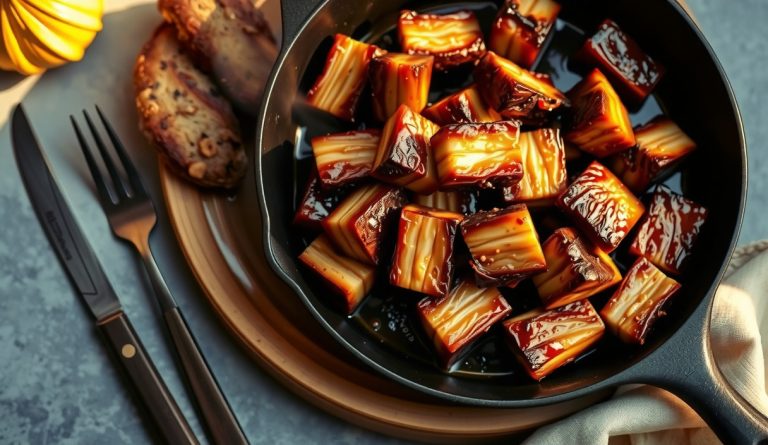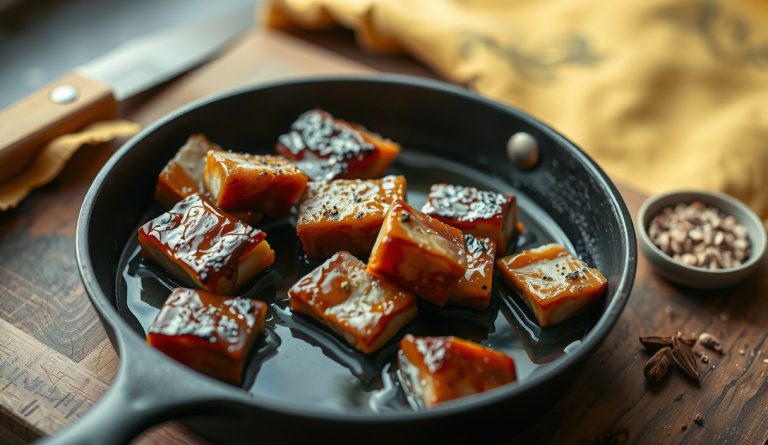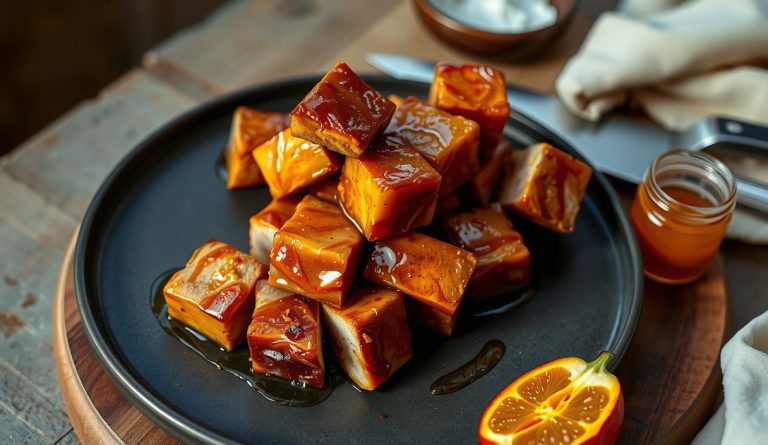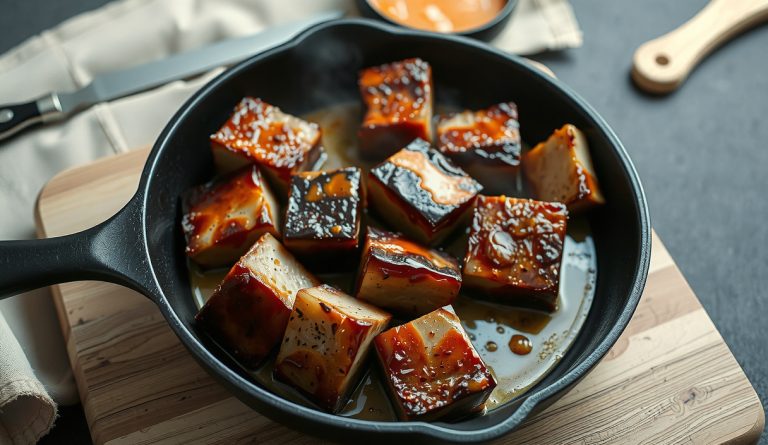
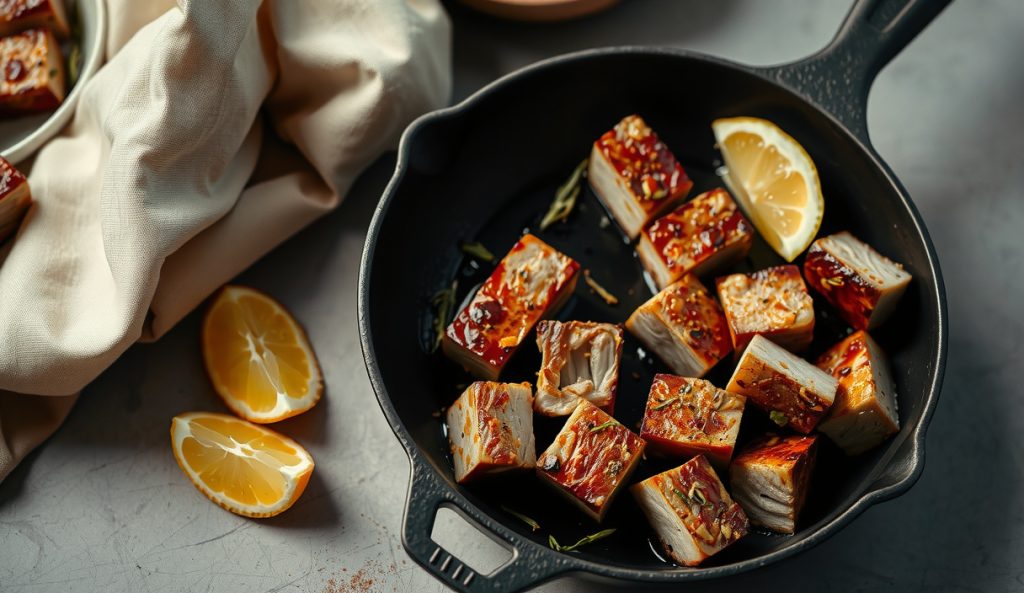
Salt is not just seasoning in this recipe — it performs two distinct mechanical roles, and reducing it requires compensating for both. This low-sodium adaptation cuts sodium by roughly 60% and names every substitution alongside its specific mechanism, so you understand exactly what you are trading and what you are getting back.
What changes when you cut sodium from smoked pork belly burnt ends?
Salt’s roles and how to compensate. In the dry rub, salt drives initial surface protein denaturation — it disrupts the myosin and actin secondary structures at the surface, creating the sticky pellicle that lets smoke compounds (primarily guaiacol and syringol) adsorb more effectively. Salt also draws surface moisture via osmosis, which dissolves remaining rub components and re-absorbs as a brine before cooking begins. Cut rub salt by 60% — from roughly 2 tablespoons down to just under 1 tablespoon per 3–4 lb slab — and rebuild surface chemistry with smoked paprika (doubled in volume), fine-ground black pepper (slightly increased), citrus zest (1 teaspoon dried orange or lemon zest adds aromatic esters and surface acidity), and a pinch of MSG if dietary rules permit. MSG delivers glutamate-driven savoriness at roughly one-third the sodium load of an equivalent salt volume.
Potassium chloride substitutes. Nu-Salt and similar KCl-based salt substitutes can replace up to 50% of the sodium chloride in the rub. An important caveat applies: KCl triggers bitter, metalite-like off-notes at concentrations above roughly 30–40% of total chloride content, particularly under sustained high heat. Keep KCl below that threshold in a hot rub application, or reserve it for finishing use only.
BBQ sauce and Worcestershire are the other high-sodium landmines. Standard Worcestershire sauce delivers 65–70 mg sodium per teaspoon; Kansas City-style BBQ sauce can run 300–450 mg per 2-tablespoon serving. Use a low-sodium or homemade BBQ sauce built on no-salt-added tomato paste, and substitute coconut aminos for Worcestershire — coconut aminos carry roughly 90 mg sodium per tablespoon versus approximately 290 mg for standard soy-based Worcestershire. Rebuild sauce depth with apple cider vinegar brightness, smoked paprika, and a touch of molasses.
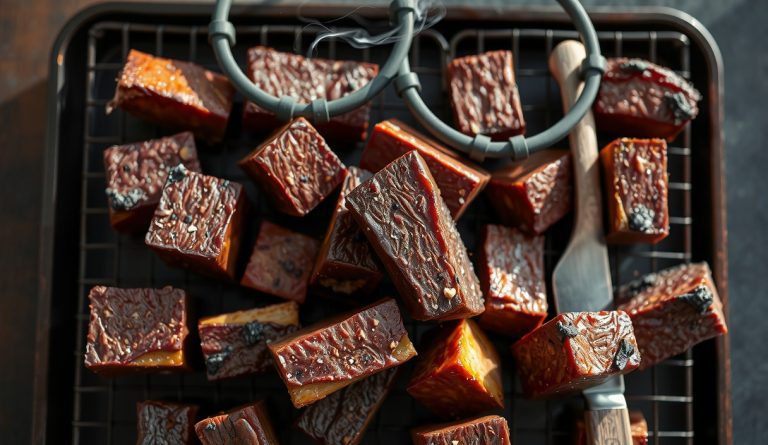
Bark formation must be assessed honestly. Less salt means less pellicle formation, which produces a modestly thinner bark. This is a real trade-off and should not be papered over. Three compensations partially offset it: extend the initial rub rest to at least 2 hours (or overnight) so the reduced salt has maximum time to work; smoke the pork belly at 250°F with a denser smoke profile by adding one extra chunk of cherry wood; and do not rush the unwrapped smoke phase — every additional 15 minutes at surface temperatures above 250°F adds Maillard crust depth that partially substitutes for the thinner pellicle.
What stays the same in the low-sodium version?
The 250°F pit temperature, the 190°F internal temperature target, the cube geometry, the unwrapped smoke phase, the aluminum-pan glaze braise, and the resting protocol are all unchanged from the standard recipe. Fat render kinetics and collagen hydrolysis have no sodium dependency — the final texture of the low-sodium burnt ends will be identical to the original.
Who is this low-sodium version the better choice for?
This adaptation serves guests managing hypertension, heart failure, or chronic kidney disease. Anyone cooking for a mixed table where even one person has a sodium restriction should default to this version, because the roughly 60% sodium reduction is invisible in the eating experience when all compensations are applied correctly.
For the complete method and temperature guidance, refer to the original Smoked Pork Belly Burnt Ends recipe.