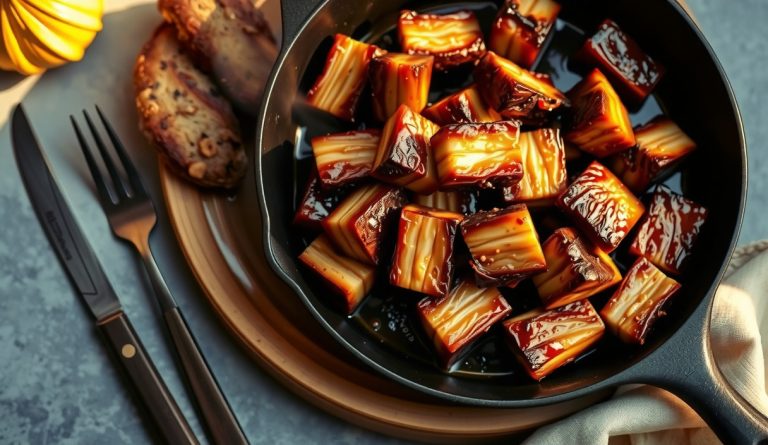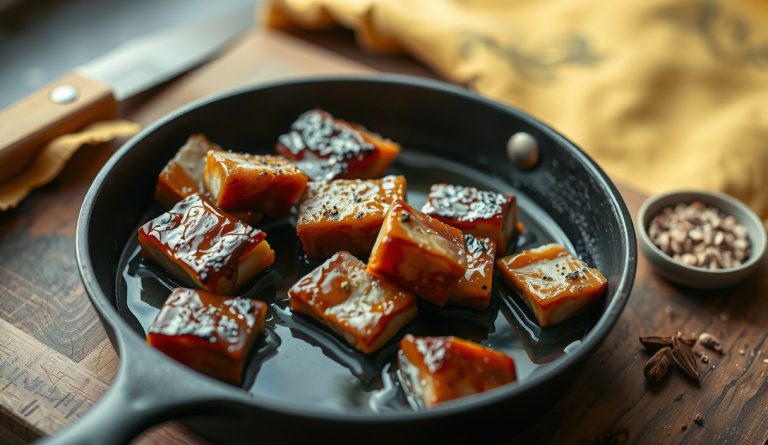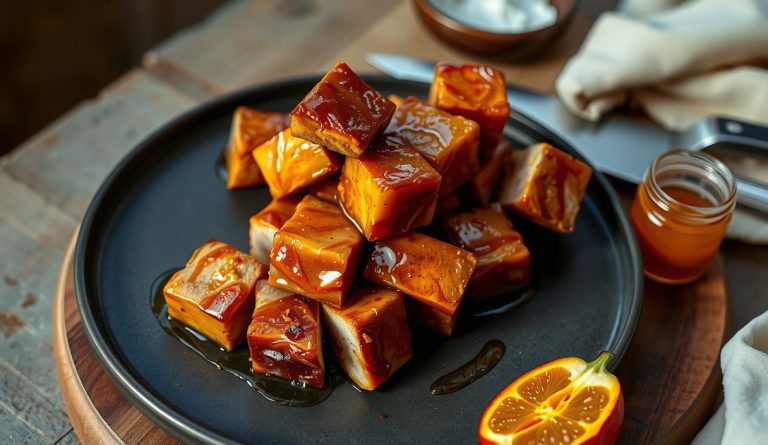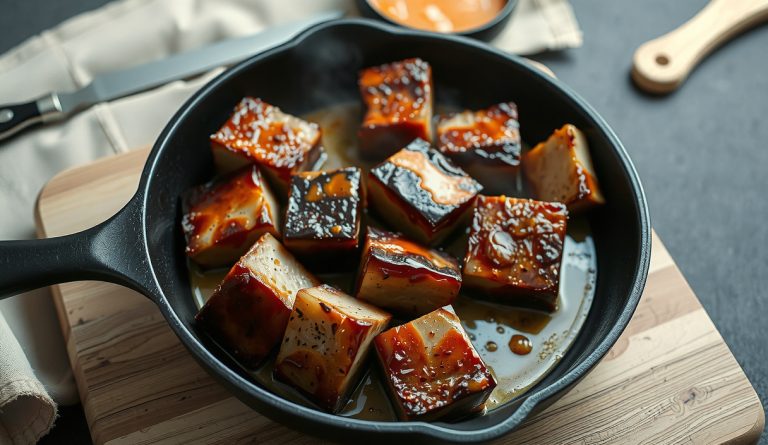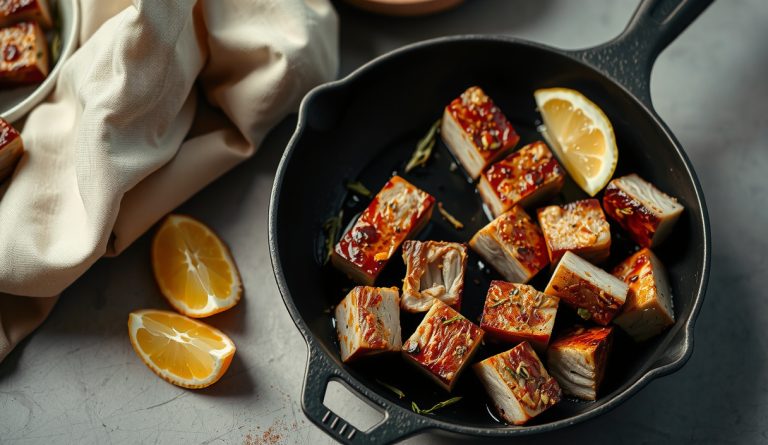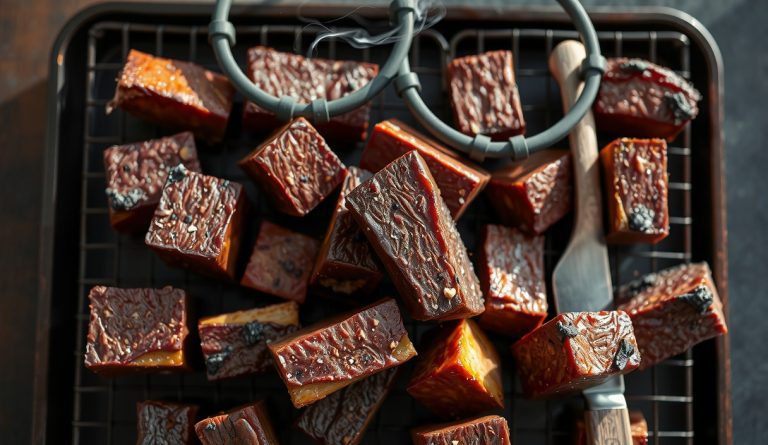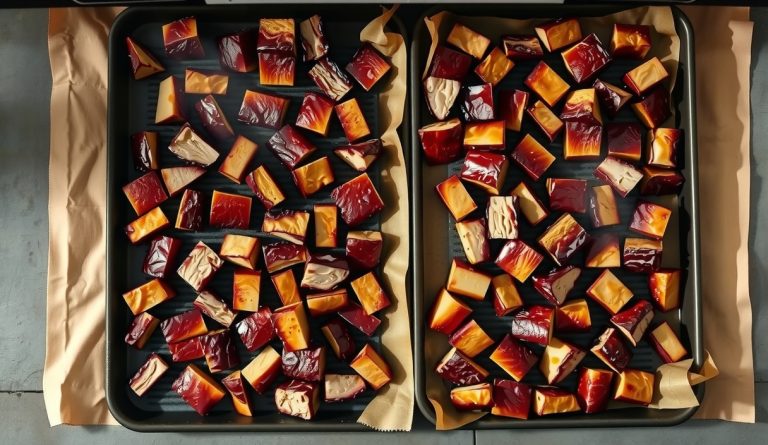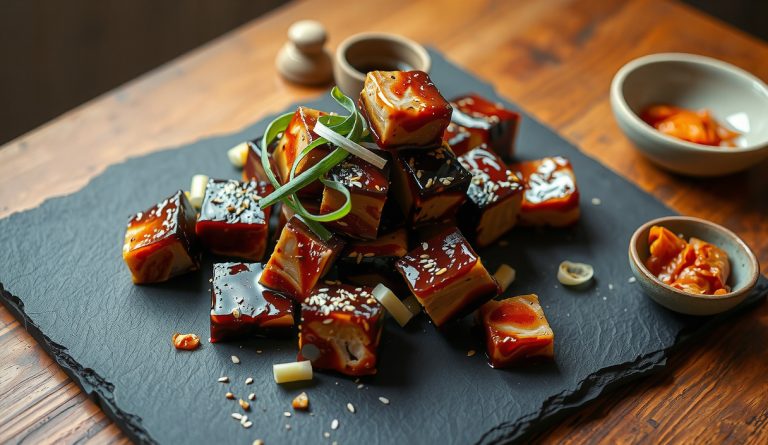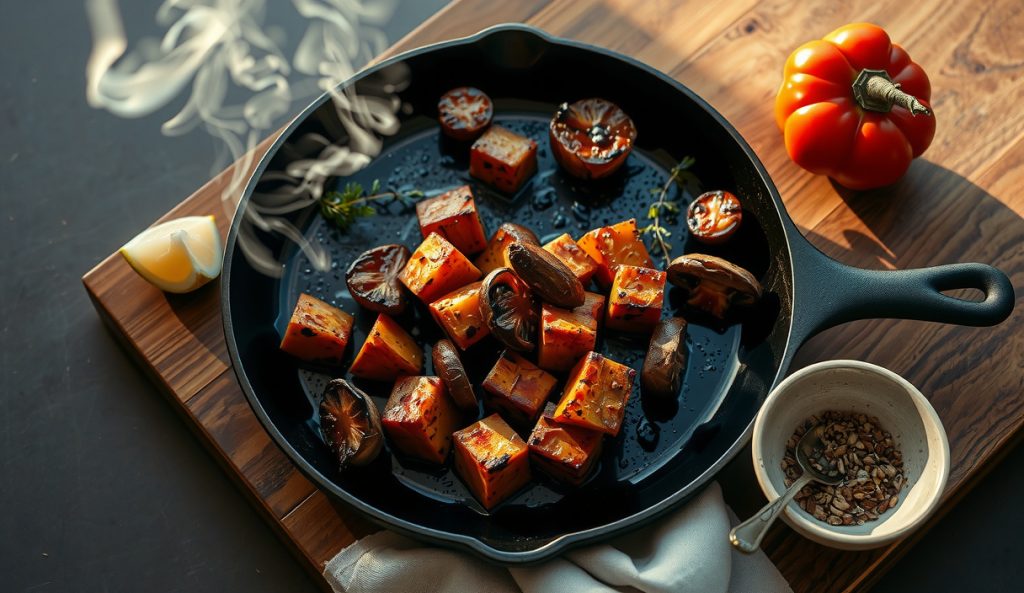
This is not a pork belly replacement. It is a companion dish designed to sit at the same table, wear the same rub, share the same smoke, and deliver a genuinely satisfying experience to vegetarian guests — while being completely honest about what it does and does not replicate. The best plant-based analog for smoked pork belly burnt ends is extra-firm tofu, pressed and cubed: it is the only plant-based option with sufficient protein-matrix density to form a real Maillard bark, absorb smoke compounds at the surface, and hold cube geometry through a two-phase cook.
What changes between pork belly and tofu burnt ends?
The protein matrix. Extra-firm tofu is a coagulated soy-protein gel composed primarily of glycinin and beta-conglycinin aggregates. Unlike pork belly, tofu has no intramuscular fat to render and no collagen to hydrolyze, so the interior will not become gelatinous. What tofu does have is a dense, porous protein scaffold that responds to heat and smoke in its own legitimate way. Press tofu for a minimum of 2 hours under weight — removing as much free water as possible is the single most important step. Residual water suppresses surface temperature during the smoke phase, killing Maillard chemistry before it can begin.
Freeze-thaw pre-treatment. Freeze the pressed tofu block solid, then thaw it completely before cutting. Freezing ruptures internal water pockets and collapses the protein gel into a sponge-like open matrix — post-thaw cubes absorb marinade, smoke-phase fat, and glaze far more aggressively than fresh tofu ever could. Cut the thawed block into 1.5-inch cubes, matching the canonical pork belly geometry exactly.
Pre-smoke fat coat. Toss the tofu cubes in 2 tablespoons of neutral oil — refined avocado oil or rice bran oil, both stable to 500°F — before applying the canonical rub. This lipid coat does for tofu what intramuscular fat does for pork belly: it creates a continuous surface film that raises effective surface temperature, promotes even Maillard condensation across each cube face, and carries fat-soluble smoke aromatics (guaiacol, syringol) into the protein matrix.
Rub and smoke phase. Apply the canonical rub at the same ratios and use the same wood — cherry or apple. Smoke compounds adsorb efficiently to tofu’s protein surface; soy protein’s relatively polar surface chemistry is actually a good smoke sink. Smoke at 250°F for 90 minutes to an internal temperature of approximately 160°F. The tofu companion requires far less time than pork belly because there is no collagen hydrolysis phase. Watch for visible surface bark formation rather than relying on internal temperature alone as the doneness signal.
Glaze phase. Transfer the smoked tofu cubes to an aluminum pan and add butter (or vegan butter for a fully plant-based version), the canonical BBQ sauce, and brown sugar. Return the pan to the smoker for 30–45 minutes. The tofu cubes braise in the glaze and absorb it through the open freeze-thaw matrix. The result is a glazed, smoke-kissed cube with a genuine Maillard exterior, a sauce-saturated interior, and a firm-but-yielding chew. The tofu companion does not tremble or melt — that gelatinous collapse is a collagen phenomenon exclusive to animal protein. Be honest with guests about the textural difference, and let the smoke and glaze speak for themselves.
What stays exactly the same as the original recipe?
The rub recipe, the wood selection, the 250°F pit temperature, the aluminum-pan glaze phase, the BBQ sauce, the brown sugar, and the butter in the glaze are all identical to the canonical pork belly recipe. Guests at both ends of the table receive the same seasoning profile and the same smoke character — the cook changes the protein, not the flavor philosophy.
When is the tofu companion the better choice for your cookout?
Cook both dishes simultaneously: the tofu companion goes on the smoker approximately 2.5 hours after the pork belly, so both finish at the same time. This is the longer table — one cook, one rub, one fire, and something genuinely worth eating for every person in the yard. The tofu burnt ends are not a consolation plate; they are a parallel result of the same technique applied honestly to a different protein.
The full pork belly method and science are at the original Smoked Pork Belly Burnt Ends recipe.