True wood smoke introduces a spectrum of combustion byproducts — phenols, guaiacol, syringol, and carbonyls — that bond to proteins and fats on the meat surface and create the layered aromatic depth that defines smoked pork. A conventional oven cannot replicate that chemistry directly. What it can do is come close enough to be genuinely satisfying, and smoked paprika is the most practical bridge between the two methods for a home cook without outdoor equipment or a dedicated smoker.
What changes when you move smoked pork tenderloin to the oven?
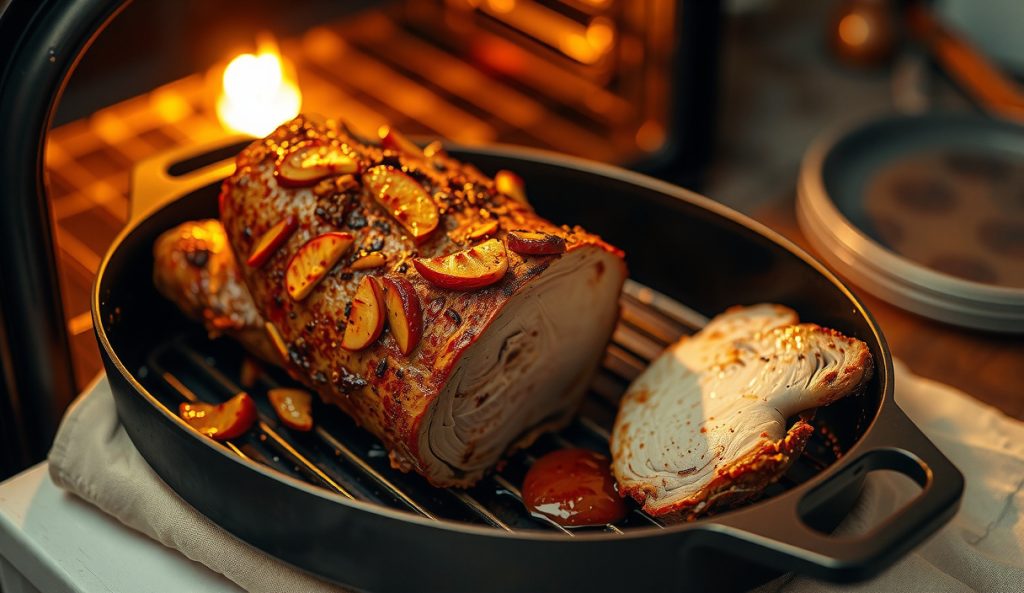
Set the oven to 250°F — the same ambient temperature used in the smoker method — and roast the tenderloin on a wire rack set over a rimmed sheet pan for even airflow on all sides. Before roasting, add 2 teaspoons of smoked paprika to the surface rub. Smoked paprika is produced by drying peppers over oak or holm oak smoke, which deposits phenolic compounds — particularly guaiacol and its derivatives — onto the pepper flesh. These are some of the same phenolic compounds responsible for the aromatic character of wood-smoked meat.
The concentration of phenolic compounds in smoked paprika is lower than what a smoker delivers over a full cook, but rubbed onto the surface and roasted at low heat, smoked paprika contributes a recognizable smoke-adjacent note without tasting artificial. One result cannot be replicated: the smoke ring. A smoke ring requires nitric oxide from combustion reacting with myoglobin in the meat — a reaction no oven can initiate — and the overall depth of flavor will be shallower than the smoker version.
After the glaze is applied and the tenderloin reaches an internal temperature of 140°F, switch the oven to broil and roast for two additional minutes directly under the element. At broiler temperatures — typically 500–550°F of radiant surface exposure — the Maillard reaction accelerates sharply above its practical onset around 140–150°C, driving rapid browning and caramelization of the applied glaze in a window that the standard 250°F oven temperature cannot achieve on its own. Watch closely: the difference between a lacquered glaze and a scorched one is roughly 60 seconds under a broiler.
What stays exactly the same as the original recipe?
The glaze recipe, reduction method, and application timing relative to internal temperature are unchanged from the canonical smoker method. Target a final internal temperature of 145°F, and observe the full rest period before slicing — both apply exactly as written in the original recipe.
When is the oven adaptation the better choice?
This adaptation is purpose-built for apartment kitchens, winter months when outdoor cooking is impractical, or any situation where a smoker is simply not available. Oven preheat is faster than bringing a smoker to temperature, and cleanup is simpler, making this a practical weeknight path. The result is a genuinely well-glazed, low-and-slow roasted tenderloin that delivers most of what makes the canonical recipe work — with the honest caveat that wood smoke has no true substitute.
- No smoker, no problem: smoked paprika supplies guaiacol-family phenols for smoke-adjacent flavor.
- 250°F oven temperature mirrors the smoker’s ambient cook environment precisely.
- A 2-minute broil at 500–550°F drives Maillard browning and glaze lacquering that low heat cannot.
- Final internal target of 145°F and the rest period apply identically to both methods.
Use the full method, glaze recipe, and rub measurements from the original Smoked Pork Tenderloin with Apple-Cider Glaze.