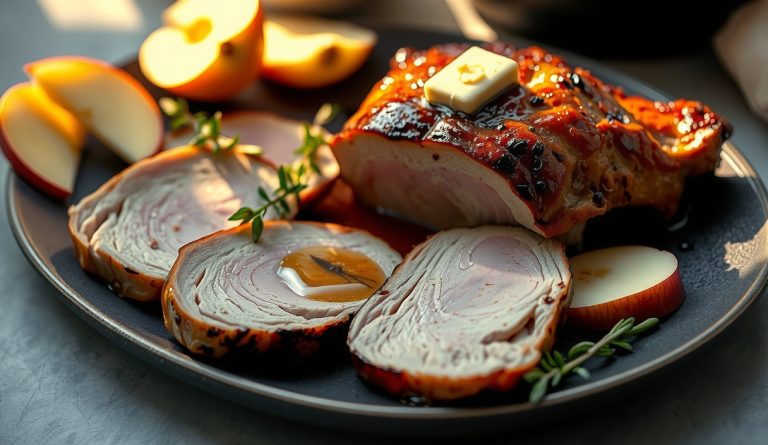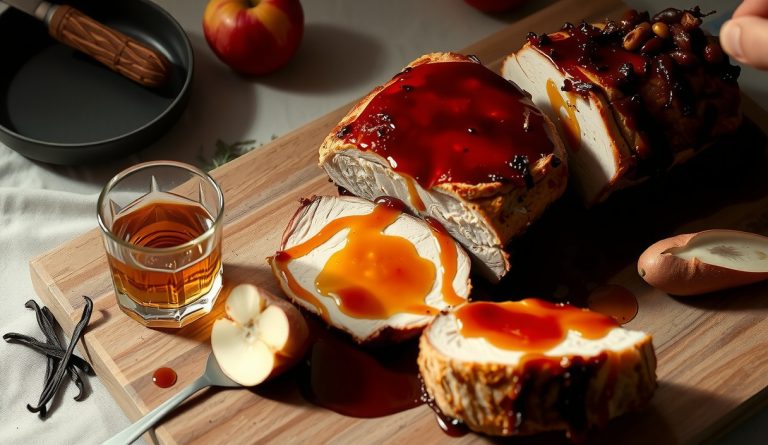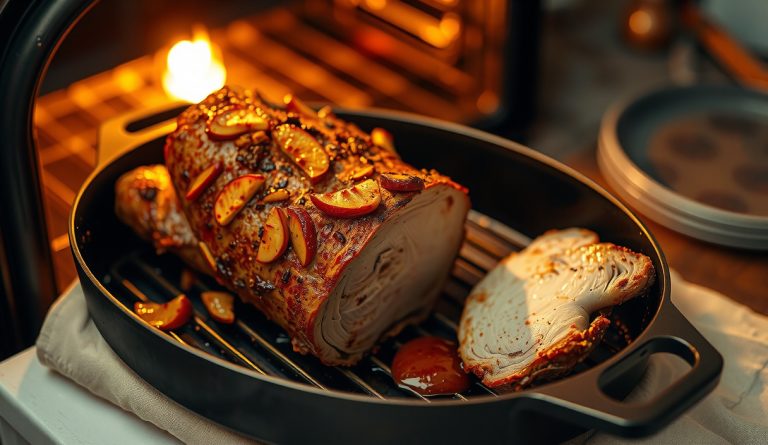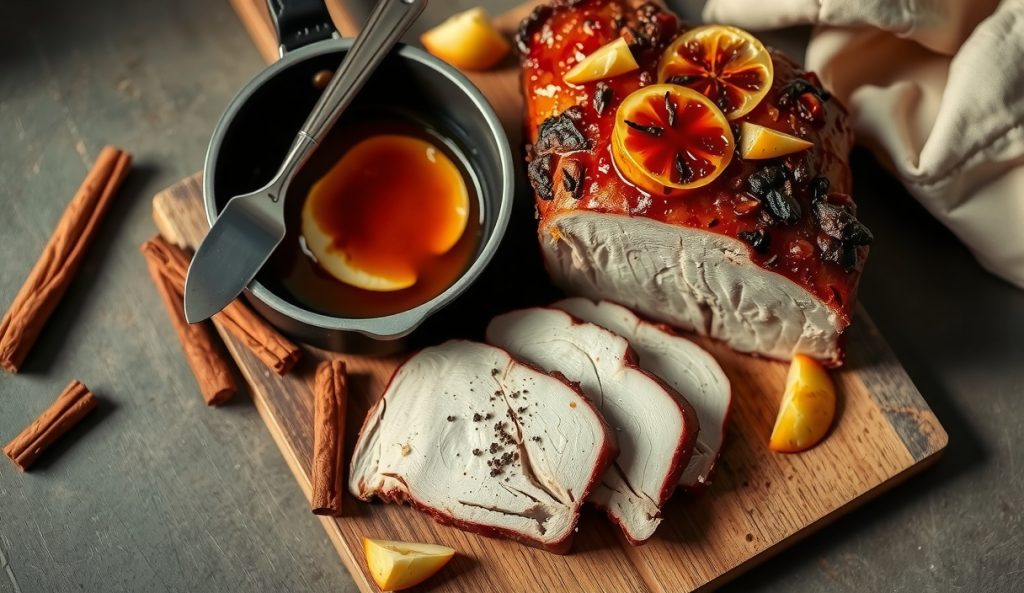
The spiced cider glaze variation takes the canonical apple-cider framework and shifts it toward a warmer, more aromatic register by steeping whole cinnamon, clove, and black pepper through the entire reduction. The result is an apple-harvest character — deeper and more seasonal than the apple-orchard brightness of the base recipe — and it pairs particularly well with fall and winter pork cookery and with sides that already carry warm spice in their profile.
What changes in the spiced cider glaze?
Add one cinnamon stick, three whole cloves, and half a teaspoon of lightly cracked black peppercorns to the cider before the reduction begins. The spices steep throughout the entire reduction, releasing cinnamaldehyde from the cinnamon bark, eugenol from the cloves, and piperine-adjacent aromatics from the pepper into the liquid under low, sustained heat.
Because these aromatic compounds are volatile rather than sugars or starches, they do not meaningfully alter the sugar-concentration curve during reduction. The spiced glaze reaches the same nappe consistency on the same approximate timeline as the unspiced version. Strain the whole spices through a fine-mesh strainer before pulling the pan from heat — and before any bourbon addition if using both variations together. The filtered glaze carries aromatic depth with no textural interference from the whole spices.
Use whole spices, not ground. Whole form releases aromatics at a rate that complements rather than overwhelms the apple base; ground spices over-extract bitterness under the sustained heat of a full reduction.
What stays the same as the original recipe?
Reduction start volume, target viscosity, glaze application timing, and number of glaze passes on the tenderloin are all identical to the canonical method. The dry rub applied to the pork itself is unchanged — the spice layering is handled entirely at the glaze stage and does not require adjusting the dry seasoning to compensate.
When is the spiced cider glaze the better choice?
This variation earns its place on a fall or winter table, or anytime pork is served alongside root vegetables, squash, or grain dishes that already carry warm spice in their profile. It is also a smart adjustment when the apple cider available is fairly neutral or lightly processed. The whole spices compensate for cider that lacks the tannin and fermentation character of fresh-pressed juice, giving the glaze a complexity it would otherwise need to draw from the cider itself.
Use the full method, equipment, and rub measurements from the original Smoked Pork Tenderloin with Apple-Cider Glaze.