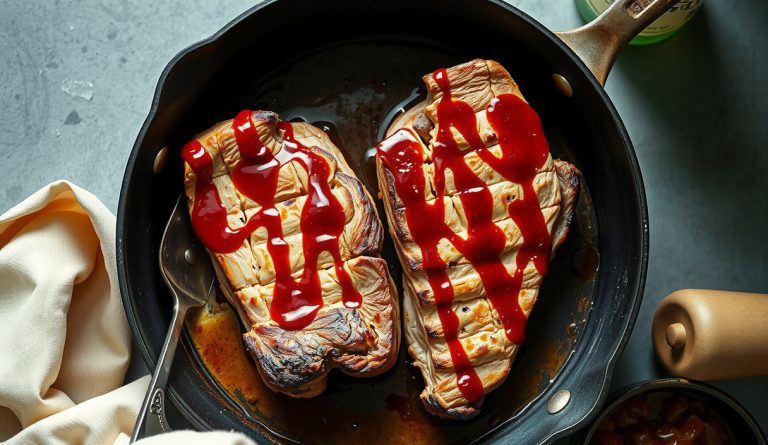
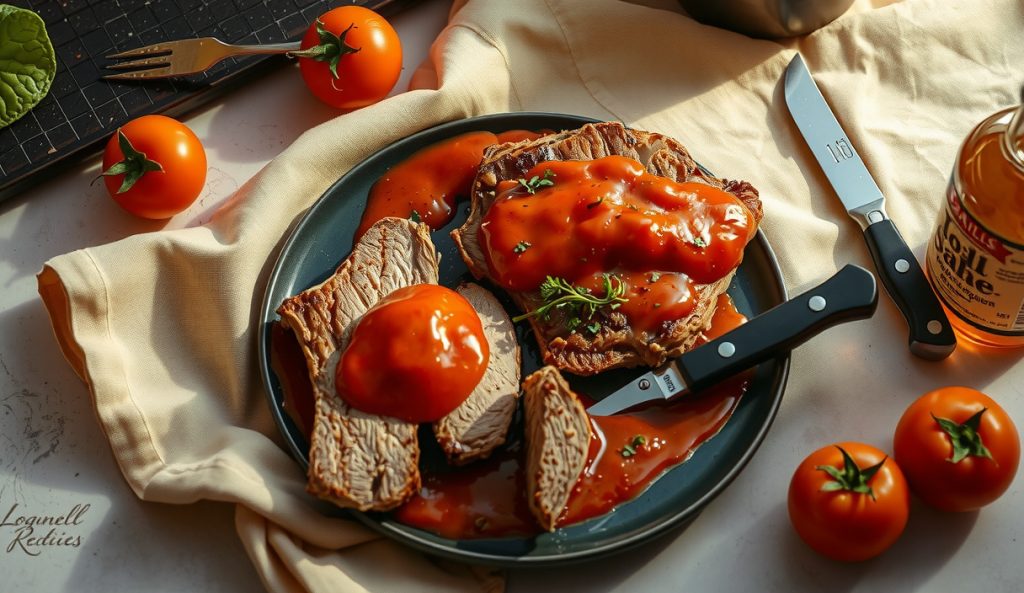
Commercial barbecue sauce — Maull’s included — carries a substantial sodium load, and a standard dry brine adds more. This variation restructures both the sauce and the seasoning protocol to bring St. Louis pork steaks within reach of people managing hypertension or following a physician-directed low-sodium diet, without sacrificing the braise-driven tenderness that defines the dish.
What changes in the low-sodium version?
Replace the commercial BBQ sauce with a homemade blend of crushed tomatoes, apple cider vinegar, smoked paprika, and a small amount of molasses. This blend delivers the acidic and mildly sweet profile the braising liquid requires without the sodium preservatives found in bottled sauce. Eliminate salt from the wet brine entirely, and reduce any added salt in the dry rub by at least half — ideally to zero if your target is strict restriction.
The trade-off is osmotic: salt in the brine creates a concentration gradient that draws seasoning into the interior of the pork steak during the wet braise phase. Without that gradient, the core of the meat seasons less deeply. Compensate by extending the initial dry rest — salted or unsalted — from 30 minutes to a minimum of 4 hours, and up to overnight in the refrigerator. The longer resting time allows seasoning compounds present on the surface, including smoked paprika’s fat-soluble flavor molecules, more contact time with the meat before heat is applied.
What stays the same in the low-sodium version?
The grill-to-braise method, two-zone fire, foil-seal timing, and 195°F internal temperature target are all identical to the original recipe. Collagen hydrolysis to gelatin is driven by time and temperature, not by sodium content — the braising mechanics are entirely unaffected by the sauce or seasoning swap.
When is the low-sodium version the better choice?
Use this variation for guests or household members managing cardiovascular conditions, kidney disease, or any protocol that restricts daily sodium intake. The low-sodium version is also worth considering when serving alongside other high-sodium sides — cornbread, baked beans, or coleslaw with a vinaigrette — where the cumulative meal sodium adds up quickly even before the main is plated.
Use the full method, equipment, and timing from the original St. Louis Pork Steaks.