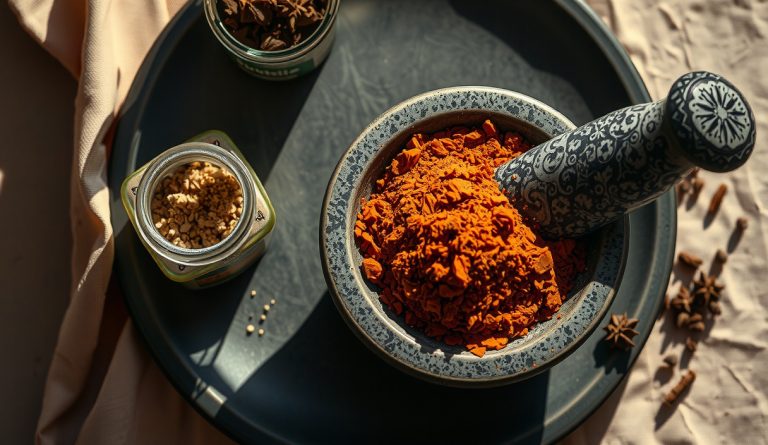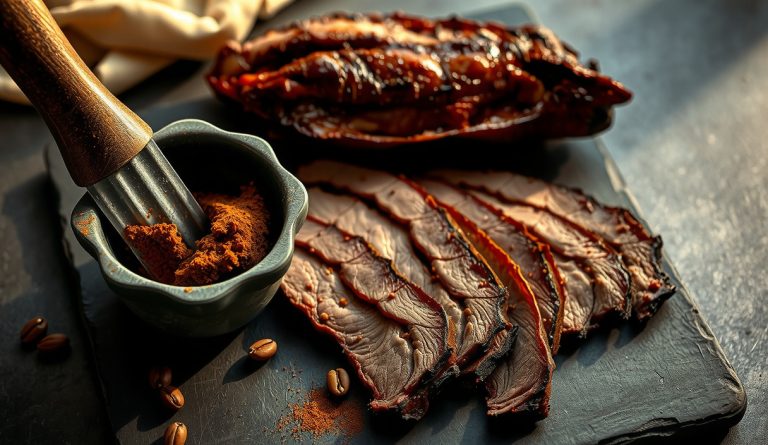
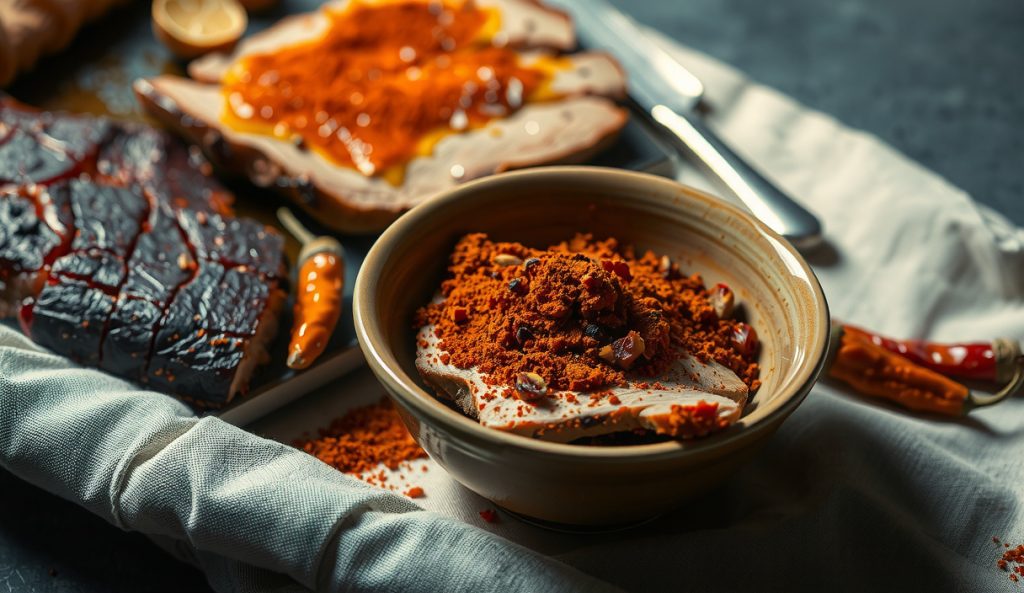
The Chipotle Heat Variant modifies the canonical Low-Sodium BBQ Rub by adding 1.5 teaspoons of chipotle powder and reducing black pepper by 1 teaspoon. The variant is designed for cooks who want genuine, sustained heat — not just warmth — and a bark with a trailing, smoke-amplified finish that lingers on the palate. Chipotle powder does dual duty: it contributes capsaicin for heat and introduces smoke-dried Maillard compounds from the jalapeño’s own drying process, stacking on top of the rub’s existing smoked paprika base.
What changes in the Chipotle Heat Variant?
The adjustment is precise: add 1.5 teaspoons of chipotle powder to the canonical formula and reduce black pepper by 1 teaspoon from its standard measurement. This balance is intentional because capsaicin — the heat compound in chipotle — binds the TRPV1 heat-sensing ion channel with roughly 300–1,000 times the potency of piperine, the heat compound in black pepper. Adding chipotle volume without reducing pepper volume would overshoot the palate’s desensitization threshold, triggering prolonged TRPV1 activation that numbs the taster to subtler flavor compounds in the rub — the cumin, mushroom powder, and remaining paprika all flatten out when that threshold is crossed.
Chipotle powder also carries a distinct Maillard-derived aroma fingerprint from the smoking and drying of the jalapeños. These compounds — including specific furfurals and phenolics — interact with the rub’s smoked paprika fraction during the cook to extend the bark’s smoke-flavor perception beyond what paprika alone achieves. The result is a longer trigeminal finish: warmth that develops progressively on the palate rather than hitting immediately and fading.
What stays the same from the canonical rub?
The low-sodium framework, mushroom powder umami loading, smoked paprika base, and all application rates and cook temperatures carry over unchanged from the canonical rub. The Chipotle Heat Variant is a single-axis adjustment — heat-compound balance only — and every other variable in the formula remains identical.
When is the Chipotle Heat Variant the better choice?
Use this build when cooking for an audience that prefers medium-high heat with a complex finish, or when the protein is bold-flavored enough to stand up to additional capsaicin. Beef short ribs, pork belly, and lamb shoulder are natural fits for this variant. Avoid the Chipotle Heat Variant on mild proteins like chicken breast or fish, where the capsaicin load will dominate the plate and suppress the aromatic complexity the rest of the rub provides.
Use the full method, equipment, and rub measurements from the original Low-Sodium BBQ Rub — Smoked Paprika-Forward.