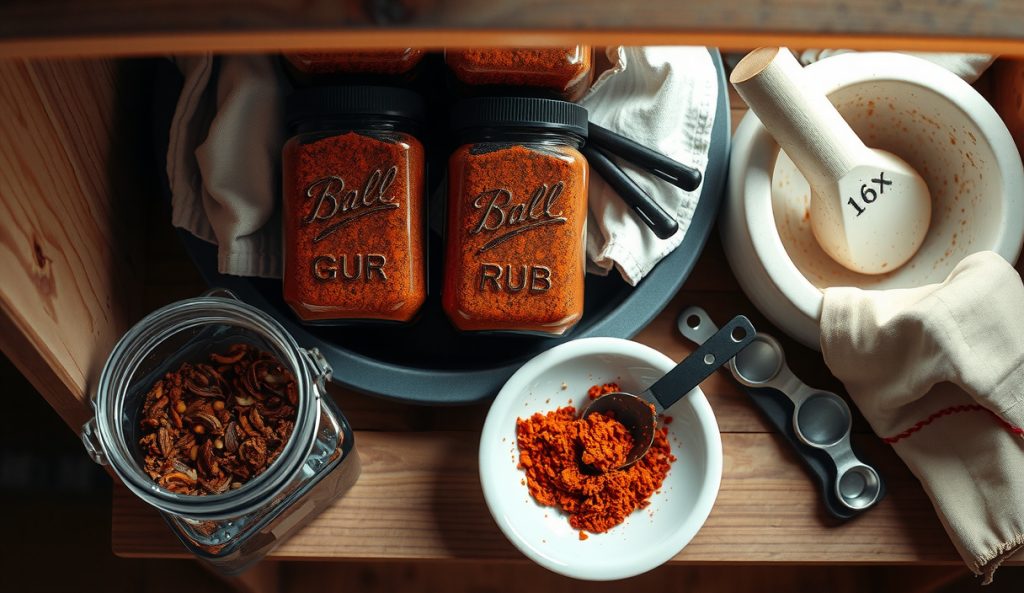
At competition scale, the low-sodium BBQ rub formula does not change — the chemistry is linear. What changes is everything around it: batch arithmetic, container selection, storage environment, and the timing discipline required to keep volatile aromatics intact from the moment you grind and mix to the moment the rub hits cold meat at 2 a.m. in a competition parking lot. This variant is for teams and serious backyard cooks preparing for a sanctioned cook-off or a large multi-protein event who need a reliable, repeatable production process.
What changes at competition scale?
Multiply every ingredient in the canonical formula by 16 to cover a full competition load of 8–10 briskets and 12 pork butts with working headroom. Batch the scaled rub into separate 1-quart airtight containers — wide-mouth mason jars fitted with oxygen-absorber packets are the most reliable option — rather than consolidating into one large vessel. Smaller containers mean fewer repeated lid openings per session, and repeated lid openings are the primary driver of oxidative degradation in spice blends held at room temperature.
The 90-day shelf life figure governs your batch timing. Volatile aromatic compounds in smoked paprika (specifically carotenoid-derived aldehydes such as geranial and neral), cumin (cuminaldehyde), and thyme-family herbs begin measurable degradation through oxidation and light exposure within that window under typical pantry conditions. The degradation is not sudden — it is a gradual flattening of aromatic intensity that becomes noticeable to a trained palate at roughly the 90-day mark. Batch the competition rub no more than 60–75 days out to build in margin; do not use rub carried over from a previous season’s prep without aroma-testing a small sample first.
What stays the same as the standard rub?
Every ratio, every ingredient, and every application method from the canonical low-sodium BBQ rub is preserved exactly at competition scale. Scaling is arithmetic — there is no formula adjustment required for batch size, no binding or clumping behavior that emerges at large volume, and no change to cook temperatures, rest times, or application rate per pound of meat.
When is the competition-scale build the better choice?
Use the competition-scale build whenever you are cooking more than three large proteins in a single session — sanctioned competition events, catering prep, or restaurant batch production all qualify. The discipline of pre-batching the rub in sealed, labeled containers eliminates mid-cook improvisation and ensures flavor consistency across every piece of meat in the session. Pre-batching is also the correct approach for any cook who wants to front-load the labor of rub production well before competition day, when time and cognitive load are already at their peak.
Use the full method, equipment, and rub measurements from the original Low-Sodium BBQ Rub — Smoked Paprika-Forward.