Memphis Pork Rub — Paprika-Brown-Sugar Base

Equipment
- 1 Kitchen scale Digital, 0.1g resolution preferred — essential for accurate ratio formulation
- 1 Mixing bowl Medium, stainless or glass
- 1 Fine mesh sieve or sifter For breaking up brown sugar clumps before measuring and combining
- 1 Airtight glass jar For storage — keeps the rub up to 6 months away from direct light and humidity
- 1 Whisk or fork For blending the dry ingredients evenly
Ingredients
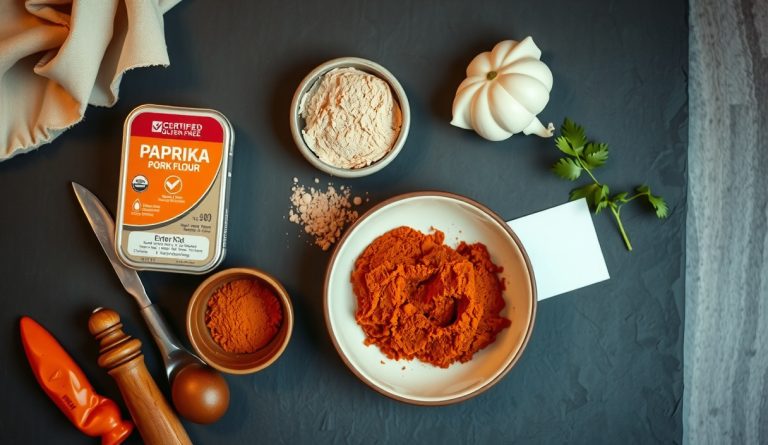
- 30 g smoked paprika Spanish pimentón de la Vera, hot or bittersweet — not sweet Hungarian paprika
- 20 g light brown sugar Sifted to break up clumps; dark brown sugar adds deeper molasses note and slightly faster browning
- 15 g kosher salt Diamond Crystal preferred; if using Morton, reduce to 12g — Morton is denser by volume
- 10 g coarse-ground black pepper 16-mesh cracked for ribs; fine-ground for tenderloin or smaller cuts
- 8 g ancho or New Mexico chili powder Single-ingredient, not a commercial blend — commercial blends contain salt and cumin that disrupt the ratio
- 7 g onion powder Not onion salt — onion powder only
- 5 g garlic powder Not garlic salt
- 3 g ground cumin Freshly ground whole cumin seeds preferred for higher volatile aromatic concentration
- 2 g dry mustard powder Coleman’s or similar pure ground mustard — provides Strecker degradation precursors for roasted depth

Instructions
- Sift the light brown sugar through a fine mesh sieve into your mixing bowl to break up any clumps. Brown sugar’s hygroscopic nature causes it to harden rapidly — sifting ensures even distribution throughout the rub.20 g light brown sugar
- Weigh all remaining ingredients individually on a digital kitchen scale and add them to the bowl with the sifted brown sugar: smoked paprika, kosher salt, black pepper, chili powder, onion powder, garlic powder, cumin, and mustard powder.30 g smoked paprika, 15 g kosher salt, 10 g coarse-ground black pepper, 8 g ancho or New Mexico chili powder, 7 g onion powder, 5 g garlic powder, 3 g ground cumin, 2 g dry mustard powder
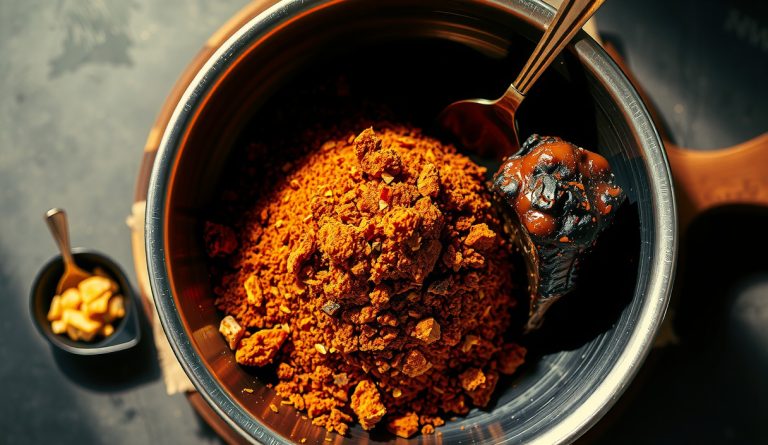
- Whisk thoroughly for 60–90 seconds until the mixture is completely uniform in color. No streaks of salt or sugar should be visible. The final blend should be a deep red-brown with visible black pepper flecks. Taste a pinch on your fingertip — it should hit paprika and smoke first, then black pepper heat, with a clean salt finish.
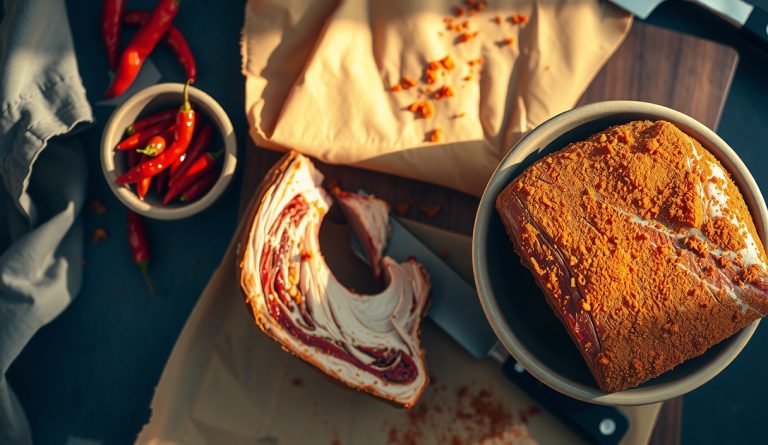
- To use: Pat your pork ribs or shoulder completely dry with paper towels. Apply the rub in two passes — a moderate base coat patted lightly to adhere, rest two minutes, then a second layer. Allow at least 45 minutes at room temperature, or rest uncovered overnight in the refrigerator for optimal osmotic penetration and surface drying before the cook.
- To store: Transfer to an airtight glass jar. Store at room temperature away from direct heat and light for up to 6 months. Add a food-safe desiccant packet to the jar to prevent brown sugar clumping in humid climates. Before each subsequent use, break up any clumps with a fork and pass through a sieve.
Notes
Nutrition
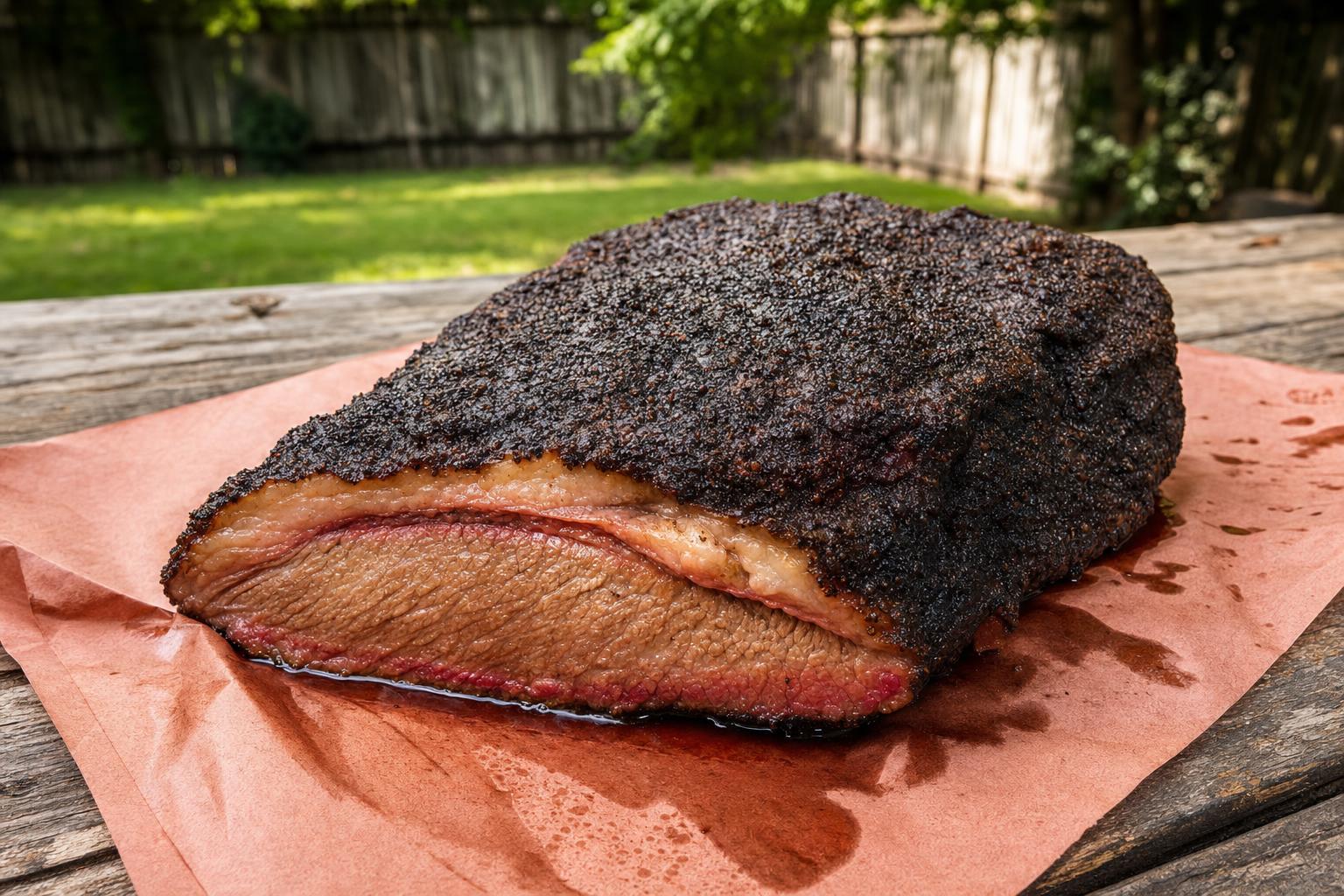
Memphis is not a style. It is a doctrine. Dry rub only — no sauce crutch, no mop to mask the mistakes. The bark carries everything: the color, the crust, the first hit of pepper and paprika before the smoke even registers. We have been dialing in this formula for long enough to know that the ratio is the recipe. Get the proportions right and a rack of spares will bark up properly on a kettle grill, a stick-burner, or a ceramic kamado. Get them wrong and you end up with a pale, sweet crust that never sets, or a salt-forward rub that pulls moisture so aggressively it fights the pellicle you need for smoke adhesion.
This is a 100-gram base formula — scale it to whatever batch size your competition schedule demands. We give you the percentages because that is how professionals think about rubs, and it is how we think about them here at American Meathead. Weigh everything. A tablespoon of brown sugar and a tablespoon of smoked paprika are not the same mass, and your bark knows it.
The science
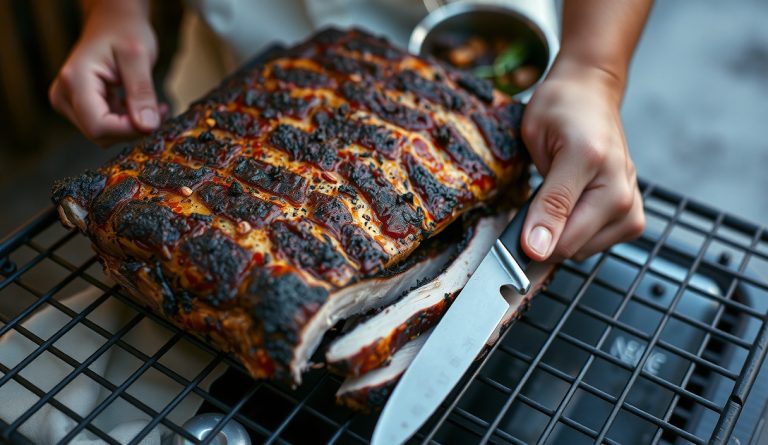
Brown sugar is the thermodynamic workhorse in this formula. It is a mixture of sucrose and residual molasses — which means it carries both the sucrose needed for caramelization and free reducing sugars (primarily fructose and glucose from the molasses fraction) that can enter the Maillard cascade at dramatically lower temperatures than sucrose alone. Maillard condensation between amino groups on the meat surface and these carbonyl-bearing reducing sugars initiates meaningfully above 280°F surface temperature and peaks in the 285–300°F window. That is precisely why Memphis-style pork ribs run hot early — 275°F cooker ambient drives the meat surface to that Maillard-active zone within the first 90 minutes, building the melanoidin layer that gives the bark its mahogany color and roasted-pepper complexity. Push the surface above 320°F for extended periods and you tip into pyrolysis: acrid, acrid, acrid. The brown sugar percentage in this formula is deliberately held at 20% — enough to produce consistent browning, not enough to scorch on a 275°F pit.
Smoked paprika at 30% is not garnish — it is the primary flavor scaffold. Paprika’s volatile aroma compounds (primarily pyrazines, carotenoid-derived ketones, and green-pepper esters) are lipophilic. They partition strongly into the surface fat layer on the pork, which acts as an aromatic reservoir, releasing VOCs in waves as the fat renders. The high paprika load also provides natural colorants — capsanthin and capsorubin — that deepen the bark color through a non-enzymatic oxidation pathway independent of the Maillard reaction. This means your bark looks done even before it fully is, so probe temperature and bark firmness are always your guides, not color alone. Black pepper at 10% contributes piperine-driven TRPV1 activation — a low-level chemesthetic heat that lingers well past the initial bite and amplifies the perception of the smoke’s phenolic compounds. Cumin and mustard at 3% and 2% respectively sit in the background but contribute critical Strecker degradation precursors: their sulfur-bearing amino acids break down under heat into heterocyclic compounds that read as roasted depth rather than identifiable spice.
Salt at 15% does three jobs simultaneously. First, it draws surface moisture via osmosis in the first 20–30 minutes post-application, then that brine is reabsorbed into the meat over the next 30–45 minutes, carrying dissolved flavor compounds inward — a wet-brine dynamic without the water bath. Second, ionic strength modulation: elevated Na+ on the surface slightly lowers the water activity of the outer meat layer, raising the effective browning threshold and concentrating Maillard precursors. Third, salt competitively suppresses bitterness receptor activation, which is why a properly salted rub makes the pepper read as sharp and bright rather than harsh. Apply this rub at least 45 minutes before the fire — or overnight uncovered in the refrigerator — to get the full osmotic benefit. Surface dry = better bark adhesion when the fat renders.
Equipment & ingredient notes
- Kitchen scale: Non-negotiable. A tablespoon of fine salt and a tablespoon of kosher salt differ by roughly 50% in mass. Use grams.
- Smoked paprika: Spanish hot or bittersweet smoked paprika (pimentón de la Vera) — not sweet Hungarian. The smoke-drying process produces additional Maillard compounds during paprika production itself, layering complexity before the rub ever hits a grill.
- Brown sugar: Light or dark both work. Dark brown sugar carries more molasses, more free reducing sugars, and a deeper molasses note — slightly more aggressive browning kinetics. If you want precise control, use light brown sugar.
- Black pepper: Freshly cracked to 16-mesh coarse if you are dusting ribs for the full bark effect. Pre-ground is fine for smaller cuts like pork tenderloin where you want even penetration rather than pepper texture.
- Chili powder: Use a single-origin ancho or New Mexico chili powder rather than a blend — commercial chili powder blends already contain cumin, oregano, and salt, which will throw your ratio math off.
- Airtight container: This rub keeps 6 months at room temperature in a sealed jar away from direct light. Brown sugar will clump; press it through a sieve before each use.
Memphis Pork Rub — Paprika-Brown-Sugar Base
Equipment
- 1 Kitchen scale Digital, 0.1g resolution preferred — essential for accurate ratio formulation
- 1 Mixing bowl Medium, stainless or glass
- 1 Fine mesh sieve or sifter For breaking up brown sugar clumps before measuring and combining
- 1 Airtight glass jar For storage — keeps the rub up to 6 months away from direct light and humidity
- 1 Whisk or fork For blending the dry ingredients evenly
Ingredients
- 30 g smoked paprika Spanish pimentón de la Vera, hot or bittersweet — not sweet Hungarian paprika
- 20 g light brown sugar Sifted to break up clumps; dark brown sugar adds deeper molasses note and slightly faster browning
- 15 g kosher salt Diamond Crystal preferred; if using Morton, reduce to 12g — Morton is denser by volume
- 10 g coarse-ground black pepper 16-mesh cracked for ribs; fine-ground for tenderloin or smaller cuts
- 8 g ancho or New Mexico chili powder Single-ingredient, not a commercial blend — commercial blends contain salt and cumin that disrupt the ratio
- 7 g onion powder Not onion salt — onion powder only
- 5 g garlic powder Not garlic salt
- 3 g ground cumin Freshly ground whole cumin seeds preferred for higher volatile aromatic concentration
- 2 g dry mustard powder Coleman’s or similar pure ground mustard — provides Strecker degradation precursors for roasted depth
Instructions
- Sift the light brown sugar through a fine mesh sieve into your mixing bowl to break up any clumps. Brown sugar’s hygroscopic nature causes it to harden rapidly — sifting ensures even distribution throughout the rub.20 g light brown sugar
- Weigh all remaining ingredients individually on a digital kitchen scale and add them to the bowl with the sifted brown sugar: smoked paprika, kosher salt, black pepper, chili powder, onion powder, garlic powder, cumin, and mustard powder.30 g smoked paprika, 15 g kosher salt, 10 g coarse-ground black pepper, 8 g ancho or New Mexico chili powder, 7 g onion powder, 5 g garlic powder, 3 g ground cumin, 2 g dry mustard powder
- Whisk thoroughly for 60–90 seconds until the mixture is completely uniform in color. No streaks of salt or sugar should be visible. The final blend should be a deep red-brown with visible black pepper flecks. Taste a pinch on your fingertip — it should hit paprika and smoke first, then black pepper heat, with a clean salt finish.
- To use: Pat your pork ribs or shoulder completely dry with paper towels. Apply the rub in two passes — a moderate base coat patted lightly to adhere, rest two minutes, then a second layer. Allow at least 45 minutes at room temperature, or rest uncovered overnight in the refrigerator for optimal osmotic penetration and surface drying before the cook.
- To store: Transfer to an airtight glass jar. Store at room temperature away from direct heat and light for up to 6 months. Add a food-safe desiccant packet to the jar to prevent brown sugar clumping in humid climates. Before each subsequent use, break up any clumps with a fork and pass through a sieve.
Notes
Nutrition
Tips for nailing it
- Pat the meat dry before applying: A wet surface dilutes the rub and slows bark formation. Paper towels, then rub, then rest. Moisture on the surface lowers the effective water activity and delays Maillard onset — the opposite of what you want.
- Apply in two layers, not one thick coat: Dust a moderate base coat, pat lightly to adhere, wait two minutes, then apply a second layer. The first coat partially hydrates and becomes tacky, giving the second layer something to grip. Single heavy coats slide off as the surface fat renders.
- Don’t go below 45 minutes and don’t stop at 20: The osmotic draw-and-reabsorption cycle needs at least 45 minutes at room temperature. Between 20 and 40 minutes, surface moisture has been drawn out but not yet reabsorbed — this is the worst time to cook. Either go straight to the pit from the fridge (cold meat, rub just applied) or give it the full 45-minute minimum rest.
- Control surface temperature, not just cooker temperature: At 250°F cooker ambient, the meat surface may only reach 200–220°F in the first two hours — below Maillard onset. If you want bark by hour three, push to 275°F. Use an instant-read at the surface if you are troubleshooting pale bark.
- Brown sugar scorching is a fat problem: If your bark burns on the underside of ribs or near the edges, the grate is running hotter than the ambient reads suggest. Rotate, add a water pan, or shield the lower surface. The sugar does not burn at 275–290°F surface — it burns when fat drips onto the coals and flares back up to 500°F+ contact heat.
- Scale by weight, not by volume: This formula is written in percentage ratios. If you want 200g of rub, multiply each percentage by 200. If you want 500g for a competition batch, multiply by 500. Do not approximate with spoons — the salt-to-sugar ratio especially must stay precise.
Variations
Hotter Memphis build: Swap 4g of the sweet chili powder for cayenne pepper. This raises the total capsaicin load, pushing TRPV1 activation into uncomfortable territory for moderate heat tolerances — which is exactly what the competition circuit in Memphis expects. Do not exceed 5% cayenne in this formula or the salt-to-heat ratio inverts and the rub reads as cayenne-forward rather than paprika-forward.
Whole-muscle shoulder version: For a Boston butt or picnic shoulder running 10–14 hours at 250°F, increase the salt to 18% and reduce brown sugar to 16%. Longer cook times mean more surface moisture loss over the cook — extra salt ensures the seasoning penetrates deep enough to flavor the inner meat, and slightly less sugar prevents over-caramelization on a bark that will be exposed to smoke for twice as long as ribs.
No-sugar competition rub: Replace the 20g of brown sugar with 10g of turbinado sugar and 10g of tapioca maltodextrin. Turbinado has larger crystals that melt more slowly on the surface, slowing the browning window and giving you more control in high-heat cooks. The maltodextrin encapsulates oil-soluble paprika volatiles and releases them in a quick burst as the surface temperature rises — a technique borrowed from modernist plating applied to live-fire barbecue.
Gluten-free and allergy considerations: This formula is inherently gluten-free and dairy-free. The single risk is commercial chili powder blends, which occasionally use wheat flour as an anti-caking agent. Use single-ingredient ancho or New Mexico chili powder, or check the label. All other ingredients in this formula are single-source spices with no known cross-contact risk from standard spice processing facilities.
FAQ
Can I use this rub on chicken or beef? Yes, with one adjustment: reduce the brown sugar to 10% and compensate with an additional 5% smoked paprika and 5% onion powder. Chicken skin renders fat at a lower temperature than pork, which means the sugar caramelizes faster and can burn before the skin crisps. Beef brisket runs a very long cook and does not need the Maillard assist from sugar the way pork ribs do — the beef surface proteins alone carry enough amino acid load for deep browning at competition temps.
Why does my rub get wet and clump after a few weeks? Brown sugar is hygroscopic — it absorbs ambient humidity aggressively. The fix is a silica gel desiccant packet inside the sealed jar, or storing the rub in the freezer in a double-sealed bag. If it has already clumped, break it up with a fork and pass it through a fine mesh sieve before use. The flavor is unaffected; it is purely a texture issue caused by moisture absorption, not spoilage.
How long should I leave the rub on before cooking? The minimum effective window is 45 minutes at room temperature, or overnight uncovered in the refrigerator. The overnight method is superior: refrigerator humidity is low, which dries the surface further while the salt-driven osmotic cycle completes fully. You get a tacky, almost lacquered surface by morning that adheres smoke and develops bark faster than same-day application. If you are cooking from cold, add 20–30 minutes to your initial high-heat phase to compensate for the lower starting surface temperature.