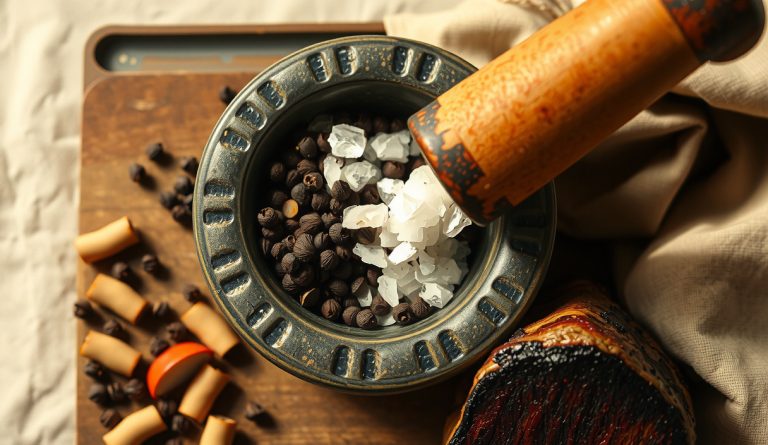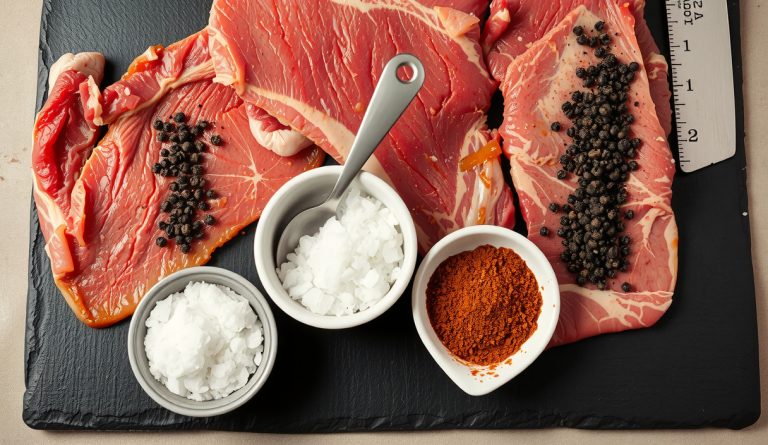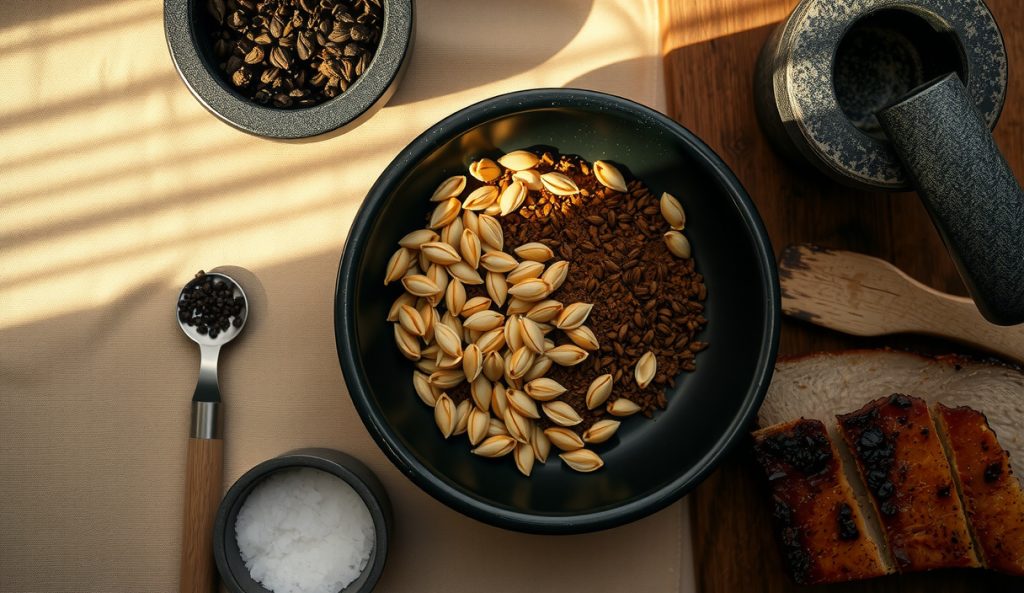
The pure salt-and-pepper Dalmatian rub is a two-ingredient doctrine, but a quiet tradition among some Central Texas pitmasters allows a third element: toasted, cracked coriander seed. Ground to the same 16-mesh geometry as the black pepper, coriander sits at 10 to 15 percent of the total rub weight, displacing equal parts salt and pepper proportionally. The result is a bark that reads familiar at a distance and complex at the bite.
What changes when you add coriander to the Dalmatian rub?
Whole coriander seeds are dry-toasted in a skillet until fragrant, then cracked in a spice mill or mortar to the same coarse 16-mesh particle size as the black pepper. This geometry is not cosmetic: mismatched grind sizes create uneven bark adhesion, with finer particles over-darkening and coarser ones failing to bond during the initial moisture-absorption phase.
Coriander contributes citrus-terpene esters — primarily linalool and geranyl acetate — that lift the aromatic profile on the nose and in the first half-second of the bite. These compounds are volatile yet largely survive at brisket cook temperatures of 225 to 275 °F surface heat, which means they remain perceptible through a full smoke session.
Critically, coriander carries no sugars and has a negligible Maillard contribution, so the coriander-third rub adds no browning potential and no sweetness signal. The bark stays savory, and black pepper still leads the finish.
What stays the same as the classic 50/50 rub?
Application rate, timing, and technique are unchanged from the canonical method. The rub is still applied generously to a dry, cold surface and allowed to hydrate before the brisket goes onto the smoker. Target bark color, smoke management, and rest protocol all follow the standard brisket approach exactly.
When is the coriander-third rub the better choice?
This variation is best suited to a whole brisket flat served to an audience unfamiliar with heavy pepper loads. Coriander at 10 to 15 percent by weight introduces perceptible complexity without heat or sweetness, making the profile more approachable while still reading as Texas-style to anyone paying attention.
The coriander-third rub also works well when the smoke wood is relatively neutral — post oak or pecan — and a second aromatic layer is needed to compensate for that lighter smoke character.
Use the full method, equipment, and base rub measurements from the original Texas-Style Beef Rub: The 50/50 Salt and Pepper Method, then introduce coriander as described here.