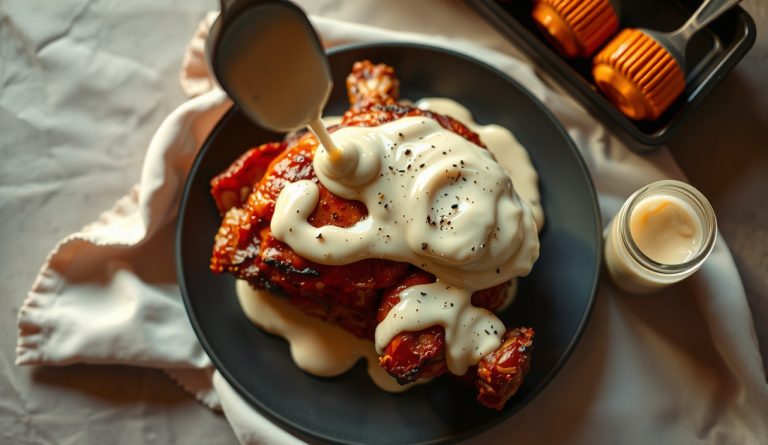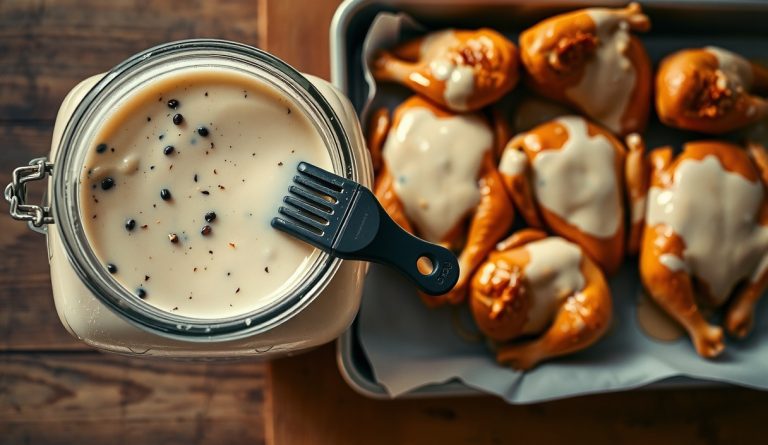
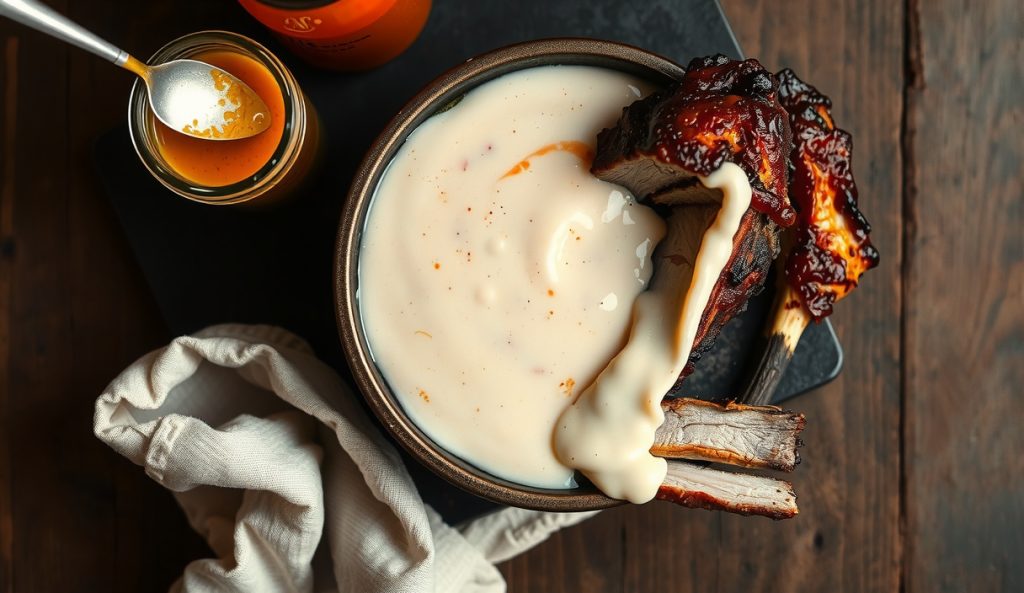
The canonical Alabama White BBQ Sauce already delivers sharp, sinus-clearing heat from prepared horseradish — a sensation driven by allyl isothiocyanate activating TRPA1 nociceptors. This spicier variant adds a second heat vector by introducing capsaicin, which targets the entirely separate TRPV1 receptor channel. The result is not simply a hotter sauce; it is a sequenced burn where horseradish hits fast and fades within seconds, and capsaicin builds more slowly and lingers for minutes. That staggered timeline works especially well against the long fat finish of pork ribs or smoked duck.
What changes in the spicier heat-profile variant?
Add 1–2 teaspoons of ground cayenne pepper, or 1 tablespoon of a Louisiana-style hot sauce (Crystal, Frank’s RedHot, or similar), to the base recipe after all other ingredients are combined. Start at 1 teaspoon cayenne and taste before committing — the horseradish is already assertive, and the goal is complementary heat, not a competition between the two channels.
If you choose liquid hot sauce instead of ground cayenne, reduce the apple cider vinegar by half a teaspoon to keep the acid balance in check, since Louisiana-style sauces are themselves vinegar-forward. Skipping that adjustment will push the sauce’s acidity past the point where it balances the mayonnaise base.
Do not substitute fresh grated horseradish root without significant adjustment: raw root contains a higher concentration of volatile glucosinolates than the prepared variety and is roughly twice as pungent by volume. If you want the brightness of fresh root alongside capsaicin, start at half the quantity of prepared horseradish called for in the canonical recipe and scale upward to taste. Because TRPV1 activation is concentration-dependent, the capsaicin effect will intensify slightly as the sauce rests overnight — taste again before serving.
What stays the same as the canonical recipe?
The mayonnaise-vinegar emulsion base, the black pepper quantity, the sugar balance, and the overnight refrigeration rest are all unchanged. Every ratio from the canonical recipe holds exactly; this variant adds capsaicin on top of an otherwise complete, fully balanced sauce — it does not rebuild the formula from scratch.
When is the spicier heat-profile version the better choice?
Choose this variation when serving cuts with substantial intramuscular fat — pork spare ribs, St. Louis-cut ribs, smoked duck breast, or fatty pulled pork — where the extra capsaicin burn cuts through the richness and keeps each bite interesting. The dual-receptor heat profile is also the right move for guests who have specifically requested heat, or at tailgates where the crowd skews toward bold flavors.
The canonical sauce remains the correct starting point for mixed audiences or for leaner poultry; this spicier version is for when you know the table can handle a sequenced, lingering burn. Use the full method, equipment, and base measurements from the original Alabama White BBQ Sauce.