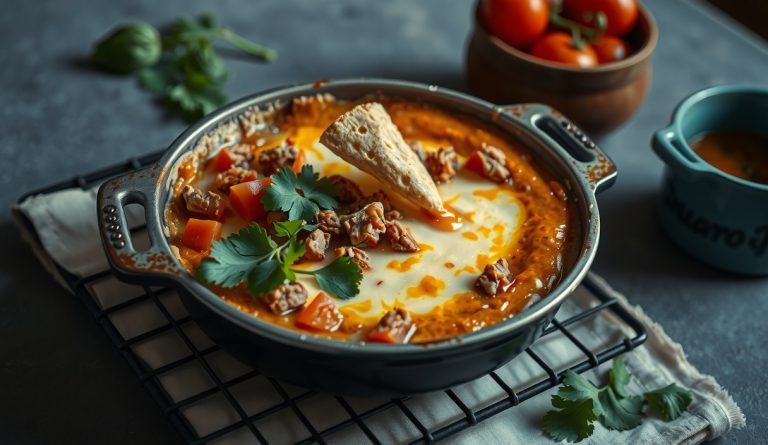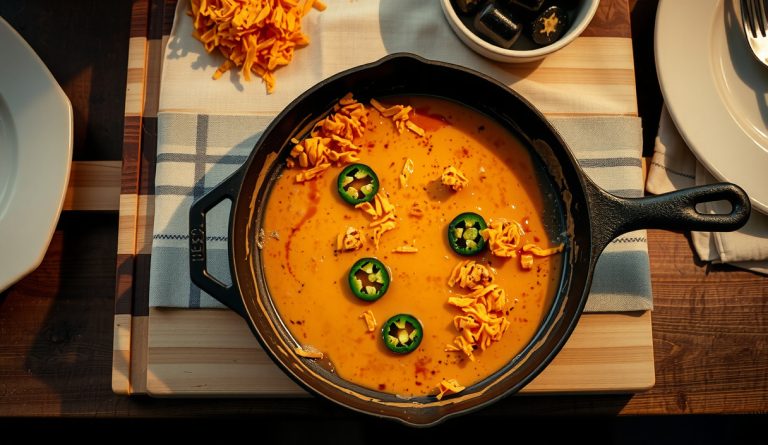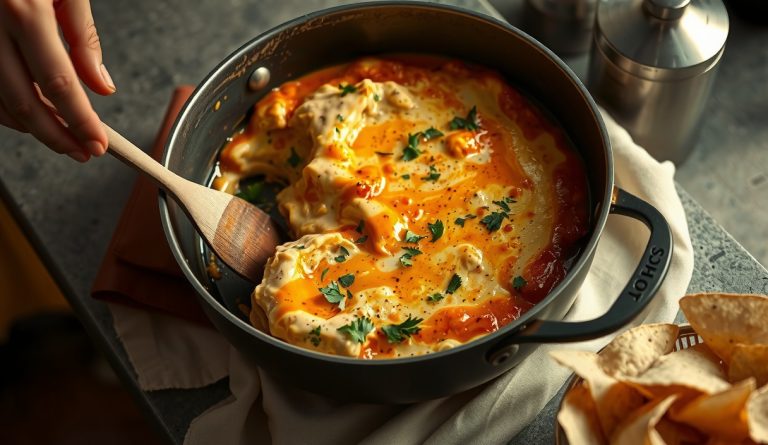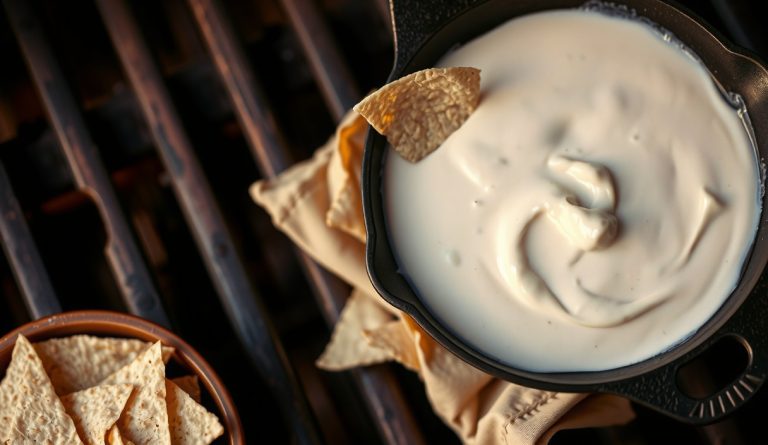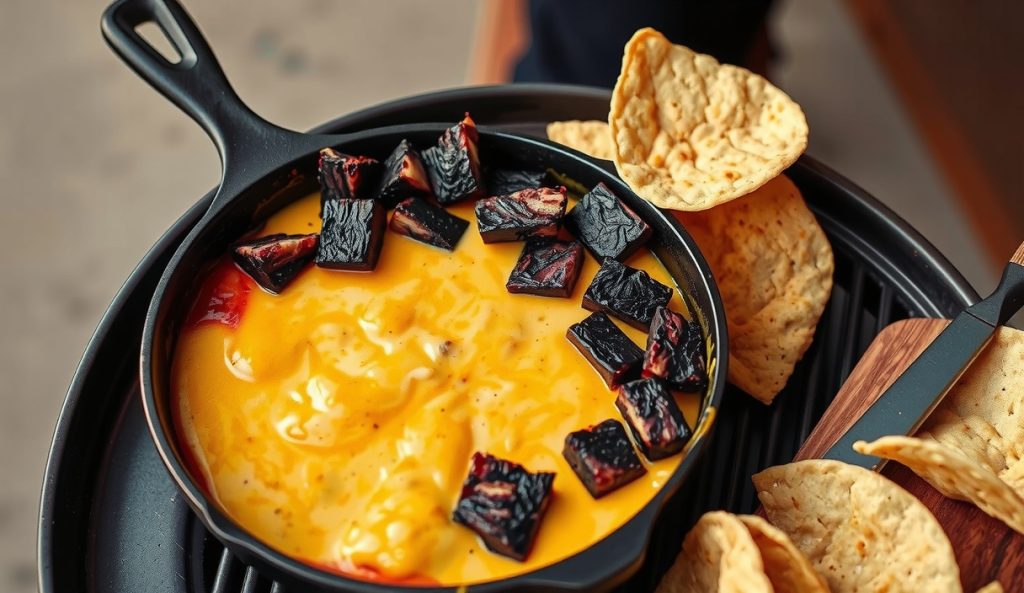
Chorizo earns its place in smoked queso through fat content, paprika sweetness, and aggressive seasoning. Brisket burnt ends earn theirs through everything chorizo cannot do: deep Maillard crust, layered smoke penetration, and a savory finish that lingers well past the first chip. If you have leftover point-end burnt ends from a brisket cook, this is the most efficient and rewarding use of those trimmings.
This variation is particularly well-suited for backyard competition cooks or any occasion where brisket is already on the smoker — the queso becomes a logical extension of the same cook rather than a separate project.
What changes when you swap chorizo for brisket burnt ends?
Swap the chorizo for approximately 6 ounces of chopped brisket burnt ends — pulled from the point end after a full smoke and rest. The bark on a properly developed burnt end carries high concentrations of pyrazines and melanoidins: heterocyclic compounds formed during the Maillard reaction at high surface temperatures. When those crust fragments break down into the molten cheese base, they release those flavor compounds into the fat phase, producing a complexity that chorizo’s spice blend approximates but does not replicate.
Because chorizo contributes paprika sweetness alongside its fat and protein, you need to account for that loss. Add one tablespoon of your preferred BBQ sauce directly to the pan alongside the burnt ends at the start of the cook. A sauce with a tomato-molasses base works best — it restores the mild sweetness and adds a subtle tang that keeps the queso balanced rather than one-dimensionally beefy. Do not add the burnt ends raw; the burnt ends should already be fully smoked and tender before going into the pan, so the cook time on the queso itself — roughly 60 minutes at 250°F — is purely about melt and integration, not cooking the meat through.
What stays the same in the burnt end queso version?
The cheese base (Velveeta plus your preferred secondary melt cheese), the Rotel, the foil pan setup, the 250°F pellet grill temperature, and the stir cadence remain unchanged from the original recipe. Emulsion stability is unaffected — the processed cheese emulsifiers do not care whether the protein in the pan came from a sausage casing or a brisket point.
When is the brisket burnt end version the better choice?
Choose this variation whenever brisket is already on the menu and you want the appetizer to feel intentional rather than incidental. The burnt end queso also works well for guests who avoid pork — burnt ends deliver the same fatty richness that chorizo provides, without any dietary conflict. The flavor profile skews savory and smoky rather than spicy, making it broadly accessible at large gatherings.
Use the full cheese ratios, pan setup, pellet recommendations, and serving notes from the original Smoked Queso Dip (Pellet Grill).