Smoked Chocolate-Chip Cookies — Pellet-Grill Baked

Equipment
- 1 Pellet grill With cherry or apple pellets loaded; preheat 20 minutes to 375°F before loading cookies
- 1 Light-colored rimmed baking sheet Half-sheet (18×13 in); do not use dark non-stick pans — they bottom-burn on the grill
- 1 sheet Parchment paper
- 1 Light-colored saucepan For browning butter; light interior lets you monitor milk-solid color
- 1 Stand mixer or hand mixer
- 1 Cookie scoop, 1.5 oz (3 tablespoons)
- 1 Instant-read thermometer Verify grill temperature independently — pellet grills often read 15–25°F low
Ingredients
Browned Butter Base
- 226 g unsalted butter 2 sticks; browned to amber, then cooled to room temperature — about 195 g usable browned butter after moisture loss
Sugar System
- 200 g light brown sugar packed; 2:1 ratio to white sugar increases hygroscopicity and accelerates early Maillard reactions
- 100 g granulated white sugar
Wet Ingredients
- 2 large eggs at room temperature
- 2 tsp pure vanilla extract
Dry Ingredients
- 270 g all-purpose flour spooned and leveled or weighed; approximately 2 1/4 cups
- 1 tbsp Dutch-process cocoa powder deepens chocolate backbone and provides additional Maillard-reactive amino acids
- 1 tsp baking soda
- 1 tsp fine sea salt
Chocolate
- 280 g dark chocolate (60–70% cacao), roughly chopped chopped bars produce irregular pools of melted chocolate with both crispy edges and molten centers; do not substitute stabilizer-containing chips if you can avoid it
Finish
- 1 tsp flaky sea salt such as Maldon; applied immediately after pulling from grill

Instructions
Brown the Butter
- Place the unsalted butter in a light-colored saucepan over medium heat. Swirl constantly as it melts, foams, and then subsides. Continue swirling until the milk solids at the bottom turn deep amber and the butter smells like hazelnuts — this takes 6–8 minutes and the butter will read approximately 300°F on an instant-read. Immediately pour through a fine-mesh strainer into a large bowl (discard the dark solids or save for another use). Cool to room temperature until the fat is semi-solid, about 45–60 minutes at room temperature or 20 minutes in the refrigerator. Do not proceed until the butter is cool enough to cream.
Mix the Dough
- Beat the cooled browned butter with light brown sugar and granulated white sugar on medium-high speed for 3 minutes until lightened and fluffy. The mixture will smell deeply of caramel.100 g granulated white sugar
- Add the eggs one at a time, beating 30 seconds after each. Scrape the bowl. Add vanilla extract and beat 10 seconds to incorporate.2 large eggs, 2 tsp pure vanilla extract
- Whisk together all-purpose flour, Dutch-process cocoa powder, baking soda, and fine sea salt in a separate bowl. Add the dry ingredients to the wet in one addition and mix on low speed until just combined — do not overmix. Streaks of flour should disappear but the dough should not be worked beyond that point.270 g all-purpose flour, 1 tbsp Dutch-process cocoa powder, 1 tsp baking soda, 1 tsp fine sea salt
- Fold in the chopped dark chocolate by hand with a flexible spatula until evenly distributed. The dough will be thick and slightly tacky.280 g dark chocolate (60–70% cacao), roughly chopped
- Cover the bowl with plastic wrap and rest the dough at room temperature for 30 minutes minimum (or refrigerate up to 24 hours). This rest hydrates the flour proteins fully, reduces surface stickiness, and deepens flavor as enzymatic activity converts starches to reducing sugars.
Prep the Grill
- Load the pellet grill with cherry or apple pellets. Ignite and preheat with the lid closed to 375°F — verify with an independent probe thermometer placed at grate level. Allow the grill to run at temperature for at least 20 minutes until it is producing clean, thin blue smoke rather than the thick white smoke of a cold start. Line a light-colored half-sheet baking pan with parchment.
Scoop and Bake
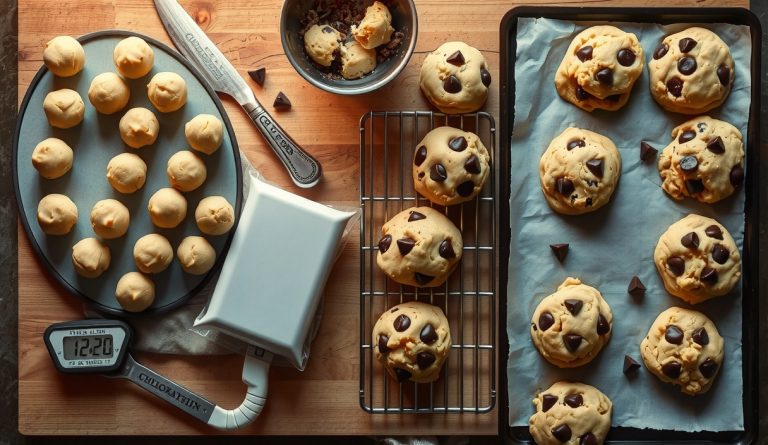
- Using a 1.5-oz (3-tablespoon) cookie scoop, portion the dough into balls and space them 2 inches apart on the parchment-lined pan — 9 cookies per pan is comfortable. If the dough was refrigerated, scoop it cold; cold dough spreads more slowly and bakes thicker.
- Slide the pan onto the grill grates. Close the lid. Bake for 11–13 minutes at 375°F. At the 8-minute mark, give the pan one firm bang against the grill grates to deflate any puffy domes and create the characteristic ripple texture.
- Pull the pan when the edges are set and golden but the centers still look glossy and slightly underdone — they will finish from carryover heat. Do not wait for the centers to look fully baked or the final cookie will be dry.
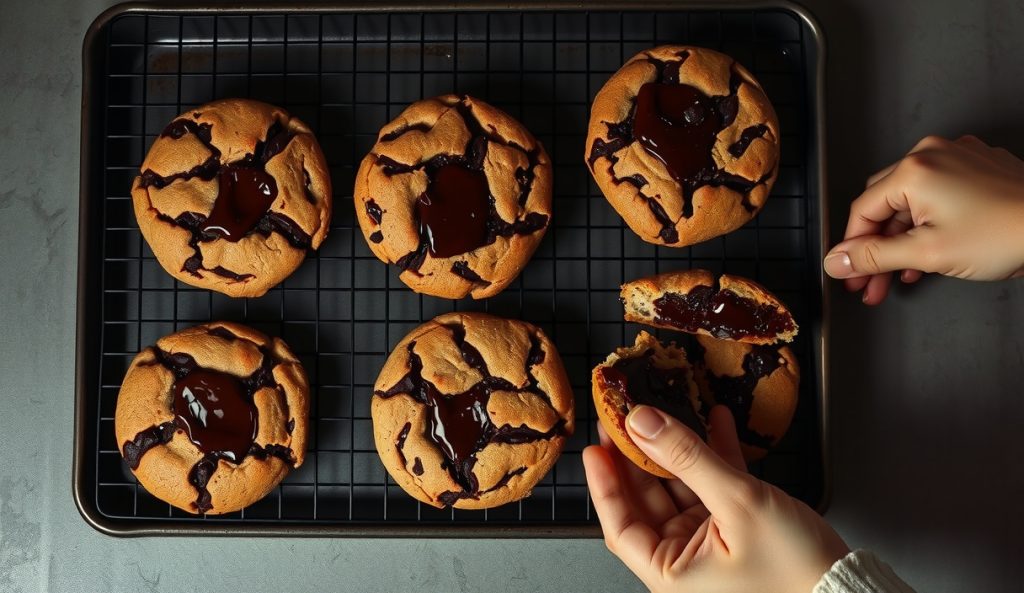
- Immediately and generously apply flaky sea salt across the tops of the cookies while they are still soft. Allow to rest on the pan for 10 minutes — this is mandatory, not optional, as the centers finish setting during this window. Transfer to a wire rack to cool completely, or eat one warm.1 tsp flaky sea salt
Notes
Nutrition
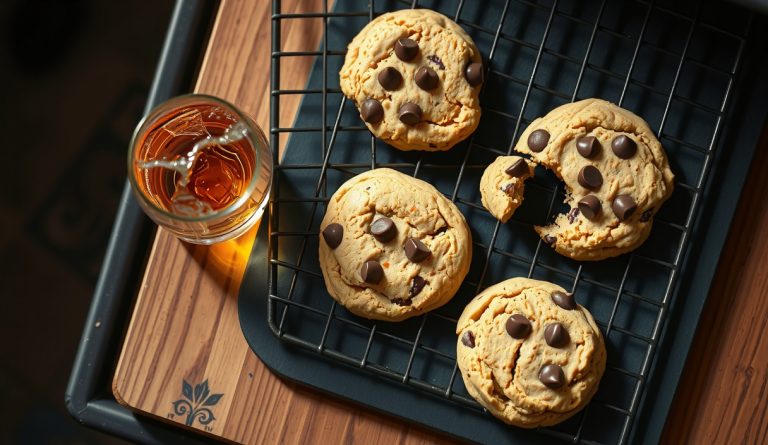
The first time I slid a tray of chocolate-chip cookie dough onto my pellet grill, I expected a gimmick. What came back thirty minutes later was something else entirely: cookies with the familiar crisp edge and gooey center, but wearing a low, resonant bass note of smoke that wove through the browned-butter toffee and bitter chocolate in a way my oven has never managed. It is not a campfire flavor. It is barely detectable as “smoke” at all — closer to the aromatic complexity you find in a well-aged bourbon or a piece of dark chocolate with a high cacao percentage. One bite and the question is not why would you do this, but why did it take this long.
The mechanism is simple once you understand the chemistry. A pellet smoker running at 375°F delivers convective heat nearly identical to a conventional oven, while the combustion of compressed hardwood pellets simultaneously generates a low-density stream of smoke phenols — guaiacol, syringol, 4-methylguaiacol — that condense on the cool fat-rich surface of the dough. Those phenolic compounds are themselves potent flavor molecules, and they happen to share a structural family with the very volatiles produced during the caramelization of butter and the browning of sugar. The result is not addition but multiplication: smoke amplifies what is already there.
Why do smoked chocolate-chip cookies work? The science
Smoked chocolate-chip cookies work because the fat-rich dough acts as a molecular reservoir, capturing smoke phenols from the pellet grill and releasing them as slow-burst aromatics during baking. Maillard onset in cookie dough begins meaningfully around 280–300°F at the dough surface, producing hundreds of nitrogen-containing heterocyclic compounds — pyrazines, furans, and thiophenes — that define the toasty, nutty aroma of a properly baked cookie. Browning the butter beforehand initiates a separate but parallel Maillard cascade in the milk-solid proteins and lactose before the dough is ever mixed: those pre-formed melanoidins contribute a distinct hazelnut-caramel layer that intensifies further during the bake.
The fat phase of cookie dough — butter plus yolk lipids — carries a disproportionately high concentration of lipophilic aroma compounds. Because volatile organic compounds partition strongly into fat, the butter acts as a sequestration reservoir: smoke phenols that land on the raw dough dissolve preferentially into that fat phase rather than evaporating away. As the cookie bakes and the fat renders, those phenols are slowly released in a time-delayed aromatic burst. This is the same thermodynamic partitioning principle that makes smoked butter so much more aromatically complex than smoked water.
The sugar system in this recipe uses a 2:1 ratio of brown sugar to granulated white, a deliberate choice grounded in water-activity and Maillard kinetics. Brown sugar’s molasses fraction lowers the melting point and raises the hygroscopicity of the dough, keeping the interior moister longer — which means the center stays fudgy even as the exterior browns. The higher reducing-sugar concentration in molasses also accelerates early-stage Maillard reactions, producing more of the aldehyde precursors that react with smoke phenols’ aromatic rings. The net effect is a cookie that tastes simultaneously smokier and more caramelized than the same formula baked in a conventional oven, even though the smoke contribution is chemically small.
Pellet temperature control is the critical variable. At 375°F the thermal mass of the grill produces a convection environment close enough to a conventional oven that spread and set timing remain predictable — typically 11–13 minutes for a 1.5-oz scoop. Dropping to 325°F to “add more smoke time” is a common mistake: the extended bake at lower heat dries out the interior before the exterior reaches the browning threshold, and it gives smoke phenols so long to accumulate that they cross from pleasant to acrid. Run it hot and short. The smoke deposit rate on a clean, well-maintained pellet grill is gentle by design.
What equipment and ingredients do you need?
Pellet grill: Any pellet smoker with reliable temperature control works. Light-colored hardwood pellets — cherry, apple, or maple — produce a delicate, fruit-forward smoke that complements chocolate without competing. Hickory and mesquite are too assertive; the guaiacol load overwhelms the cookie’s own aromatics. Preheat with the lid closed for at least 20 minutes so the grill is fully at temperature and producing clean, thin blue smoke rather than the thick white smoke of a cold start.
Browned butter: Cook butter in a light-colored saucepan over medium heat, swirling constantly, until the milk solids turn deep amber and smell like hazelnuts — roughly 300°F on an instant-read thermometer. Strain immediately into a bowl and cool to room temperature before using. The strained milk solids are discarded; their Maillard products have already transferred to the fat. Do not substitute melted (un-browned) butter: you will lose the most important flavor layer in the recipe.
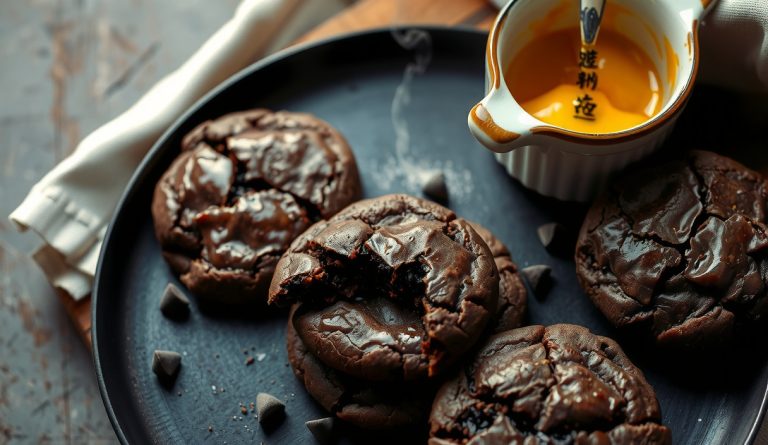
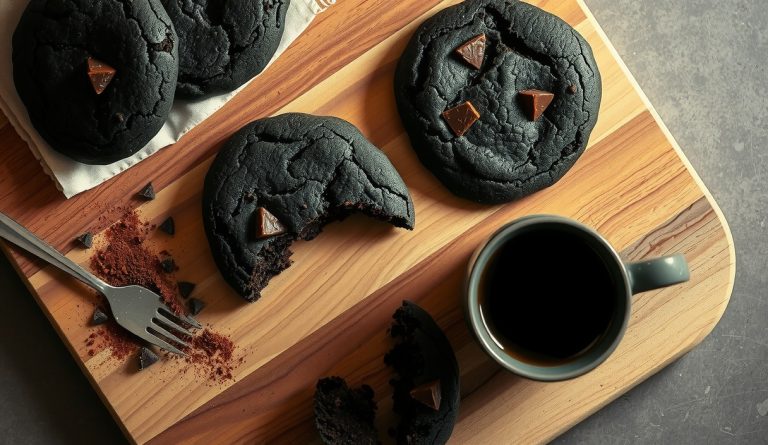
Chocolate: Use chopped high-quality dark chocolate (60–70% cacao) rather than commercial chips. Chips contain stabilizers that resist full melting; chopped chocolate produces irregular puddles of varying thickness that create both crispy chocolate edges and molten centers in the same cookie. A small amount of cocoa powder in the dough reinforces the bitter-chocolate backbone and provides additional Maillard-reactive amino acids.
Resting the dough: A minimum 30-minute rest (up to 24 hours refrigerated) after mixing allows the flour proteins to fully hydrate, reduces excess water activity in the dough, and deepens flavor as enzymatic activity begins breaking down starch chains into more Maillard-reactive reducing sugars.
Smoked Chocolate-Chip Cookies — Pellet-Grill Baked
Equipment
- 1 Pellet grill With cherry or apple pellets loaded; preheat 20 minutes to 375°F before loading cookies
- 1 Light-colored rimmed baking sheet Half-sheet (18×13 in); do not use dark non-stick pans — they bottom-burn on the grill
- 1 sheet Parchment paper
- 1 Light-colored saucepan For browning butter; light interior lets you monitor milk-solid color
- 1 Stand mixer or hand mixer
- 1 Cookie scoop, 1.5 oz (3 tablespoons)
- 1 Instant-read thermometer Verify grill temperature independently — pellet grills often read 15–25°F low
Ingredients
Browned Butter Base
- 226 g unsalted butter 2 sticks; browned to amber, then cooled to room temperature — about 195 g usable browned butter after moisture loss
Sugar System
- 200 g light brown sugar packed; 2:1 ratio to white sugar increases hygroscopicity and accelerates early Maillard reactions
- 100 g granulated white sugar
Wet Ingredients
- 2 large eggs at room temperature
- 2 tsp pure vanilla extract
Dry Ingredients
- 270 g all-purpose flour spooned and leveled or weighed; approximately 2 1/4 cups
- 1 tbsp Dutch-process cocoa powder deepens chocolate backbone and provides additional Maillard-reactive amino acids
- 1 tsp baking soda
- 1 tsp fine sea salt
Chocolate
- 280 g dark chocolate (60–70% cacao), roughly chopped chopped bars produce irregular pools of melted chocolate with both crispy edges and molten centers; do not substitute stabilizer-containing chips if you can avoid it
Finish
- 1 tsp flaky sea salt such as Maldon; applied immediately after pulling from grill
Instructions
Brown the Butter
- Place the unsalted butter in a light-colored saucepan over medium heat. Swirl constantly as it melts, foams, and then subsides. Continue swirling until the milk solids at the bottom turn deep amber and the butter smells like hazelnuts — this takes 6–8 minutes and the butter will read approximately 300°F on an instant-read. Immediately pour through a fine-mesh strainer into a large bowl (discard the dark solids or save for another use). Cool to room temperature until the fat is semi-solid, about 45–60 minutes at room temperature or 20 minutes in the refrigerator. Do not proceed until the butter is cool enough to cream.
Mix the Dough
- Beat the cooled browned butter with light brown sugar and granulated white sugar on medium-high speed for 3 minutes until lightened and fluffy. The mixture will smell deeply of caramel.100 g granulated white sugar
- Add the eggs one at a time, beating 30 seconds after each. Scrape the bowl. Add vanilla extract and beat 10 seconds to incorporate.2 large eggs, 2 tsp pure vanilla extract
- Whisk together all-purpose flour, Dutch-process cocoa powder, baking soda, and fine sea salt in a separate bowl. Add the dry ingredients to the wet in one addition and mix on low speed until just combined — do not overmix. Streaks of flour should disappear but the dough should not be worked beyond that point.270 g all-purpose flour, 1 tbsp Dutch-process cocoa powder, 1 tsp baking soda, 1 tsp fine sea salt
- Fold in the chopped dark chocolate by hand with a flexible spatula until evenly distributed. The dough will be thick and slightly tacky.280 g dark chocolate (60–70% cacao), roughly chopped
- Cover the bowl with plastic wrap and rest the dough at room temperature for 30 minutes minimum (or refrigerate up to 24 hours). This rest hydrates the flour proteins fully, reduces surface stickiness, and deepens flavor as enzymatic activity converts starches to reducing sugars.
Prep the Grill
- Load the pellet grill with cherry or apple pellets. Ignite and preheat with the lid closed to 375°F — verify with an independent probe thermometer placed at grate level. Allow the grill to run at temperature for at least 20 minutes until it is producing clean, thin blue smoke rather than the thick white smoke of a cold start. Line a light-colored half-sheet baking pan with parchment.
Scoop and Bake
- Using a 1.5-oz (3-tablespoon) cookie scoop, portion the dough into balls and space them 2 inches apart on the parchment-lined pan — 9 cookies per pan is comfortable. If the dough was refrigerated, scoop it cold; cold dough spreads more slowly and bakes thicker.
- Slide the pan onto the grill grates. Close the lid. Bake for 11–13 minutes at 375°F. At the 8-minute mark, give the pan one firm bang against the grill grates to deflate any puffy domes and create the characteristic ripple texture.
- Pull the pan when the edges are set and golden but the centers still look glossy and slightly underdone — they will finish from carryover heat. Do not wait for the centers to look fully baked or the final cookie will be dry.
- Immediately and generously apply flaky sea salt across the tops of the cookies while they are still soft. Allow to rest on the pan for 10 minutes — this is mandatory, not optional, as the centers finish setting during this window. Transfer to a wire rack to cool completely, or eat one warm.1 tsp flaky sea salt
Notes
Nutrition
How do I nail smoked cookies every time? Six techniques
- Do not skip the preheat. A pellet grill producing thick white smoke from a cold start deposits acrid, unburned compounds. Wait for clean thin smoke before loading the cookies — typically 20–25 minutes after ignition.
- Use a light-colored rimmed baking sheet, not dark. Dark pans absorb radiant energy from the grill grates and bottom-burn the cookies before the tops set. Light-colored aluminum reflects heat more evenly in the convection environment of a pellet grill.
- Scoop cold dough. If you rested the dough in the refrigerator, scoop it cold. Cold dough spreads more slowly, giving the structure time to set before the fat fully liquefies — the result is a thicker, chewier cookie rather than a flat disc.
- Bang the pan once on the grill grates at 8 minutes. A single firm tap deflates any puffy air pockets and creates the characteristic ripple texture on the surface of a bakery-style cookie.
- Pull them at the “underdone” visual cue. The centers should look glossy and slightly underset when you pull the pan. Carryover heat from the hot pan finishes them to a fudgy interior over the next 10 minutes of resting. Waiting for the center to look fully set means you will eat a dry cookie.
- Finish with flaky salt immediately off the grill. Apply Maldon or similar flake salt within 30 seconds of pulling. The salt crystals partially dissolve into the soft surface, creating a salt-fat-smoke synergy that dramatically elevates the finish.
What are the best variations on this recipe?
Bourbon-smoked: Add 1 tablespoon of good bourbon to the dough with the egg. The ethanol acts as a co-solvent, pulling additional smoke phenols from the butter phase into the water phase of the dough, distributing them more evenly throughout the matrix. The alcohol bakes off completely; what remains is a subtle grain-whiskey warmth that pairs naturally with cherry or apple pellet smoke.
Espresso-dark chocolate: Add 1 teaspoon of instant espresso powder with the dry ingredients and use 70% cacao chocolate. Espresso contributes additional bitter pyrazines that mirror those formed during pellet combustion, creating an almost coffee-toffee-smoke flavor loop. This variation also suppresses any residual sweetness that might make the smoke note feel incongruous.
Brown butter and miso: Blend 1 tablespoon of white (shiro) miso into the cooled browned butter before mixing. Miso provides a high concentration of free amino acids — particularly glutamic acid — that react aggressively with the reducing sugars in the brown sugar during baking, producing dramatically deeper melanoidin color and a savory umami undercurrent. The miso flavor itself essentially disappears; what remains is an intensity of browning that reads as “more” of every other flavor already present.
Scaling and storage: This recipe doubles cleanly by weight. Portioned dough balls freeze beautifully on a sheet tray for 2 hours and then transfer to a zip-close bag; bake directly from frozen at 375°F, adding 2–3 minutes to the bake time. Baked cookies hold well at room temperature in an airtight container for 3 days; the smoke note actually deepens slightly on day 2 as the phenolic compounds continue to migrate from the fat phase into the surrounding matrix.
Frequently asked questions about smoked chocolate-chip cookies
Can I use a charcoal or offset smoker instead of a pellet grill? Yes, but temperature control becomes the challenge. Charcoal and offset smokers produce heavier, less refined smoke with higher particulate loads than clean-burning pellet combustion. If you use one, run it at 375°F with the vents mostly open to keep smoke density low and thin, and use small chunks of mild wood (apple, cherry) rather than logs. Thick white smoke at any temperature will make the cookies taste bitter and harsh.
My cookies spread flat and thin on the grill. What went wrong? The most common cause is warm or fully melted butter. Browned butter must cool to room temperature — ideally firm enough to hold a finger impression — before mixing. If the fat is liquid when it enters the dough, the dough cannot trap air during creaming, and the cookies spread immediately on contact with heat. A 30-minute chill of the finished dough before scooping solves the problem even if your butter was slightly too warm at mixing.
I cannot taste any smoke. What am I doing wrong? Three possible causes: the grill was not producing clean smoke at temperature when you loaded the cookies, you used low-smoke pellet varieties, or the cookies baked too quickly on an over-hot grill. Verify grill temperature with an independent probe thermometer — many pellet grills run 15–25°F hotter than their displays indicate. Use cherry or apple pellets specifically, and make sure the cookies spend at least 11 full minutes on the grill. If you genuinely want more smoke intensity, place the cookies on the grill for 5 minutes cold (raw dough, no heat) before igniting, letting the cold fat surface passively absorb smoke phenols before the bake begins.