Eastern North Carolina Vinegar Sauce

Equipment
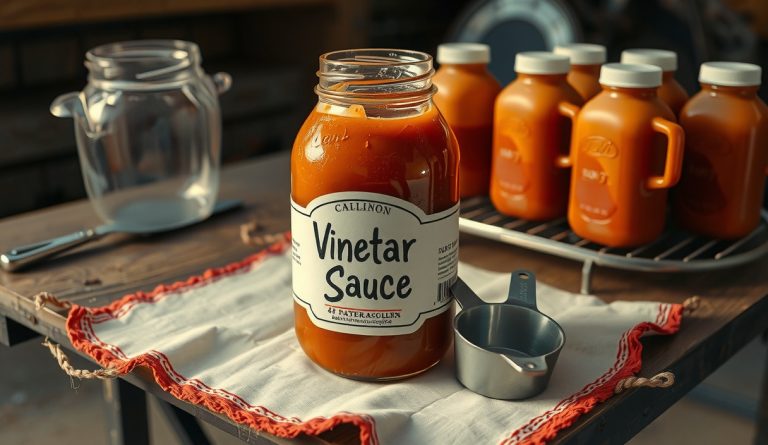
- 1 Quart mason jar or glass bottle with lid Glass only — acetic acid at pH 3 can leach compounds from low-quality plastic containers over time.
- 1 set Measuring cups and spoons
- 1 Long-handled stirring spoon or chopstick Needed to stir aggressively until sugar is fully dissolved — about 60 seconds of continuous stirring.
Ingredients
- 2 cups apple cider vinegar Unfiltered raw ACV at 5% acidity is traditional; distilled white vinegar produces a sharper profile
- 1 tablespoon granulated white sugar Fully dissolve before resting; tempers the acid edge without sweetening the sauce
- 1 teaspoon kosher salt Diamond Crystal reference; reduce by 25% if using Morton kosher or fine sea salt
- 1 teaspoon crushed red pepper flakes Standard cayenne-forward blend; increase to 2 teaspoons for competition heat level
- 1 teaspoon freshly ground black pepper Contributes piperine, a TRPA1 agonist that layers a secondary heat note distinct from capsaicin

Instructions
- Combine apple cider vinegar, sugar, salt, red pepper flakes, and black pepper in a quart mason jar or glass bottle.2 cups apple cider vinegar, 1 tablespoon granulated white sugar, 1 teaspoon kosher salt, 1 teaspoon crushed red pepper flakes, 1 teaspoon freshly ground black pepper
- Seal the jar and shake vigorously for 20 seconds, or stir continuously with a long spoon for 60 full seconds. The sugar must be completely dissolved — gritty sugar that settles is the most common failure mode. If granules persist, remove 2 tablespoons of the vinegar mixture to a small microwave-safe cup, microwave for 15 seconds to warm, stir to dissolve the sugar, then return it to the jar.2 cups apple cider vinegar, 1 tablespoon granulated white sugar
- Taste immediately and note that the sauce will seem harshly acidic and mildly salty. This is expected and correct — fresh sauce is always too sharp. Do not adjust salt at this stage. Salt perception is suppressed by low pH; the balance will equilibrate during the rest period.
- Rest at room temperature, loosely covered, for a minimum of 30 minutes before serving. For best results, rest for 24 hours. During this time the sugar fully integrates, the capsaicin from the pepper flakes diffuses into the acetic acid continuous phase, and the volatile aroma compounds reach equilibrium — producing a sauce with integrated heat rather than a sharp spike.1 teaspoon crushed red pepper flakes, 1 teaspoon freshly ground black pepper
- Apply to smoked pulled pork in two passes: first pass while pork is still hot (180°F+ internal), immediately after pulling, so the sauce wicks deep into the muscle fiber matrix via capillary action (3–4 tablespoons per pound of pork). Second pass at the table for each diner to season to taste. Store remaining sauce in the sealed glass jar at room temperature for up to 3 weeks, or refrigerated for up to 3 months.
Notes
Nutrition
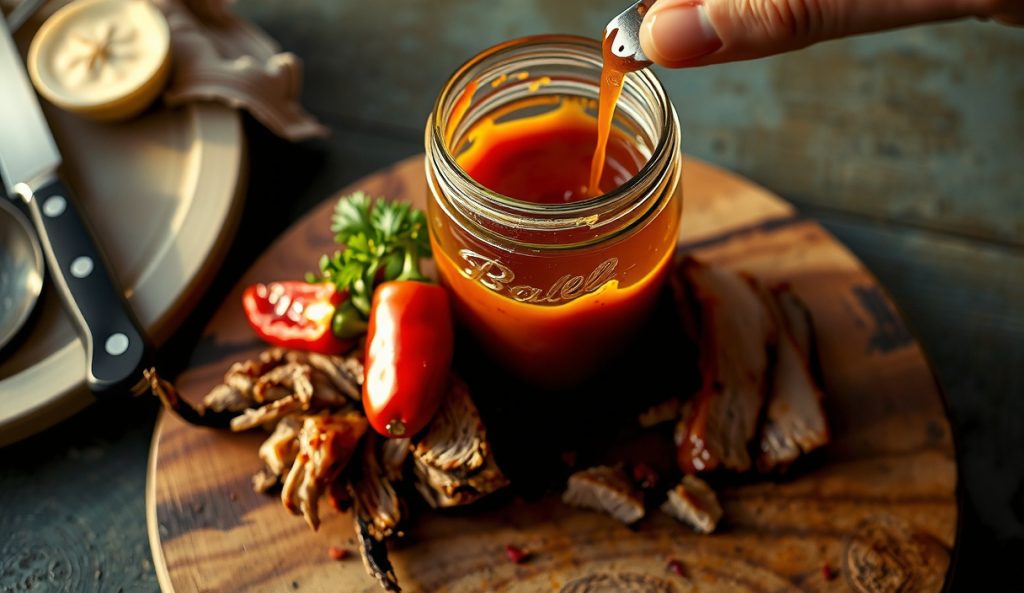
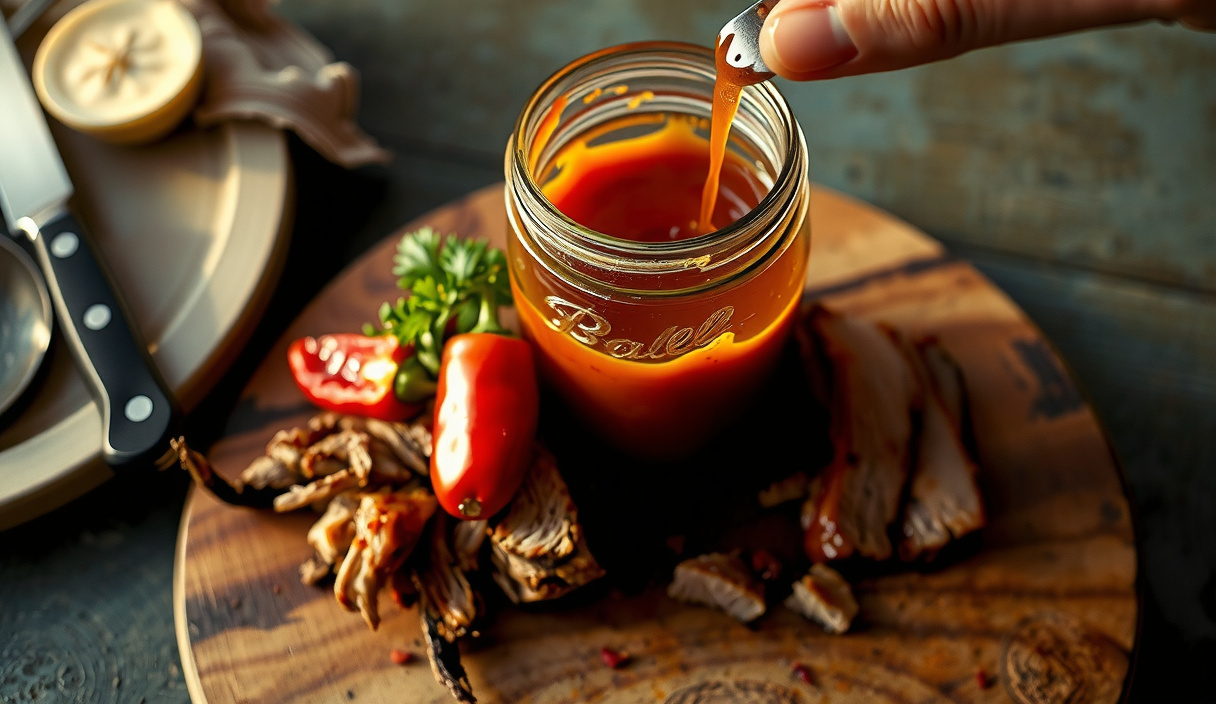
There is a moment at every eastern North Carolina whole-hog cookout when someone tips a mason jar over a pile of just-pulled pork and the room goes quiet. That jar holds nothing but apple cider vinegar, sugar, salt, black pepper, and red pepper flakes — and it is the most polarizing condiment in American barbecue. No tomato. No ketchup. No butter. Just acid and heat doing the exact work that twenty-four hours of wood smoke started. This sauce has roots in the oldest whole-hog traditions of eastern North Carolina, and the reason it works so well is pure chemistry.
Eastern NC vinegar sauce is a no-cook sauce. Nothing is heated, nothing is blended, nothing is reduced. You combine, you stir, you wait. The waiting matters — a minimum of 30 minutes allows the sugar to fully dissolve and the capsaicin from the red pepper flakes to diffuse into the acetic acid continuous phase, building a slow, fat-soluble heat that blooms on the back of the palate. Get this sauce on the table and the pork takes care of the rest.
Why does eastern NC vinegar sauce work? The science
Eastern NC vinegar sauce works through fat-acid balance, and it operates at the molecular level. Smoked pork shoulder — specifically the Boston butt cut cooked to an internal temperature of 195–205°F to fully hydrolyze collagen into gelatin and render intramuscular fat — delivers a rich, heavy lipid payload per bite. That fat is tri-acylglycerol: long hydrocarbon chains with high caloric density and almost zero polarity. The human palate reads this accumulation of non-polar fat as richness, then as heaviness, and finally as the need for a reset.
Apple cider vinegar at approximately 5% acetic acid concentration drops the pH of the sauce to roughly 3.0–3.3. When this acid contacts the fat coating the tongue and oral mucosa, it performs two simultaneous functions. First, acetic acid is itself a small, volatile molecule that vaporizes rapidly in the oral cavity at body temperature (37°C), delivering a sharp retronasal aroma burst that neurologically interrupts the fat-saturation signal. Second, the hydrogen ions (H+) in solution interact with the emulsified fat-saliva interface, triggering increased salivary flow — a physiological response that mechanically rinses the oral fat film and resets receptor sensitivity. The sauce does not overpower the pork; it clears the palate so you want another bite.
The capsaicin in red pepper flakes engages a completely different receptor pathway. Capsaicin is a lipophilic alkaloid (log P ≈ 3.5) that selectively binds to TRPV1 ion channels on nociceptive trigeminal nerve fibers, generating the chemesthetic burning sensation registered as heat. Because capsaicin is fat-soluble, it partitions preferentially into the pork’s intramuscular lipid phase rather than remaining in the aqueous vinegar continuous phase. This means the heat from the sauce migrates directly into the fat pockets of the pork as the sauce penetrates, delivering heat precisely where the fat is richest. The sugar in the recipe serves a dual purpose: it raises the water activity (a_w) slightly above straight vinegar, moderating the harshness of the acetic acid spike, and it provides a very small quantity of Maillard precursors if the sauce is ever heated — though in traditional use, no cooking occurs. Black pepper contributes piperine, another TRPA1 agonist, layering a secondary trigeminal heat note that extends the sensation without additional capsaicin load.
Eastern NC vinegar sauce contains no emulsifiers — it is a true aqueous solution with suspended pepper particulates, not an emulsion. This matters for application: the low viscosity allows the sauce to wick rapidly into the pulled pork fiber matrix via capillary action, coating individual myofibrillar strands rather than sitting on the surface. Because there is no continuous fat phase to sequester the volatile acetic acid, the aroma release is immediate and intense — exactly the sensory contrast a fatty, smoke-laden meat demands. The absence of tomato, the defining regional distinction, is not mere tradition. Tomato paste raises viscosity and introduces pectin, which slows penetration and buffers the acid, dulling the fat-cutting precision that defines eastern NC style.
What equipment and ingredients do I need?
- Apple cider vinegar: Use unfiltered, raw ACV at 5% acidity. The mother does not meaningfully alter flavor but is traditional. Distilled white vinegar produces a sharper, less rounded acid profile — use it only if you want maximum edge. Do not use rice vinegar (too mild, wrong ester profile) or malt vinegar (wrong flavor phenolics entirely).
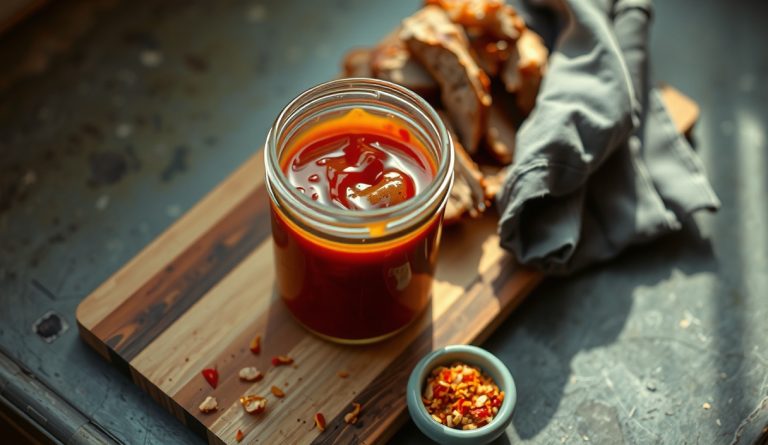
- Red pepper flakes: Standard crushed red pepper (cayenne-forward blends) is the baseline. For more complexity, substitute half with calabrian chili flakes. For more heat without additional particulate, add 1/4 teaspoon of cayenne powder alongside standard flakes. The flakes are structural as well as functional — they provide visual cue and a slow-release capsaicin depot.
- Sugar: White granulated sugar dissolves cleanly without introducing molasses character. If you want a slightly rounder finish, up to 1 teaspoon of light brown sugar can replace the white without breaking regional authenticity.
- Salt: Diamond Crystal kosher salt is the reference here. If using Morton kosher or fine sea salt, reduce by 25% by volume (Morton is denser). Iodized table salt is not recommended — iodine compounds can impart metallic off-notes in high-acid solutions.
- Mason jar or glass bottle: Store and serve in glass. Acetic acid at pH 3 is aggressive enough to leach compounds from low-quality plastics over time and will pick up off-flavors.
- Rest time: A minimum 30-minute rest at room temperature before serving is non-negotiable. 24 hours is better. At 30 minutes, the sugar is dissolved but the pepper flakes have not fully surrendered their capsaicin. At 24 hours, the sauce has achieved full equilibrium and the heat integrates rather than spikes.
Eastern North Carolina Vinegar Sauce
Equipment
- 1 Quart mason jar or glass bottle with lid Glass only — acetic acid at pH 3 can leach compounds from low-quality plastic containers over time.
- 1 set Measuring cups and spoons
- 1 Long-handled stirring spoon or chopstick Needed to stir aggressively until sugar is fully dissolved — about 60 seconds of continuous stirring.
Ingredients
- 2 cups apple cider vinegar Unfiltered raw ACV at 5% acidity is traditional; distilled white vinegar produces a sharper profile
- 1 tablespoon granulated white sugar Fully dissolve before resting; tempers the acid edge without sweetening the sauce
- 1 teaspoon kosher salt Diamond Crystal reference; reduce by 25% if using Morton kosher or fine sea salt
- 1 teaspoon crushed red pepper flakes Standard cayenne-forward blend; increase to 2 teaspoons for competition heat level
- 1 teaspoon freshly ground black pepper Contributes piperine, a TRPA1 agonist that layers a secondary heat note distinct from capsaicin
Instructions
- Combine apple cider vinegar, sugar, salt, red pepper flakes, and black pepper in a quart mason jar or glass bottle.2 cups apple cider vinegar, 1 tablespoon granulated white sugar, 1 teaspoon kosher salt, 1 teaspoon crushed red pepper flakes, 1 teaspoon freshly ground black pepper
- Seal the jar and shake vigorously for 20 seconds, or stir continuously with a long spoon for 60 full seconds. The sugar must be completely dissolved — gritty sugar that settles is the most common failure mode. If granules persist, remove 2 tablespoons of the vinegar mixture to a small microwave-safe cup, microwave for 15 seconds to warm, stir to dissolve the sugar, then return it to the jar.2 cups apple cider vinegar, 1 tablespoon granulated white sugar
- Taste immediately and note that the sauce will seem harshly acidic and mildly salty. This is expected and correct — fresh sauce is always too sharp. Do not adjust salt at this stage. Salt perception is suppressed by low pH; the balance will equilibrate during the rest period.
- Rest at room temperature, loosely covered, for a minimum of 30 minutes before serving. For best results, rest for 24 hours. During this time the sugar fully integrates, the capsaicin from the pepper flakes diffuses into the acetic acid continuous phase, and the volatile aroma compounds reach equilibrium — producing a sauce with integrated heat rather than a sharp spike.1 teaspoon crushed red pepper flakes, 1 teaspoon freshly ground black pepper
- Apply to smoked pulled pork in two passes: first pass while pork is still hot (180°F+ internal), immediately after pulling, so the sauce wicks deep into the muscle fiber matrix via capillary action (3–4 tablespoons per pound of pork). Second pass at the table for each diner to season to taste. Store remaining sauce in the sealed glass jar at room temperature for up to 3 weeks, or refrigerated for up to 3 months.
Notes
Nutrition
How do I nail it every time? Tips and technique
- Dissolve the sugar completely. The most common failure mode is gritty sugar that settles to the bottom of the jar. Stir aggressively for a full 60 seconds after combining. If sugar granules persist after 5 minutes of occasional stirring, add the sugar to 2 tablespoons of the vinegar and warm it very briefly in a microwave (15 seconds) before combining with the rest of the cold vinegar. Do not boil — you will drive off volatile acetic acid and flatten the sauce.
- Taste for salt before resting, not after. Acidity perception suppresses saltiness. Taste the fresh sauce and it will seem underseasoned. After 24 hours of rest, the salt has fully equilibrated and the sauce will taste significantly saltier. Salt to the edge of just-right when fresh; do not compensate after resting.
- Match heat to meat mass. This recipe makes enough sauce for a full 8–10 pound pork shoulder. For smaller cuts or ribs, halve the batch. The ratio of acid to meat matters — too much sauce on too little meat produces an acidic, one-dimensional result. Apply in two passes: one before pulling, one at the table.
- Apply the sauce hot, before pulling. The single biggest upgrade most backyard cooks miss: ladle 3–4 tablespoons of sauce directly onto the pork while it is still 180°F+ internal, immediately after pulling from the cooker. The residual heat opens the muscle fibers and allows the sauce to wick deep into the meat. A second application at the table is then for seasoning, not penetration.
- Do not blend or process. The particulate suspension of pepper flakes is intentional — it provides visual texture, a slow-release heat depot, and regional identity. Running the sauce through a blender homogenizes the capsaicin too aggressively and destroys the graduated heat profile.
- Check the shelf life. Because of the low pH (~3) and no added preservatives beyond salt and acid, eastern NC vinegar sauce is microbiologically quite stable. Stored in a sealed glass jar at room temperature, the sauce keeps comfortably for 2–3 weeks. Refrigerated, 3 months. The flavor improves markedly at the 1-week mark as the pepper equilibrates.
What variations can I make on eastern NC vinegar sauce?
Western NC (Lexington) pivot: Add 3 tablespoons of ketchup and 1 tablespoon of brown sugar to the base recipe. This is technically a different sauce — the Piedmont or Lexington dip — but it is the logical bridge between eastern NC vinegar sauce and the tomato-forward sauces of the Midwest and South Carolina. The ketchup introduces pectin, which raises viscosity and buffers the acid, producing a noticeably gentler, thicker sauce. Texturally it will cling rather than wick, and the pH climbs to approximately 3.7–4.0, softening the fat-cutting effect.
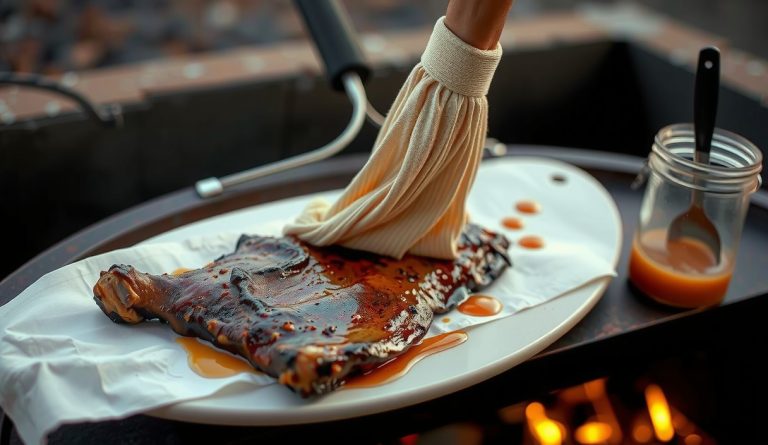
Whole hog vs. shoulder application: Traditional eastern NC whole-hog barbecue uses this sauce directly on the pit as a mop during cooking, in addition to finishing. As a mop, the evaporative cooling of the high-water-content vinegar helps manage bark development and slows surface charring during the final hours of cooking. If using the sauce as a mop, apply it only in the last 2 hours; earlier application at high pit temperatures (250–275°F) will suppress Maillard browning on the exterior by keeping surface water activity too high. As a table sauce, no adjustment is needed.
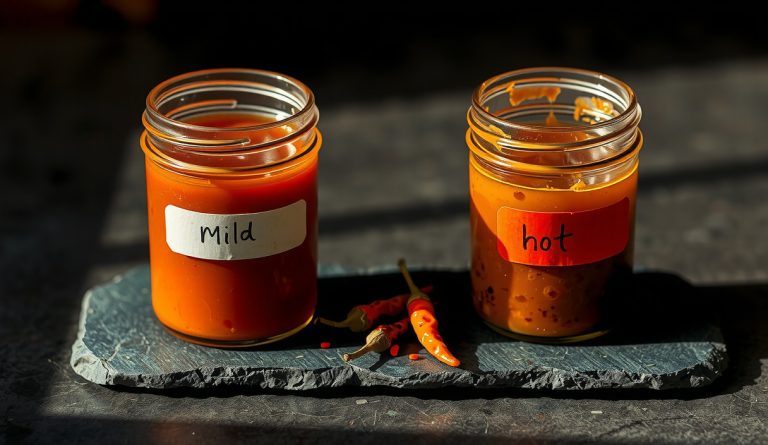
Heat scaling: The base recipe is medium-hot — noticeable but not aggressive. For a competition-style heat level, double the red pepper flakes to 2 teaspoons and add 1/2 teaspoon of cayenne powder. For a family-friendly version, reduce the flakes to 1/4 teaspoon and increase the sugar to 2 teaspoons. The fat-acid cutting mechanism functions independently of the heat level, so the sauce remains effective even at minimal capsaicin loads.
Scaling the batch: Eastern NC vinegar sauce scales perfectly linearly — double or triple every ingredient proportionally. There are no emulsification ratios to maintain, no critical concentrations to protect. The pH will remain in the same range regardless of batch size, as long as the ACV-to-other-ingredients ratio is preserved. Large batches (1 gallon) are standard for whole-hog cookouts and can be made 48–72 hours in advance.
Frequently asked questions
Why does eastern NC sauce have no tomato? Eastern North Carolina whole-hog traditions predate the widespread commercial availability of ketchup as a condiment in rural communities, and the technique descends from vinegar-basted whole-hog cooking that required nothing but pantry staples — vinegar, salt, and pepper. From a food-science perspective, tomato introduces pectin (a thickening polysaccharide), lycopene pigments, sugars, and organic acids at a different pH profile than pure ACV. These compounds change the sauce from a thin, penetrating wicking solution into a coating emulsion-gel. The fat-acid cutting mechanism still works, but it is attenuated by the buffer capacity of the tomato solids. Eastern NC pitmasters made the empirically correct choice: nothing penetrates smoked pork fat like pure vinegar.
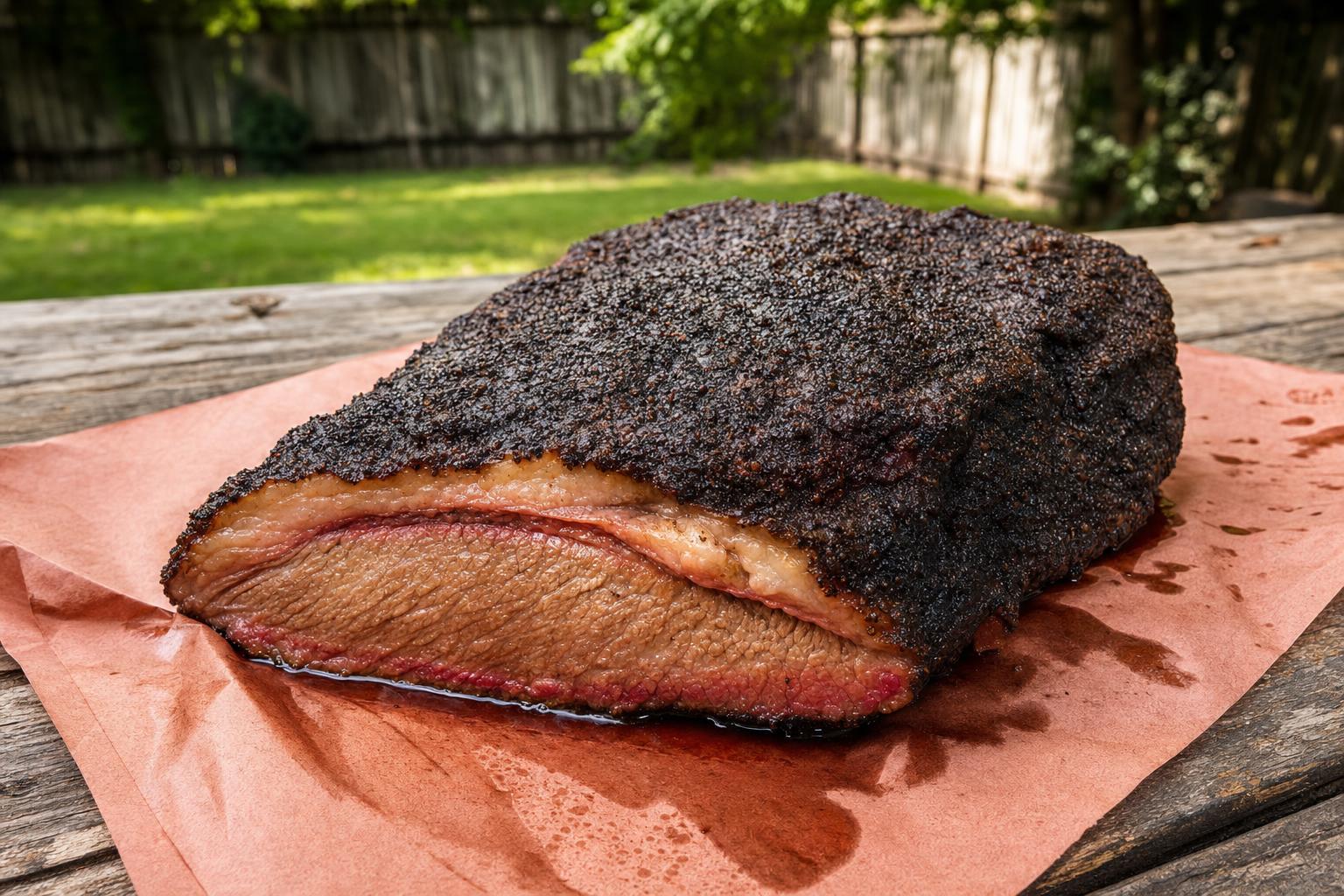
Can I use this sauce on chicken or brisket? Yes, with calibration. On smoked chicken, eastern NC vinegar sauce is excellent — apply it 10–15 minutes before pulling the bird from the smoker at an internal temperature of 165°F so the surface acidity assists skin crispness via slight protein denaturation. On brisket, the sauce is unconventional but functional: Texas-style brisket with its heavy bark and rendered intramuscular fat has a very similar fat-richness profile to pork shoulder, and the acid cut works the same way. Use the sauce sparingly as a table-side dip rather than a blanket application — the flavor phenolics of heavily smoked brisket are more delicate than pork and the vinegar can dominate if applied too heavily.
My sauce tastes too harsh right after mixing. Did I do something wrong? No — this is expected and correct. Fresh, un-rested vinegar sauce is unpleasantly sharp because the acetic acid aroma compounds are maximally volatile and the sugar has not yet fully dissolved into solution. The rest time (minimum 30 minutes, ideally 24 hours) allows three things to happen: the sugar fully integrates and tempers the acid edge by raising water activity slightly; the capsaicin diffuses from the surface of the pepper flakes into the continuous aqueous phase, distributing heat evenly; and the volatile acetic acid compounds reach a partial equilibrium with the headspace, softening the harsh initial aroma spike. Make the sauce the day before you need it.