Gluten-Free BBQ Sauce — Tamari Base

Equipment
- 1 Heavy-bottomed saucepan (3-quart minimum) 3-ply stainless or enameled cast iron preferred — prevents scorching at high sugar concentrations
- 1 Silicone spatula Flexible enough to reach pan edges and prevent caramelized sugar buildup
- 1 Fine-mesh strainer Optional — for ultra-smooth texture; strain out any solids before jarring
- 1 Instant-read thermometer or refractometer Refractometer reads 38–42 Brix at the correct endpoint; thermometer confirms sauce is below 220°F during active reduction
- 1 Mason jar (pint, wide-mouth) For storage; sterilize if canning
Ingredients
Aromatic base
- 2 tablespoons extra-virgin olive oil
- 1 teaspoon garlic powder certified GF; single-ingredient, no anti-caking fillers
- 1 teaspoon onion powder certified GF
- 2 teaspoons smoked paprika certified GF; Spanish pimenton de la vera preferred for depth
- ½ teaspoon dry mustard powder certified GF
- ¼ teaspoon cayenne pepper adjust to heat preference
Wet base
- 6 ounces tomato paste one standard small can; look for BPA-free, no-added-sugar varieties
- ½ cup certified gluten-free tamari San-J or Kikkoman GF certified; verify the GF certification mark on label — not merely ‘wheat-free’
- ½ cup apple cider vinegar raw unfiltered preferred; naturally GF
- ¼ cup blackstrap molasses unsulfured; Brer Rabbit or Plantation brand; provides melanoidin depth and viscosity
- ¼ cup packed dark brown sugar balances blackstrap bitterness; naturally GF
- 1 cup water filtered; starting hydration for reduction
Finishing
- 1 tablespoon fresh lemon juice added off-heat; brightens without adding harsh acidity
- 1 teaspoon kosher salt Diamond Crystal; add after full reduction and taste — tamari contributes substantial sodium
- ½ teaspoon freshly cracked black pepper

Instructions
Build the aromatic base
- Heat the olive oil in your heavy-bottomed saucepan over medium heat until it shimmers — approximately 300°F at the surface. Add the garlic powder, onion powder, smoked paprika, dry mustard, and cayenne all at once.Stir constantly with the silicone spatula for 45 to 60 seconds. You are blooming the fat-soluble aroma compounds into the lipid phase: the guaiacol volatiles from the smoked paprika, the allyl sulfides from the garlic and onion, and the capsaicin from the cayenne all partition dramatically better into oil than into water. Do not walk away — spice powders scorch fast in direct-contact oil.1 teaspoon garlic powder, 1 teaspoon onion powder, 2 teaspoons smoked paprika, 1/2 teaspoon dry mustard powder, 1/4 teaspoon cayenne pepper
- Add the tomato paste directly to the bloomed spice oil. Stir and cook for 2 to 3 minutes, pressing the paste against the pan, until it deepens from bright red to a brick-red color and begins to stick slightly to the bottom. This step drives additional Maillard browning in the tomato’s sugar-amino acid matrix and reduces its raw, acidic edge before the vinegar goes in.6 ounces tomato paste
Build and dissolve the wet base
- Pour in the tamari, apple cider vinegar, blackstrap molasses, brown sugar, and water in one pour. Stir vigorously to deglaze any fond from the bottom of the pan — those stuck bits are concentrated Maillard solids and are full of flavor.Raise heat to medium-high and bring the mixture to a full boil, stirring until the brown sugar is completely dissolved. You will see a single, unified, deep mahogany liquid with no visible sugar granules.1/2 cup certified gluten-free tamari, 1/2 cup apple cider vinegar, 1/4 cup blackstrap molasses, 1/4 cup packed dark brown sugar, 1 cup water
Reduce to nappe consistency
- Once the sauce reaches a full boil, immediately drop the heat to a steady simmer — medium-low, with occasional large lazy bubbles breaking the surface. A hard rolling boil will volatilize the smoked paprika aromatics and the acetic acid edge of the ACV faster than flavor can develop. This is the critical heat-management step.Simmer uncovered, stirring every 3 to 5 minutes and scraping the edges of the pan, for 20 to 25 minutes. The sauce is ready when it coats the back of the spatula cleanly and holds a distinct line when you draw a finger through it. Volume will reduce by approximately 30 to 35 percent from the starting amount.
Finish and season
- Remove the pan from heat. Stir in the fresh lemon juice. The lemon goes in off-heat to preserve its bright, volatile citrus esters — heat destroys them rapidly.Taste the sauce now, before adding salt. The tamari has contributed significant sodium through the reduction. Add the kosher salt and freshly cracked black pepper gradually, tasting after each addition. The finished sauce should be deeply savory, smoke-forward, tangy, and balanced — not salty-forward.1 tablespoon fresh lemon juice, 1 teaspoon kosher salt, 1/2 teaspoon freshly cracked black pepper
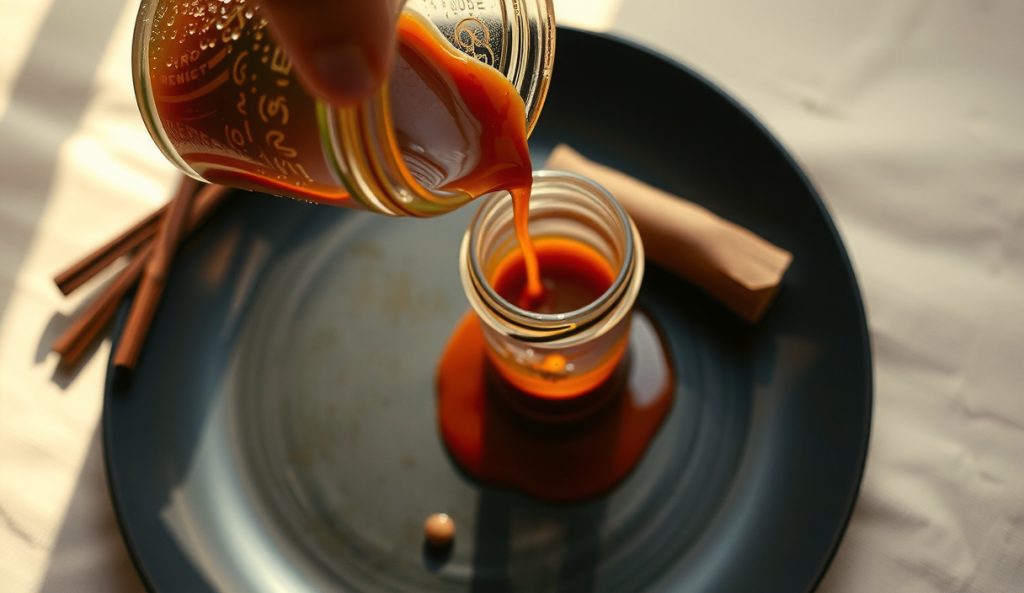
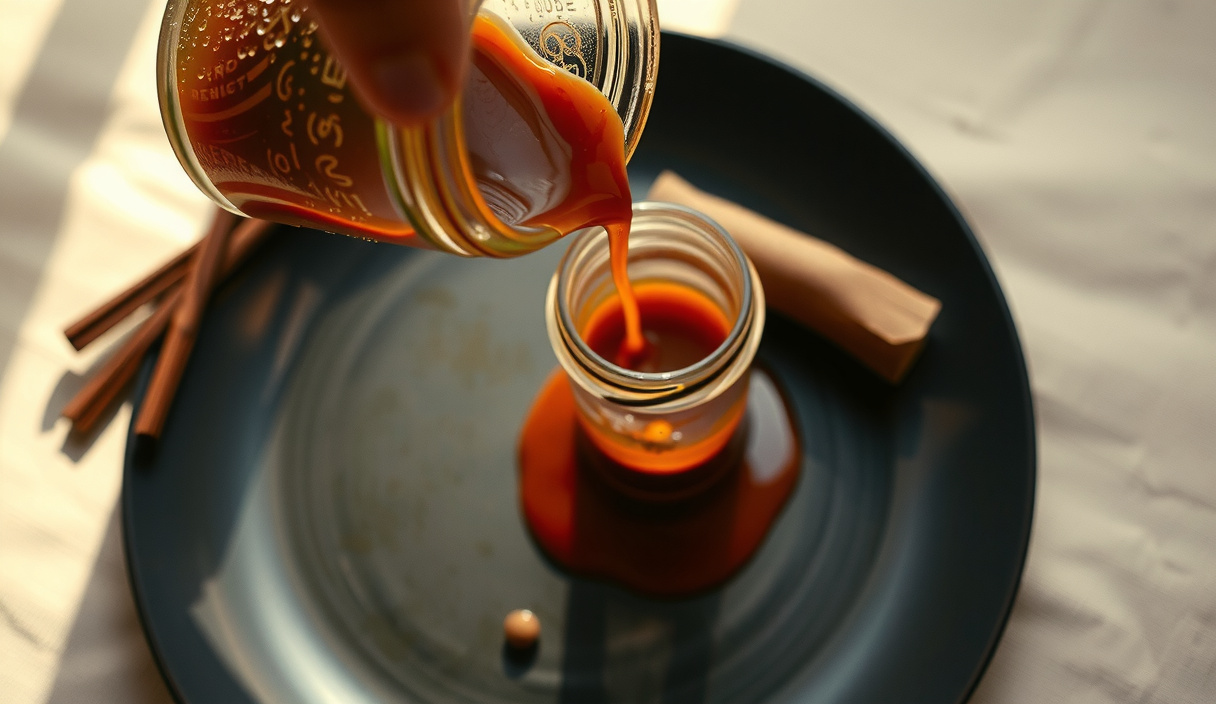
- For a smooth, glossy finished texture, pass the sauce through a fine-mesh strainer, pressing the solids through with the back of a spoon. For a slightly more rustic texture with visible spice freckles, skip the strainer — both are correct.Transfer to a sterilized mason jar while still hot. Let cool uncovered for 10 minutes, then seal and refrigerate. The sauce will thicken further as it chills — this is normal starch retrogradation behavior from the tomato paste pectin and concentrated sugars. It will loosen again when warmed.
Notes
Nutrition
There is a landmine buried in almost every bottle of store-bought BBQ sauce: Worcestershire. Standard Worcestershire sauce is fermented with malt vinegar — a barley derivative — making it off-limits for anyone with celiac disease or serious gluten sensitivity. Even “soy sauce” on an ingredient label is almost always brewed wheat-forward shoyu. The result is that an entire category of condiment, one that defines American backyard cooking, is quietly riddled with gluten triggers that most people never trace back to source.
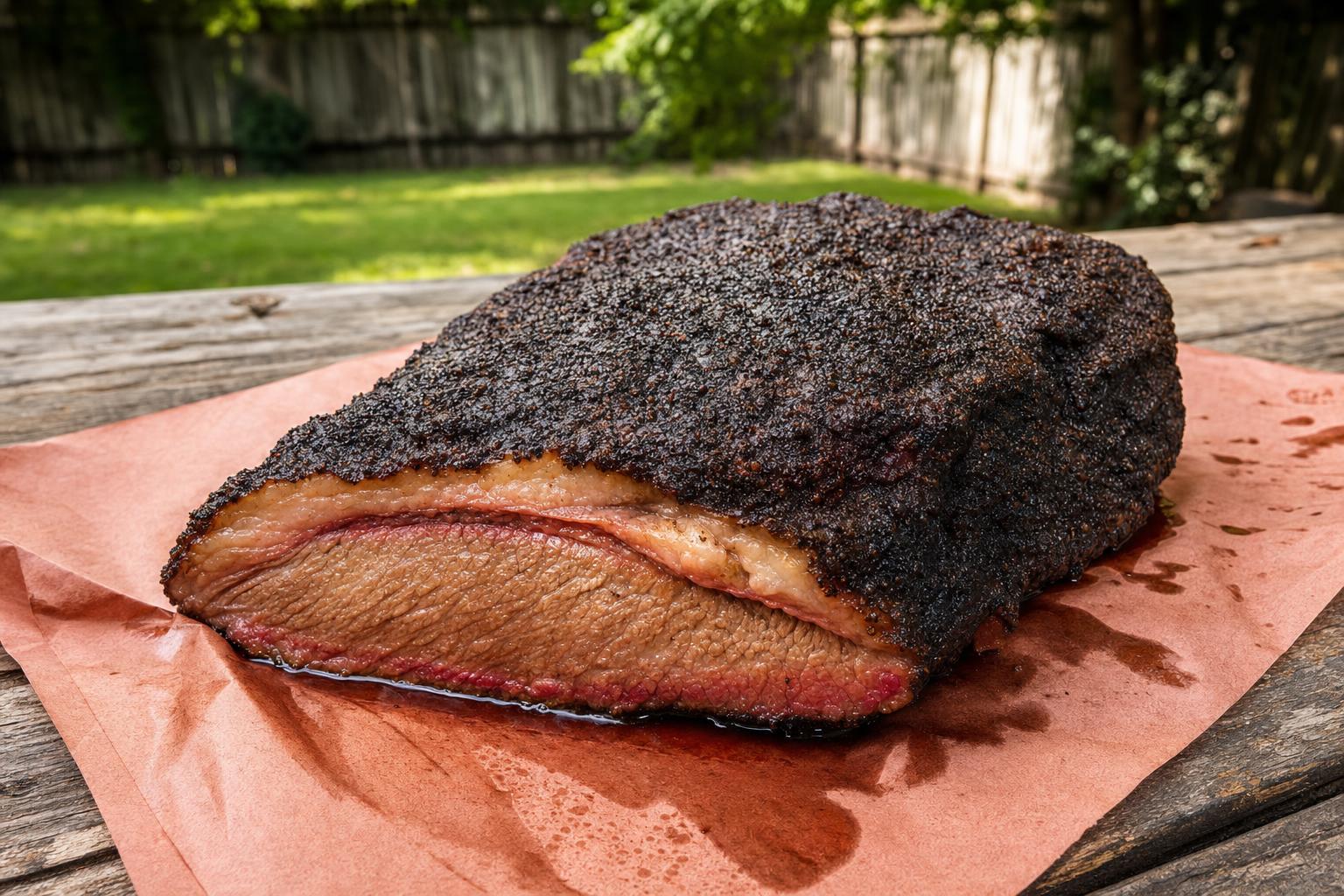
This gluten-free BBQ sauce solves that problem structurally, not by omission. Tamari — traditionally brewed from soybeans with little to no wheat — replaces both the soy sauce and the Worcestershire, delivering the same fermented-umami depth without the malt liability. Layer in tomato paste for body, blackstrap molasses for bittersweet complexity, apple cider vinegar for acid backbone, and smoked paprika for the fire note you would normally coax from actual wood smoke. Reduce the sauce down, and what emerges is a condiment that earns its place on a brisket without asking anyone to compromise on safety.
Why does a gluten-free BBQ sauce need tamari instead of soy sauce? The science
Gluten-free BBQ sauce works because tamari delivers the full fermented-umami profile of soy sauce while eliminating the malt-based gluten pathway entirely. BBQ sauce is a reduction — an aqueous continuous phase loaded with dissolved solids (sugars, organic acids, salt, melanoidins) that concentrates as free water escapes via the latent heat of vaporization. The rheology of the finished sauce is governed by the Brix level: as soluble solids climb past roughly 35–40 Brix, the sauce transitions from a Newtonian fluid into a weakly pseudoplastic (shear-thinning) system. That is the threshold where the sauce clings to a rib rather than running off. Molasses contributes a dense hygroscopic load of sucrose, glucose, and fructose, but its real structural gift is the population of Maillard-derived melanoidins already baked into the refining process — bitter-sweet, high-molecular-weight polymers that deepen color and add viscosity without requiring additional cook time. Tomato paste adds a complementary polysaccharide load via native pectin and concentrated lycopene-laden cell-wall debris, which further thickens the continuous phase and stabilizes emulsified lipid droplets from the olive oil base.
The acid architecture of this gluten-free BBQ sauce is equally deliberate. Apple cider vinegar sits at roughly pH 3.0–3.5, well below the Maillard reaction’s preferred alkaline sweet spot, which means the vinegar suppresses browning during the reduction. That is a feature here, not a bug — the lower pH prevents the sauce from scorching on the stovetop while preserving the fresh, sharp tang that cuts through fatty pork or brisket. The tamari brings free L-glutamate and organic acids from its slow bacterial fermentation, providing T1R1/T1R3 umami receptor activation that dramatically amplifies perceived savoriness without triggering any malt-based gluten pathway. Brown sugar adds a second reducing-sugar population on top of the molasses, ensuring sufficient Amadori rearrangement products form during the final high-heat reduction phase, generating additional pyrazines and furans that read as roasted depth on the palate.
Smoked paprika deserves its own mechanistic note. The primary aromatic driver is a family of methoxyphenol volatiles — guaiacol, 4-methylguaiacol, eugenol — that partition heavily into the lipid phase of the sauce. Because fat partition coefficients for these compounds are orders of magnitude higher than their aqueous equivalents, even the modest olive oil in this formulation acts as a controlled-release reservoir: the volatiles are buffered at rest and burst retronasal during mastication when the sauce structure is sheared. The result is a smoke perception that lingers well past the initial bite, mimicking the sustained aromatic delivery of actual wood-fired barbecue without a single gram of actual smoke.
What equipment and ingredients do I need to get right?
Tamari — read the label every time. Most tamari is wheat-free, but not all. San-J and Kikkoman both make certified gluten-free tamari; look for the GF certification logo rather than trusting the ingredient list alone, since shared-facility cross-contact is a real exposure vector in soy fermentation plants. Certified GF tamari is not optional here — it is the entire point of the swap.
Blackstrap molasses vs. regular molasses. Blackstrap has been through three extraction cycles, concentrating minerals, bitterness, and melanoidins. Blackstrap contributes more structural color, deeper flavor complexity, and stronger viscosity than first or second molasses — but blackstrap is also sharply bitter on its own. The brown sugar in the recipe offsets that bitterness without diluting the depth. If you substitute regular molasses, reduce the brown sugar by about a tablespoon and accept a lighter-colored, thinner finished sauce.
Tomato paste, not sauce. Tomato paste has been reduced to a concentrated solids content of roughly 28–30 Brix before it hits the can, meaning you are buying pre-concentrated Maillard products and pectin, not dilute raw tomato water. Using crushed tomatoes or passata will require significantly longer reduction time and risk scorching before you reach proper viscosity.
Heat management. This sauce scorches aggressively past 220°F because of the sugar load. Use a heavy-bottomed saucepan — stainless 3-ply or enameled cast iron — and stir actively during the final reduction phase. A silicone spatula that reaches the edges of the pot prevents the caramelized sugar film from building up and burning on the walls.
Gluten-Free BBQ Sauce — Tamari Base
Equipment
- 1 Heavy-bottomed saucepan (3-quart minimum) 3-ply stainless or enameled cast iron preferred — prevents scorching at high sugar concentrations
- 1 Silicone spatula Flexible enough to reach pan edges and prevent caramelized sugar buildup
- 1 Fine-mesh strainer Optional — for ultra-smooth texture; strain out any solids before jarring
- 1 Instant-read thermometer or refractometer Refractometer reads 38–42 Brix at the correct endpoint; thermometer confirms sauce is below 220°F during active reduction
- 1 Mason jar (pint, wide-mouth) For storage; sterilize if canning
Ingredients
Aromatic base
- 2 tablespoons extra-virgin olive oil
- 1 teaspoon garlic powder certified GF; single-ingredient, no anti-caking fillers
- 1 teaspoon onion powder certified GF
- 2 teaspoons smoked paprika certified GF; Spanish pimenton de la vera preferred for depth
- ½ teaspoon dry mustard powder certified GF
- ¼ teaspoon cayenne pepper adjust to heat preference
Wet base
- 6 ounces tomato paste one standard small can; look for BPA-free, no-added-sugar varieties
- ½ cup certified gluten-free tamari San-J or Kikkoman GF certified; verify the GF certification mark on label — not merely ‘wheat-free’
- ½ cup apple cider vinegar raw unfiltered preferred; naturally GF
- ¼ cup blackstrap molasses unsulfured; Brer Rabbit or Plantation brand; provides melanoidin depth and viscosity
- ¼ cup packed dark brown sugar balances blackstrap bitterness; naturally GF
- 1 cup water filtered; starting hydration for reduction
Finishing
- 1 tablespoon fresh lemon juice added off-heat; brightens without adding harsh acidity
- 1 teaspoon kosher salt Diamond Crystal; add after full reduction and taste — tamari contributes substantial sodium
- ½ teaspoon freshly cracked black pepper
Instructions
Build the aromatic base
- Heat the olive oil in your heavy-bottomed saucepan over medium heat until it shimmers — approximately 300°F at the surface. Add the garlic powder, onion powder, smoked paprika, dry mustard, and cayenne all at once.Stir constantly with the silicone spatula for 45 to 60 seconds. You are blooming the fat-soluble aroma compounds into the lipid phase: the guaiacol volatiles from the smoked paprika, the allyl sulfides from the garlic and onion, and the capsaicin from the cayenne all partition dramatically better into oil than into water. Do not walk away — spice powders scorch fast in direct-contact oil.1 teaspoon garlic powder, 1 teaspoon onion powder, 2 teaspoons smoked paprika, 1/2 teaspoon dry mustard powder, 1/4 teaspoon cayenne pepper
- Add the tomato paste directly to the bloomed spice oil. Stir and cook for 2 to 3 minutes, pressing the paste against the pan, until it deepens from bright red to a brick-red color and begins to stick slightly to the bottom. This step drives additional Maillard browning in the tomato’s sugar-amino acid matrix and reduces its raw, acidic edge before the vinegar goes in.6 ounces tomato paste
Build and dissolve the wet base
- Pour in the tamari, apple cider vinegar, blackstrap molasses, brown sugar, and water in one pour. Stir vigorously to deglaze any fond from the bottom of the pan — those stuck bits are concentrated Maillard solids and are full of flavor.Raise heat to medium-high and bring the mixture to a full boil, stirring until the brown sugar is completely dissolved. You will see a single, unified, deep mahogany liquid with no visible sugar granules.1/2 cup certified gluten-free tamari, 1/2 cup apple cider vinegar, 1/4 cup blackstrap molasses, 1/4 cup packed dark brown sugar, 1 cup water
Reduce to nappe consistency
- Once the sauce reaches a full boil, immediately drop the heat to a steady simmer — medium-low, with occasional large lazy bubbles breaking the surface. A hard rolling boil will volatilize the smoked paprika aromatics and the acetic acid edge of the ACV faster than flavor can develop. This is the critical heat-management step.Simmer uncovered, stirring every 3 to 5 minutes and scraping the edges of the pan, for 20 to 25 minutes. The sauce is ready when it coats the back of the spatula cleanly and holds a distinct line when you draw a finger through it. Volume will reduce by approximately 30 to 35 percent from the starting amount.
Finish and season
- Remove the pan from heat. Stir in the fresh lemon juice. The lemon goes in off-heat to preserve its bright, volatile citrus esters — heat destroys them rapidly.Taste the sauce now, before adding salt. The tamari has contributed significant sodium through the reduction. Add the kosher salt and freshly cracked black pepper gradually, tasting after each addition. The finished sauce should be deeply savory, smoke-forward, tangy, and balanced — not salty-forward.1 tablespoon fresh lemon juice, 1 teaspoon kosher salt, 1/2 teaspoon freshly cracked black pepper
- For a smooth, glossy finished texture, pass the sauce through a fine-mesh strainer, pressing the solids through with the back of a spoon. For a slightly more rustic texture with visible spice freckles, skip the strainer — both are correct.Transfer to a sterilized mason jar while still hot. Let cool uncovered for 10 minutes, then seal and refrigerate. The sauce will thicken further as it chills — this is normal starch retrogradation behavior from the tomato paste pectin and concentrated sugars. It will loosen again when warmed.
Notes
Nutrition
How do I nail this gluten-free BBQ sauce every time?
- Bloom the aromatics in fat first, not water. Sweating the garlic and onion powder in olive oil before adding liquids is not cosmetic — the step drives oil-soluble sulfur compounds and fat-soluble spice volatiles (including the guaiacol in smoked paprika) into the lipid phase, from which they release slowly during eating. Adding spices directly to the aqueous phase short-circuits that partitioning.
- Watch the viscosity, not the clock. The reduction time listed is a guideline. Ambient humidity and exact starting volume vary. The correct endpoint is a nappe consistency — the sauce coats the back of a spoon cleanly and holds a line when you drag a finger through it. If you are measuring, a refractometer reading of 38–42 Brix indicates the sauce is done.
- Do not boil hard throughout. A hard rolling boil drives off volatile aromatics faster than flavor compounds can develop. Bring the sauce to a boil to dissolve the solids, then immediately drop to a steady simmer with occasional large bubbles. This preserves the smoked paprika volatiles and the acetic acid edge of the apple cider vinegar.
- Verify your smoked paprika is gluten-free. Most pure smoked paprika is inherently gluten-free, but spice blends and budget brands may use wheat-based anti-caking agents or suffer from shared-line contamination. Buy single-origin certified-GF paprika or contact the manufacturer directly if celiac severity demands it.
- Salt last, tamari early. Tamari carries significant sodium load, and its saltiness concentrates during reduction. Add the tamari early so its sodium contribution factors into the reduction math. Hold additional kosher salt until the sauce has fully reduced; taste then, and adjust. Adding salt at the start without accounting for reduction is the fastest route to an oversalted batch.
- Shelf life depends on your acid level. At the apple cider vinegar ratio in this recipe, the finished sauce has a pH of approximately 3.5–4.0, which suppresses microbial growth effectively. Refrigerated in a sealed jar, the sauce holds for three to four weeks. For longer storage, process in a water bath canner at 212°F for 15 minutes — the acid level comfortably meets safe-canning thresholds.
What variations can I make on the base recipe?
Hot and smoky variant. Add 1 to 2 teaspoons of chipotle powder or blend in one canned chipotle pepper in adobo sauce (check the adobo label for GF status). Chipotles contribute both capsaicin heat and a second, distinct smoke character derived from the wood-fire drying process — different from the paprika smoke note, and considerably more aggressive. This variant works exceptionally well on chicken thighs and pork ribs where you want the heat to cut through rendered fat.
Carolina-style thin vinegar variant. Double the apple cider vinegar to 1 cup, eliminate the tomato paste, reduce the molasses to 1 tablespoon, and do not cook down as long. This produces a thin, bracingly acidic mop sauce in the tradition of eastern North Carolina pulled pork — structurally a different beast, but built on the same tamari gluten-free foundation. The Carolina variant will not coat a spoon; the sauce is meant to soak into pulled meat.
Nightshade-free variant. Replace the tomato paste with an equal volume of roasted red beet puree (roughly 3 tablespoons). Beet puree provides a similar pectin load and deep red color, though the flavor profile shifts — earthier, less acidic, and with a distinct sweetness that requires bumping the apple cider vinegar by an additional tablespoon to maintain balance. This variant threads the needle for AIP-adjacent or nightshade-sensitive eaters while keeping the gluten-free integrity intact.
Scaling for production. This recipe scales linearly up to approximately 8x batch size in a single vessel without formula adjustments. Beyond that, reduction time extends non-linearly because the surface-area-to-volume ratio of the pot decreases. At 16x batch, plan for 30 to 40 additional minutes of reduction, and use a wide, shallow rondeau rather than a deep stockpot to maximize evaporative surface area. The tamari contribution stays constant by ratio — do not reduce tamari thinking you are saving sodium, as the umami depth will drop out of the sauce entirely.
Frequently asked questions about gluten-free BBQ sauce
Is tamari always gluten-free? No — tamari is traditionally made with very little or no wheat, but manufacturing practices vary by brand and facility. Some tamari contains trace wheat; some is produced on shared lines with wheat-containing soy sauce. The only safe assumption for celiacs is a certified gluten-free tamari from a brand that tests finished product. San-J Organic Tamari and Kikkoman Gluten-Free Tamari both carry third-party GF certification and are widely available in the US.
Can I use this gluten-free BBQ sauce as a marinade and a basting sauce? Yes, with one modification: reserve half the batch before the final 10-minute reduction for use as a marinade, then finish reducing the rest to nappe consistency for basting. Using a fully reduced sauce as a marinade is not ideal because the high sugar concentration can cause the exterior of the meat to form a crust during the marinade phase before the meat ever hits heat — a surface hardening that can actually impede smoke and heat penetration during the cook.
Why does my BBQ sauce taste flat after it cools? Fat-soluble volatiles — the guaiacol from smoked paprika and the sulfur compounds from garlic — partition more aggressively into the lipid phase at lower temperatures, effectively locking those aromatics away from your olfactory receptors. This is thermodynamic partitioning at work: the vapor-condensed phase partition coefficient for these compounds drops sharply as temperature falls, suppressing retronasal delivery. The fix is straightforward — warm the sauce to at least 140°F before serving, which shifts the partition coefficient back toward the vapor phase and restores the full aromatic impact you tasted during cooking.