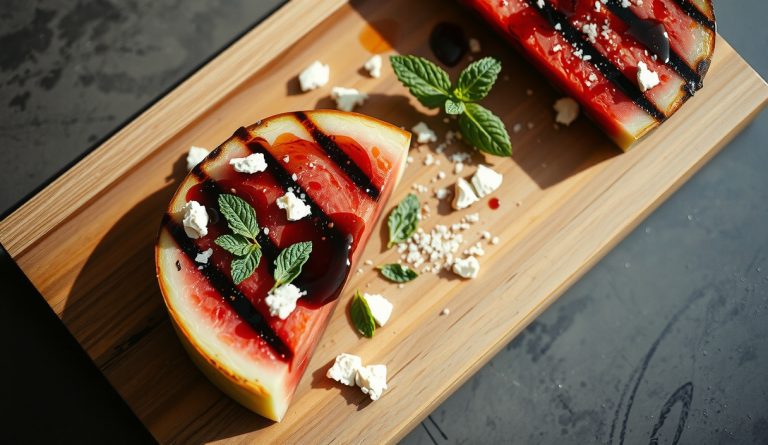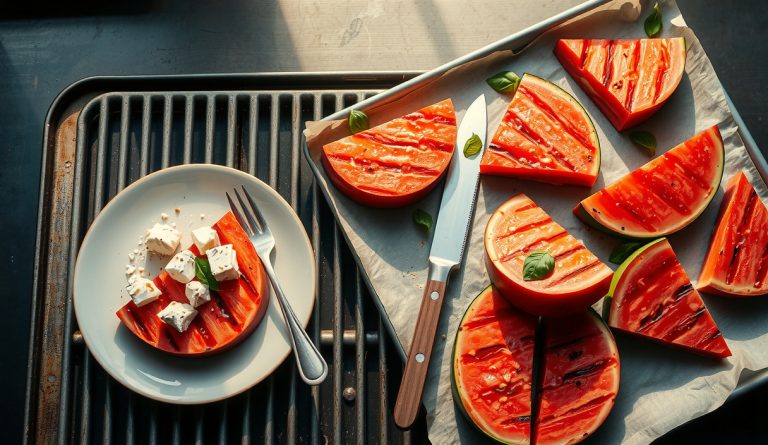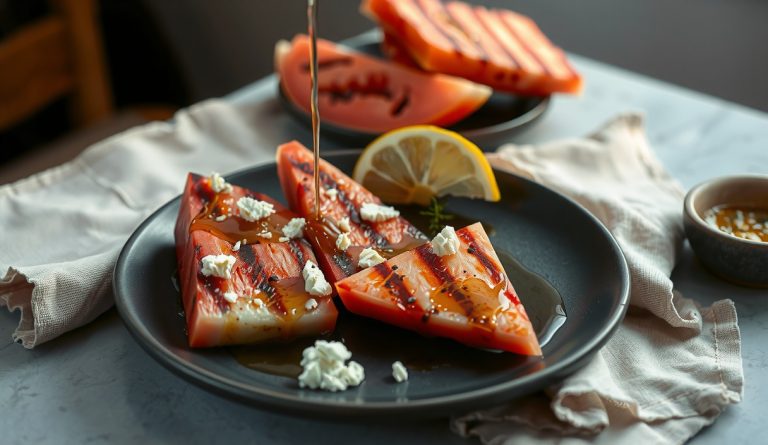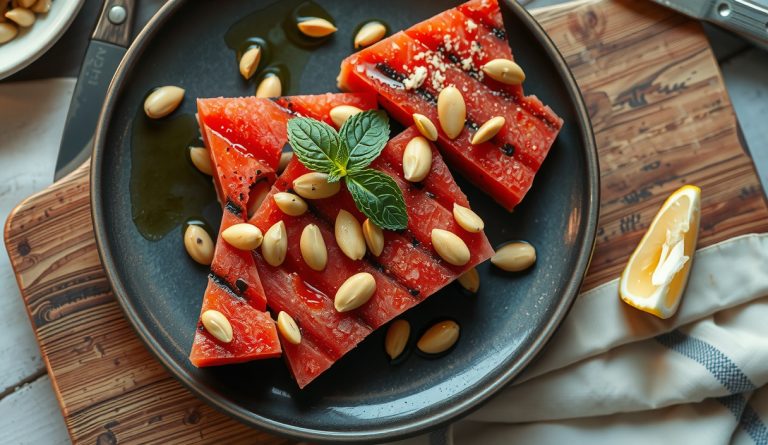
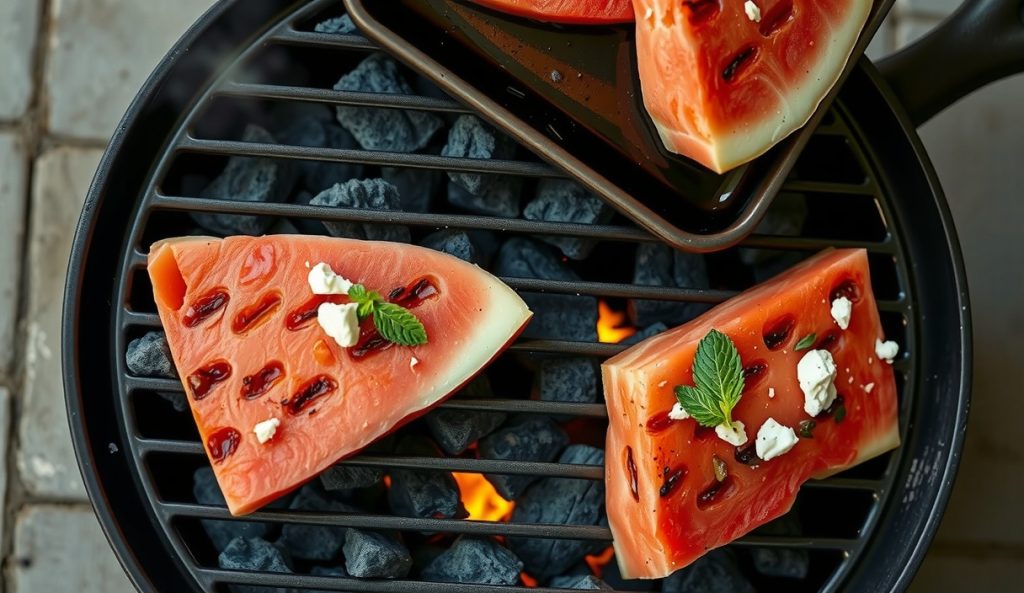
Watermelon over charcoal with wood smoke produces something a gas grill cannot fully replicate: a savory, almost meat-like aromatic complexity that sits in deliberate tension with the fruit’s natural sweetness. If charcoal is an option, this variation justifies the extra setup time.
What changes when you move from gas to charcoal?
Build a two-zone charcoal fire and allow the coals to reach peak temperature — white-ashed and glowing — before the watermelon slabs go on. Immediately before placing the slabs on the grate, throw a small handful of hickory or cherry wood chips directly onto the coals. Both species are dense in lignin fractions that pyrolyze into guaiacol and syringol, the principal volatile phenolic compounds responsible for the characteristic aroma perceived as savory and woody.
These smoke compounds deposit onto the watermelon’s surface rapidly during the first minute of exposure. The fruit’s high water activity — near 0.99 — keeps the surface cool enough to act as a condensation target for smoke volatiles rather than simply burning them off. The result is a thin, adherent aromatic layer that reads almost like grilled meat before the sweetness registers. Cherry wood adds a mild fruitiness that reinforces the melon; hickory pushes harder toward savory and smoke. A smoker box on a gas grill can approximate this effect, but the phenolic concentration and contact dynamics over live coals are substantially higher.
What stays exactly the same as the original recipe?
Slab thickness, the blotting step, target grill surface temperature, sear time per side, and all finishing components — feta, mint, balsamic, flaky salt — are unchanged from the base recipe. The structural recipe is identical; only the heat source and the addition of wood chips differ.
When is the charcoal-and-smoke method the better choice?
This is the right call when grilled watermelon is anchoring a BBQ spread alongside smoked or grilled proteins. The smoke dimension bridges the fruit into the savory register of the meal rather than letting it read as a standalone sweet side. It also suits guests who are skeptical of fruit on the grill — the smoke layer gives them something familiar and meaty to anchor on before the sweetness arrives.
Use the full prep method, slab dimensions, and finishing instructions from the original Grilled Watermelon Steak with Feta, Mint, and Balsamic.