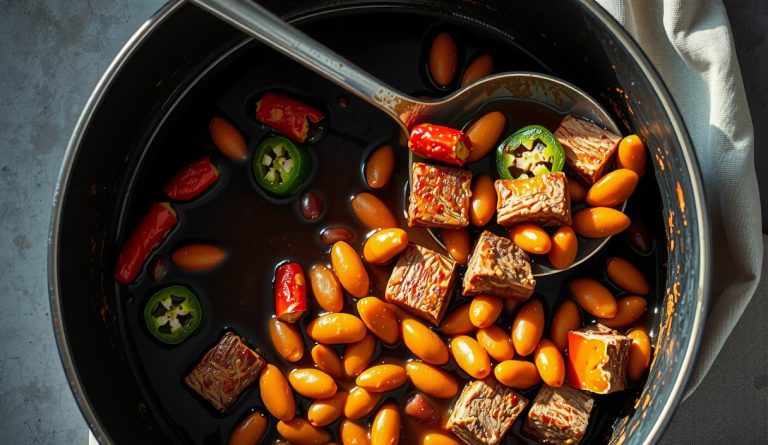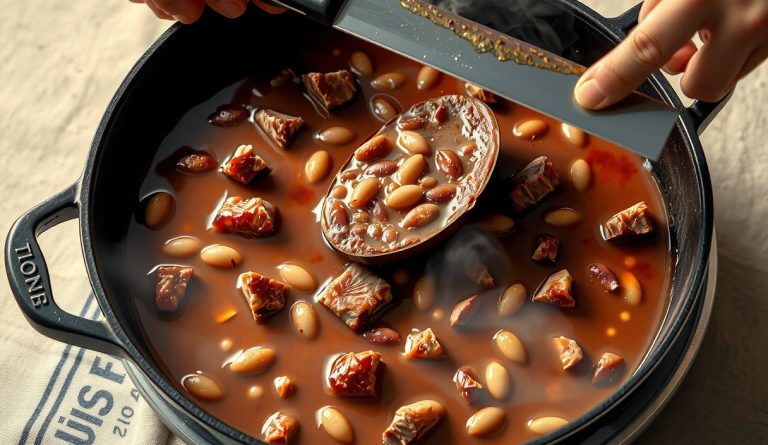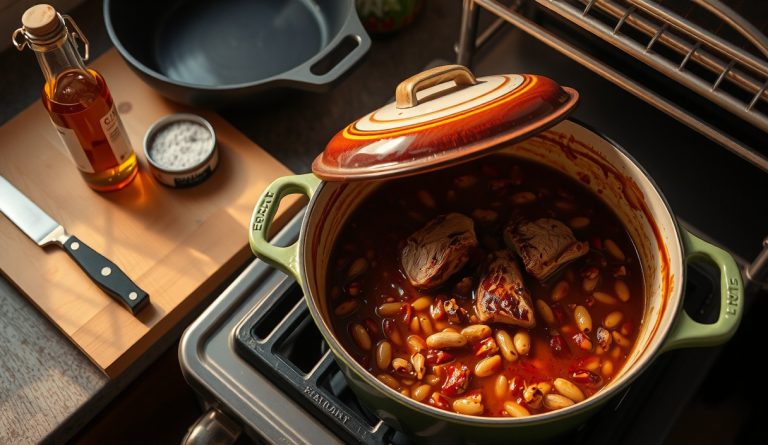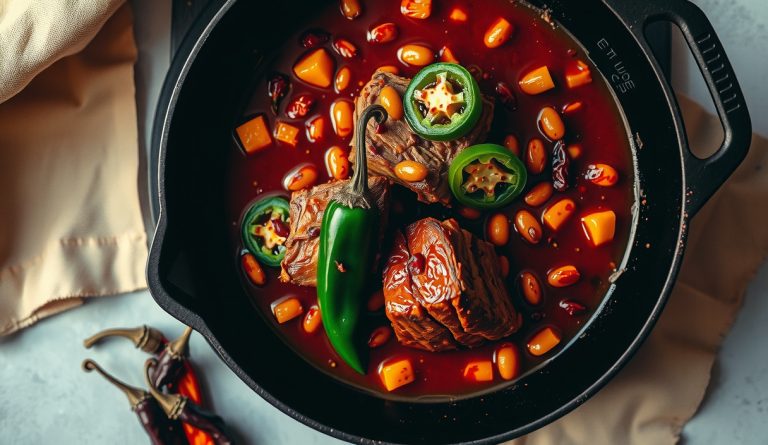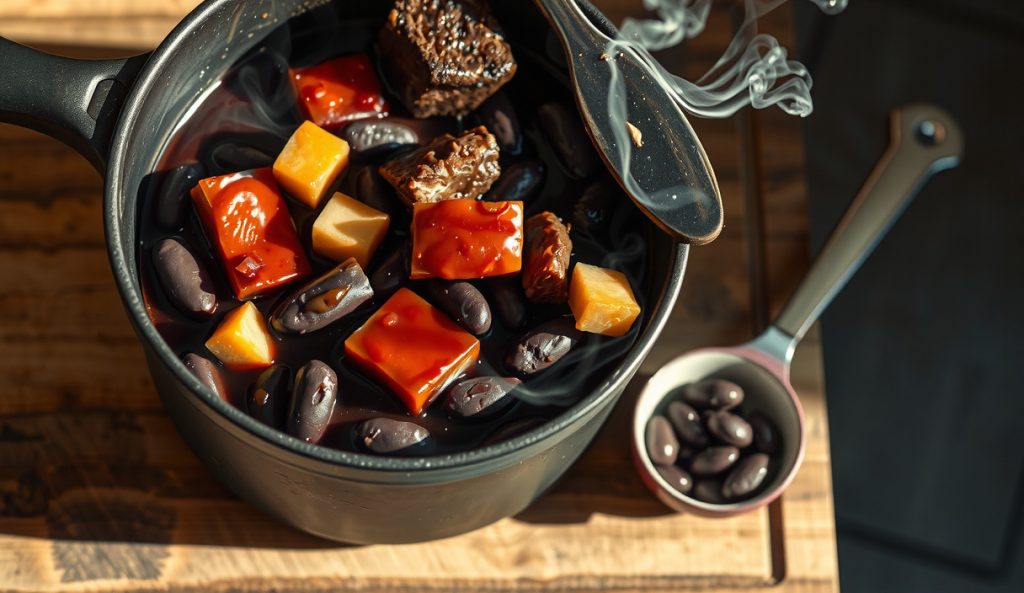
Pinto beans are the default in Texas pit bean tradition, but black beans are a compelling alternative that shifts the dish toward a darker, earthier register without requiring a recipe overhaul. The swap is nearly seamless — one timing adjustment and an awareness of flavor alignment are all that stand between you and an excellent pot.
What changes when you substitute black beans for pinto beans?
Substitute dried black beans in a 1-to-1 ratio by weight or volume. Black beans carry a higher concentration of anthocyanins — the same class of water-soluble flavonoid pigments found in blueberries and red cabbage — which accounts for their deep purple-black color and contributes a slightly more tannic, mineral-forward flavor compared to the mild, creamy sweetness of pintos. Those anthocyanins leach into the braising liquid and turn it a rich, dark mahogany, which is visually striking in the finished pot.
Black beans have a denser cell wall structure with a higher proportion of insoluble dietary fiber in the seed coat than pinto beans. This means pectin hydration — the softening mechanism that transforms a starchy, chalky bean interior into a creamy one — takes longer to complete at the same temperature. Extend the covered braise phase by 15 to 20 minutes beyond the canonical time and test for doneness by pressing a bean between your fingers: the black bean should yield completely with no chalky resistance at the center. Do not shorten this extension; underdone black beans have a noticeably gritty texture that does not improve on reheating.
On the flavor-pairing side, the earthier, less sweet profile of black beans aligns particularly well with mesquite smoke and a heavier hand on dried chiles. If your smoke source is oak or pecan — the canonical choices — consider nudging the chile quantities upward slightly to compensate for the flavor contrast that pinto sweetness normally provides.
What stays exactly the same in the black bean variation?
Pre-soak protocol, the two-phase smoke-then-braise structure, brisket trimming technique, braising liquid volume, and all aromatics remain exactly as in the canonical recipe. Only the bean variety and the covered braise time change — every other variable is held constant.
When is the black bean variation the better choice?
This variation suits cooks who want a visually dramatic pot with a deeper, more assertive flavor — particularly alongside mesquite-smoked beef or heavily spiced sausage. Black beans are also a practical choice when pinto beans are unavailable and you want to stay within the dried-legume family rather than switching to canned alternatives.
Use the full soak instructions, braising liquid ratios, and brisket trimming guidance from the original Pit Beans — Texas-Style Smoked Pinto Beans with Brisket Trimmings, adding 15 to 20 minutes to the covered braise phase.