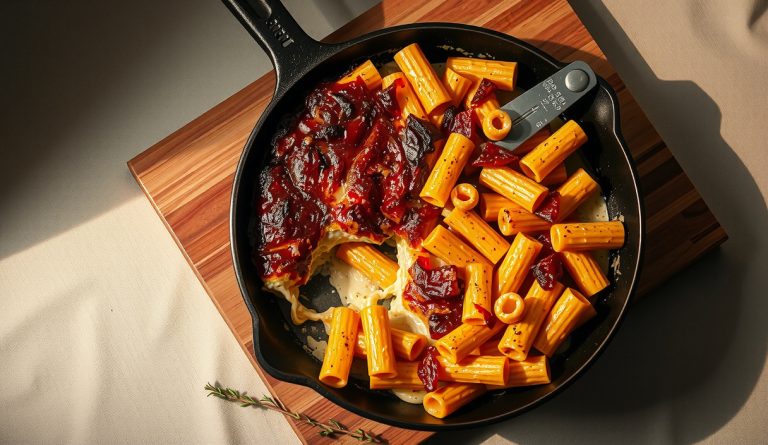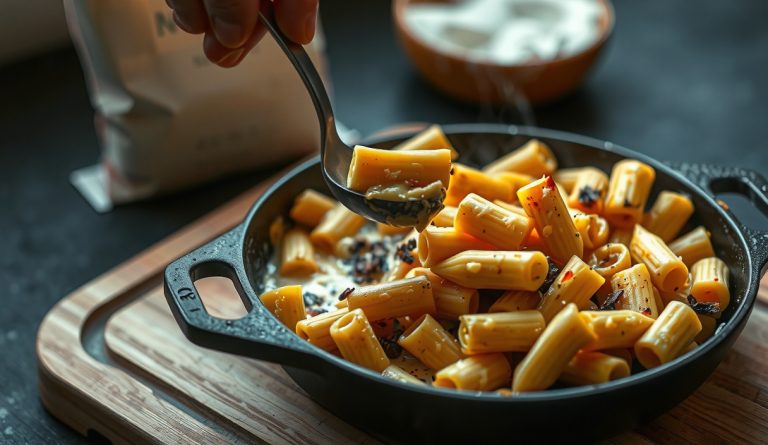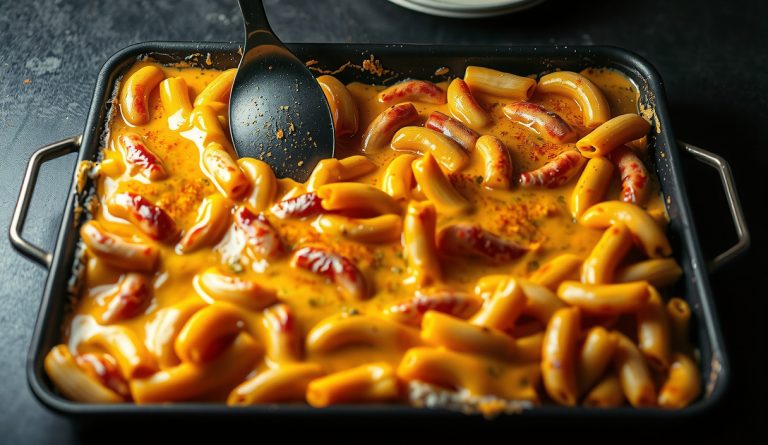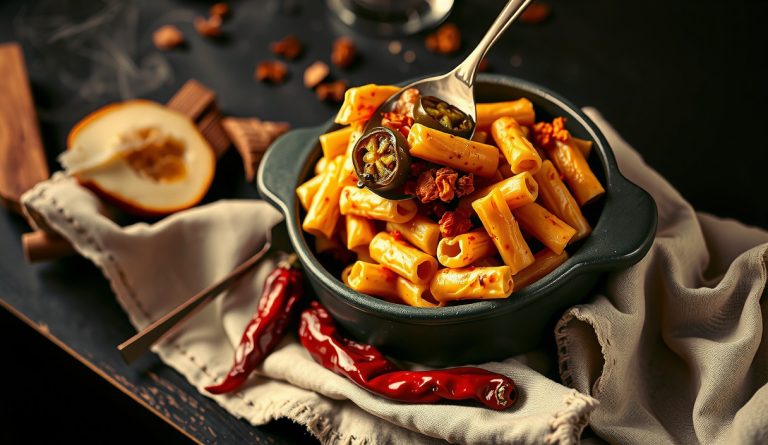
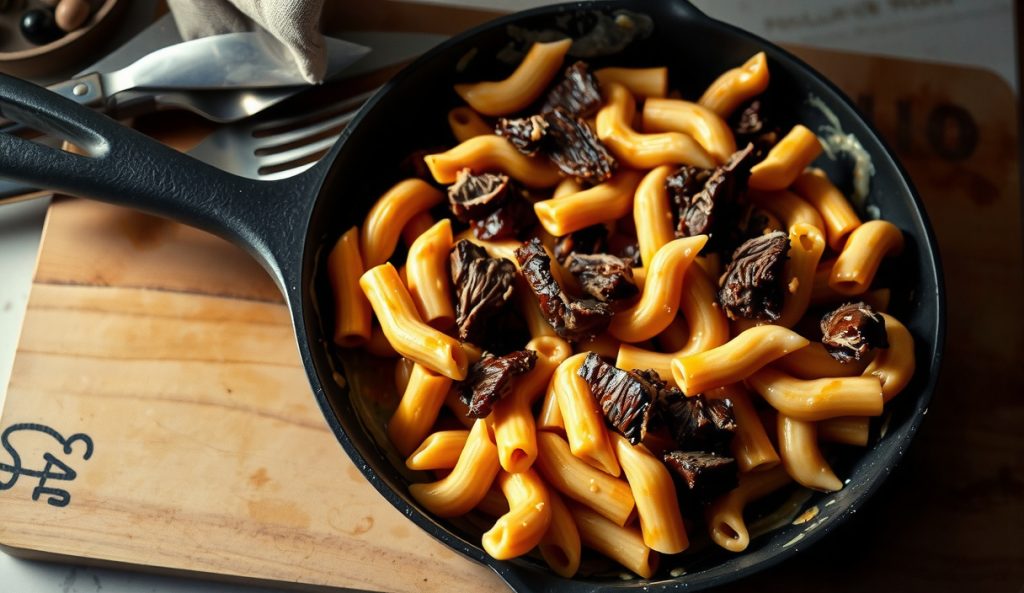
The canonical smoked mac and cheese functions as a side dish — rich and substantial, but built to support a protein rather than be one. Folding in 8 ounces of smoked pulled pork shoulder or chopped brisket point changes that equation entirely. The dish becomes a self-contained main course with the barbecue already built in, and the béchamel sauce itself becomes structurally denser in a way that is more than cosmetic.
This meat-loaded version is the right choice any time leftover smoked meat needs a home in a single-pan meal that holds and reheats well, or when serving a crowd that expects smoked mac and cheese to be the centerpiece rather than the accompaniment.
What changes when you add smoked meat?
Fold 8 ounces of pulled smoked pork shoulder or chopped smoked brisket point into the finished béchamel-coated pasta just before transferring to the smoker. The collagen in long-cooked barbecue meat has already converted to gelatin during the original smoke — when that gelatin disperses into the warm béchamel, it creates a secondary hydrocolloid network alongside the sodium citrate emulsion, noticeably increasing the final body and clinging quality of the sauce. This is not a subtle textural shift; the sauce coats the pasta more aggressively and the set is firmer at the finish.
Reduce the dry pasta quantity by approximately 25% from the canonical weight to maintain the sauce-to-solid ratio. The added meat is dense and displaces sauce-carrying capacity — keeping the full pasta volume will make the dish read as under-sauced. Everything else — the roux weight, the cheese volumes, the sodium citrate percentage — holds at canonical proportions.
What stays the same in the meat-loaded version?
The three-cheese profile, the béchamel construction sequence, the 275°F chamber temperature, and the 45-minute smoke window remain unchanged from the base recipe. The smoke exposure the mac and cheese receives is unchanged regardless of whether the folded meat has been pre-smoked — the surface area available for smoke absorption is determined by the skillet geometry, not the fill volume.
When is the meat-loaded version the better choice?
This version outperforms the canonical smoked mac and cheese whenever the dish needs to anchor a plate rather than flank it — tailgates, standalone weeknight dinners, or buffet lines where a single protein-forward pan must carry the meal. It is also the most practical application for smoked meat leftovers: pulled pork and brisket point reheat inside the béchamel with far better moisture retention than they would on their own, because the emulsified sauce acts as a protective hydration matrix around the meat fibers.
- Add 8 oz smoked pulled pork shoulder or chopped brisket point — fold in just before the smoker transfer.
- Reduce dry pasta by ~25% to keep the sauce-to-solid ratio balanced.
- Hold all other quantities — roux, cheeses, sodium citrate — at canonical proportions.
- Maintain 275°F and 45 minutes of smoke time exactly as in the base method.
Use the full method, equipment, and cheese measurements from the original Smoked Mac & Cheese — Three-Cheese Béchamel.