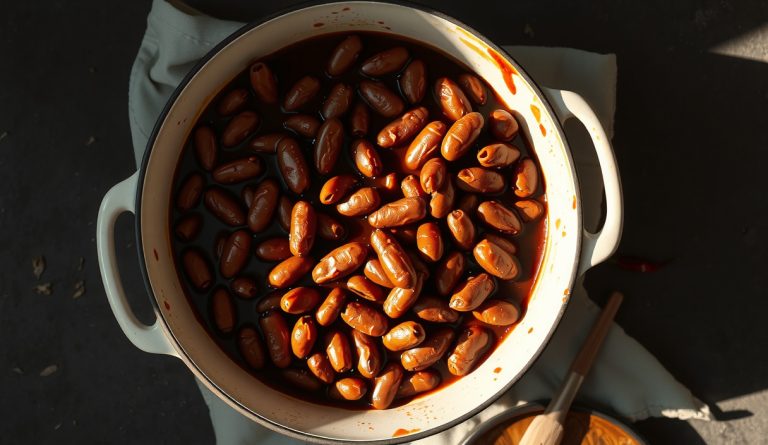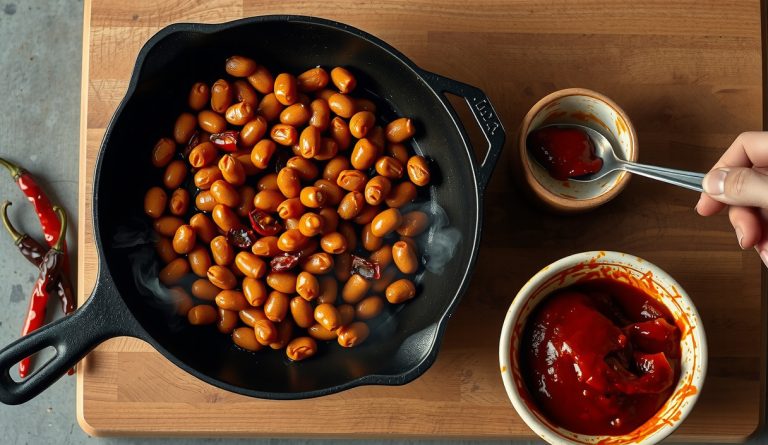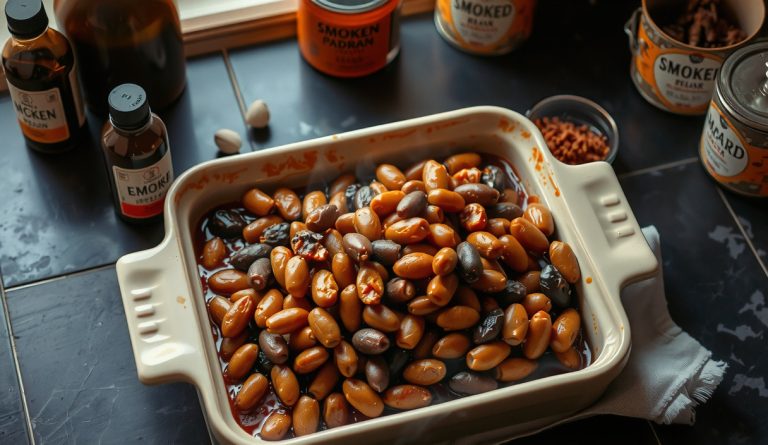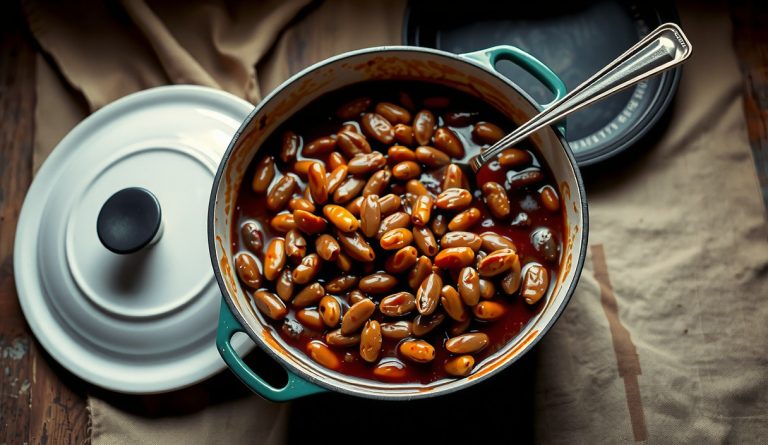
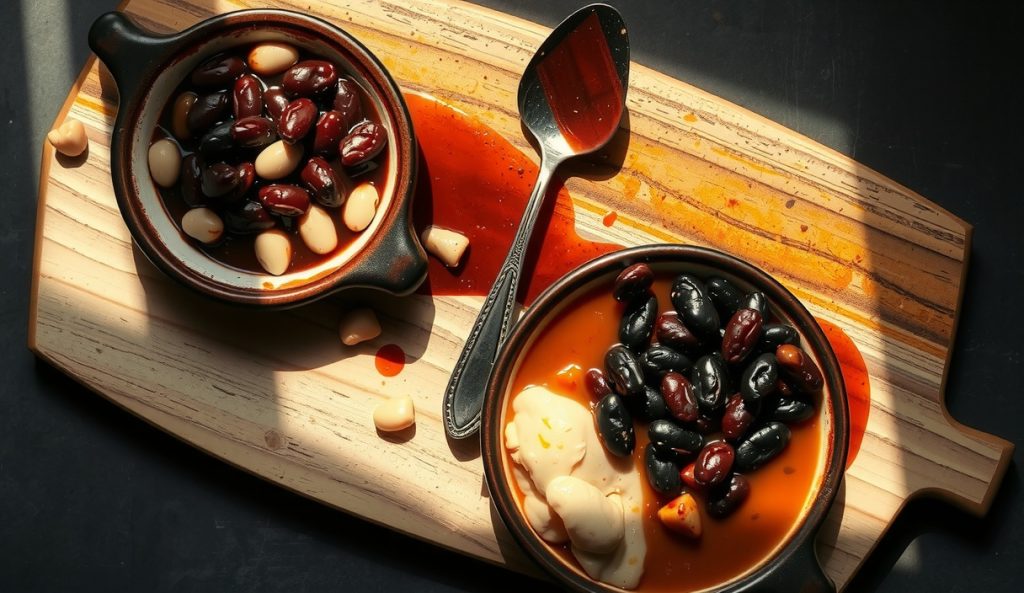
Pinto beans are the default for the Vegan BBQ Beans method for a measurable reason: their moderate starch content and neutral-sweet flavor integrate cleanly with a molasses-forward BBQ sauce. The same smoke-and-braise framework accommodates navy, great northern, and black beans without any structural changes to the method, and each substitution pulls the final dish in a meaningfully different direction.
What changes when you swap the bean variety?
Navy beans are the traditional American baked-bean choice. Smaller and lower in pectin than pinto beans, navy beans release less soluble fiber into the braising liquid, which produces a slightly thinner, less viscous sauce — a quality some cooks actively prefer. Because of their smaller mass, navy beans reach tenderness 20–30 minutes faster than pintos, so begin checking doneness at the 90-minute mark.
Great northern beans fall between navy and pinto in both size and starch density, yielding a medium-bodied sauce and a cleaner, more neutral flavor that lets the smoke character read louder. Great northerns are a strong middle-ground choice when the goal is a pronounced smoky profile without the earthiness of black beans.
Black beans are the most dramatic swap in this framework. Their anthocyanin pigments bleed into the braising liquid, turning the sauce a deep near-black. Black bean flavor is earthier and less sweet than pinto, which suppresses the molasses character slightly — lean into that shift by amplifying cumin and smoked paprika in the spice mix. Pectin content in black beans is comparable to pinto beans, so cook times remain similar; start checking at the 90-minute mark regardless of variety. Bean age — how long the dried beans have sat in the bag — affects hydration and cook time more than cultivar does, so always calibrate from the 90-minute check rather than relying on a fixed endpoint.
What stays the same across all bean varieties?
The sauté base, the sauce components (tomato, molasses, apple cider vinegar, mustard, and nutritional yeast), the smoke exposure time, and the uncovered reduction phase are identical across all bean varieties. The bean-to-liquid ratio does not change. Only the bean itself — and any spice-mix adjustments you choose to make — differs between variations.
Which bean swap is the better choice for your plate?
Choose navy beans when you want the classic New England baked-bean texture and a slightly lighter, thinner sauce. Choose great northern beans when a neutral, smoke-forward flavor profile is the priority. Choose black beans when you are building a Tex-Mex or cumin-forward plate and want a visually striking, earthier side that stands apart from the canonical version’s sweetness.
- Navy beans: smaller mass, thinner sauce, check at 90 minutes
- Great northern beans: medium body, neutral flavor, smoke reads louder
- Black beans: anthocyanin-darkened sauce, earthier profile, amplify cumin and smoked paprika
Use the full method, equipment, and rub measurements from the original Vegan BBQ Beans — Smoked Pinto.