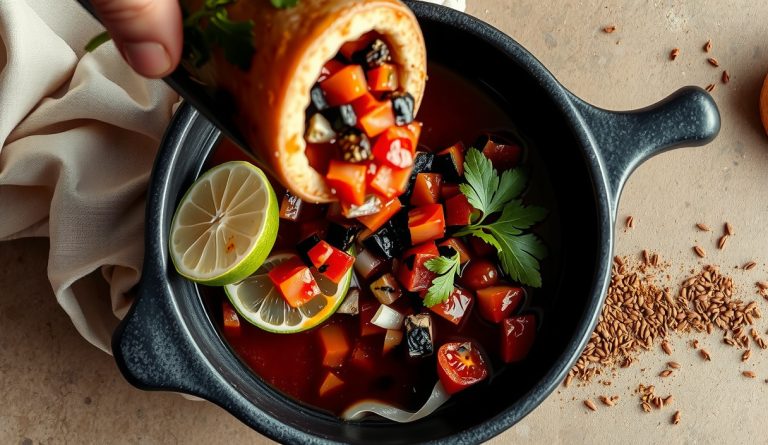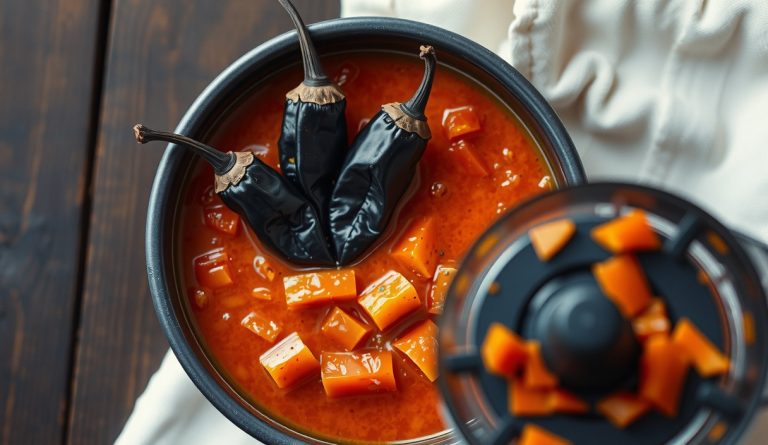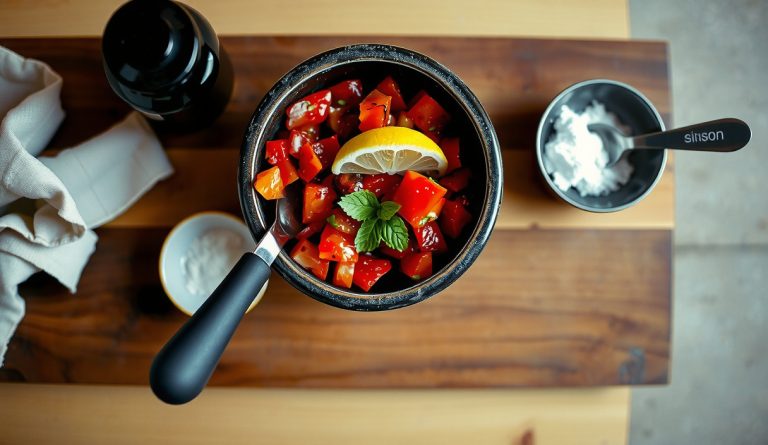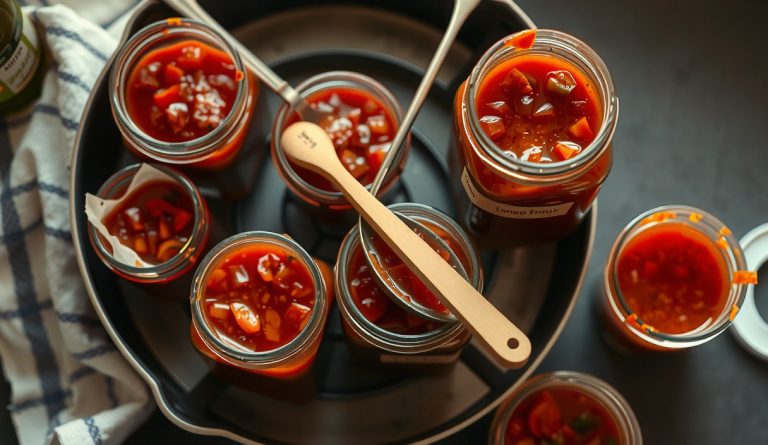
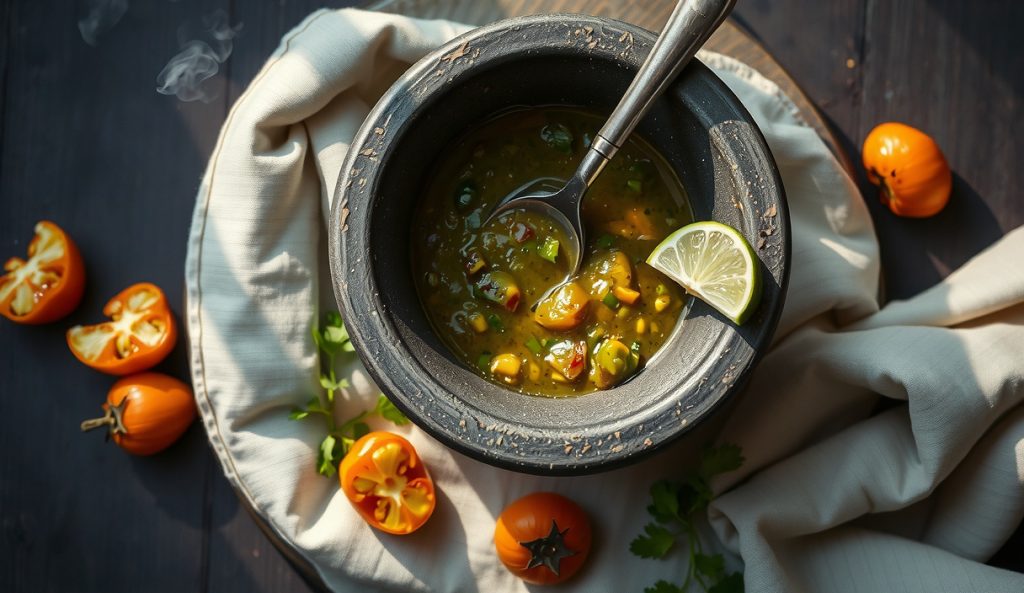
The tomatillo swap is not a casual substitution — it rewires the flavor architecture of the salsa from sweet-smoky to tart-pyrazine. Where Roma tomatoes contribute residual sugars and lycopene-forward fruitiness, tomatillos bring oxalic and citric acids, a lower Brix, and a raw bitterness that transforms decisively under heat. The result is a salsa verde asada that pairs with fatty, rich proteins the way brightness always should: by contrast rather than echo.
What changes when you swap tomatillos for Roma tomatoes?
Replace the Roma tomatoes with an equal weight of husked tomatillos — no other quantity adjustment is necessary. Raw tomatillos contain tomatine, a steroidal alkaloid responsible for the sharp, almost soapy edge present in the uncooked fruit. During the flame char phase, heat converts tomatine to the milder compound tomatidine, stripping out most of the bitterness and leaving the fruit’s natural acidity intact. The subsequent time in the smoker further develops pyrazine volatiles through Maillard reactions at the charred surfaces, adding the same roasted, nutty depth that anchors the original salsa — now balanced against tartness rather than sweetness.
The finished salsa verde asada will be visibly greener, noticeably more acidic, and lower in residual sugar than the Roma tomato version. The lime juice called for in the canonical recipe can often be reduced slightly, since tomatillos already contribute significant citric acid; taste the blended salsa before adjusting.
What stays the same in the salsa verde asada method?
The full char-then-smoke sequence remains unchanged: open-flame blister first to develop the pyrazine layer, then 45 minutes in the smoker to drive volatile phenols from the wood deep into the fruit. The aromatics — white onion, garlic, jalapeño, cilantro — stay at the same quantities. Blending technique, seasoning order, and resting time are identical. The structural intent of building a cooked salsa with layered smoke and char carries through without modification.
When is the tomatillo version the better choice?
Choose the tomatillo version whenever the protein on the table is high in rendered fat: carnitas, duck confit, braised pork shoulder, or lamb barbacoa. The elevated acidity and lower sugar content of the tomatillo base prevent the salsa from disappearing into the fat of the meat — instead the salsa verde asada cuts and refreshes. The tomatillo version also outperforms the tomato base as an enchilada sauce foundation or as a dressing for grain bowls where a tomato salsa would read as heavy.
Use the full method, equipment, and rub measurements from the original Smoked Tomato Salsa Asada.