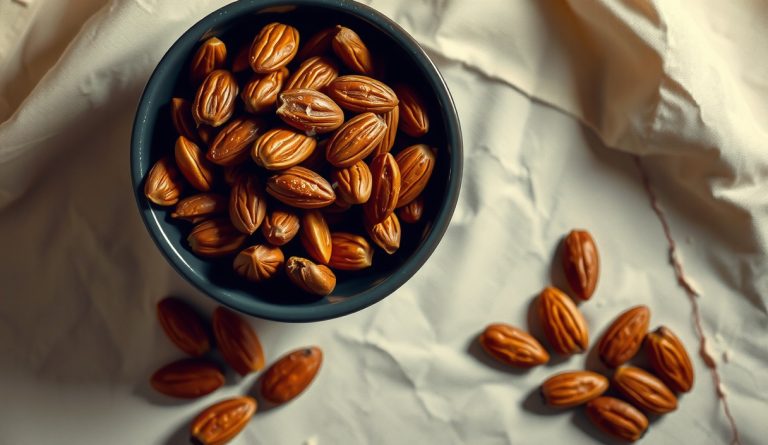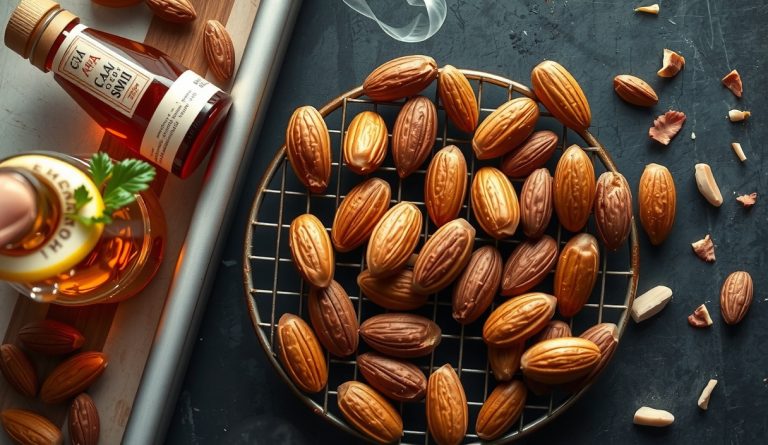
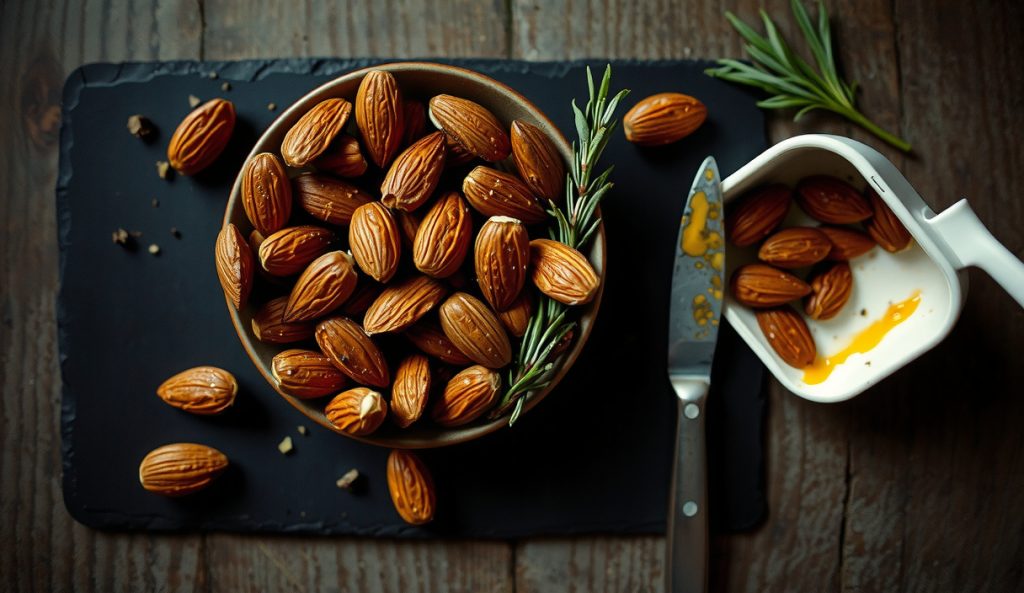
The maple-cayenne smoked almond build is designed around slow, lingering capsaicin heat. This rosemary and black pepper variation dismantles that framework entirely, replacing it with something more herbal and immediate. The result reads as savory-forward with a maple undercurrent rather than sweet-forward with a spice tail — a distinction that makes these almonds a stronger match for charcuterie boards, aged cheeses, and cocktail-hour snacking.
What changes in the rosemary and black pepper variation?
Drop the cayenne entirely and add 1 teaspoon of freshly cracked black pepper plus 1 tablespoon of finely minced fresh rosemary to the coating mixture. Rosemary is surprisingly smoke-stable: its dominant volatiles, rosmarinic acid and camphor, survive sustained 225°F heat without fully burning off, which means the herbal note persists through the full smoke rather than cooking out in the first interval. Use a sharp knife and mince the rosemary fine — large leaf fragments will not adhere uniformly to the nut surface and can scorch on the edges.
The heat mechanism shifts meaningfully with this swap. Piperine — the alkaloid responsible for black pepper’s bite — activates the TRPV1 thermoreceptor channel just as capsaicin does, but at a lower effective concentration threshold. The warmth registers quickly on the palate and dissipates within seconds rather than the minute-plus lingering typical of cayenne. This makes the black pepper heat feel crisp and bright rather than persistent, which is a distinct advantage when serving guests with lower capsaicin tolerance.
What stays the same in this variation?
Temperature, smoke wood, timing, and the maple syrup-to-nut ratio are all unchanged from the base recipe. The coating goes on raw almonds in the same quantity, the two-interval stir method applies exactly as written, and the target internal color — deep golden amber on the sugar glass — is the same visual cue to pull the almonds from the smoker. Cooling time before serving remains non-negotiable regardless of the spice swap.
When is the rosemary and black pepper variation the better choice?
Choose this variation when the context calls for a more savory, herb-forward snack — wine pairings, cheese plates, or any occasion where the canonical cayenne heat might conflict with delicate flavors on the table. The rosemary and black pepper build is also the right call for guests who enjoy flavor complexity without significant spice heat. The rosemary aroma in particular tends to be a conversation-starter straight off the smoker.
Use the full method, equipment, and base coating measurements from the original Maple-Cayenne Smoked Almonds.