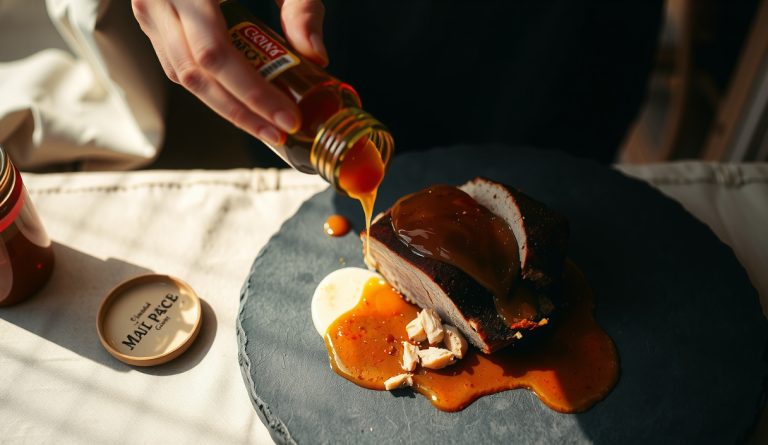

The canonical Whole-Food BBQ Sauce was built around whole-food and minimally processed ingredients from the start, which means Whole30 compliance is not a reformulation — it is a verification exercise. Two label checks and one optional adjustment are all that stand between this sauce and full program compliance. Understanding why each ingredient either passes or requires scrutiny makes it easier to shop confidently and adapt when your specific pantry items vary.
What needs to change for Whole30 compliance?
Check your tamari label before using it on program. Tamari is a wheat-reduced or wheat-free soy sauce, but not all commercial tamari is produced identically: some labels include added sugar (often listed as alcohol or mirin in trace amounts) or wheat starch as a processing aid. A compliant tamari lists soybeans, water, and salt — nothing else — or carries explicit Whole30 Approved labeling.
Date paste clears the program’s sweetener rules because Whole30 permits dates used as a functional ingredient in a sauce or cooking application. What the program restricts is eating dates as a standalone sweet treat to replicate dessert behavior — using date paste to build body and mild sweetness in a savory BBQ sauce is a legitimate, program-approved technique.
Smoked paprika, apple cider vinegar, garlic, tomato paste, and all dry spices are unrestricted on Whole30. On salt: commercial tamari already contributes moderate sodium to the finished sauce. During an active Whole30 round, skip any optional added salt beyond what the tamari provides. The tamari’s glutamate content handles the savory depth that added salt would otherwise reinforce — there is no flavor loss from omitting it.
What stays exactly the same?
Every ingredient, ratio, and method in the canonical recipe remains exactly as written. This variant is a compliance audit, not a reformulation. The sauce’s flavor profile, body, and application are completely unchanged from the original whole-food formula.
When is the Whole30 compliance version the better choice?
Use this compliance checklist whenever you are cooking this sauce during an active Whole30 round, cooking for someone who is currently on program, or serving a BBQ sauce at a gathering where guests may be navigating elimination protocols. It is also a useful structural reference if you are auditing other sauce formulas for Whole30 compatibility — the ingredient-by-ingredient approach applied here translates directly to other recipes.
The complete ingredient list, quantities, and cooking method live in the original Whole-Food BBQ Sauce — No Refined Sugar — verify your tamari label before you start.