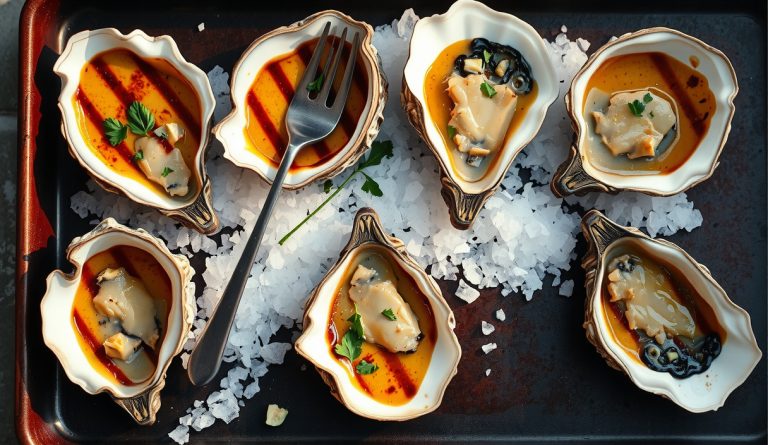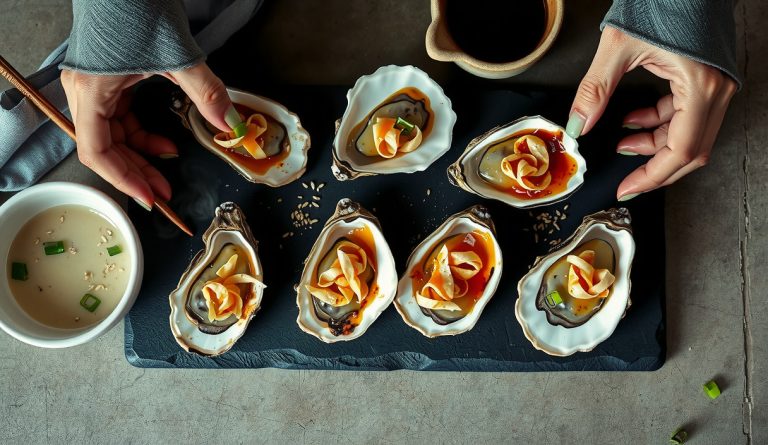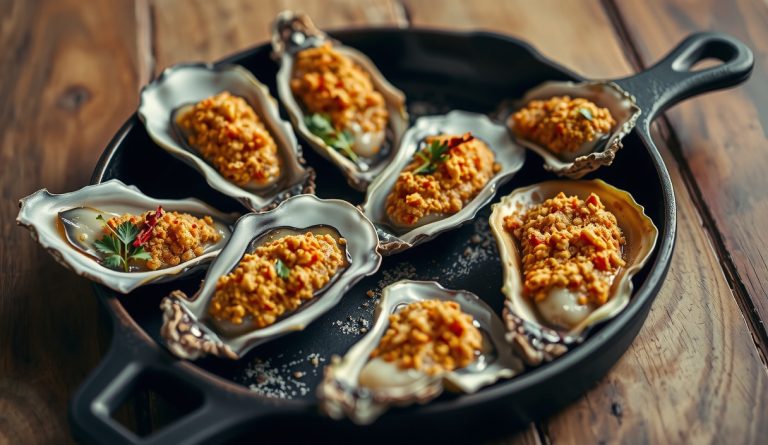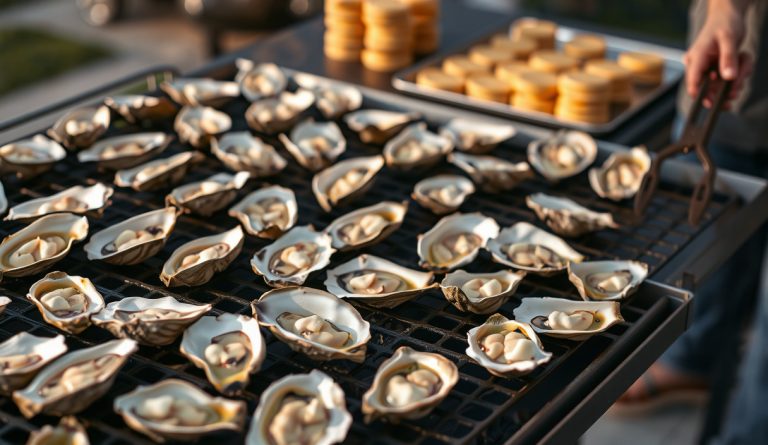
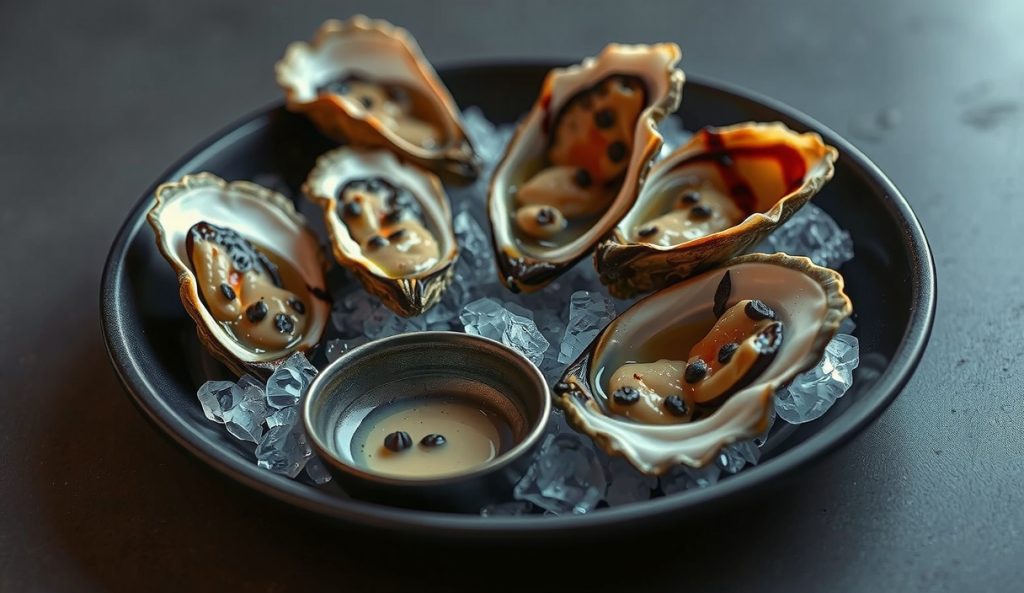
A raw-bar mignonette — champagne vinegar, shallot, cracked black pepper — is one of the most classical pairings for fresh oysters. This variation translates that combination into a compound butter format, giving you the same aromatic sharpness in a fat-enriched form that performs beautifully over a live flame. The result reads as simultaneously familiar and unexpected: raw-bar DNA expressed through the technique of a grilled preparation.
What changes when you make the mignonette swap?
Replace the lemon juice in the compound butter with 1 tablespoon of champagne vinegar, then stir in 1 teaspoon of finely minced shallot and a generous amount of cracked black pepper. The substitution matters chemically: acetic acid — the active compound in vinegar — is significantly more volatile than citric acid at grill temperatures, meaning it releases its aromatic spike faster and more aggressively inside the shell. That volatility produces a sharper, brighter top note that cuts through the richness of the butter more effectively than lemon juice does, and mirrors the aromatic profile of a classic mignonette with greater fidelity.
One hard constraint applies: keep the champagne vinegar addition below approximately 2% of total butter mass by weight. Above that threshold, the acetic acid begins to destabilize the fat-water emulsion in the compound butter, and the butter will break under heat rather than melt smoothly across the oyster liquor.
What stays the same in this variation?
The garlic base, the parsley, the portioning method, the grilling position, and the bubbling-butter doneness cue are all unchanged from the canonical recipe. The mignonette substitution is entirely a flavor-profile adjustment — the technique is identical. Use the full method, equipment, and base compound butter ratios from the original Grilled Oysters with Garlic-Parsley Butter.
When is the mignonette compound butter the better choice?
This variation is the right call when your crowd includes guests who favor raw oysters and would normally reach for a mignonette over hot sauce — people who want the acidic brightness of a classic condiment without sacrificing the char and warmth of the grilled preparation. It also pairs particularly well with a crisp sparkling wine or dry Chablis if you are building a more refined seafood course.