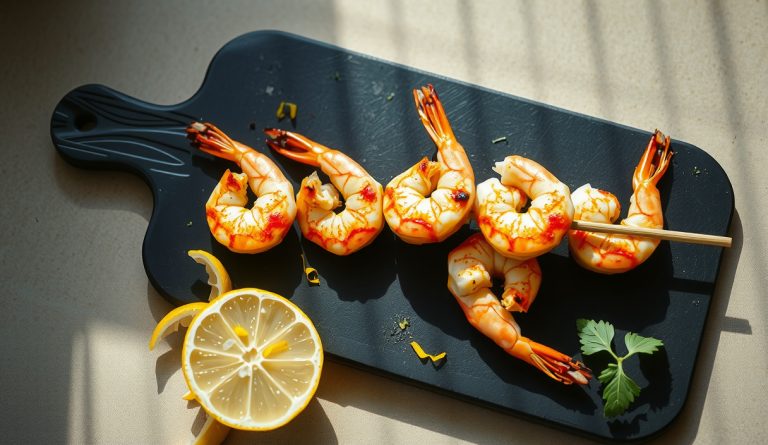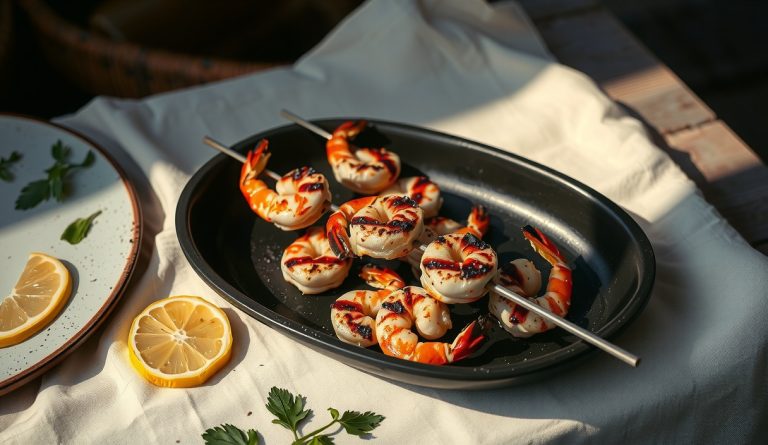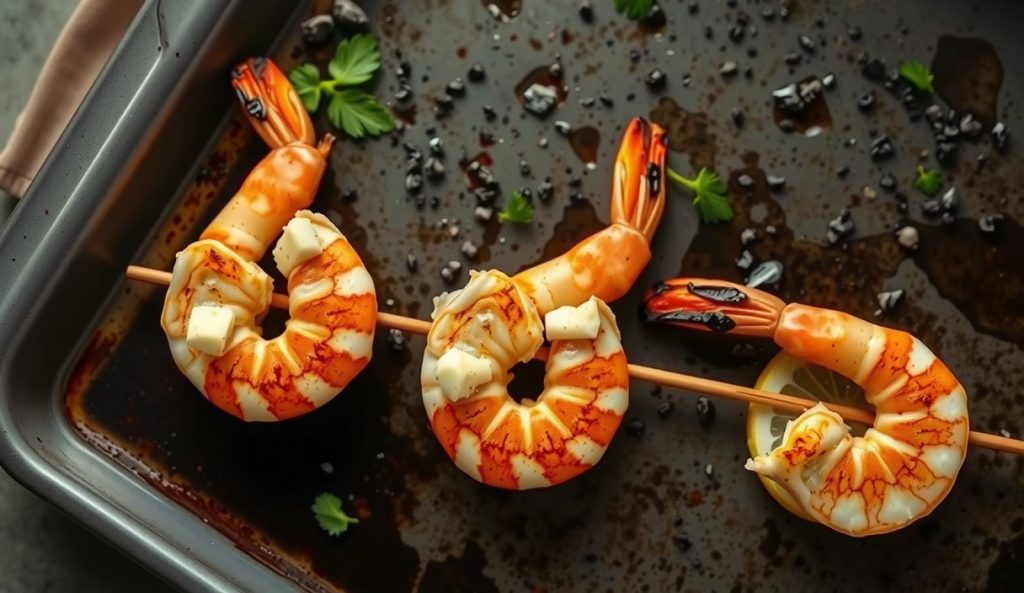
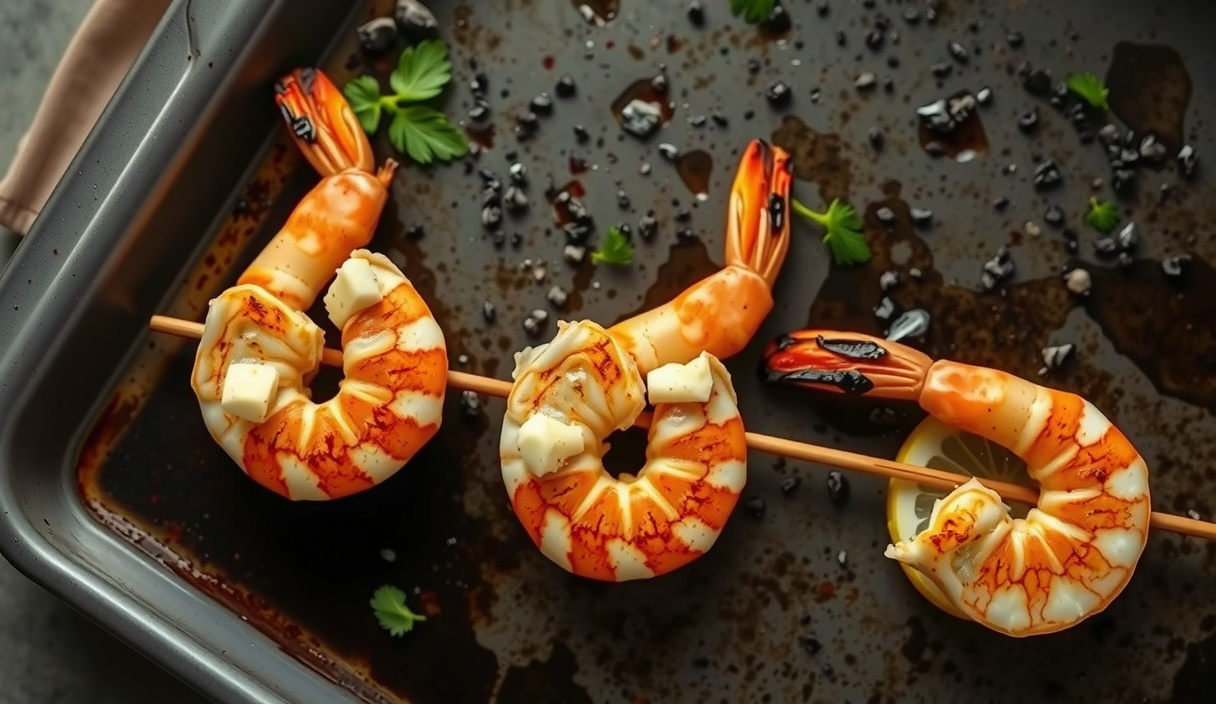
Grilled Cajun Shrimp Skewers
Equipment
- 1 Charcoal or gas grill Must reach 500–550°F grate temperature at the direct zone; preheat with lid closed for at least 15 minutes
- 8 Flat metal skewers Flat or double-pronged stainless steel; prevents shrimp from spinning when flipped
- 1 Infrared grill thermometer Optional but highly recommended for confirming grate temperature
- 1 Instant-read thermometer Verify shrimp internal temp hits 140°F; pull immediately, carryover will handle the rest
- several Paper towels For thoroughly patting shrimp dry before rubbing — critical step
- 1 Large mixing bowl
- 1 pair Tongs Long-handled, for flipping skewers safely over high heat
Ingredients
Shrimp
- 2 lbs jumbo shrimp, 16/20 or 13/15 count Peeled and deveined, tail on; patted completely dry with paper towels
- 2 tablespoons avocado oil or light olive oil For tossing shrimp after rubbing; high smoke point critical
Cajun Dry Rub
- 2 teaspoons smoked paprika Not sweet or hot — smoked specifically; higher reactive carbonyl density for browning
- 1 teaspoon kosher salt
- 1 teaspoon garlic powder
- ¾ teaspoon dried thyme Provides thymol and carvacrol volatiles for retronasal aroma
- ¾ teaspoon dried oregano
- ½ teaspoon onion powder
- ½ teaspoon freshly ground black pepper Piperine amplifies perception of all other aromatics
- ½ teaspoon cayenne pepper Adjust to heat preference; activates TRPV1 thermoreceptors for chemesthetic heat
- ¼ teaspoon dried thyme Second hit of thyme for herb-forward depth; combine with first addition
For Serving
- 2 lemons, cut into wedges For finishing; squeeze over hot shrimp to volatilize limonene aromatics
- 2 tablespoons fresh flat-leaf parsley, roughly chopped Optional garnish

Instructions
Prepare the Shrimp and Rub
- Combine all Cajun dry rub ingredients in a small bowl and whisk until uniform. Set aside.2 teaspoons smoked paprika, 1 teaspoon kosher salt, 1 teaspoon garlic powder, 3/4 teaspoon dried thyme, 3/4 teaspoon dried oregano, 1/2 teaspoon onion powder, 1/2 teaspoon freshly ground black pepper, 1/2 teaspoon cayenne pepper, 1/4 teaspoon dried thyme
- Pat the shrimp completely dry with paper towels — work in two passes. This is the most important prep step. Any surface moisture will flash to steam on the grill and delay Maillard browning by 30–45 seconds, pushing the interior past 145°F before a crust forms.
- Add the dried shrimp to a large bowl. Sprinkle the Cajun rub over the shrimp and toss thoroughly until each piece is evenly coated on all sides. Drizzle in the avocado oil and toss again — the oil should form a thin, even sheen on every surface.2 tablespoons avocado oil or light olive oil, 2 teaspoons smoked paprika, 1 teaspoon kosher salt, 1 teaspoon garlic powder, 3/4 teaspoon dried thyme, 3/4 teaspoon dried oregano, 1/2 teaspoon onion powder, 1/2 teaspoon freshly ground black pepper, 1/2 teaspoon cayenne pepper, 1/4 teaspoon dried thyme
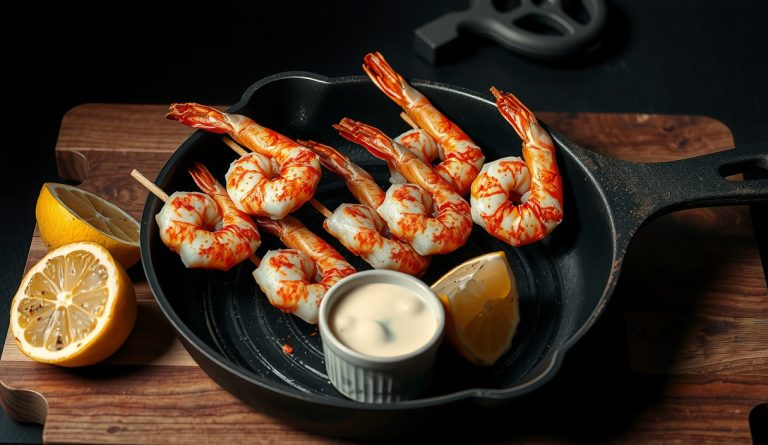
- Thread shrimp onto flat metal skewers, piercing each shrimp in two places — through the thick tail end and through the body just below the head joint. This keeps shrimp flat and prevents spinning when you flip. Leave at least 1/2 inch of space between each shrimp on the skewer. Aim for 4–5 shrimp per skewer.
Fire the Grill
- Preheat your grill on high with the lid closed for 15 minutes. Target grate temperature at the direct zone: 500–550°F. Verify with an infrared thermometer. If using charcoal, build a full chimney of lit coals and arrange for a two-zone fire — full coals on one side, nothing on the other.
- Using tongs, wipe the grate with a paper towel lightly soaked in avocado oil in two firm passes. A clean, oiled grate minimizes protein adhesion and allows the shrimp to release naturally after the surface proteins have set.2 tablespoons avocado oil or light olive oil
Grill the Shrimp
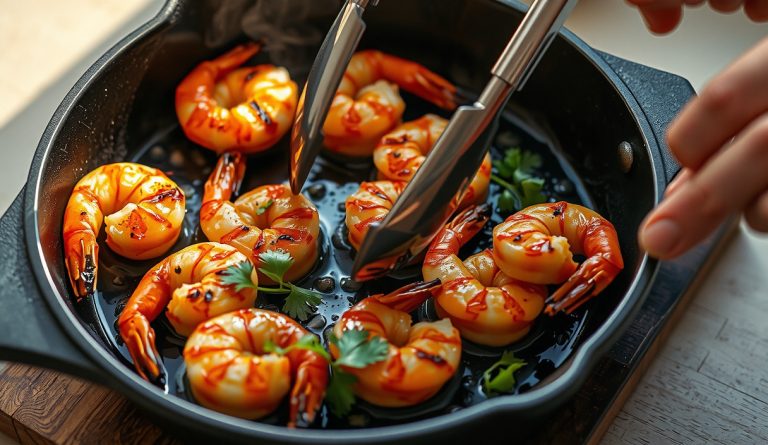
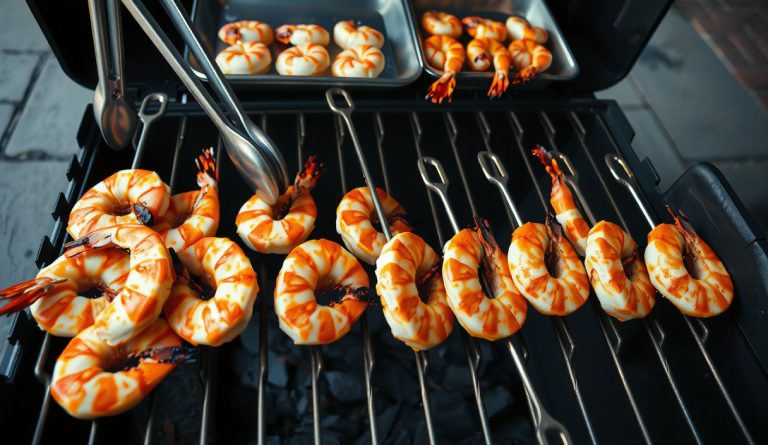
- Place skewers on the direct heat zone perpendicular to the grill grates. Do not move them. Close the lid and cook for exactly 2 minutes. You should hear a sustained sizzle immediately — if it is quiet, the grill is not hot enough.
- Open the lid and attempt to lift one skewer with tongs. If it releases cleanly, the shrimp are ready to flip. If they pull back with resistance, close the lid for 15 more seconds and try again — never force them. The Maillard crust is still bonding to the metal.
- Flip all skewers in one confident motion. Cook the second side for 2 minutes with the lid closed. The shrimp are done when the flesh is opaque all the way through and the exterior shows deep reddish-mahogany char marks. Spot-check with an instant-read thermometer: target 140°F internal. Pull at 140°F — carryover will bring them to a safe 145°F off the heat.
- Transfer skewers to a platter and rest for 90 seconds on the skewer before sliding shrimp off. This brief rest allows surface moisture to redistribute into the muscle tissue.
Serve
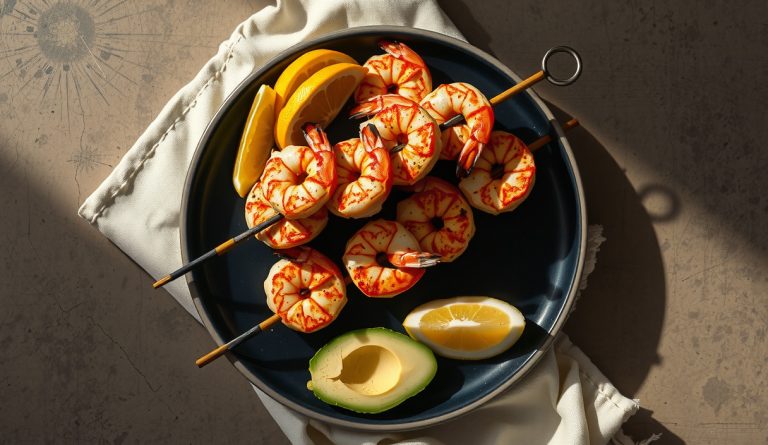
- Slide shrimp off skewers onto the platter. Squeeze fresh lemon wedges generously over the hot shrimp — the heat volatilizes the limonene in the juice for an intense aromatic punch. Scatter chopped parsley over the top and serve immediately.2 lemons, cut into wedges, 2 tablespoons fresh flat-leaf parsley, roughly chopped
Notes
Nutrition
There is a five-second window between a perfectly cooked shrimp and a rubbery, curled disaster. The physics are unforgiving: shrimp myofibrillar proteins set around 140°F and begin losing moisture aggressively past 145°F. At a direct-grill surface temperature of 500°F, that gap closes in about 25 seconds. The only way to win is to understand what the heat is actually doing inside that shell — and then move with conviction.
American Meathead has been firing Cajun shrimp at backyard cookouts and competition rigs for years. This version is stripped to its mechanical core: a fat jumbo shrimp, a dry rub built on the classic Louisiana flavor triad of paprika, cayenne, and thyme, and a two-minute-per-side direct sear that builds a proper Maillard crust before the interior climbs past the danger zone. Four minutes total cook time. No guesswork. Where Flavor Meets the Flame.
Why does grilled Cajun shrimp work? The science
Cajun grilled shrimp cooks perfectly in four minutes because shrimp muscle has almost no thermal buffering — the acceptable internal temperature window is only five degrees Fahrenheit, from 145°F (done) to 150°F (overdone). Shrimp muscle is dominated by myosin and actin filaments — the same proteins found in beef and pork, but in an animal with negligible thermal mass. Myosin begins denaturing around 104–120°F, and you can see it: the translucent flesh starts to opacify. The critical zone is 140–145°F, where the myofibrillar network reaches full coagulation and water-holding capacity collapses sharply as actin begins to contract. Direct, radiant-plus-conductive heat from a 500°F grate is the right tool because it engineers a race: drive the exterior Maillard reaction fast enough to deposit flavor compounds before conduction pushes the core past threshold.
The Cajun rub is not decorative — it is a reactive surface coating doing thermodynamic work at every gram. Smoked paprika supplies reducing sugars and amino acids that enter the Maillard cascade above roughly 280°F surface temperature. Cayenne provides capsaicin, a TRPV1 agonist that fires the trigeminal nerve and creates the chemesthetic heat perception distinct from thermal heat. Dried thyme and oregano contribute terpene volatiles — thymol and carvacrol — with low volatilization thresholds, meaning they vaporize off the grill grate and carry retronasal aroma into the olfactory epithelium before the shrimp even hits your tongue. Garlic powder supplies sulfurous Maillard precursors that accelerate browning. Black pepper delivers piperine, which amplifies the perception of all other aromatics by inhibiting metabolic clearance in the mouth.
Skewering each shrimp flat through two points — at the base of the tail and just below the head joint — prevents the C-curl that spins shrimp off single-point skewers and ensures maximum flat-plate contact with the grate. Metal skewers conduct heat into the shrimp’s core from the inside out, shaving 10–15 seconds off cook time from the center while the outside sears. That dual-direction heat convergence is what lets you achieve a proper char without overshooting the 145°F ceiling. A brief coat of neutral oil on both the shrimp and the grate eliminates steam buildup at the contact surface, which would otherwise evaporatively cool the skin and delay browning — the same evaporative stall physics that slow a brisket through the 160°F plateau, just on a 4-minute timescale instead of 6 hours.
What equipment and ingredients do I need?
Shrimp size matters more than anything. Use 16/20-count (extra-jumbo) or 13/15-count (colossal) shrimp. Smaller counts cook through before any crust develops. Larger counts give you the thermal buffer to build a real sear. Fresh wild-caught Gulf shrimp are the gold standard; frozen U-15 or 16/20 from a reputable processor run a very close second — just thaw overnight in the refrigerator, never under running water, which dilutes surface proteins and kills the sear.
Peel-on vs. peel-off. Shell-on shrimp insulate the meat slightly, adding about 30 seconds to the sear window. Shell-on shrimp also pick up less rub on the surface. Peeled-and-deveined with the tail on delivers maximum rub adhesion, clean mouthfeel, and no wrestling with shells at the table. Devein from the dorsal side; the exposed channel allows the rub to penetrate the flesh directly.
Metal skewers only. Flat or double-pronged stainless skewers prevent spinning and conduct internal heat. If you use bamboo, soak for 30 minutes minimum, use two parallel sticks, and expect slightly longer cook times. Double-skewering — two parallel sticks per set of shrimp — is the pitmaster move that keeps shrimp from rotating when you flip.
Smoked paprika vs. sweet paprika. The Maillard reaction in this recipe calls for smoked paprika — the drying and smoking process increases the density of reactive carbonyl compounds on the paprika surface, which accelerates the browning cascade. Sweet paprika works but produces a paler crust. Hot smoked paprika ratchets up capsaicin load; dial back the cayenne by half if you use it.
The grill. You need two zones: a screaming-hot direct zone (target 500–550°F grate temperature, confirmed with an infrared thermometer) and a cooler indirect zone. All cooking happens direct. The indirect zone is your safety net if skewers arrive from the grill at different rates.
Grilled Cajun Shrimp Skewers
Equipment
- 1 Charcoal or gas grill Must reach 500–550°F grate temperature at the direct zone; preheat with lid closed for at least 15 minutes
- 8 Flat metal skewers Flat or double-pronged stainless steel; prevents shrimp from spinning when flipped
- 1 Infrared grill thermometer Optional but highly recommended for confirming grate temperature
- 1 Instant-read thermometer Verify shrimp internal temp hits 140°F; pull immediately, carryover will handle the rest
- several Paper towels For thoroughly patting shrimp dry before rubbing — critical step
- 1 Large mixing bowl
- 1 pair Tongs Long-handled, for flipping skewers safely over high heat
Ingredients
Shrimp
- 2 lbs jumbo shrimp, 16/20 or 13/15 count Peeled and deveined, tail on; patted completely dry with paper towels
- 2 tablespoons avocado oil or light olive oil For tossing shrimp after rubbing; high smoke point critical
Cajun Dry Rub
- 2 teaspoons smoked paprika Not sweet or hot — smoked specifically; higher reactive carbonyl density for browning
- 1 teaspoon kosher salt
- 1 teaspoon garlic powder
- ¾ teaspoon dried thyme Provides thymol and carvacrol volatiles for retronasal aroma
- ¾ teaspoon dried oregano
- ½ teaspoon onion powder
- ½ teaspoon freshly ground black pepper Piperine amplifies perception of all other aromatics
- ½ teaspoon cayenne pepper Adjust to heat preference; activates TRPV1 thermoreceptors for chemesthetic heat
- ¼ teaspoon dried thyme Second hit of thyme for herb-forward depth; combine with first addition
For Serving
- 2 lemons, cut into wedges For finishing; squeeze over hot shrimp to volatilize limonene aromatics
- 2 tablespoons fresh flat-leaf parsley, roughly chopped Optional garnish
Instructions
Prepare the Shrimp and Rub
- Combine all Cajun dry rub ingredients in a small bowl and whisk until uniform. Set aside.2 teaspoons smoked paprika, 1 teaspoon kosher salt, 1 teaspoon garlic powder, 3/4 teaspoon dried thyme, 3/4 teaspoon dried oregano, 1/2 teaspoon onion powder, 1/2 teaspoon freshly ground black pepper, 1/2 teaspoon cayenne pepper, 1/4 teaspoon dried thyme
- Pat the shrimp completely dry with paper towels — work in two passes. This is the most important prep step. Any surface moisture will flash to steam on the grill and delay Maillard browning by 30–45 seconds, pushing the interior past 145°F before a crust forms.
- Add the dried shrimp to a large bowl. Sprinkle the Cajun rub over the shrimp and toss thoroughly until each piece is evenly coated on all sides. Drizzle in the avocado oil and toss again — the oil should form a thin, even sheen on every surface.2 tablespoons avocado oil or light olive oil, 2 teaspoons smoked paprika, 1 teaspoon kosher salt, 1 teaspoon garlic powder, 3/4 teaspoon dried thyme, 3/4 teaspoon dried oregano, 1/2 teaspoon onion powder, 1/2 teaspoon freshly ground black pepper, 1/2 teaspoon cayenne pepper, 1/4 teaspoon dried thyme
- Thread shrimp onto flat metal skewers, piercing each shrimp in two places — through the thick tail end and through the body just below the head joint. This keeps shrimp flat and prevents spinning when you flip. Leave at least 1/2 inch of space between each shrimp on the skewer. Aim for 4–5 shrimp per skewer.
Fire the Grill
- Preheat your grill on high with the lid closed for 15 minutes. Target grate temperature at the direct zone: 500–550°F. Verify with an infrared thermometer. If using charcoal, build a full chimney of lit coals and arrange for a two-zone fire — full coals on one side, nothing on the other.
- Using tongs, wipe the grate with a paper towel lightly soaked in avocado oil in two firm passes. A clean, oiled grate minimizes protein adhesion and allows the shrimp to release naturally after the surface proteins have set.2 tablespoons avocado oil or light olive oil
Grill the Shrimp
- Place skewers on the direct heat zone perpendicular to the grill grates. Do not move them. Close the lid and cook for exactly 2 minutes. You should hear a sustained sizzle immediately — if it is quiet, the grill is not hot enough.
- Open the lid and attempt to lift one skewer with tongs. If it releases cleanly, the shrimp are ready to flip. If they pull back with resistance, close the lid for 15 more seconds and try again — never force them. The Maillard crust is still bonding to the metal.
- Flip all skewers in one confident motion. Cook the second side for 2 minutes with the lid closed. The shrimp are done when the flesh is opaque all the way through and the exterior shows deep reddish-mahogany char marks. Spot-check with an instant-read thermometer: target 140°F internal. Pull at 140°F — carryover will bring them to a safe 145°F off the heat.
- Transfer skewers to a platter and rest for 90 seconds on the skewer before sliding shrimp off. This brief rest allows surface moisture to redistribute into the muscle tissue.
Serve
- Slide shrimp off skewers onto the platter. Squeeze fresh lemon wedges generously over the hot shrimp — the heat volatilizes the limonene in the juice for an intense aromatic punch. Scatter chopped parsley over the top and serve immediately.2 lemons, cut into wedges, 2 tablespoons fresh flat-leaf parsley, roughly chopped
Notes
Nutrition
How do I nail grilled Cajun shrimp every time?
- Dry the shrimp before rubbing. Surface moisture is the enemy of sear. Pat shrimp thoroughly dry with paper towels. Any residual water will flash to steam the moment the shrimp hits the grate, evaporatively cooling the surface and delaying the Maillard reaction by 30–45 seconds — enough to push the interior past 145°F before the crust forms.
- Oil the shrimp, not just the grate. Toss rubbed shrimp in a thin film of neutral oil (avocado or light olive) after seasoning. This creates a thin hydrophobic barrier between the rub and the grate, preventing the spices from burning before the shrimp is cooked and ensuring even heat transfer across the surface.
- Do not move them for 90 seconds. Resist the urge to check. The shrimp will initially stick to the grate via protein bonding. After 90 seconds, as the surface proteins denature and char, the shrimp will naturally release. If the shrimp pulls back with resistance, it needs 15 more seconds — never force it.
- Watch the opacity, not the clock. The ideal flip point is when the shrimp is opaque roughly two-thirds of the way up the side — the bottom pink-and-charred, the upper portion still translucent. The residual heat from the first side will finish the top third during the second-side sear.
- Rest on the skewer, not on a plate. Pulling shrimp off the skewer immediately releases juices. Let the shrimp rest 90 seconds on the skewer suspended over the platter before sliding off — the collagen in the connective sheaths around each muscle bundle needs a moment to reabsorb surface moisture.
- Do not crowd the skewers. Leave at least half an inch between each shrimp. Crowding traps steam between the pieces and creates a steaming environment, not a searing one. You want dry radiant-conductive heat at every surface simultaneously.
What variations can I make to this recipe?
Lemon-herb Cajun. Reduce cayenne to 1/4 teaspoon and add 1 teaspoon of fine lemon zest to the dry rub. The citric acid in the zest lowers the surface pH slightly, which accelerates Maillard browning by increasing the nucleophilicity of the amine groups. Finish skewers with a squeeze of fresh lemon directly over the hot shrimp — the volatile limonene volatilizes on contact with residual heat and delivers an intense retronasal citrus punch.
Dairy-free garlic butter finish. The Cajun shrimp recipe as written is naturally dairy-free. For a richer finish, melt 3 tablespoons of high-quality vegan butter (one with a clean fat profile, not heavily hydrogenated) with 3 smashed garlic cloves over indirect heat in a cast-iron pan during the last minute of cooking. Slide the shrimp directly from the skewer into the pan and toss for 30 seconds. The fat acts as a lipophilic carrier for the Cajun volatile organic compounds, coating the palate and extending the retronasal aroma duration significantly.
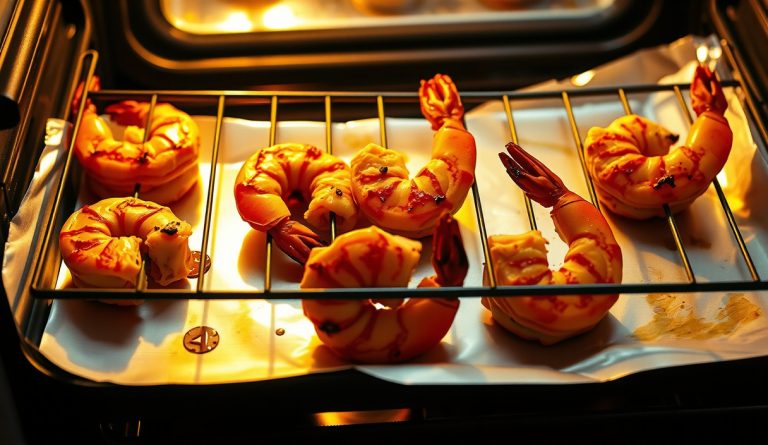
Indoor broiler adaptation. Position an oven rack 4 inches from the broiler element. Preheat the broiler on high for 10 full minutes — the element and pan must be fully saturated with radiant energy. Place skewers on a preheated broiler-safe wire rack over a sheet pan and cook 2 minutes per side. The heat transfer mode shifts from conductive-plus-radiant (grill) to primarily radiant (broiler), which means the surface browns slightly more slowly. Add 20–30 seconds per side and watch closely: broiler output varies dramatically between ovens.
Scaling for a crowd. This recipe scales linearly up to about 5 pounds of shrimp (roughly 6 skewers per batch for a standard 22-inch grill). Beyond that, the thermal mass of the grill drops between batches and the first side of skewer two may not sear as aggressively as skewer one. Cook in maximum three-batch runs, letting the grill recover to 500°F between each batch (lid closed, 3–4 minutes). The dry rub can be made up to 2 weeks ahead and stored in an airtight jar; the essential oils in the dried herbs are stable for that window.
Frequently asked questions about grilled Cajun shrimp
Can I marinate shrimp in acid before grilling? Avoid acid marinades before grilling: a citrus juice or vinegar marinade will begin to denature the surface proteins within 15–20 minutes — the same mechanism as ceviche — pre-denaturing the outer layer, which actually slows the Maillard reaction because intact proteins and available water are required for the browning cascade to initiate properly. If you want citrus flavor, use zest in the dry rub or squeeze fresh juice on after cooking, not before.
How do I know if my grill is hot enough without a thermometer? Hold your open palm 4 inches above the grate. If you cannot hold it there for more than 2–3 seconds without pulling away, the grate is in the 450–550°F zone. If you can comfortably hold it for 4–5 seconds, the grill is too cool and needs more preheat time. This is a rough heuristic — an infrared thermometer is the reliable tool and costs under $20.
My shrimp keep sticking and tearing. What is wrong? Three likely causes account for sticking: the grate is not hot enough (see the palm test above), the grate was not oiled before placing skewers, or you are flipping too early before the protein has naturally released from the metal. Clean grates with a wire brush, preheat fully, wipe with an oiled paper towel using tongs, and wait the full 90 seconds before attempting the flip. Shrimp that release cleanly at 90 seconds are on track; shrimp that resist are telling you to wait 15 more seconds.