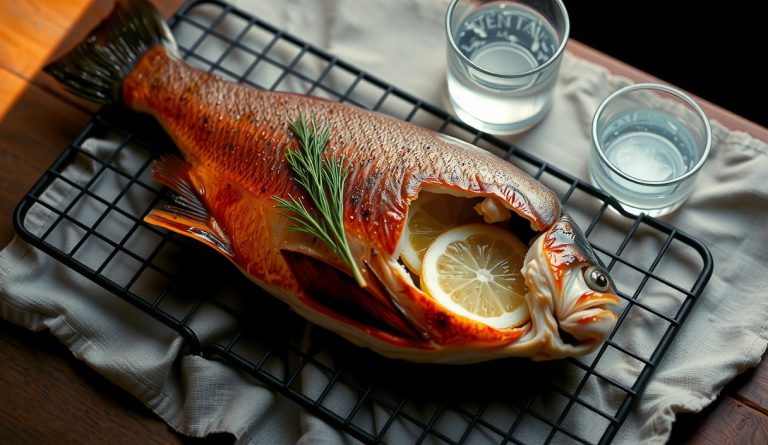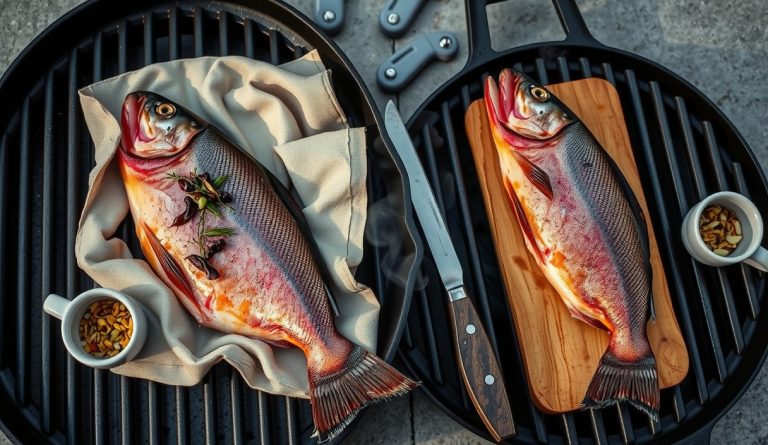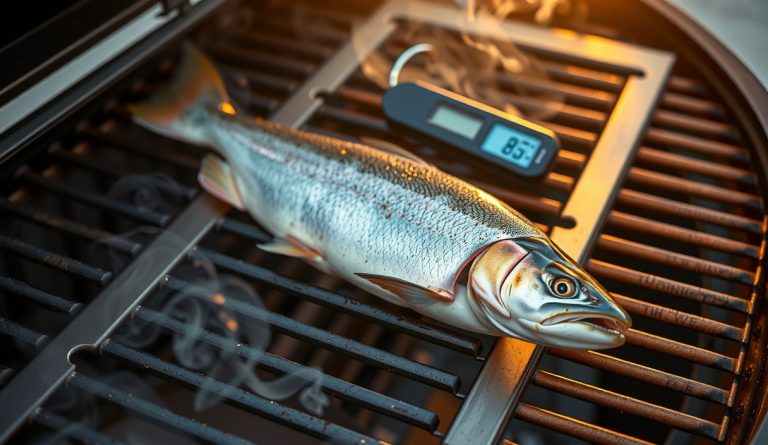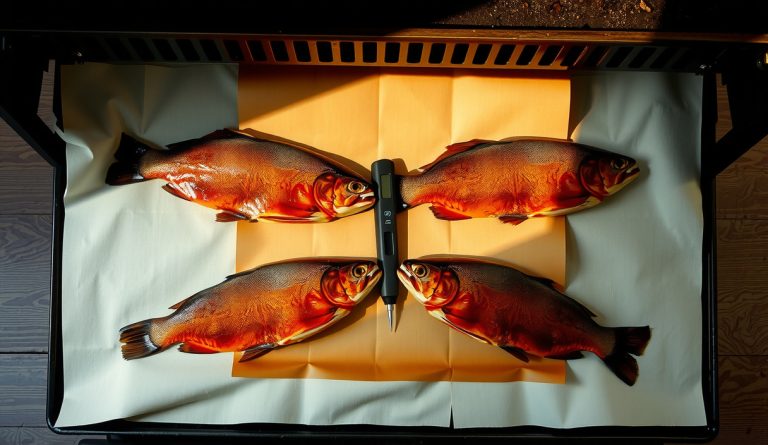
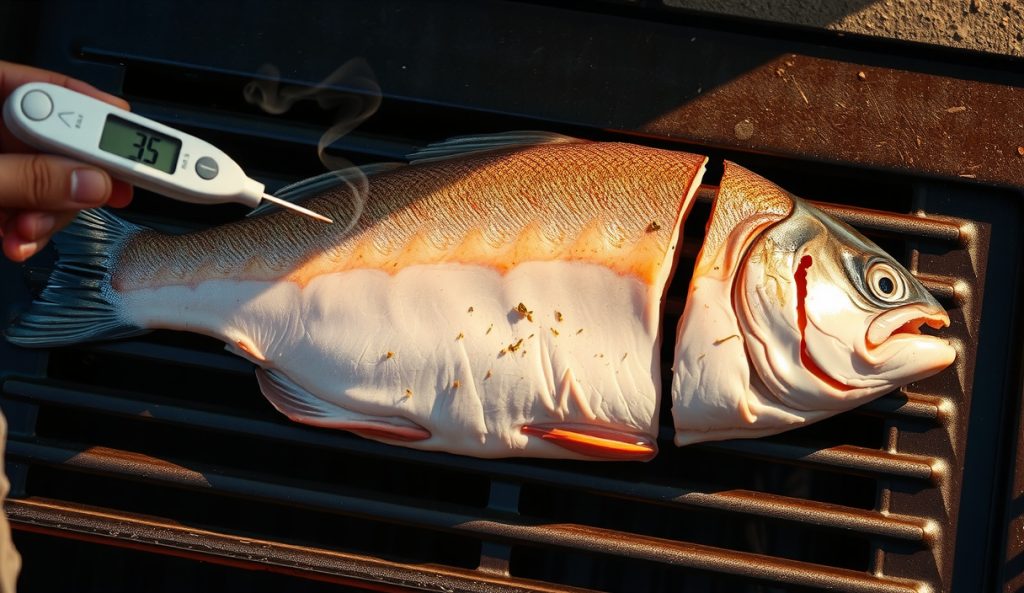
Butterflying a whole trout — running a knife along the spine, removing the backbone, and opening the fish flat like a book — is one of the most effective prep changes you can make when time is short or when you want a more uniform smoke surface. The modification is minor in effort but meaningful in physics: removing the spine and flattening the trout reduces the thickest cross-sectional measurement of the flesh by roughly half, which directly compresses the time heat needs to migrate to the geometric center of the cut.
The butterflied format is not a lesser version of the whole-fish presentation — it is a distinct format with its own visual appeal and a different surface texture, since more flesh is directly exposed to convective airflow and smoke particles during the cook.
What changes when you butterfly a trout?
At a 200°F chamber temperature, a butterflied trout reaches a safe internal temperature of 140–145°F in approximately 45–55 minutes — compared to the 75–90 minute window required for a round whole fish in the same smoker. That speed advantage follows directly from geometry: heat penetration in a protein-dense food scales with the square of the half-thickness (Fourier’s law of conduction), so halving the effective thickness cuts center-conduction time by a factor of roughly four. Increased surface evaporation from the additional exposed flesh partially offsets that gain, but the net result is substantially faster cooking.
Probe placement becomes more critical with a butterflied trout because there is no deep shoulder cavity to target in the traditional sense. Place the probe tip at the thickest point of the shoulder flesh, angling the probe parallel to the grill grate rather than perpendicular. Avoid probing the area immediately adjacent to the tail — that thinner section will overcook before the shoulder reaches temperature.
What stays the same when you switch to the butterflied format?
The dry brine, the pellet wood choice, the 200°F chamber set-point, and the 140–145°F internal target all remain unchanged from the whole-fish method. The food-safety endpoint is identical regardless of format — internal temperature is the only reliable indicator of doneness for hot-smoked fish, and no format change alters that requirement.
When is the butterflied format the better choice?
Choose the butterflied format when cooking for guests and a faster turnaround matters, when you plan to serve the trout plated rather than whole, or when you want maximum smoke-surface contact on the flesh side. The open, flat format also makes portioning at the table significantly easier — a practical advantage on a crowded serving board.
Use the full method, equipment list, and brine measurements from the original Smoked Whole Rainbow Trout on a Pellet Grill.